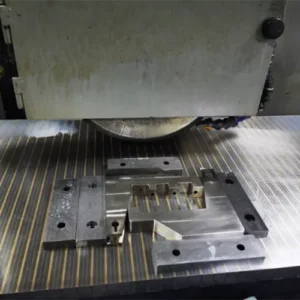









1018 steel machining cost is usually relatively easy to control because 1018 steel is a U.S. standard low-carbon steel with good machinability, weldability, and cold-forming performance. It is suitable for CNC milling, turning, drilling, tapping, and general mechanical part machining.
However, the final machining cost does not depend only on the material itself. It is also affected by part geometry, tolerance requirements, machining time, surface finishing, inspection standards, and order quantity. For buyers, understanding these cost factors helps evaluate quotations more accurately and reduce unnecessary machining expenses.
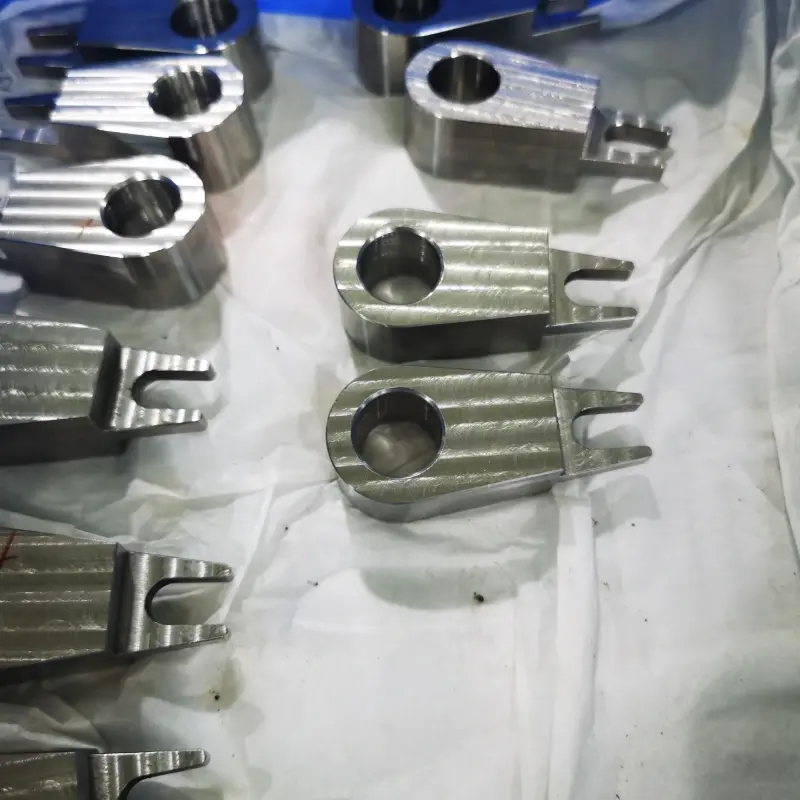
¿Qué es el acero 1018?
1018 steel is a U.S. standard low-carbon steel commonly found in the AISI / SAE carbon steel system. The “10” usually refers to the plain carbon steel series, while “18” indicates a nominal average carbon content of about 0.18%. Compared with some ordinary low-carbon steels, 1018 steel has a relatively higher manganese content, allowing it to maintain good ductility, weldability, and cold-forming performance while providing more stable strength and machining behavior.
1018 steel is also supplied in different delivery conditions, such as hot rolled, cold drawn, cold rolled, plate, round bar, square bar, or cold finished steel. Among them, 1018 CFS usually refers to 1018 Cold Finished Steel. It is not a new steel grade, but 1018 steel that has been processed by cold drawing, cold rolling, straightening, peeling, grinding, or polishing, usually providing better dimensional accuracy, surface quality, and machining consistency.
1018 steel is commonly used for shafts, pins, bolts, brackets, fixtures, connectors, gears, and general mechanical parts. It is also suitable for improving surface hardness through carburizing or carbonitriding. Because it has good machining stability and mature material availability, it is considered a cost-friendly material in many CNC machining projects.
Is 1018 Steel Expensive to Machine?
Overall, 1018 steel is usually not considered a high-cost material to machine. Because it has relatively low hardness, good cutting performance, and stable weldability and cold-forming properties, tool wear and machining difficulty in conventional CNC milling, turning, drilling, and tapping are usually lower than those of stainless steel, hardened alloy steel, and tool steel. Therefore, for parts with simple structures, moderate tolerances, and no complex post-processing requirements, 1018 steel can often achieve good cost control.
However, the machining cost of 1018 steel is not fixed. If a part includes deep holes, small holes, precision threads, thin-wall structures, multi-sided machining, tight-tolerance mating surfaces, or post-processing such as carburizing, carbonitriding, zinc plating, black oxide, or nickel plating, machining time, inspection cost, and outsourced processing cost will all increase. In other words, 1018 steel itself is relatively economical, but the final quotation still depends on part design, machining operations, quality requirements, and production volume.
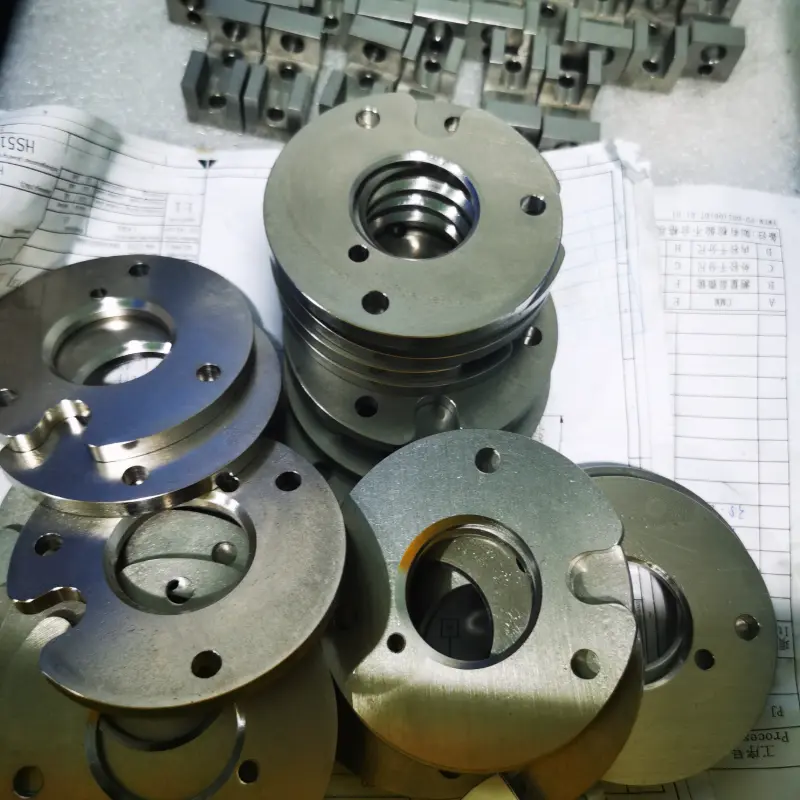
Key Properties of 1018 Steel
1018 steel itself is not a difficult material to machine, but its composition, strength, hardness, and corrosion resistance all affect tool selection, machining time, post-processing needs, and the final quotation.
Tipo de material: 1018 steel is a U.S. standard low-carbon steel with a nominal carbon content of about 0.18% and a relatively high manganese content. It is commonly used for general CNC machined parts, fasteners, shafts, brackets, and case-hardened components, making it a cost-friendly carbon steel material.
Chemical Composition: Typical composition is approximately C 0.15–0.20% / 0.17–0.24% and Mn 0.60–0.90% / 0.60–1.00%. Low carbon content provides good ductility, weldability, and cold-forming performance, while manganese helps improve strength and a certain degree of hardenability. This is also an important reason why 1018 steel is suitable for machining and surface hardening.
Strength and Hardness: The tensile strength of 1018 steel is usually about 410–450 MPa or higher, the yield strength is about 270 MPa or higher, and the untreated hardness is commonly below 197 HB. This strength and hardness level keeps cutting resistance relatively low and tool wear more controllable, so conventional machining costs are usually lower than those of stainless steel, hardened steel, and tool steel.
Machinability: 1018 steel has good machinability and is suitable for CNC milling, turning, drilling, tapping, grinding, and thread machining. However, because low-carbon steel has relatively high toughness, burrs, long chips, built-up edge, or surface tearing may occur during machining, so cutting tools, cutting parameters, and cooling methods should be selected properly.
Corrosion Resistance: 1018 steel itself has weak corrosion resistance and is prone to rust in humid, salt-spray, or outdoor environments. Therefore, many parts require surface protection such as black oxide, zinc plating, nickel plating, phosphating, painting, or rust-preventive oil, and these post-processing steps directly affect the final machining cost.
Typical 1018 Steel Machining Cost Range
The machining cost of 1018 steel is usually in the low-to-medium range. If the part structure is simple, such as a standard mounting plate, bracket, bushing, pin, or basic connector, and only requires conventional CNC milling, turning, drilling, and chamfering, the machining cost is usually easier to control. The main costs for this type of part come from material, programming and setup, machining time, and basic inspection.
If the part includes multi-sided machining, deep holes, precision threads, tight-tolerance hole positions, thin-wall structures, complex slots, or higher surface roughness requirements, the cost will move into the medium-to-high range. If carburizing, carbonitriding, zinc plating, black oxide, nickel plating, grinding, or full CMM dimensional inspection is also required, the overall quotation will continue to increase. Therefore, 1018 steel machining cost is better evaluated based on part complexity, precision requirements, and post-processing needs rather than summarized with one fixed price.
Main Factors Affecting 1018 Steel Machining Cost
1018 steel machining cost is affected by material condition, part complexity, tolerance requirements, machining operations, finishing, and production quantity.
Material Form: 1018 steel may be supplied as plate, bar, cold drawn steel, or cold finished steel. Cold finished material offers better dimensional accuracy and surface quality, but usually costs more than hot rolled material.
Part Geometry: Simple shafts, brackets, plates, and connectors are usually easier to machine. Deep pockets, thin walls, small internal radii, deep holes, and multi-sided features increase machining time and setup cost.
Tolerance Requirements: General tolerances are more economical, while tight hole positions, mating surfaces, threads, and shaft-hole fits require more finishing, inspection, and process control.
Machining and Finishing: More operations, such as milling, turning, drilling, tapping, grinding, carburizing, zinc plating, óxido negro, or nickel plating, will increase the final cost.
Production Quantity: Prototype and small-batch parts have higher unit costs because programming, setup, fixturing, and first-article inspection are spread across fewer parts. In stable batch production, the unit cost usually decreases.
Common 1018 Steel Machining Challenges and Solutions
1018 steel machines well, but its ductility can cause burrs, long chips, built-up edge, hole variation, and thin-wall deformation if tooling, coolant, workholding, and inspection are not properly controlled.
Burr Formation: Burrs often appear during drilling, tapping, slot milling, and cross-hole machining. Sharp carbide tools, proper chamfering, optimized toolpaths, and deburring at critical edges can help improve assembly and thread quality.
Chip Control: Long chips may occur in turning, deep-hole drilling, and slot machining. Chipbreaker inserts, suitable drills, stable coolant, and proper feed rates help improve chip evacuation and protect the machined surface.
Acabado de Superficie: Built-up edge, surface tearing, and unstable roughness may occur when tools are dull, cutting speed is too low, or cooling is insufficient. Carbide tools or suitable coated tools, along with optimized spindle speed and coolant, can improve surface quality.
Hole and Thread Accuracy: Critical holes can be drilled and then reamed, while threads can be tapped or thread milled depending on accuracy requirements. Pin gauges, plug gauges, and go/no-go gauges should be used for in-process inspection.
Dimensional Stability: Thin-wall parts, long shafts, and large flat parts may deform due to clamping force, cutting heat, or uneven material removal. Low-stress workholding, soft jaws, balanced roughing and finishing, and proper machining allowance can improve stability.
Eficacia de mecanizado: For pocketing, profiling, and batch material removal, HEM high efficiency milling can improve material removal rate, extend tool life, and reduce dimensional variation by maintaining stable tool load.
How to Calculate 1018 Steel Machining Cost
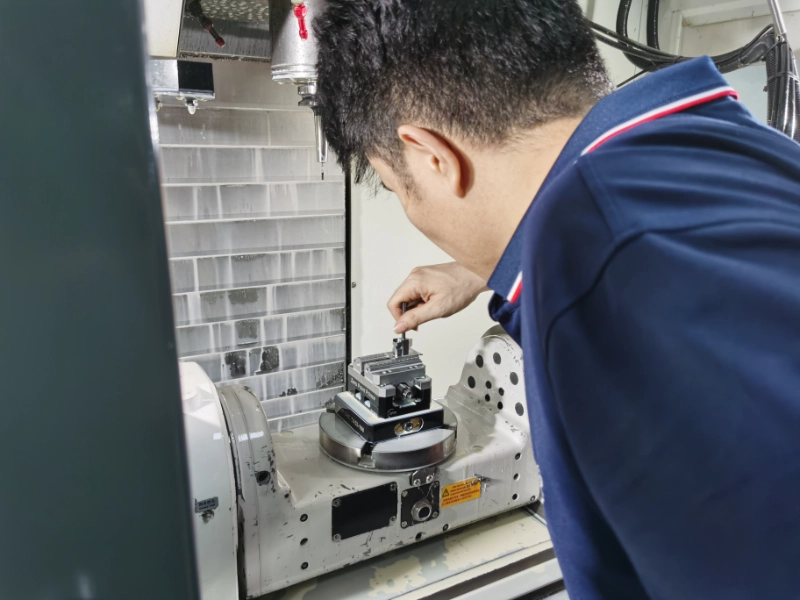
The machining cost of 1018 steel is usually not a single material expense, but a combination of material, programming, setup, machining time, tooling, inspection, post-processing, packaging, and shipping. For prototypes and small-batch orders, programming, fixturing, and first-article inspection account for a higher share. For batch production, unit cost depends more on cycle time, tool life, yield rate, and process stability.
A common cost calculation logic can be understood as:
1018 steel machining cost = material cost + programming cost + machining time + inspection cost + heat treatment / surface finish cost + packaging and delivery cost
Material Cost: Affected by material specification, weight, procurement condition, and material loss. Cold finished steel has better dimensional accuracy, but its unit price is usually higher than ordinary hot rolled material.
Programming and Setup Cost: Includes CNC programming, process planning, fixture preparation, machine setup, and first-article confirmation. The more complex the part and the more setups required, the higher this cost becomes.
Machining Time: This is one of the core factors affecting the quotation. Deep holes, thin walls, tight tolerances, multi-sided machining, complex slots, and precision threads all increase machine occupancy time.
Tooling Cost: Tool wear in 1018 steel is usually controllable, but tapping, deep-hole drilling, finishing, batch material removal, or machining after hardening can still increase tool consumption.
Inspection Cost: General dimensional inspection is lower in cost, but critical hole diameters, hole positions, threads, mating surfaces, and tight-tolerance dimensions require more in-process checks and final inspection.
Post-Processing Cost: If parts require carburizing, carbonitriding, black oxide, zinc plating, nickel plating, phosphating, grinding, or rust-preventive packaging, the overall cost will increase significantly.
How to Reduce 1018 Steel Machining Cost
The focus of reducing 1018 steel machining cost is not simply lowering the material price, but improving production efficiency, reducing setup times, minimizing rework risk, and avoiding unnecessary post-processing costs.
- Relax Non-Critical Tolerances: Strict tolerances should be applied only to hole positions, shaft-hole fits, assembly surfaces, and key functional dimensions. General outer profiles, chamfers, and non-critical edges can be relaxed appropriately to reduce finishing and inspection time.
- Optimize Part Geometry: Avoid overly deep pockets, excessively thin walls, very small internal radii, and complex closed slots. Properly increasing radii and adding tool access space can reduce machining difficulty and tooling cost.
- Choose the Right Material Condition: When better dimensional stability and surface quality are required, 1018 cold finished steel can be selected. For ordinary structural parts, hot rolled material can be evaluated based on cost requirements to avoid over-specifying the material condition.
- Reduce Setup and Fixturing Time: Multi-sided machining and repeated setups increase machining time and error risk. During design, unnecessary machined surfaces should be minimized, and key dimensions should be completed from the same setup datum whenever possible.
- Plan Finishing and Heat Treatment Early: Carburizing, carbonitriding, zinc plating, black oxide, nickel plating, and phosphating all affect dimensions, lead time, and cost. Processing requirements should be confirmed in advance, and reasonable machining allowance should be reserved to avoid rework after post-processing.
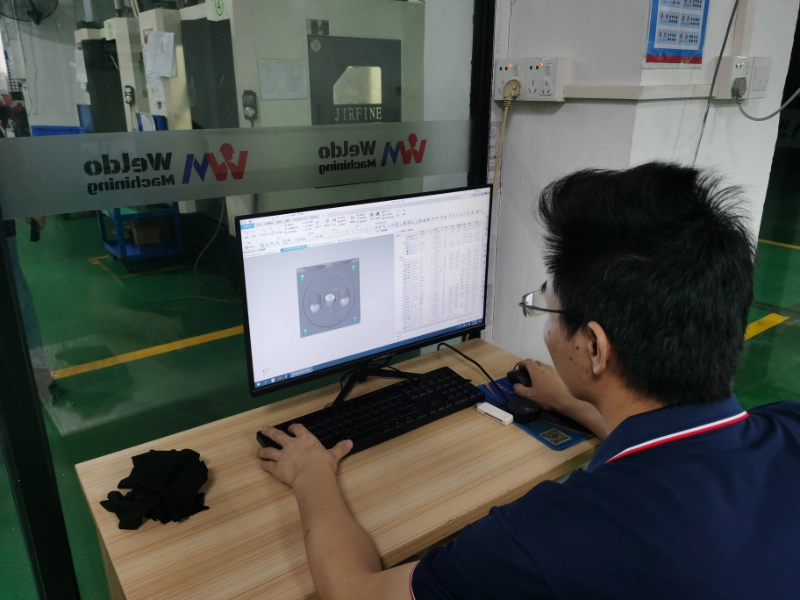
How to Find a Reliable 1018 Steel Machining Partner
When choosing a 1018 steel machining partner, focus on material experience, machining capability, post-processing support, and inspection control rather than comparing only the unit price.
Material Knowledge: The supplier should understand the differences among 1018 steel, 1018 cold finished steel, 1022, 1045, 4140, and other materials, and provide suggestions based on strength, machinability, and cost requirements.
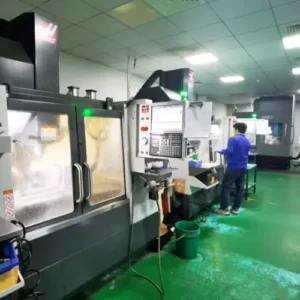
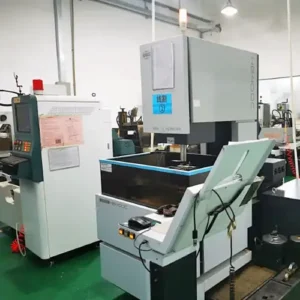
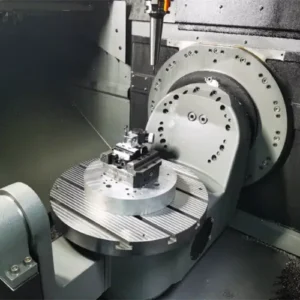
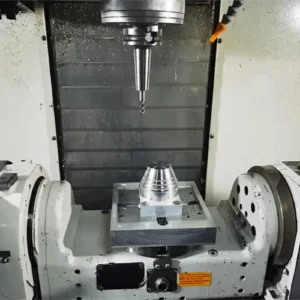
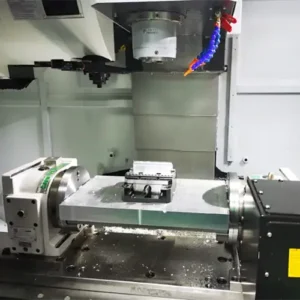
Machining Capability: The supplier should have basic machining capabilities such as CNC milling, large surface grinding, and EDM cutting.
Finishing Support: The supplier should be able to support post-processing such as carburizing, carbonitriding, black oxide, zinc plating, nickel plating, and phosphating, while considering their impact on dimensions and lead time.
Inspection Control: The supplier should be able to use pin gauges, plug gauges, go/no-go gauges, calipers, micrometers, height gauges, and CMM to inspect critical hole diameters, threads, and mating dimensions.
Delivery Lead Time: There should be a clear delivery commitment or signed contract, real-time reporting of machining progress, timely communication for unexpected situations, and corresponding compensation or handling clauses in case of delays.
Conclusión
The advantage of 1018 steel lies in its stable machining performance, mature material availability, and good balance among cost, strength, and post-processing adaptability. For shafts, brackets, connectors, fixtures, and threaded parts, it is usually a practical and economical material choice.
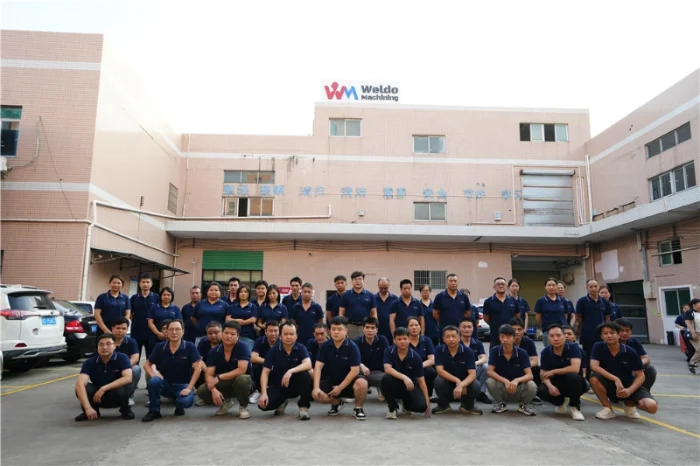
However, a truly reasonable quotation is not calculated simply by material price. It is built on drawing review, process planning, tolerance control, and surface finishing coordination. Weldo Machining can evaluate CNC milling, turning, tapping, surface finishing, and batch production solutions according to your 1018 steel part drawings, helping you obtain clearer and more controllable machining costs.