
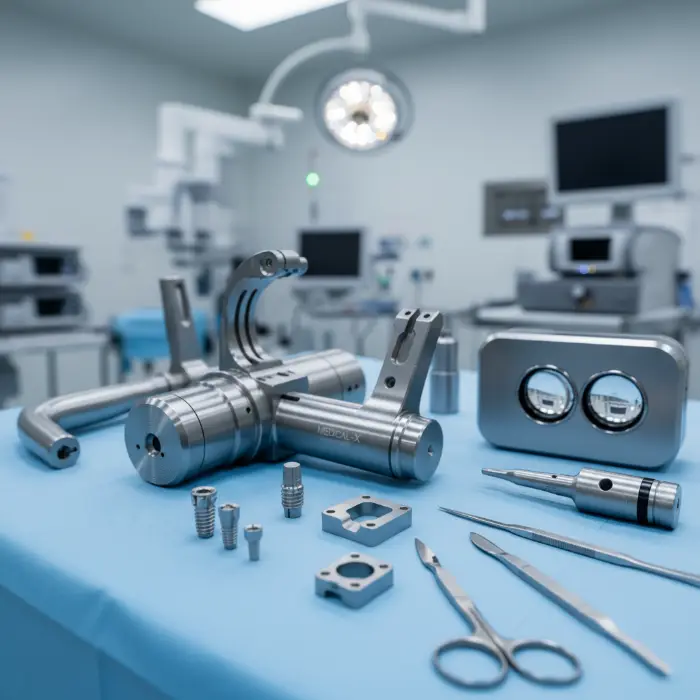
Servicios de mecanizado CNC para el sector médico
Custom parts for medical-device development, diagnostic equipment, and precision healthcare assemblies. Weldo supports prototypes and repeat production with drawing-based material, tolerance, surface, and inspection review.
- Del prototipo a la producción
- Drawing-Defined Tolerances
- Agreed Inspection Records
Custom Parts for Medical Equipment Projects
Match component geometry, material, finish, and documentation to the intended equipment function and assembly requirements.
Surgical Instrument Components
Handles, jaws, linkages, tool bodies, and other drawing-defined instrument subcomponents.
Diagnostic & Laboratory Equipment
Sample holders, analyzer components, fixtures, carriers, and stable instrument interfaces.
Device Housings & Structures
Enclosures, frames, brackets, covers, adapters, and internal equipment supports.
Imaging, Sensors & Optics
Camera mounts, sensor housings, lens barrels, retaining rings, and alignment interfaces.
Fluid, Motion & Thermal Parts
Manifolds, valve bodies, pump components, guides, shafts, and heat-transfer components.
Prototypes & Verification Tooling
Functional prototypes, trial components, assembly fixtures, and design-verification aids.
Requisitos de control antes de iniciar el mecanizado
Review functional interfaces, datum relationships, machining risks, and service conditions before confirming the production route.
Feature-Based Capability Review
| General Dimensions | Controlled drawing requirements or an explicitly agreed general-tolerance standard. |
|---|---|
| Fits & Geometric Controls | The drawing’s specified ISO 286, ISO 1101, ASME Y14.5, or other stated basis and revision. |
| Características fundamentales | Tolerance confirmed by feature after material, geometry, setup, and measurement review. |
| Estado de la superficie | Specified roughness, edge limits, finish, and accessible geometry. |
| Método de Inspección | CMM, optical tools, height measurement, and suitable gauges as required. |
A universal ±0.005 mm tolerance does not apply to every dimension. Critical targets are confirmed after process and inspection review.
Materiales para componentes médicos
Specify the exact grade, condition, material standard, service exposure, and required certificates. Material designation alone does not establish biocompatibility.
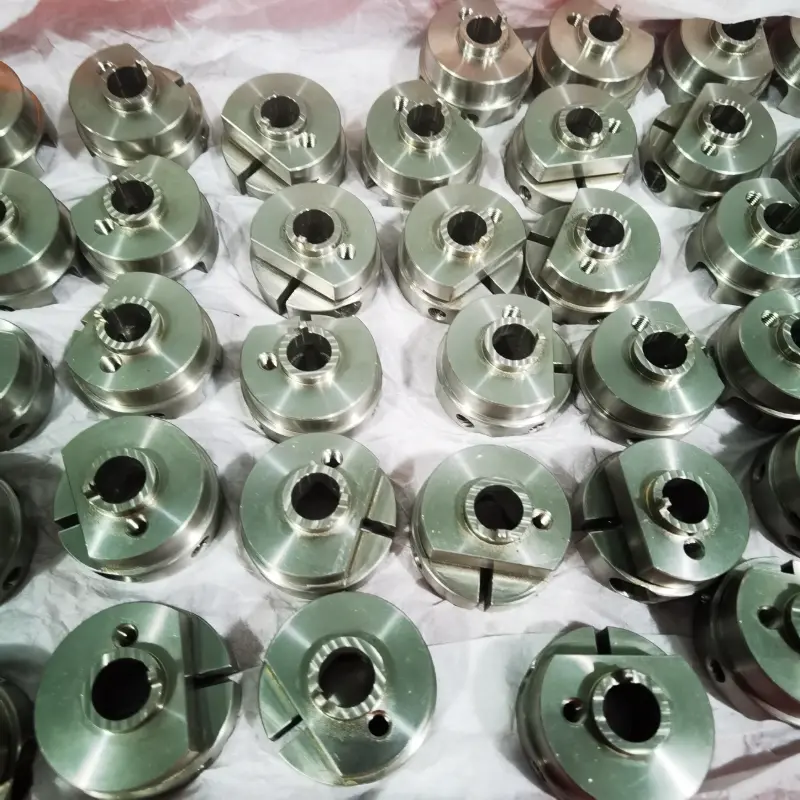
Acero inoxidable
Corrosion-resistant and hardenable grades for instrument subcomponents, fluid parts, housings, and cleanable equipment interfaces. Specify the grade and condition for the actual duty.
View material planning details
- Aplicaciones típicas
- Instrument bodies, fittings, sleeves, housings, and mechanical interfaces.
- Selection and processing
- Define corrosion exposure, hardness, heat treatment, passivation or polishing, surface roughness, and required material records.
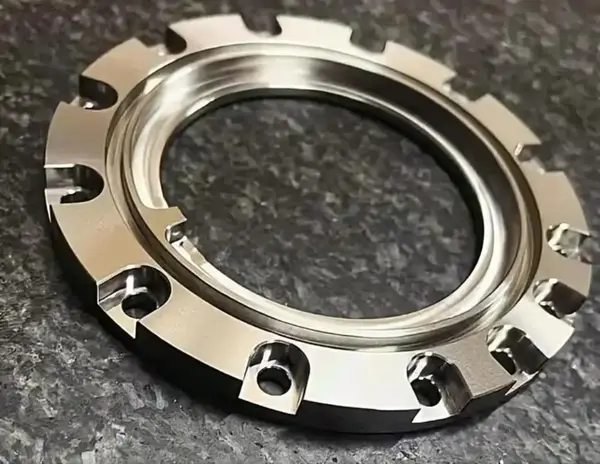
Aleaciones de titanio
Lightweight, corrosion-resistant options for specified instruments and device components. Grade, stock condition, and supporting documentation must match the drawing.
View material planning details
- Aplicaciones típicas
- Specialized instrument parts, device interfaces, brackets, and other specified precision components.
- Selection and processing
- Review material specification, cutting access, heat control, surface integrity, cleaning, and finishing. A grade designation alone does not establish suitability for implantation.
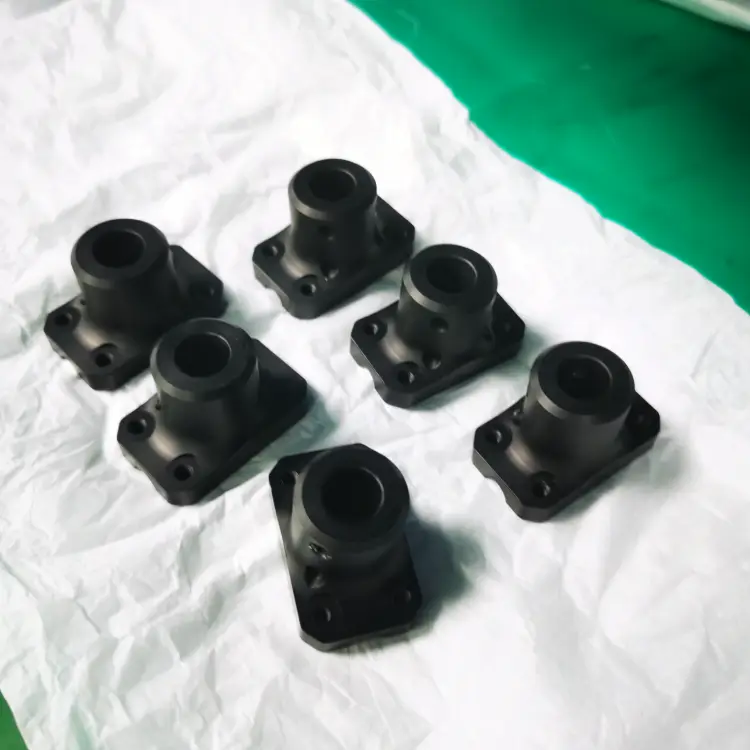
Aleaciones de aluminio
Lightweight, thermally conductive materials for equipment housings, fixtures, heat sinks, and non-implant structures. The specified temper and finish affect final performance.
View material planning details
- Aplicaciones típicas
- Diagnostic-equipment housings, mounting brackets, frames, fixture plates, and thermal parts.
- Selection and processing
- Account for residual stress, thin-wall support, coating allowance, masking, electrical contact areas, and cleaning-agent compatibility.

Plásticos técnicos
Options for insulation, low friction, chemical resistance, and reduced weight. Specify the exact resin, filler, color, stock condition, and application documentation.
View material planning details
- Aplicaciones típicas
- Guides, rollers, spacers, insulators, housings, fluid components, and equipment interfaces.
- Selection and processing
- Review load, creep, moisture, thermal expansion, chemical exposure, and cleaning or sterilization cycles. Filled and unfilled grades are not interchangeable.
Surface Finish and Cleanliness Planning
Define the finish, roughness, masking, dimensional effects, and cleanliness requirements for the component and its intended use.
Pasivación
For compatible stainless steels, with the process specification, cleaning, rinsing, and acceptance criteria defined.
Electropulido
For suitable stainless parts where specified. Review geometry, surface condition, edge effects, and material removal.
Anodizado
For compatible aluminum or titanium requirements. Define coating type, masking, thickness, and dimensional allowance.
Cleaning & Protection
Agree residue limits, drying, handling, and protective packaging. Sterile supply requires a separately validated process.
Inspection Evidence Matched to Critical Features
Agree measurement methods and records before production so critical dimensions and release requirements remain traceable.
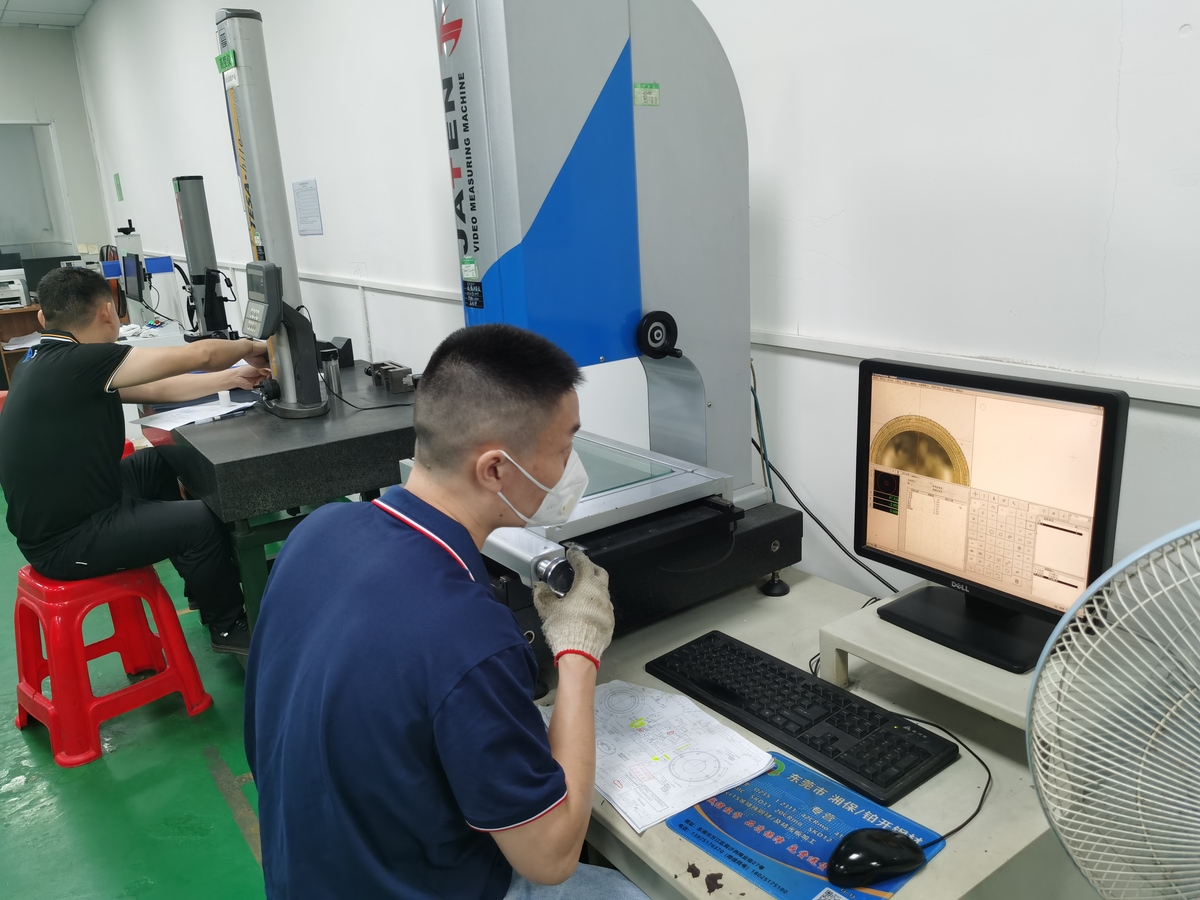
Drawing & Revision Control
Maintain the approved revision, material condition, critical requirements, and inspection scope through the order.
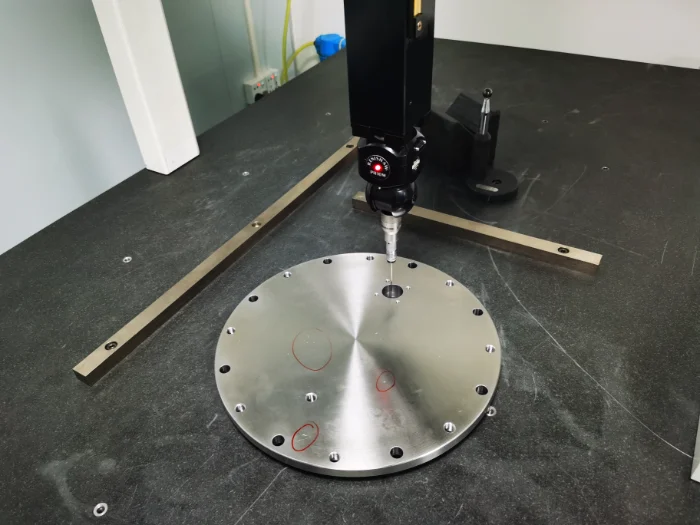
Feature-Based Inspection
Use CMM and other suitable calibrated equipment to check datums, fits, and critical dimensions.
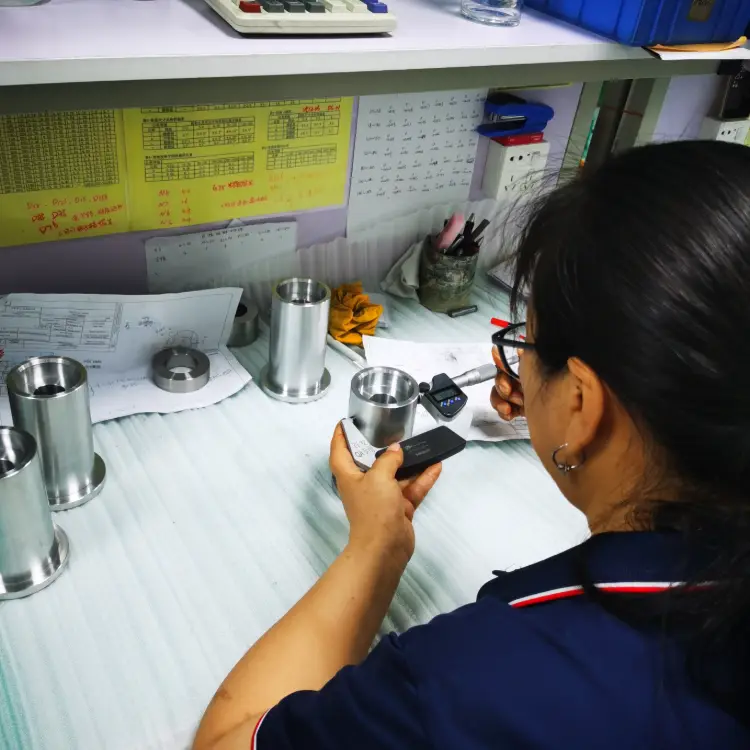
Records & Traceability
Agree material certificates, lot and treatment traceability, dimensional reports, CoC, and first-article records before order acceptance.
Define Project Inputs Before Production
Weldo’s ISO 9001:2015 quality system supports drawing-based manufacturing. State device-specific manufacturing and documentation requirements during quotation.
Intended Use & Material
Define component function, interfaces, market requirements, exact grade, material records, and substitution restrictions.
Surface & Service Conditions
Specify finish, roughness, cleanliness, prohibited residues, chemical exposure, and cleaning or sterilization cycles.
Inspection & Release
Agree methods, sampling, reports, traceability, protective packaging, labeling, and shipping records.
Biological evaluation considers the finished device and its processing, including sterilization where applicable. Device-level risk management, validation, and regulatory acceptance remain with the legal manufacturer; component material selection is one input to that work.
Specify required certifications and project records on the RFQ. ISO 13485 certification, regulatory registration, implant suitability, and sterile supply are not implied by this page.
Medical Machining Questions
Clarify materials, tolerances, cleanliness, records, and design changes before quotation.
How is a medical-component machining quote prepared?
Price and lead time depend on grade, geometry, tolerances, quantity, finishing, inspection, and documentation. Send the controlled drawing, model, revision, and project requirements for review.
What tolerances can be achieved?
Capability is evaluated by feature. Material, geometry, workholding, finishing allowance, and inspection conditions determine the result; ±0.005 mm is not a general tolerance for every feature.
Are titanium, PEEK, and stainless steel automatically biocompatible?
No. Suitability depends on the intended contact and the finished component or device, including manufacturing, surface processing, cleaning, and sterilization where applicable. A material name alone is insufficient.
Can material certificates and inspection records be supplied?
Material certificates, traceability, dimensional reports, certificates of conformity, first-article records, and treatment certificates can be planned when specified and agreed before production.
Can parts be cleaned or prepared for sterilization?
Cleaning, residue control, handling, and packaging can be reviewed against customer specifications. Parts should not be described as sterile without a validated sterilization process and the required release evidence.
Can another material be used for an early prototype?
Only after the substitution and intended use are agreed. Identify whether the prototype is for fit, function, or process verification, since a substitute may not represent final material or device performance.
What happens when the drawing changes?
The new revision is reviewed for material, tooling, manufacturing, inspection, cost, and schedule impact before the affected production proceeds.
Which quality requirements should be included in the RFQ?
State required quality-system certifications, material records, cleanliness, inspection, traceability, and device-specific requirements. Weldo’s ISO 9001 certification does not establish ISO 13485 certification or regulatory clearance for a device.