
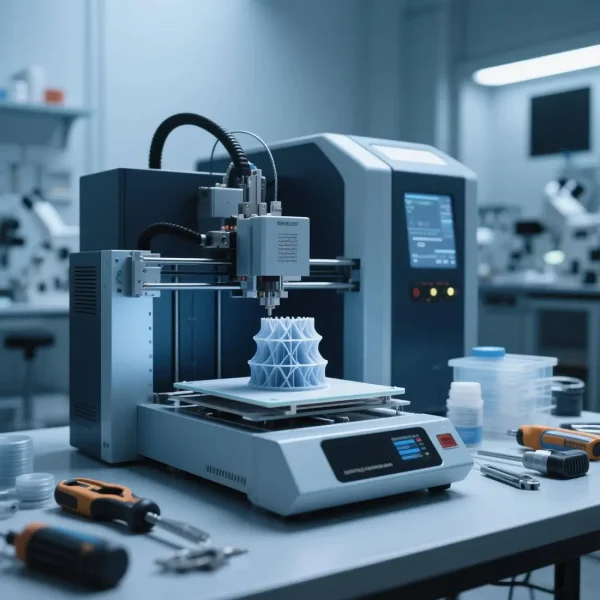
Fabricación aditiva rápida
Servicios de impresión 3D a medida
Convierte los modelos CAD en prototipos precisos y piezas de baja producción mediante la selección de procesos, el asesoramiento sobre materiales, la impresión, el posprocesamiento y la inspección, todo ello coordinado en un único flujo de trabajo.
Se prefiere el formato STEP; también se aceptan archivos STL y 3MF.
Materiales de impresión
Elige el material adecuado para la impresión 3D
Compara el proceso de impresión, las características del material, las piezas más habituales y los controles de producción antes de seleccionar un tipo de material.
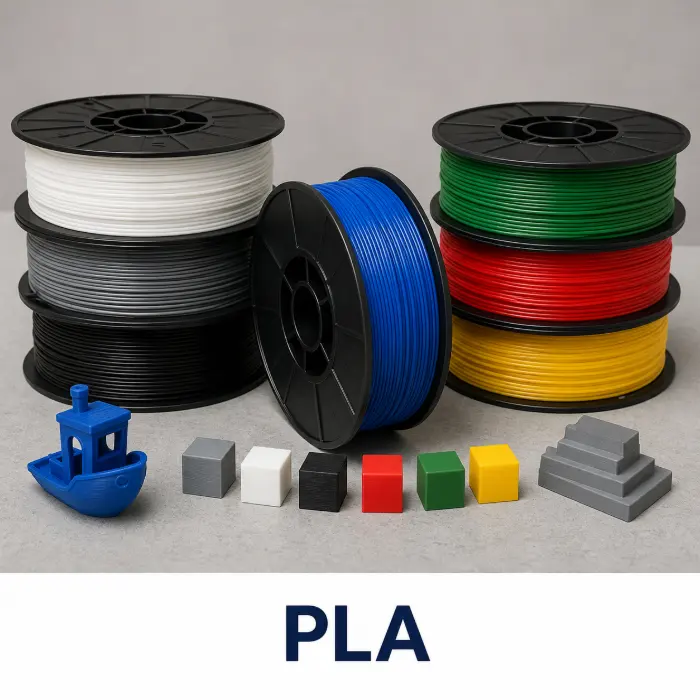
Material termoplástico
PLA
Rígido, económico y fácil de imprimir, con una resistencia limitada al calor prolongado.
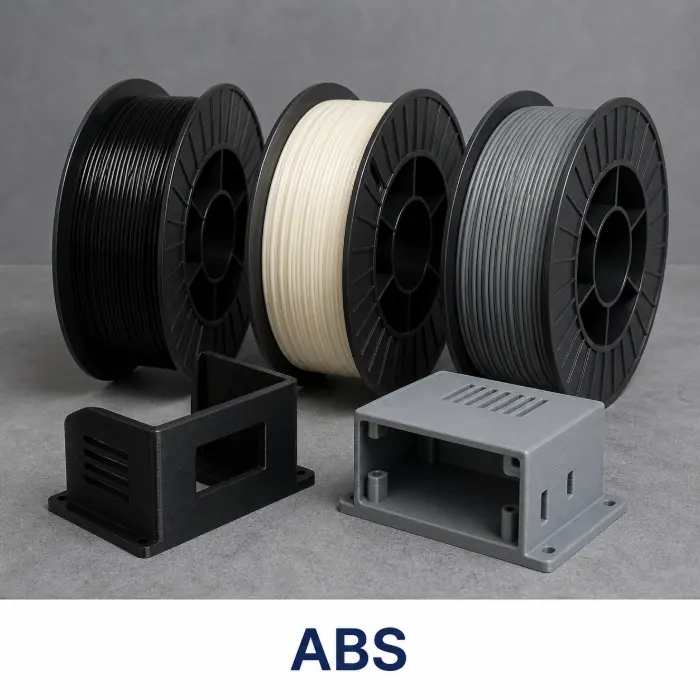
Material termoplástico
ABS
Un termoplástico técnico resistente con una buena resistencia al impacto y una mayor resistencia al calor que el PLA.

Material termoplástico
PETG
Combina una buena resistencia, impermeabilidad y una mínima deformación, lo que lo hace ideal para la impresión funcional en general.
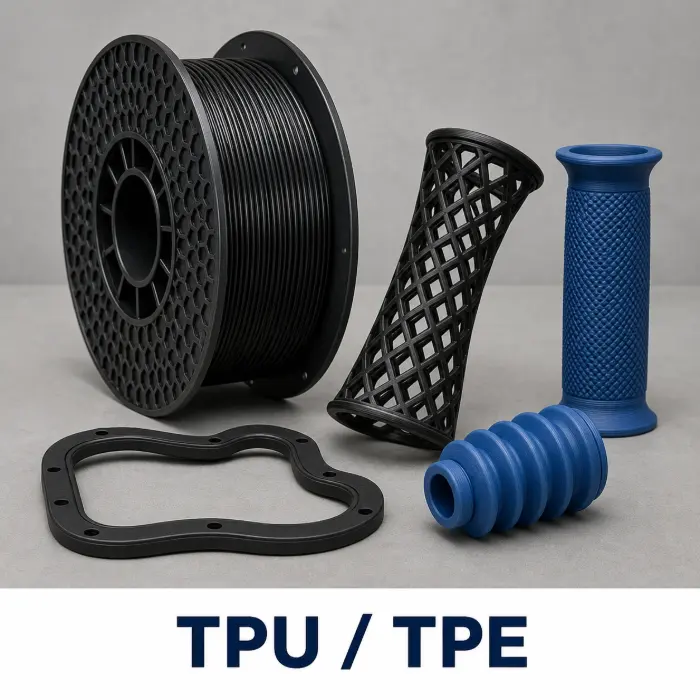
Material termoplástico
TPU / TPE
Material flexible y elástico con buena resistencia a la abrasión y buen comportamiento ante flexiones repetidas.
Material termoplástico
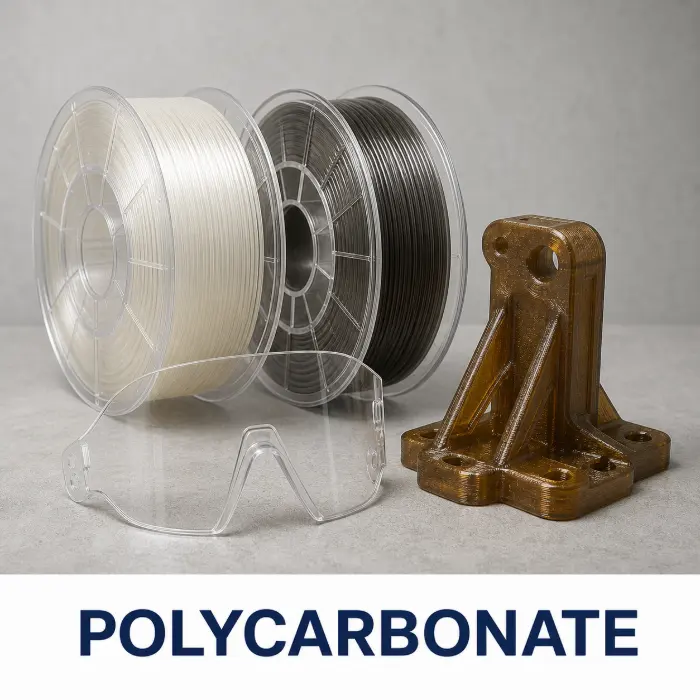
Policarbonato (PC)
Termoplástico de alto impacto y resistente al calor para prototipos funcionales y estructurales más resistentes.
Material termoplástico
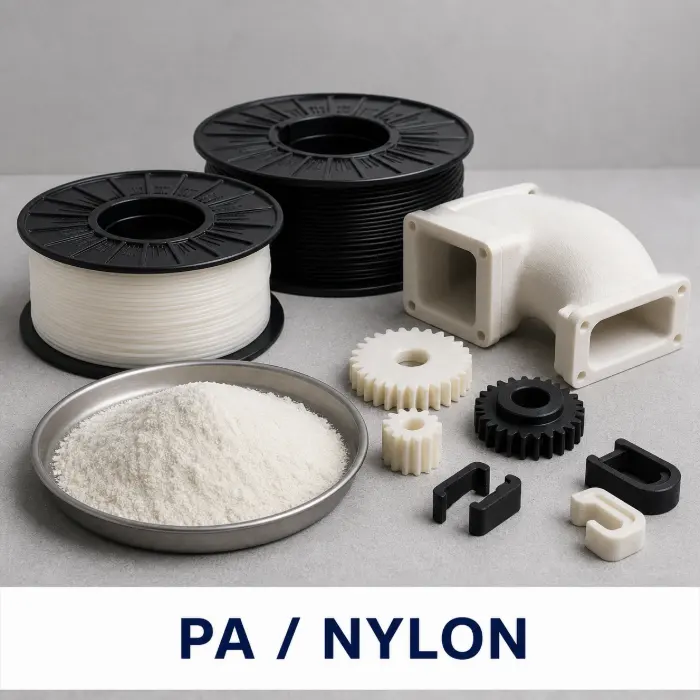
PA / Nylon
Material resistente, resistente a la fatiga y al desgaste, destinado a piezas móviles y sometidas a cargas mecánicas.
Material termoplástico
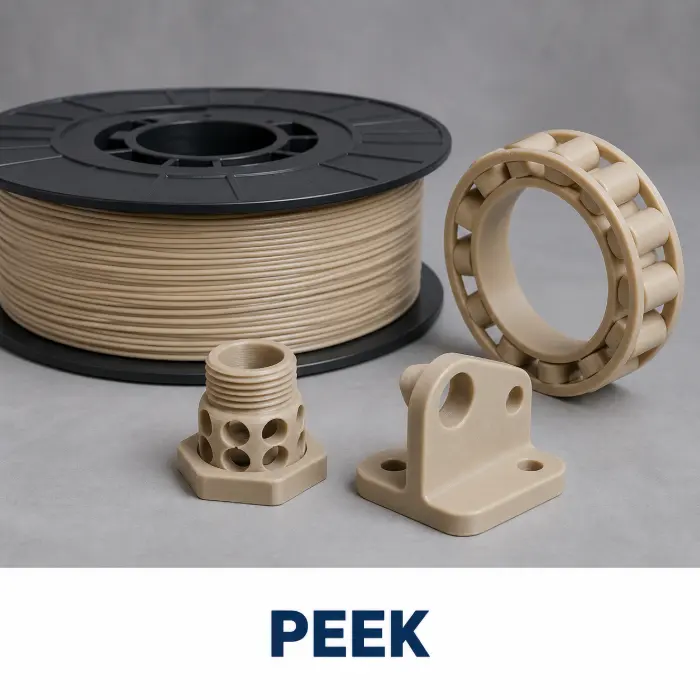
PEEK
Polímero industrial de alto rendimiento con una excelente resistencia térmica y química.
Resina fotopolimérica
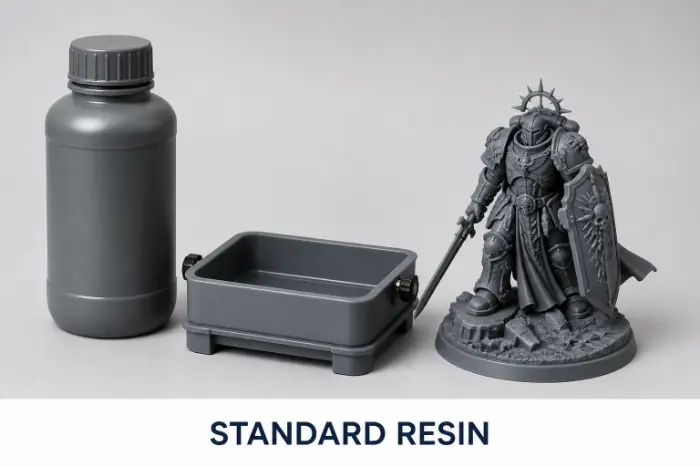
Resina estándar
Resina de alto nivel de detalle que permite obtener superficies lisas, pero cuya resistencia a los impactos es relativamente limitada.
Resina fotopolimérica
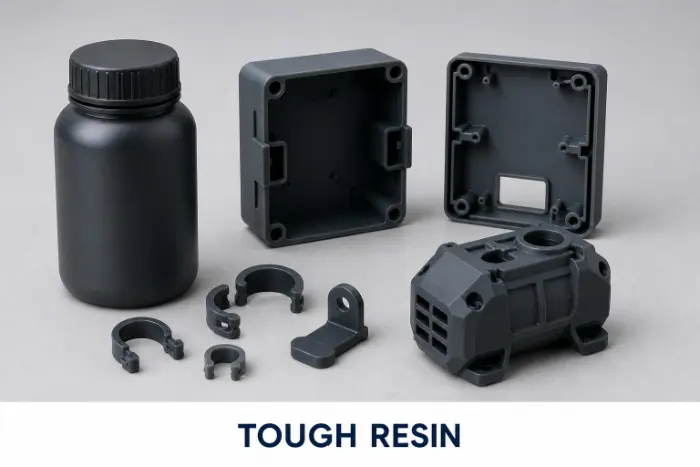
Resina resistente
Resina de ingeniería formulada para mejorar la tenacidad sin perder el nivel de detalle propio de la tecnología SLA.
Resina fotopolimérica
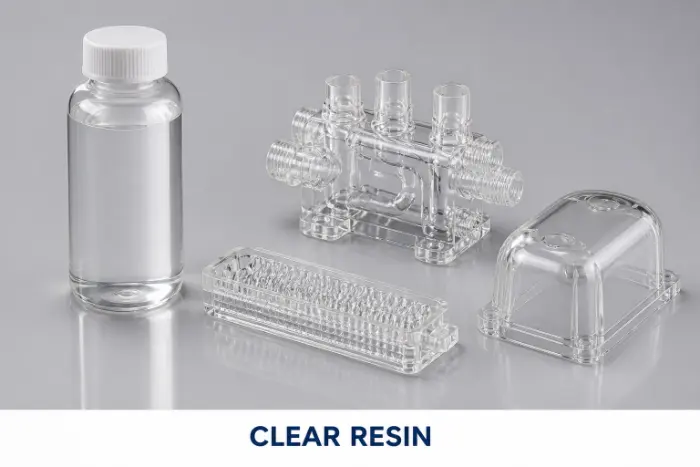
Resina transparente
Resina transparente para piezas que requieren visibilidad o una transmisión controlada de la luz.
Resina fotopolimérica
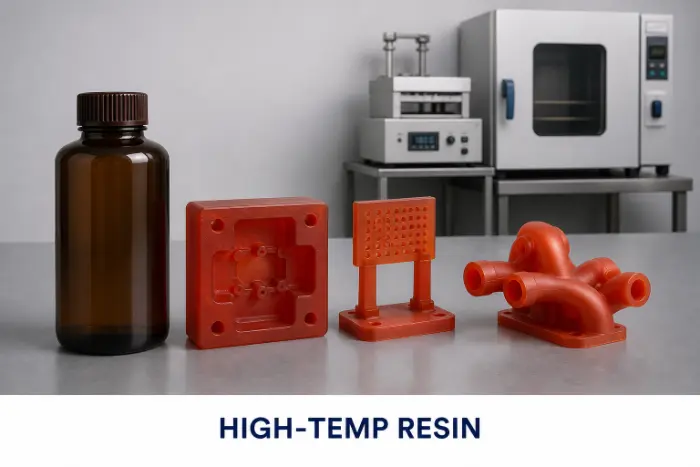
Resina resistente a altas temperaturas
Resina especial diseñada para mantener su forma durante la exposición térmica específica de cada grado.
Resina fotopolimérica
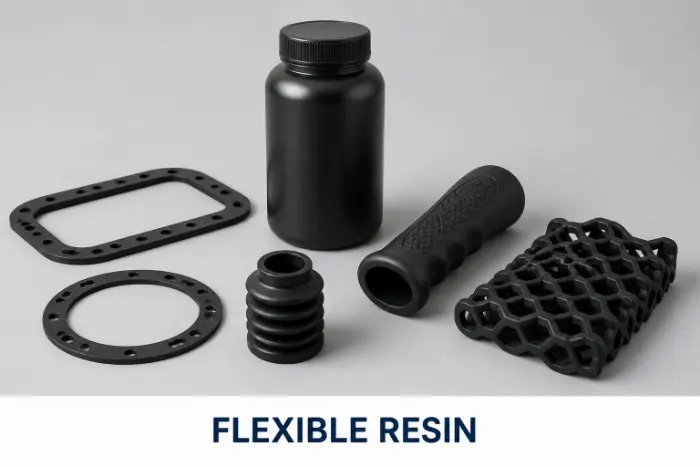
Resina flexible
Fotopolímero de textura similar al caucho para piezas flexibles y prototipos funcionales blandos.
El rendimiento final depende del tipo exacto de material, la orientación de impresión y el tratamiento posterior. Las aplicaciones en contacto con alimentos, médicas, ignífugas y otras reguladas requieren materiales certificados y un proceso documentado.
Dónde encaja la fabricación aditiva
Aplicaciones de la impresión 3D
La impresión 3D resulta especialmente útil para la iteración rápida, las piezas personalizadas, las geometrías complejas y la producción en series reducidas sin necesidad de utillaje específico.

Médica y dental
Modelos anatómicos, guías quirúrgicas, modelos dentales y prototipos de dispositivos.
Automoción
Piezas de diseño conceptual, utillajes de montaje, modelos de flujo de aire y prototipos de interiores a medida.
Electrónica
Conceptos de carcasa, soportes internos y modelos de desarrollo ergonómico.
Arquitectura
Maquetas a escala, estudios de fachadas y elementos de presentación.
Equipamiento industrial
Plantillas, utillajes, protectores, conductos y piezas funcionales de baja producción.
Desarrollo de productos
Evaluación rápida de la forma, el ajuste y el montaje antes de invertir en utillaje.