What is stainless steel ss 316
stainless steel ss 316 is a widely used austenitic stainless steel, belonging to the 300 series stainless steel materials. Compared with the common 304 stainless steel, 316 stainless steel adds molybdenum (Mo) to its chemical composition, which is especially resistant to chloride ions, salt spray, and acid-alkali environments. Therefore, 316 stainless steel is also often called Marine Grade Stainless Steel.
In manufacturing and processing, SS 316 is commonly used to produce food machinery, medical equipment, highly corrosion-resistant equipment, mechanical parts, fasteners, piping systems, and precision machined components.
This article will analyze in detail from multiple aspects including 316 stainless steel material composition, mechanical properties, thermal properties, corrosion resistance, melting point, material forms, application fields, product components, recycling cost, and comparison with 304 stainless steel.
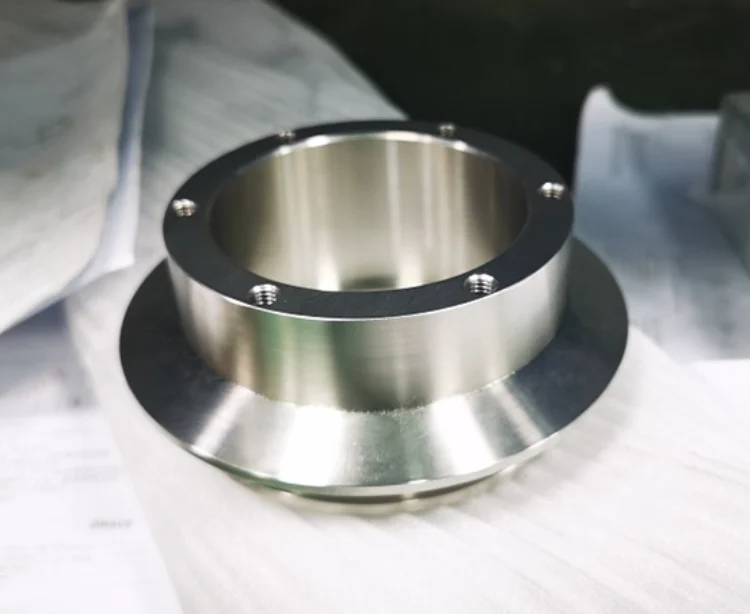
SS 316 Material Composition
The excellent performance of 316 stainless steel comes from its balanced alloy element proportions. Its typical chemical composition is as follows:
| Element | Content Range |
|---|---|
| Iron (Fe) | Main component |
| Chromium (Cr) | 16% – 18% |
| Nickel (Ni) | 10% – 14% |
| Molybdenum (Mo) | 2% – 3% |
| Carbon (C) | ≤0.08% |
| Manganese (Mn) | ≤2% |
| Silicon (Si) | ≤1% |
| Phosphorus (P) | ≤0.045% |
| Sulfur (S) | ≤0.03% |
Role of key alloy elements
Chromium (Cr) is the key element that forms corrosion resistance in stainless steel. It forms a stable chromium oxide protective film on the surface of the material.
Nickel (Ni) stabilizes the austenitic structure and improves the toughness and oxidation resistance of the material.
Molybdenum (Mo) is the key element that distinguishes 316 stainless steel from 304 stainless steel. It significantly improves the durability of the material in strong corrosive chemical environments and seawater (chloride environments).
Reason: molybdenum reacts with chromium to form a denser and more damage-resistant Cr-Mo composite oxide film, which acts like a bulletproof vest against chloride ions, making it difficult for chloride ions to penetrate and react with iron, preventing corrosion.Therefore, 316 stainless steel performs better in Pitting Corrosion and Crevice Corrosion.
Mechanical properties of 316 stainless steel
316 stainless steel has a good balance between strength and ductility, making it very suitable for manufacturing structural parts and mechanical components.
| Performance Index | Value |
|---|---|
| Tensile Strength | ≥515 MPa |
| Yield Strength | ≥205 MPa |
| Elongation | ≥40% |
| Hardness | ≤217 HB |
| Density | 8.0 g/cm³ |
Mechanical performance characteristics
High strength and high toughness, good impact resistance, still maintains good toughness in low-temperature environments, suitable for complex mechanical structural parts.
Therefore, 316 stainless steel is often used in the CNC precision machining industry to manufacture high-precision mechanical parts and corrosion-resistant equipment components.
What is the melting point of 316 stainless steel
The melting point range of 316 stainless steel is about 1370°C – 1400°C.
This high melting point allows it to maintain stable structural performance even in high-temperature environments, therefore it is often used in:
Heat exchangers, high-temperature industrial equipment, boiler components, and high-temperature resistant chemical equipment.
During industrial processing, the high melting point also means that 316 stainless steel has good heat resistance and thermal stability.
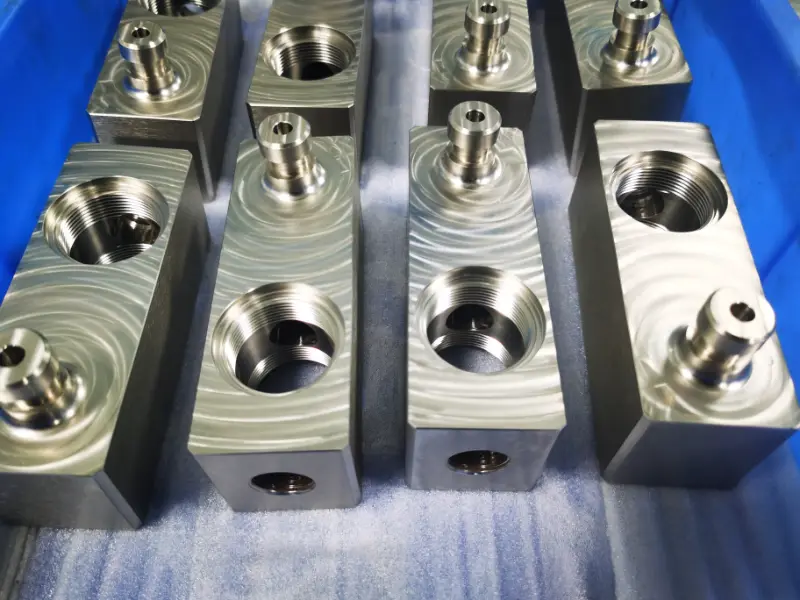
Thermal properties of 316 stainless steel
316SS has stable thermal properties and belongs to heat-resistant austenitic stainless steel. The short-term service temperature can reach 870–925°C, and long-term continuous operation is recommended to be controlled within 600–750°C. Its high-temperature oxidation resistance and creep resistance are better than 304, and it can still maintain good strength under high-temperature conditions.
Its thermal conductivity is relatively low and the coefficient of thermal expansion is relatively large. During welding and heat treatment, deformation control should be considered. It cannot be strengthened by quenching and is usually treated with solution annealing to restore corrosion resistance and toughness.
316 stainless steel performs stably in both high-temperature and low-temperature environments. Its main thermal performance parameters are as follows:
| Thermal Property Parameter | Value |
|---|---|
| Melting Point | 1370–1400°C |
| Thermal Conductivity | 16 W/m·K |
| Thermal Expansion Coefficient | 16 µm/m·°C |
| Specific Heat Capacity | 500 J/kg·K |
Thermal performance characteristics
Good high temperature resistance: 316 stainless steel can be used for long periods at relatively high temperatures.
Strong thermal stability: the material can maintain structural stability even under changing temperature environments.
Good low-temperature toughness: even in low-temperature environments, 316 stainless steel still maintains good mechanical properties and will not experience collapse or warping deformation.
Corrosion resistance of 316 stainless steel
Corrosion resistance is one of the most prominent advantages of 316 stainless steel.Due to the presence of molybdenum (Mo), 316 stainless steel performs well in the following environments:
1 Marine environment
When metal equipment works offshore, it is easily exposed to seawater, salt spray, and other chlorides. The molybdenum and chromium elements in 316SS react to form a denser and more durable Cr-Mo composite oxide film, which acts like a protective armor that prevents chloride ions from contacting iron, effectively improving corrosion resistance.
Therefore, it is widely used in ship equipment, offshore platforms, and seawater pipelines.
2 Chemical industry environment
316 stainless steel can withstand many chemical media, such as:Organic acids,Acetic acid,Phosphoric acid,Some sulfuric acid solutions.316 stainless steel has good resistance to acidic corrosion because the material contains high proportions of chromium (Cr), nickel (Ni), and molybdenum (Mo). When 316 stainless steel is exposed to air or oxygen environments, a dense and stable chromium oxide passive film (Cr₂O₃) forms on the surface.
This passive film effectively isolates acidic media from direct contact with iron, thereby reducing chemical reactions. When the surface is slightly damaged, the protective film can quickly regenerate in the presence of oxygen, giving it a self-healing capability.The passivation film formed by chromium + corrosion resistance enhanced by molybdenum + structural stability provided by nickel effectively improves the material’s resistance to common acidic solution environments.So 316 stainless steel is widely used in chemical equipment and food processing equipment. However, corrosion may still occur in concentrated sulfuric acid, hydrochloric acid (HCl), and high-temperature strong acid environments. In such cases, super austenitic stainless steels, Hastelloy alloys, or titanium alloys are recommended.
3 Food and medical industries
316 stainless steel forms a stable chemical protective film and has characteristics such as non-toxicity, easy cleaning, antibacterial properties, and acid corrosion resistance.Therefore, 316SS material components are often seen in food processing equipment, medical instruments, and pharmaceutical equipment, such as utensils, containers, reactors, and clamps.
Common material forms of 316 stainless steel
In industrial production and mechanical manufacturing, 316 stainless steel is usually supplied in multiple material forms to meet different manufacturing needs.
Common material forms include:
Stainless Steel Plates & Sheets
Plates are also called sheet materials, including thin sheets and medium-thick plates. Length, width, and thickness can be customized according to customer requirements.This SAE 316 stainless steel plate has excellent corrosion resistance and high-temperature resistance, strong overall stability, and performance consistent with bars. It also has good flatness and is easy to cut and weld.It is commonly used for equipment panels, chemical containers, ship structures, hardware accessories, sheet metal parts, or various stainless steel components, and the surface can be brushed or polished.
Round Bars
316 stainless steel bars usually appear as bright cylindrical straight rods with uniform cross-sections. Common diameters are generally 3mm–80mm, and lengths are usually 2m, 2.5m, 3m standard sizes.They have high strength, corrosion resistance, and good toughness, and are mainly used for shafts, pins, fasteners, mechanical parts, ship accessories, and food and medical equipment.They can undergo turning, milling, drilling, tapping, and other CNC machining processes. Surface treatments commonly include bright cold drawing, pickling, polishing, and brushing.
Pipes & Tubes
316 stainless steel pipes have excellent corrosion resistance, acid and alkali resistance, high temperature resistance, and strength.Common round pipe outer diameters range from Φ6mm–Φ108mm, wall thickness 0.8mm–5mm, and lengths usually 2m or 4m standard specifications. Square tubes and rectangular tubes also have corresponding standard sizes.They can be processed through cutting, bending, welding, threading, drilling, and stamping.Surface treatments include pickling, bright finish, brushing, polishing, and mirror finishing.They are mainly used in chemical pipelines, marine piping systems, food and medical equipment, building railings, fluid components, and mechanical structural components. In ordinary environments, 304 stainless steel pipes can be used as a substitute material.
Wire
316SS wire has a thin straight appearance with a smooth surface, and common diameters range from 0.5mm–10mm.It has good corrosion resistance, toughness, and high strength, and is not easy to rust. It is suitable for precision forming and welding.Processing methods include straightening, bending, coiling, turning, milling, drilling, and tapping.Surface treatments include bright cold drawing, pickling passivation, electrolytic polishing, mechanical polishing, and brushing. Some can be nickel-plated or sandblasted.It is mainly used for springs, wire mesh, fasteners, medical instruments, marine accessories, and electronic hardware parts.
Forgings and Castings
316SS forgings have dense structures and high strength, with regular shapes and relatively smooth surfaces. Castings have flexible shapes and relatively rough surfaces, and specifications range from small components to large structural parts.Forgings have excellent pressure resistance, corrosion resistance, and fatigue resistance, while castings are suitable for complex shapes.Processing methods include forging, casting, turning, milling, drilling, grinding, slotting, and tapping.Surface treatments include pickling passivation, polishing, brushing, and sandblasting.They are widely used in valves, flanges, pump bodies, ship accessories, chemical equipment, and high-strength mechanical structural components.
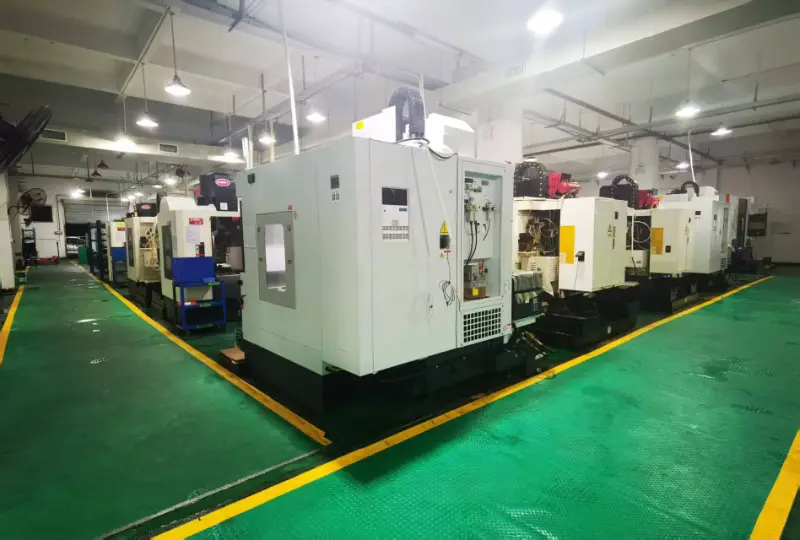
Application fields and product components of 316 stainless steel
Due to its excellent chemical characteristics, corrosion resistance, resistance to acids and salt corrosion, and excellent food safety, 316 stainless steel is widely used in many industrial fields.
Typical product components include:
Marine engineering: ship fasteners, marine bolts, marine railings, seawater pump components
Chemical equipment: chemical reactors, piping systems, valves, heat exchangers
Medical equipment: surgical instruments, medical implants, medical equipment structural parts
Food processing industry: food processing equipment, mixing equipment, storage tanks, conveying systems
CNC machining: precision mechanical parts, automation equipment parts, highly corrosion-resistant components
Difference between 316 stainless steel and 304 stainless steel
304 and 316 are the two most common austenitic stainless steels. 304 stainless steel belongs to 18-8 stainless steel (18-8 SS).316 adds 2%~3% molybdenum (Mo) on the basis of 304 and increases nickel content, which effectively prevents chloride ions from corroding the internal iron components. This is the key reason why its resistance to chloride corrosion is significantly better than 304.
Chemical composition comparison between 304 and 316 stainless steel (weight percentage, %)
| Element | 304 (06Cr19Ni10) | 316 (06Cr17Ni12Mo2) | Core Difference |
|---|---|---|---|
| Carbon (C) | ≤ 0.08 | ≤ 0.08 | Same |
| Silicon (Si) | ≤ 1.00 | ≤ 1.00 | Same |
| Manganese (Mn) | ≤ 2.00 | ≤ 2.00 | Same |
| Phosphorus (P) | ≤ 0.045 | ≤ 0.045 | Same |
| Sulfur (S) | ≤ 0.030 | ≤ 0.030 | Same |
| Chromium (Cr) | 18.0 ~ 20.0 | 16.0 ~ 18.0 | 316 slightly lower |
| Nickel (Ni) | 8.0 ~ 10.5 | 10.0 ~ 14.0 | 316 higher |
| Molybdenum (Mo) | 0 | 2.0 ~ 3.0 | Unique to 316 |
| Iron (Fe) | Balance | Balance | Matrix |
Similarities
Both belong to austenitic stainless steel, have good welding performance, good corrosion resistance, and are weakly magnetic or non-magnetic materials.
Differences
316 stainless steel performs significantly better than 304 in chloride environments, marine environments, and highly corrosive environments.
Differences between 18 8 vs 316 ss
18-8 stainless steel refers to a general category of austenitic stainless steel containing about 18% chromium and about 8% nickel.304 is the most standard and commonly used grade within 18-8, meaning 304 belongs to 18-8, but 18-8 is not limited to 304, and may also include 302, 303, and other similar stainless steel grades.316SS is a higher corrosion-resistant grade based on 304 with added molybdenum.18-8 stainless steel has good rust resistance, toughness, weldability, non-magnetism, moderate strength, stable thermal performance, good machinability, lower cost, and the widest range of applications.
316SS, due to the presence of molybdenum, has far superior resistance to chloride ions, acids, alkalis, high temperatures, and creep resistance compared to 18-8 stainless steel. Mechanical and thermal properties are similar but overall better.However, the cost is significantly higher.18-8 is widely used in indoor environments, general corrosion protection, food applications, decorative components, and general structural parts, while 316SS is more suitable for marine, shipbuilding, chemical, medical, and seawater environments.
316 vs 316L ss
The main difference between 316 and 316L is the carbon content.316L is the low-carbon version, with lower carbon content. After welding it is less likely to produce intergranular corrosion, and it has better corrosion resistance and toughness. It is suitable for welded parts, chemical equipment, and medical equipment that require high corrosion resistance.Standard 316 has slightly higher carbon content, slightly higher strength, slightly lower cost, and stable machining performance. It is suitable for structural parts and mechanical components that do not require complex welding and require higher strength.Overall, 316L has stronger versatility and durability, while 316 has slight advantages in cost and strength.
416 ss vs 316 ss
316 and 416SS belong to completely different types of stainless steel.
316 is austenitic stainless steel, containing molybdenum, with very strong corrosion resistance, non-magnetic properties, and good welding performance, but its machinability is average.416 is free-machining martensitic stainless steel, containing sulfur, with excellent turning performance, can be hardened by heat treatment, and has a lower price.However, its corrosion resistance is much lower than 316, and it is magnetic and has poor welding performance.316 is superior in acid resistance, seawater resistance, high-temperature resistance, hygiene, and environmental friendliness, making it suitable for marine, chemical, medical, and food industries.416 is superior in easy machining, high efficiency, and heat-treat strengthening, making it suitable for shafts, pins, fasteners, and structural components requiring high precision but used in mild environments.

316 SS Grades by Country and Standard
To clearly understand how 316 stainless steel is designated in different countries and regions, the following table combines the common standards and corresponding grades used worldwide. This helps engineers, manufacturers, and buyers quickly identify equivalent materials in international trade, material selection, and engineering drawings.
| Country / Region | Standard System | 316 Stainless Steel Grade |
|---|---|---|
| United States | ASTM / AISI / UNS | 316, S31600 |
| Europe (including Germany) | EN / DIN / ISO | 1.4401, X5CrNiMo17-12-2 |
| China | GB | 06Cr17Ni12Mo2 |
| Japan | JIS | SUS316 |
| South Korea | KS | STS316 |
| United Kingdom | BS / EN | 316S31, 1.4401 |
| Canada | CSA / ASTM | 316, S31600 |
| Australia | AS / ASTM | 316, AS 1449 316 |
| Mexico | NMX / ASTM | 316, S31600 |
Recycling cost of 316 stainless steel
Currently in the United States, the recycling scrap price is approximately 0.8–1 USD per pound.316 stainless steel has a higher metal recycling value than 304 mainly because it contains higher-value alloy elements:Nickel,Molybdenum.
In the metal recycling market, the main factors affecting recycling price include:Nickel market price,Molybdenum market price,Material purity,Market demandTherefore, 316 stainless steel not only has high value in manufacturing but also has high economic value in the metal recycling industry.
Advantages and limitations of using 316 stainless steel
Advantages
The advantages of 316 stainless steel are very prominent. Due to the addition of molybdenum, it has excellent resistance to chloride corrosion, acid and alkali resistance, and high temperature resistance, far better than 304 stainless steel.At the same time, it has high strength, good toughness, stable welding and machining performance, non-magnetic properties, hygiene, and environmental friendliness.It performs reliably in marine, chemical, medical, and food industries, with long service life and low maintenance costs.
Limitations
However, it also has certain limitations:The price is higher than 304 and the raw material cost is higher.Its thermal conductivity is relatively low and the coefficient of thermal expansion is relatively large, making deformation more likely during welding and high-temperature processing.It cannot be strengthened by quenching and can only rely on solution treatment to improve performance.In ultra-high strength, strong corrosion, or ultra-high temperature extreme conditions, special processes or higher-grade alloys such as 2205 duplex steel, 317L, 904L, or Hastelloy may be required.
Summary
With the development of industrial manufacturing, marine engineering, and high-end equipment industries, 316 stainless steel will continue to maintain broad application demand in the future.For engineering projects requiring high corrosion resistance, high strength, and long-term stability, 316 stainless steel is undoubtedly a very ideal material choice.if you want get more details or 316 ss machining quote,you can contact with us.