Custom CNC Machining FR4 Services
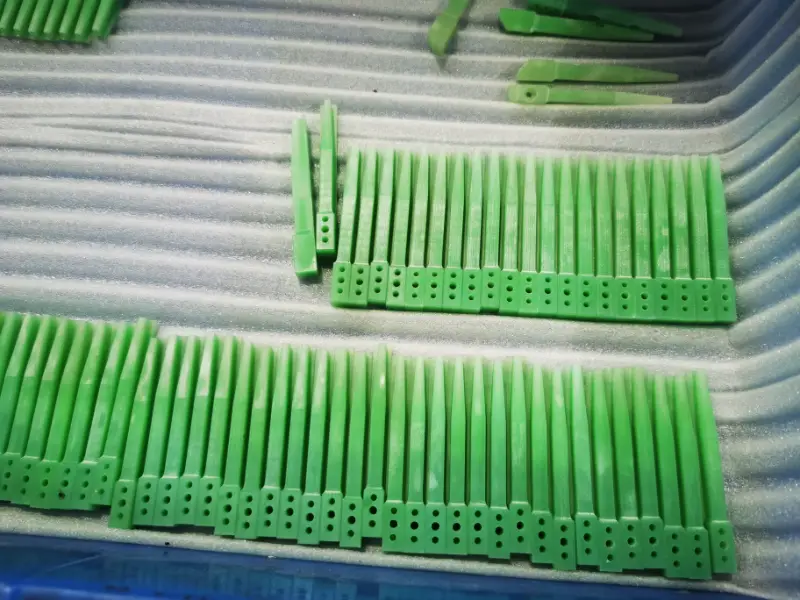
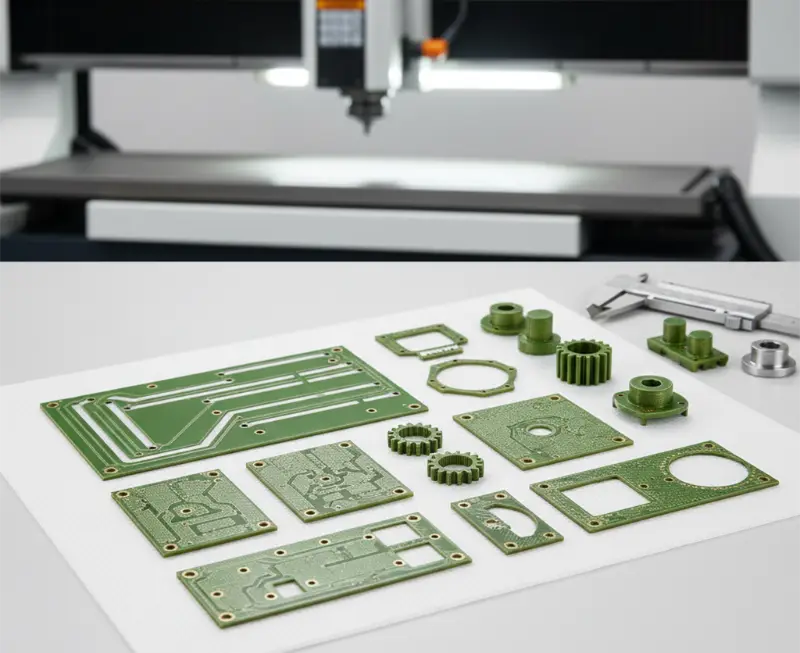
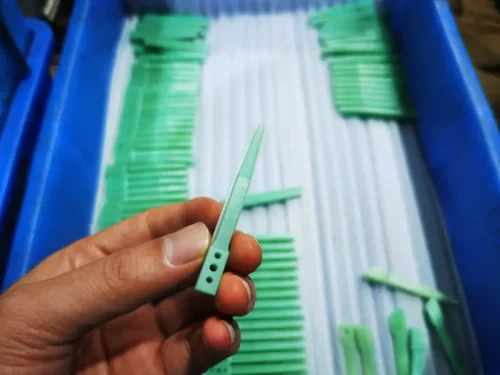
Weldo machines FR4 laminate into electrical insulation plates, PCB fixtures, spacers, bushings and structural components for prototypes and production.
*Tolerance depends on thickness, geometry, hole pattern, laminate quality and inspection conditions.

What Is FR4 Laminate?
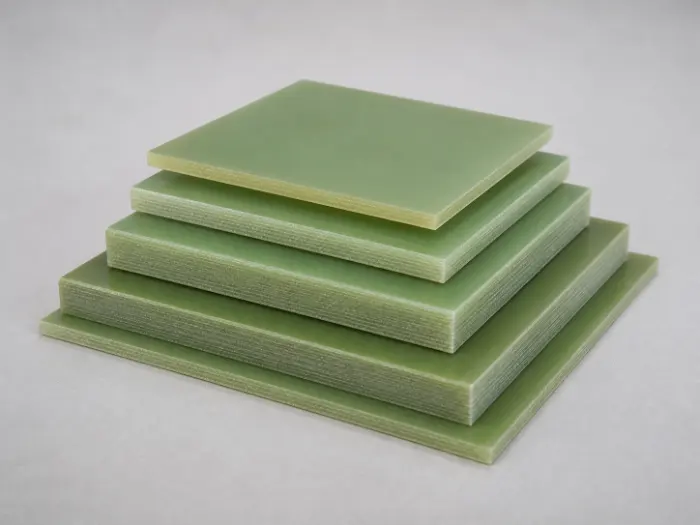
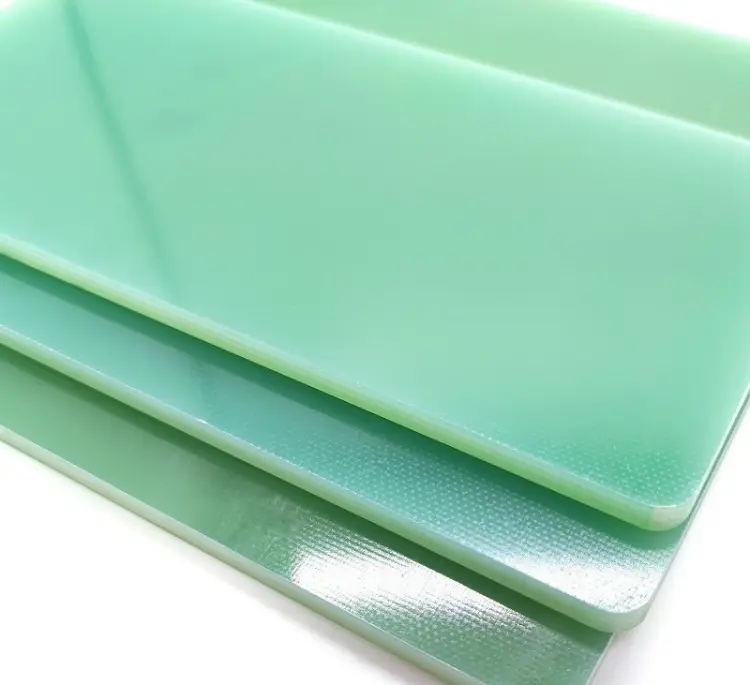
FR4 is a NEMA grade designation for woven-glass-reinforced epoxy laminate. It combines electrical insulation with mechanical strength and is commonly supplied as sheet or plate for machined components and PCB-related tooling.
Electrical Insulation
Supports insulating plates, spacers, fixtures and high-voltage assemblies.
Mechanical Support
Glass reinforcement provides useful stiffness and strength for structural panels.
Moisture Resistance
Epoxy-glass construction offers relatively low moisture uptake for many electrical uses.
Grade-Dependent Performance
Dielectric, thermal, flame and chemical properties vary by supplier and grade.
“FR-4” is a laminate grade—not “Flame Retardant Type 4.” Confirm UL, Tg and dielectric requirements from the selected material datasheet.
FR4 Types for CNC Machining
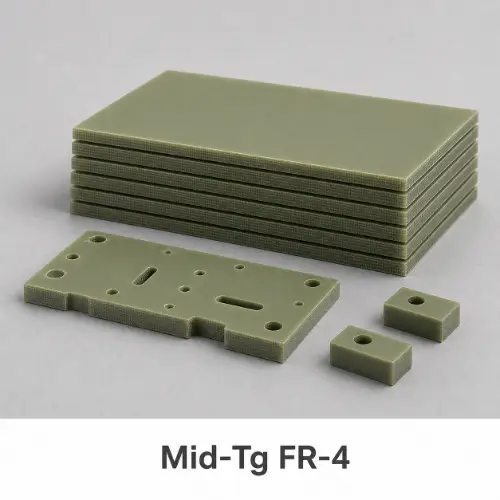
Select the laminate grade by temperature, voltage, signal and compliance requirements.
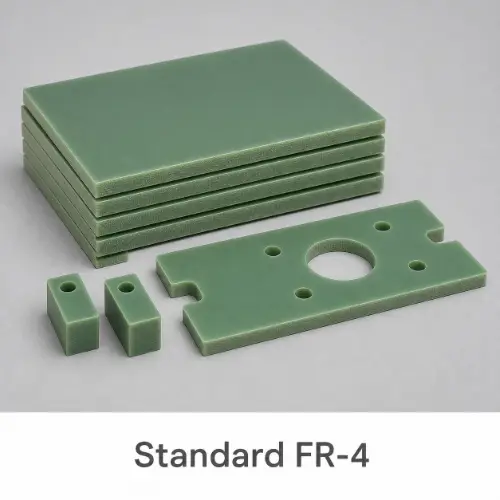
Standard FR4
Balanced insulation, strength and cost for general parts.
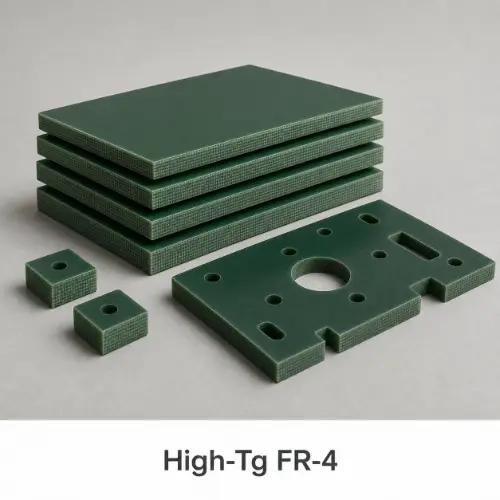
High-Tg FR4
Improved heat resistance and dimensional stability.
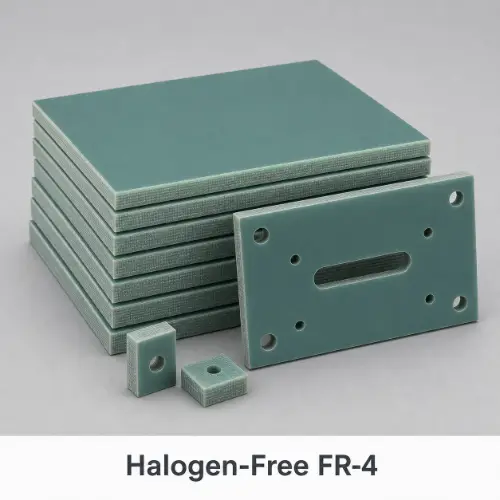
Halogen-Free FR4
For projects with restricted-halogen requirements.
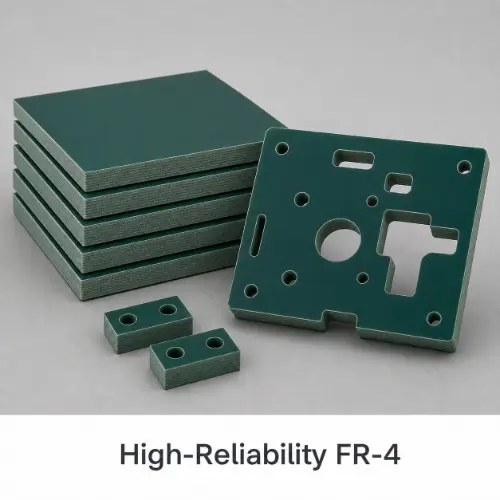
High-CTI FR4
Better tracking resistance for high-voltage assemblies.
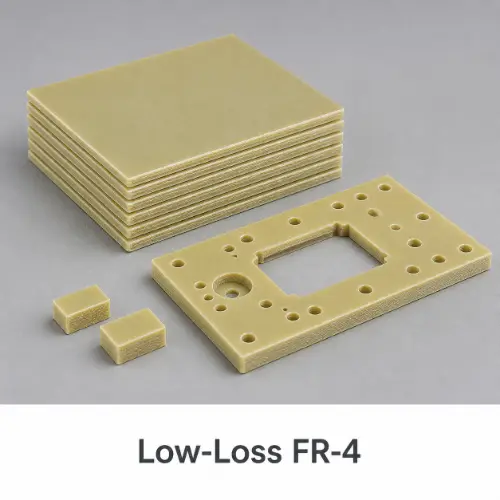
Low-Loss FR4
Lower Dk and Df for high-frequency signal applications.
CAF-Resistant FR4
Improved insulation reliability in humid, high-voltage use.
Confirm Tg, CTI, UL rating, dielectric data and thickness from the selected supplier’s datasheet.
FR4 CNC Machining Capabilities
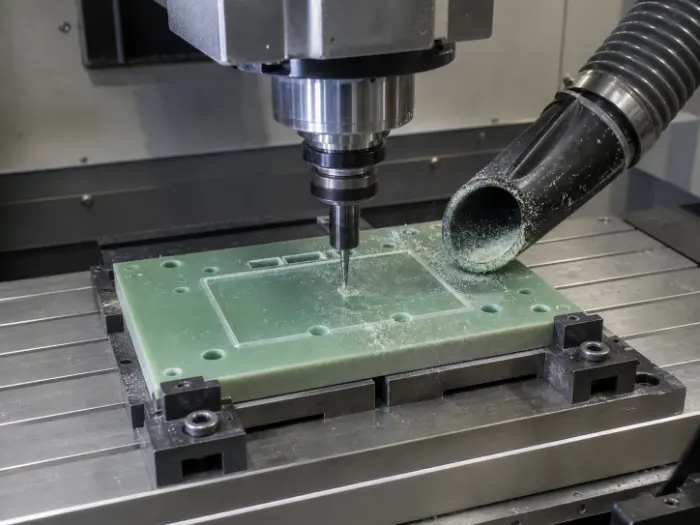
Tooling, feeds, support and dust extraction are selected to control edge fray, fiber pull-out, delamination and abrasive tool wear.
CNC Milling
Profiles, slots, pockets and multi-level insulation plates.
CNC Turning
Cylindrical spacers, sleeves, rings and bushings.
CNC Grinding
Thickness, flatness and controlled surface refinement.
Drilling and Routing
Hole patterns, contours and panel cut-outs with supported edges.

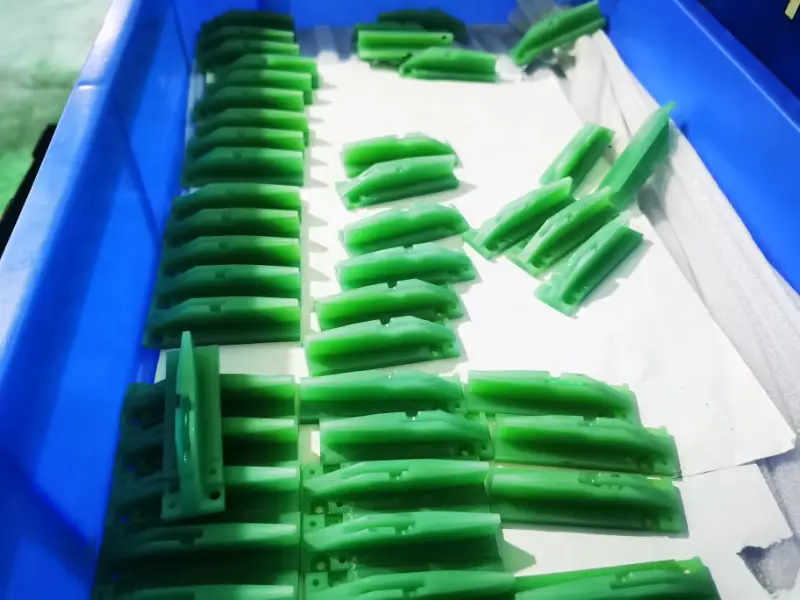
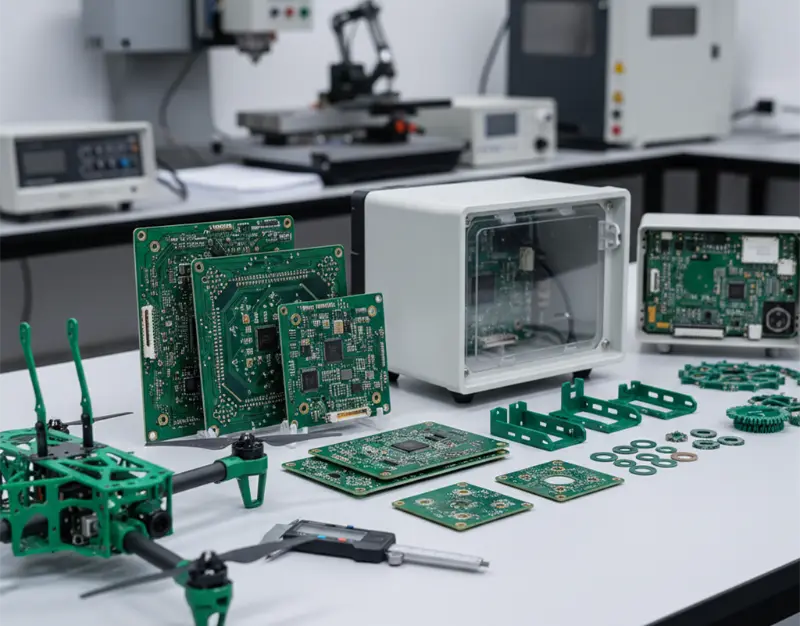
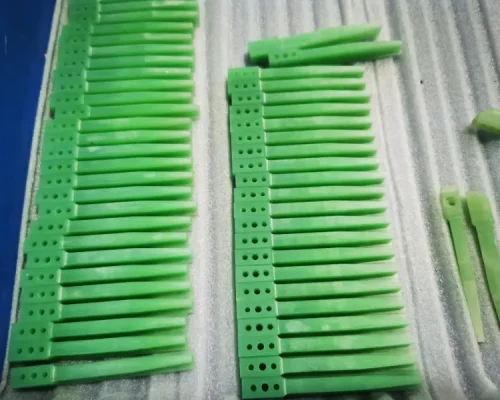
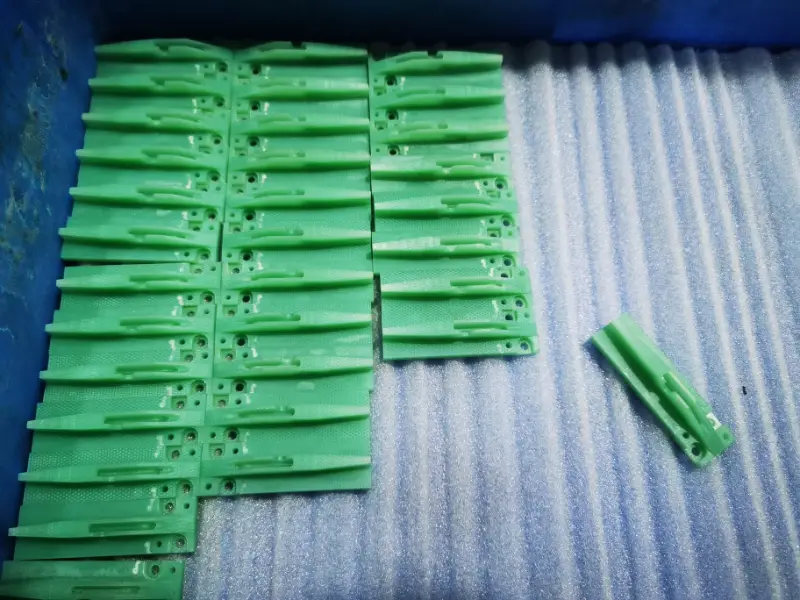
Common CNC-Machined FR4 Components
FR4 parts are selected where electrical insulation and structural support are required in the same component.


Surface Finishes for Machined FR4
Finishing focuses on clean edges, safe handling, identification and environmental protection.
Deburring and Sanding
Removes sharp edges, loose fibers and machining burrs.
Precision Grinding
Supports flatness, thickness and controlled mating surfaces.
Insulating Coating
Selected epoxy or conformal coatings can improve moisture protection.
Marking and Bonding
Laser marking, labels, tape or rubber pads support identification and assembly.
FR4 is not anodized like aluminum. Coating, blasting and tumbling suitability must be confirmed against geometry and laminate construction.
Why Work With Weldo for FR4?
FR4 projects are reviewed for laminate grade, fiber direction, tooling access, edge quality, tolerance and inspection requirements before machining.
60+ Machines
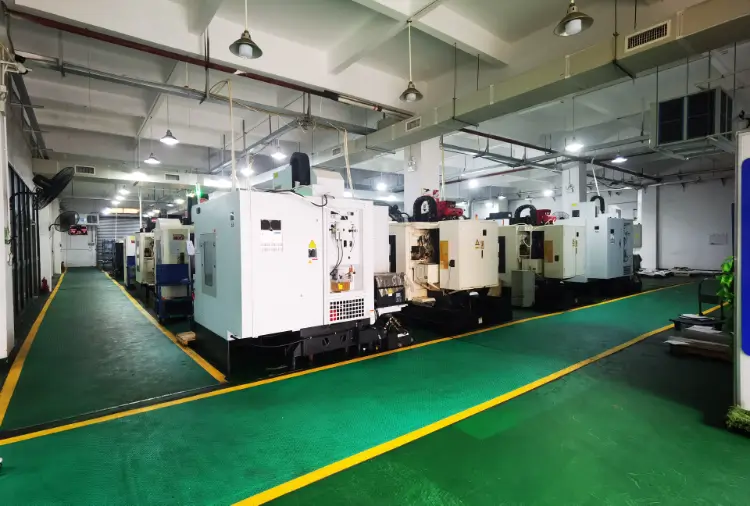
Multi-axis CNC, turning, grinding and supporting processes for prototype-to-batch work.
DFM Support
Hole spacing, internal radii, wall sections and delamination risks are reviewed.
Inspection Capability
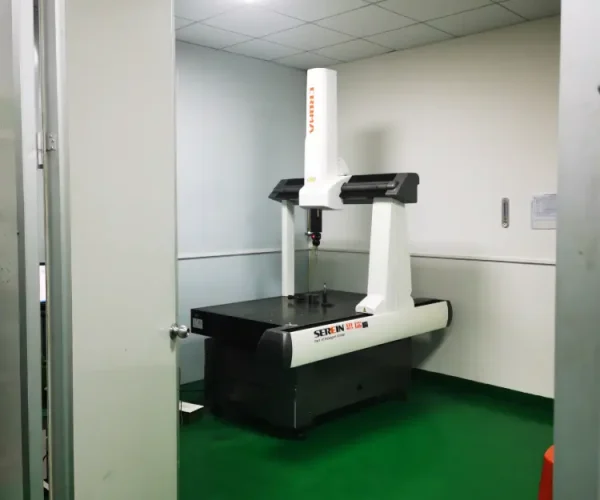
CMM and dimensional tools support controlled inspection; 0.001 mm refers to equipment resolution.
Published Lead Times
Samples from 1 day and production from 3–15 days, subject to project review.


Frequently Asked Questions
Concise guidance on accuracy, tool wear, insulation, flame rating and alternative laminate materials.
Is FR4 suitable for precision CNC machining?
Yes. With abrasion-resistant tooling, supported edges, controlled feeds and effective dust extraction, FR4 can achieve clean features and stable dimensions.
Does machining FR4 cause excessive tool wear?
FR4 is abrasive because of its glass reinforcement. Tool material, geometry, cutting parameters and inspection intervals must account for wear.
Can FR4 be used for high-voltage insulation parts?
Often yes, but voltage, creepage, clearance, thickness, dielectric properties and certification must be validated for the specific grade and assembly.
Is every FR4 sheet UL94 V-0 certified?
No. Flame performance and certification depend on the exact manufacturer, grade and thickness. Request the relevant datasheet and certification.
What is the difference between FR4 and G10?
Both are glass-epoxy laminates, but FR4 grades include flame-retardant requirements. Confirm the exact NEMA grade and supplier specification.
How does FR4 compare with phenolic laminate?
FR4 generally offers stronger electrical and mechanical performance, while phenolic grades may be selected for cost, machinability or application-specific behavior.
References: G10 and phenolic resin.
Send Your Drawing for DFM Review
Upload the model and drawing with laminate grade, thickness, quantity, critical tolerances, flame or dielectric requirements and required documentation.
Upload FR4 CAD Files