Injection Molding Services
From mold development to repeat production, Weldo supports custom injection-molded plastic parts with material selection, tooling, molding and inspection coordinated around your drawing.
*Capability depends on resin, geometry, shrinkage, wall thickness, mold design and inspection method.
How Injection Molding Works
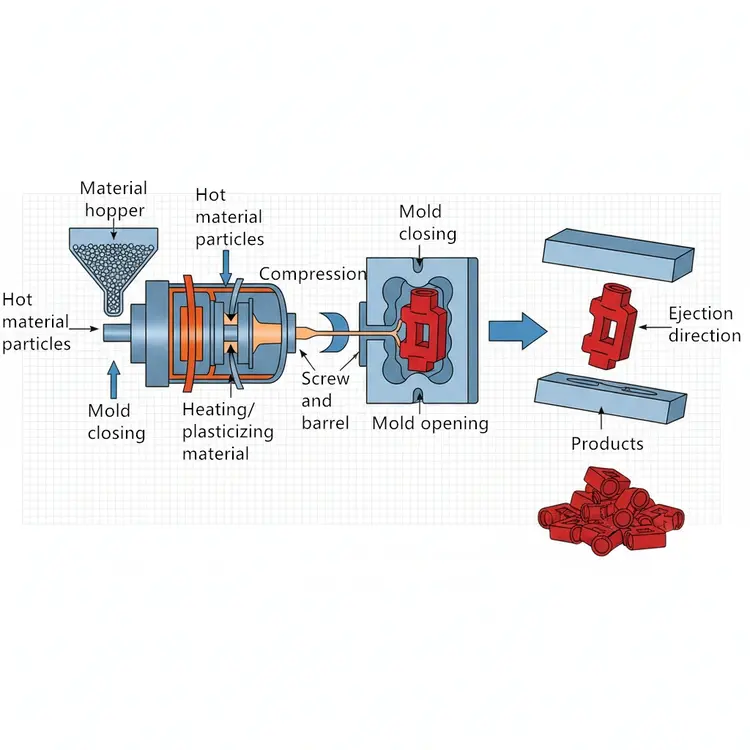
Plastic resin is melted, injected into a closed mold, cooled and ejected. The mold controls part geometry, texture and repeatability, while process settings control filling, packing and cooling.
Tooling Review
Confirm resin, shrinkage, draft, gates, parting lines, ejectors and cooling.
Resin Preparation
Dry and condition the selected resin, colorant and reinforcement as required.
Inject and Cool
Control temperature, pressure, holding time and cooling for stable filling.
Eject and Inspect
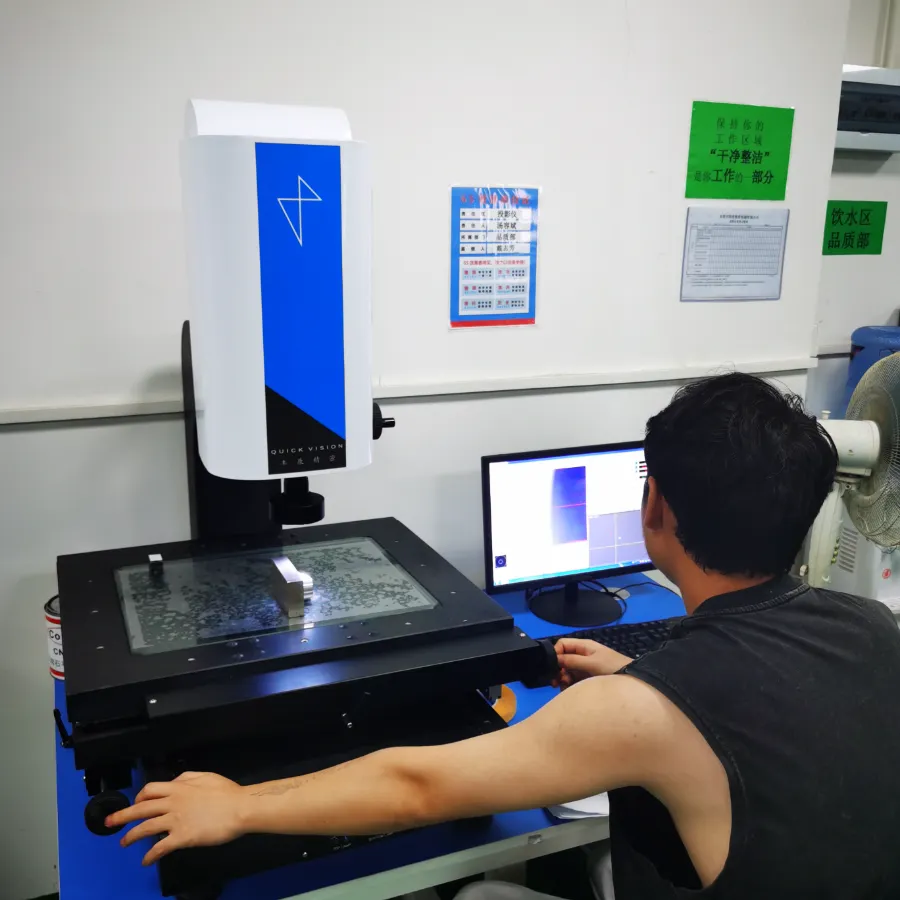
Trim, inspect and finish the molded parts before packing or assembly.
Common Materials for Injection Molding Service
Select resin by strength, impact, heat, chemicals, friction, color, flame rating and regulatory requirements—not by price alone.
ABS
Impact-resistant housings, covers, ducts and consumer parts.
PC
Strong, transparent or flame-retardant parts requiring impact resistance.
PA / Nylon
Wear-resistant gears, clips, bearings and reinforced structural parts.
PE
Chemical-resistant containers and low-friction molded components.
PEEK
High-temperature aerospace, medical and industrial components.
PP
Lightweight living hinges, containers, connectors and repeat-bend parts.
Mold and insert materials: aluminum and tool steel are commonly used for mold tooling; stainless steel and other metals may be used as molded-in inserts. These are not listed as plastic molding resins.
Injection Molding Capabilities
These figures reflect the range stated on the original page. Final capability must be confirmed after DFM, mold-flow and resin review.
| Positioning accuracy | About ±0.01 mm |
| Repeat positioning | Up to ≤0.005 mm |
| Injection amount | 50–5000 g |
| Mold stroke | 500–1200 mm |
| Mold size | 400–1800 mm |
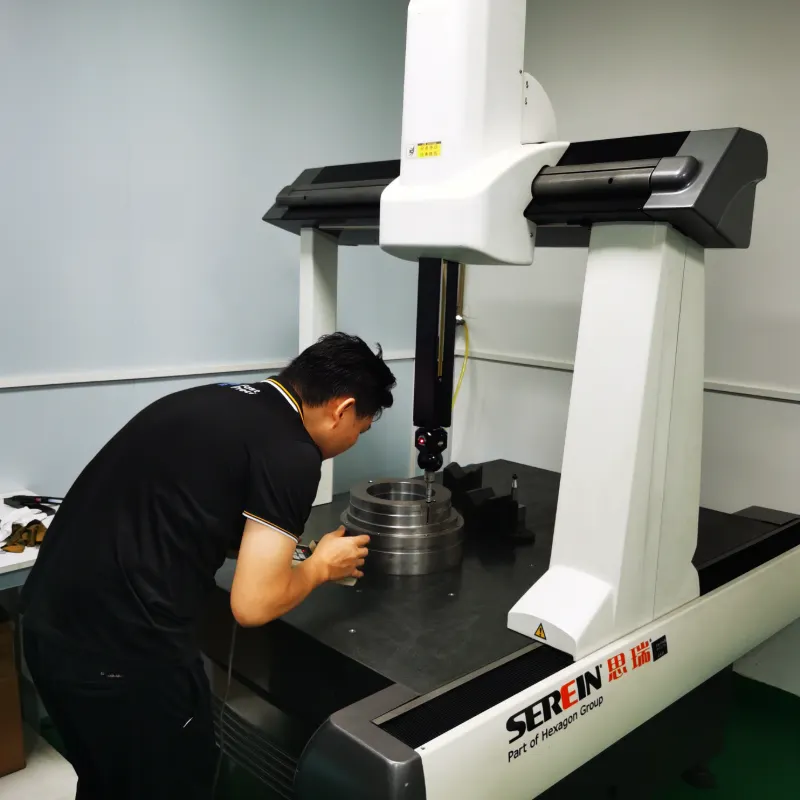
| Part tolerance | About ±0.05 mm general; precision features reviewed to ±0.01 mm |
| Minimum wall reference | About 0.3 mm for PC; 0.5 mm for ABS |
| Mold surface reference | Mirror polish up to Ra 0.02 μm; texture resolution about 50 μm |
Tooling Options
Prototype aluminum molds and durable steel molds selected by quantity and resin.
Insert Molding
Metal inserts can be positioned and encapsulated during molding.
Color and Texture
Color matching, polished surfaces and molded textures are available.
Secondary Work
Machining, printing, coating, assembly and inspection can follow molding.
Injection Molding Design Guide
Good molded-part design balances filling, cooling, ejection and appearance before tooling is released.
Uniform Wall
Keep walls as consistent as possible to reduce sink, warpage and uneven cooling.
Draft Angles
Add suitable draft to vertical faces, especially on textured surfaces.
Ribs and Bosses
Use balanced ribs and supported bosses instead of unnecessarily thick sections.
Radii and Corners
Use smooth transitions to improve flow and reduce stress concentration.
Gate Location
Place gates to support balanced filling and limit visible marks or weld lines.
Material Shrinkage
Size the mold around the selected resin, filler content and expected shrinkage.
Injection-Molded Part Applications
Injection molding suits repeat production of detailed plastic parts across regulated, structural and cosmetic applications.

Automotive
Dashboard frames, battery housings, ducts and reinforced structural parts.
Medical Devices
Instrument housings, handles and controlled-material plastic components.
Consumer Electronics
Enclosures, frames, buttons, connectors and wearable-device parts.
Aerospace
Lightweight cabin parts and high-temperature PEEK components.
Why Choose Injection Molding
Injection molding combines repeatable geometry, broad resin choice and efficient production when tooling and process control are matched to the project.
Repeatable Output
Controlled tooling and process parameters support consistent production batches.
Integrated Features
Ribs, bosses, clips, textures and inserts can reduce later assembly.
Material Choice
Commodity and engineering resins support different mechanical environments.
Scalable Cost
Unit economics improve as tooling is distributed across repeat quantities.


Frequently Asked Questions
Concise guidance on resin selection, tolerances, tooling, defects and quote preparation.
What information is needed for an injection molding quote?
Send the 3D model, 2D drawing, resin, color, finish, quantity, annual demand and critical quality requirements.
Which plastic is best for injection molding?
There is no universal best resin. Select by strength, impact, heat, chemicals, friction, appearance, compliance and cost.
How tight can injection molding tolerances be?
About ±0.05 mm is a useful general reference; tighter features may reach ±0.01 mm after drawing, resin and tooling review.
Can you support inserts and secondary operations?
Yes. Projects may include insert molding, machining, printing, coating, assembly and dimensional inspection.
What causes warpage and sink marks?
Uneven walls, cooling and packing are common causes. DFM and mold-flow review help reduce these risks before tooling.
When is injection molding cost-effective?
It is generally strongest for repeat production where mold cost can be distributed across sufficient part quantities.
Start Your Injection Molding Project
Upload the CAD files and tell us the resin, quantity, finish and critical dimensions. We will review the part for tooling and production.
Upload Your Design Files