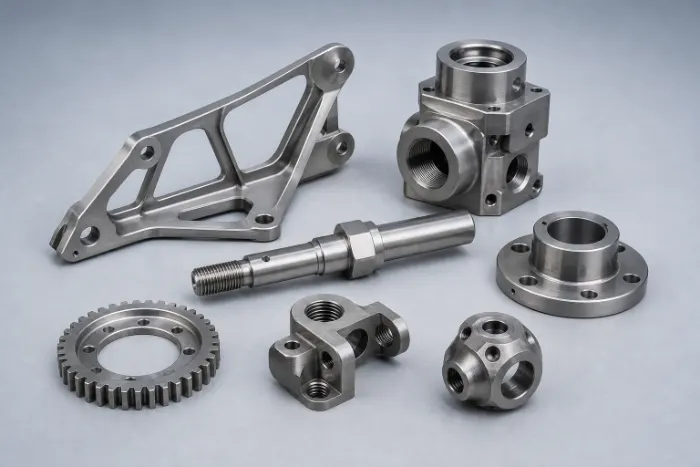
Titanium CNC machining

titanium cnc machining


We offer high-precision CNC machining services for titanium alloys down to 0.001 inch, specializing in the manufacturing of complex parts for the aerospace, medical, and 3C industries. Inquire now for a customized quote and experience end-to-end process optimization and surface treatment solutions.

cnc machining titanium part

What is Titanium cnc machining ?

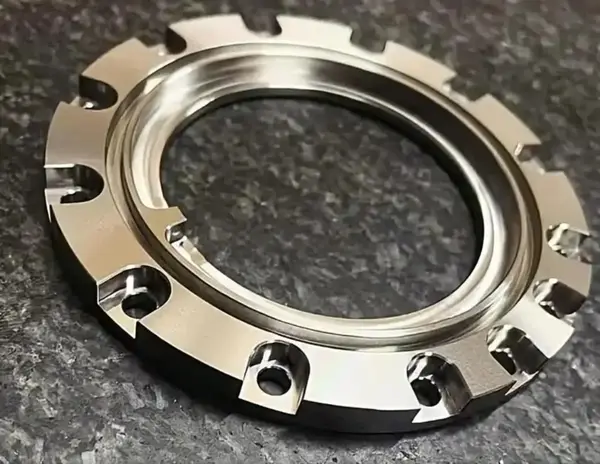
This technology utilizes programmed machine tools to perform high-precision cutting, milling, drilling, and tapping processes on titanium alloy materials, enabling the manufacture of complex structural parts. Due to its high strength, low thermal conductivity, and chemical reactivity, titanium alloys are difficult to machine. However, by selecting end mills and optimizing toolpaths, cutting parameters, and cooling systems, efficient and precise manufacturing can be achieved.

Alpha-type titanium alloys
Features: Excellent high-temperature stability (long-term operation at 500℃), strong oxidation resistance, cannot be heat-treated for strengthening, relatively low strength at room temperature. Primarily used in high-temperature aerospace components and corrosion-resistant chemical equipment.

β-type titanium alloys
Features: Excellent cold-deformation plasticity, can be heat-treated for strengthening, but poor thermal stability (<300℃). Primarily used in springs and high-strength fasteners.

α+β duplex titanium alloys
Features: Possesses both high-temperature and room-temperature strength, balanced plasticity and toughness, can be heat-treated for strengthening. Primarily used in aero-engine blades and orthopedic implants (such as TC4 alloy).

Surface finish for cnc machined titanium parts

Based on over 15 years of CNC machining experience, we have compiled the following list of surface finish processes used for various precision-machined parts made from titanium material.

as machined finish

Machined finish

The prototype processed by the machine tool retains traces of tool machining.

anodizing finish

Anodizing

Anodizing enhances the corrosion and wear resistance of metals and enables coloring and coating, suitable for metals such as aluminum, magnesium, and titanium.

polishing finish

Polish

Polishing enhances surface finish and aesthetic appeal, suitable for materials such as metals, ceramics, plastics, and PMMA.

Sand Blasting finish

Sand blasting

Sandblasting involves propelling abrasive material at high pressure or mechanically onto a workpiece to achieve a clean, roughened, and matte finish.


brushed finish

Brushed finish

Brushed finish creates a textured pattern on metal surfaces, enhancing aesthetic appeal. Suitable for aluminum, copper, stainless steel, and other materials.

powder coating finish

Powder coating

Powder coating is applied to the workpiece surface via electrostatic adhesion, then cured at high temperatures to form a dense coating, enhancing the corrosion resistance of metal and plastic surfaces.

electropolish finish

Electroplating finish

Metal plating is deposited onto material surfaces through electrolytic processes to enhance corrosion resistance and wear resistance. This technique is suitable for metals and certain plastics.

black oxidize finish

Black oxidize

A black oxide coating is formed on metal surfaces through chemical oxidation, offering low cost, a simple process, and reduced light reflection.

electropolish finish

Electropolish

Removes microscopic protrusions from metal surfaces through electrochemical anodic dissolution, creating a smooth, dense surface free of residual stress and highly corrosion-resistant. Capable of processing complex metals and conductive materials.

Alodine finish

Alodine

Forms a protective coating on surfaces through chemical conversion, enhancing corrosion resistance and adhesion. Environmentally friendly with excellent conductivity, suitable for aluminum and magnesium alloys.

heat treatment finish

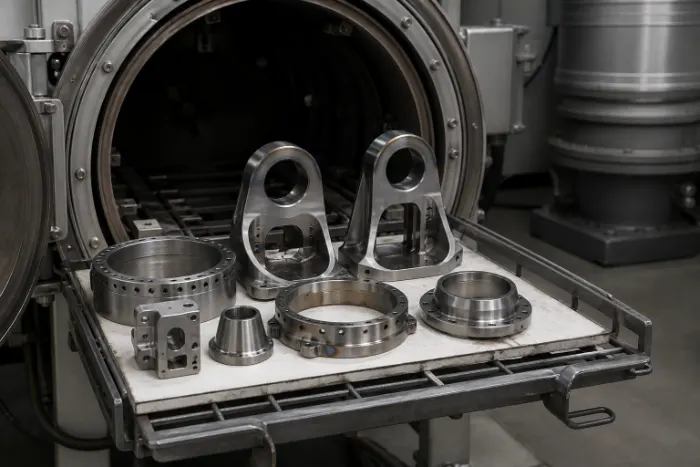
Heat treatment

By altering the internal microstructure of metallic materials through heating, this process enhances hardness, strength, toughness, and wear resistance. It is suitable for metals such as steel, aluminum alloys, copper alloys, and titanium alloys.

Titanium cnc machining processing capacity

Maximum machining length: 5m
Minimum machining diameter: 0.5mm
Dimensional tolerance: ±0.005mm~±0.02mm
Flatness/Roundness: ≤0.01mm
Positioning/Perpendicularity: ≤0.008mm
Mirror finish: Ra<0.4μm
General finish: Ra0.8-1.6μm
Delivery time: 1-3 days

titanium cnc machining Processing capacity

Advantage of cnc machining titanium part

High Precision
Achieves tolerance control down to 0.001mm, meeting the stringent requirements of aerospace and medical fields.

Efficient Machining of Complex Structures
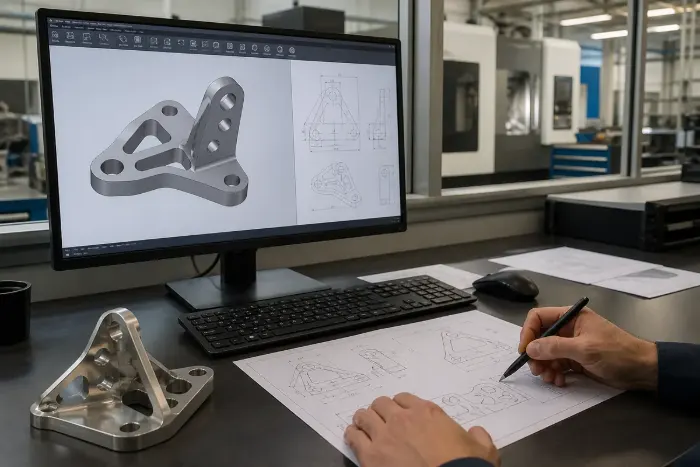
5 axis linkage technology enables the simultaneous machining of complex geometries, reducing the number of setups and error accumulation.

Excellent Surface Quality
Directly produces mirror-like surfaces (Ra<0.4μm), reducing post-processing steps.

High Material Utilization
Combined with MIM (Metal Injection Molding) or 3D printing pre-forming, CNC precision finishing significantly reduces material waste.

cnc titanium machining parts

Application of cnc machining titanium part

Aerospace: Manufacturing engine blades and airframe structural components, utilizing their lightweight and high-temperature resistance.

Medical Devices: Artificial joints and dental implants, relying on biocompatibility and corrosion resistance.

Automotive Industry: High-performance engine parts and exhaust systems, improving durability and lightweighting.

3C Consumer Electronics: Mobile phone frames and laptop casings, meeting the requirements for thinness and strength.

FAQ of titanium cnc machining 

What are the main challenges of CNC machining of titanium alloys?
Titanium alloys have low thermal conductivity, leading to high temperatures in the cutting zone and accelerating tool wear; their high chemical reactivity readily reacts with tool coatings, causing tool sticking; and their low elastic modulus easily leads to work hardening, increasing the difficulty of subsequent cutting.

How to choose a suitable tool material?
Prioritize carbide tools (such as YG6 and YG8), as their wear resistance is 3-5 times higher than high-speed steel; ceramic tools are recommended for high-volume machining, while high-speed steel can be used for small batches; choose TiCN or TiAlN coatings to reduce tool sticking and oxidation.

How to control machining temperature?
Use high-pressure coolant (10-20MPa) directly sprayed into the cutting zone, or use liquid nitrogen (-180℃) for cryogenic cutting; use internal coolant shanks with a central water outlet system to remove chips and heat in real time.

How to improve the overall efficiency of CNC machining of titanium alloys?
Process optimization: Use high-speed cutting (Vc=60-120m/min) combined with small depth of cut (ap=0.1-0.3mm) to shorten the machining time per piece.
Tool Management: Use indexable inserts to reduce tool changes, and integrate with a tool wear monitoring system for early warning and replacement.
Automation Integration: Introduce robotic loading/unloading and online inspection equipment to achieve 24-hour continuous production and reduce manual intervention.
CAM Software Assistance: Utilize five-axis simultaneous programming software (such as HyperMILL) to automatically generate optimal toolpaths, reducing trial cuts.

How to control deformation in titanium alloy machining?
Process Optimization: Employ a strategy of small depth of cut (≤0.3mm) and high feed rate (0.05-0.1mm/tooth) to reduce the impact of cutting forces on the workpiece.
Clamping Design: Use hydraulic clamps or vacuum chucks to distribute clamping forces and avoid localized stress concentration that could lead to deformation.
Machining Sequence: Roughing removes most of the excess material, followed by semi-finishing to release stress, and finally finishing to ensure dimensional accuracy.
Cryogenic Treatment: Perform deep cryogenic treatment at -80℃ on the workpiece before machining to stabilize the material structure and reduce deformation during subsequent machining.