PET and PETG are both thermoplastic polyesters, but they are not interchangeable materials. PET is a broad material family that includes bottle-grade, film-grade, fiber-grade, and engineering-grade products. In the machining industry, PET-P or PETP usually refers to semi-crystalline engineering-grade PET. PETG, by comparison, is a modified amorphous copolyester known for its transparency, toughness, and thermoformability.
For CNC machining, PET-P is typically selected for rigidity, wear resistance, creep resistance, and dimensional stability, making it suitable for precision structural parts, gears, bushings, and guide components. PETG is more commonly used for transparent covers, viewing windows, panels, and lightly loaded protective components. This article compares their chemical structure, mechanical properties, physical and thermal performance, electrical properties, chemical resistance, CNC machinability, and material selection criteria.
What Are PET and PETG?
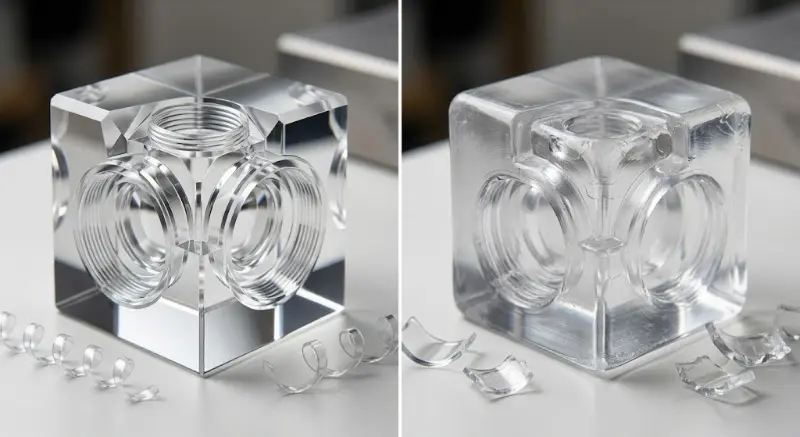
PET and PETG belong to the same thermoplastic polyester family, but their structures and performance priorities differ. PET is the base material family, PET-P is a commonly used name for semi-crystalline engineering-grade PET, and PETG is a copolymer-modified form of PET.
What Is PET?
PET stands for Polyethylene Terephthalate. It is typically produced through the polycondensation of terephthalic acid and ethylene glycol. Depending on its crystallinity, grade, and processing method, PET can be used for bottles, films, fibers, and engineering components. As a result, different PET products may vary significantly in transparency, rigidity, heat resistance, and mechanical performance.
In this article, PET mainly refers to engineering-grade PET used for sheets, rods, and CNC-machined components rather than conventional bottle-grade or film-grade PET. Engineering PET typically provides high rigidity, low moisture absorption, and good dimensional stability, making it suitable for parts that require precise fits or long-term load-bearing performance.
What Is PET-P?
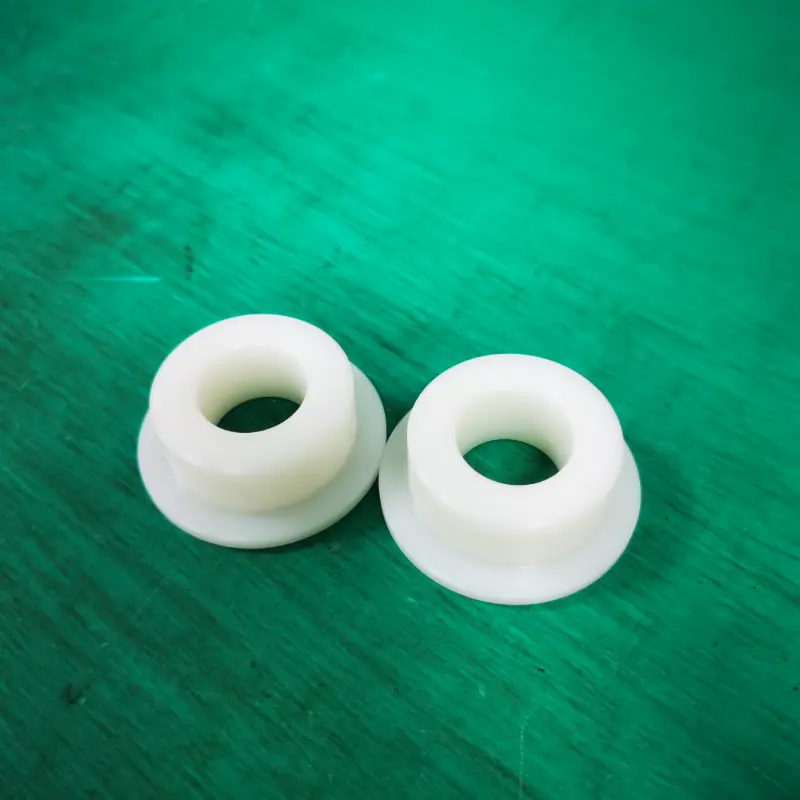
PET-P, also written as PETP, generally refers to a semi-crystalline engineering-grade form of PET. It is not a separate polymer, but a type of PET developed for improved mechanical strength, dimensional stability, wear resistance, and machinability. It is commonly supplied as sheets, rods, and tubes.
PET-P is frequently machined into gears, bushings, rollers, guide components, electrical insulators, and precision structural parts. For this reason, the mechanical and machining properties of PET discussed in this article mainly refer to PET-P.
What Is PETG?
PETG stands for Polyethylene Terephthalate Glycol-modified. It is produced by introducing comonomers such as CHDM into the PET polymer system, reducing the tendency of the material to crystallize and allowing it to remain primarily amorphous.
This structure gives PETG high transparency, good toughness, and a broad processing window. It is commonly used for transparent guards, viewing windows, panels, and housings. PETG can also be CNC milled, drilled, cut, and turned, although its relatively soft surface makes it more sensitive to cutting heat, scratches, and clamping pressure.
PET vs PETG at a Glance
The following table highlights the eight factors most relevant to CNC machining and material selection.
| Comparison Factor | PET / PET-P | PETG |
|---|---|---|
| Rigidity | High; suitable for load-bearing parts | Moderate; suitable for light-duty parts |
| Impact toughness | Moderate | Higher |
| Dimensional stability | Good; suitable for tight tolerances | Moderate |
| Wear resistance | Good | Limited |
| Heat resistance | Higher | Lower and more heat-sensitive |
| Moisture absorption | Low | Low |
| CNC machinability | Well suited to turning, milling, drilling, and threading | Machinable, but cutting heat must be controlled |
| Common machining issues | Burrs and thin-wall distortion | Melting, tool adhesion, and surface scratching |
Overall, PET-P is better suited to precision, wear-resistant, and load-bearing components, while PETG is more appropriate for transparent, impact-resistant, and lightly loaded parts.
Chemical Composition and Molecular Structure
PET is produced through the polycondensation of terephthalic acid (PTA) and ethylene glycol (EG). Depending on the processing conditions, it can form either an amorphous or semi-crystalline structure. PET-P used for CNC machining is usually semi-crystalline, giving it higher rigidity, wear resistance, and dimensional stability.
PETG is a modified copolyester produced by introducing comonomers such as CHDM into the PET polymer chain. This modification suppresses crystallization, allowing PETG to remain mostly amorphous. As a result, PETG offers better transparency and toughness, but its rigidity, heat resistance, and long-term dimensional stability are generally lower than those of PET-P.
Mechanical Properties
The values below compare representative engineering-grade PET-P and PETG materials. Actual values may vary depending on grade, thickness, temperature, and test method.
| Mechanical Property | PET / PET-P | PETG |
|---|---|---|
| Tensile yield strength | Approx. 83 MPa | Approx. 50 MPa |
| Tensile modulus | Approx. 3.17 GPa | Approx. 2.03 GPa |
| Flexural strength | Approx. 117 MPa | Approx. 68 MPa |
| Flexural modulus | Approx. 3.31 GPa | Approx. 2.06 GPa |
| Elongation at break | Approx. 30% | Approx. 180% |
| Notched Izod impact strength | Approx. 27 J/m | Approx. 105 J/m |
| Rockwell hardness | Approx. R125 | Approx. R108 |
Tensile Strength and Rigidity
PET-P typically has higher tensile yield strength and tensile modulus than PETG, making it less likely to bend or lose its shape under load. It is therefore better suited to support components, mounting blocks, precision-fit parts, and components subjected to continuous mechanical loads.
PETG has lower rigidity but greater ductility, making it more appropriate for transparent housings, protective covers, and structural parts that are not required to carry heavy loads.
Flexural Performance
PET-P has a flexural strength of approximately 117 MPa and a flexural modulus of around 3.31 GPa, giving it better resistance to bending. This makes it suitable for long components, thin support plates, and machined parts that must maintain flatness.
PETG has a lower flexural modulus and is more likely to deform under continuous loading or elevated temperatures, making it better suited to light-duty applications.
Impact Resistance and Toughness
PETG generally has a much higher elongation at break and notched impact strength than PET-P. It can absorb more deformation before failure, making it suitable for transparent guards and housings that may be exposed to impact, drops, or vibration.
PET-P emphasizes rigidity and dimensional stability rather than high impact toughness. Thin walls, sharp corners, and notches should therefore be designed carefully to reduce stress concentration.
Hardness, Wear, and Creep
PET-P usually has higher surface hardness than PETG, providing better resistance to indentation and wear. It is commonly selected for gears, bushings, rollers, and guide components.
PET-P also offers better creep resistance, allowing it to retain its dimensions more effectively under continuous loading. PETG is more likely to deform gradually under long-term stress or elevated temperatures.
Physical and Thermal Properties
The following values are representative of engineering-grade PET-P and PETG sheets. Exact values should be confirmed using the supplier’s technical data sheet.
| Property | PET / PET-P | PETG |
|---|---|---|
| Density | Approx. 1.41 g/cm³ | Approx. 1.27 g/cm³ |
| 24-hour water absorption | Approx. 0.07% | Approx. 0.20% |
| Heat deflection temperature at 1.8 MPa | Approx. 116°C | Approx. 68°C |
| Coefficient of linear thermal expansion | Approx. 5.9 × 10⁻⁵/°C | Approx. 7.0 × 10⁻⁵/°C |
| Reference service temperature | Up to approx. 110°C | Typically approx. −40 to 60°C |
Density and Moisture Absorption
PET-P is slightly denser than PETG, although both materials have relatively low moisture absorption. The lower water absorption and higher rigidity of PET-P help it maintain dimensional accuracy in changing humidity conditions.
PETG also absorbs much less moisture than materials such as nylon, but it generally provides less dimensional stability than PET-P in applications involving tight tolerances or long-term loading.
Transparency and Appearance
Engineering-grade PET-P is commonly supplied in natural, white, gray, or black. It is primarily selected for mechanical performance, wear resistance, and dimensional stability rather than transparency.
PETG typically offers high transparency and surface gloss, making it suitable for viewing windows, display components, transparent housings, and machine guards. Its surface, however, is more susceptible to scratching.
Heat Resistance
Under equivalent load conditions, PET-P generally has a much higher heat deflection temperature than PETG. It is therefore better able to retain rigidity and dimensional accuracy at elevated temperatures.
PETG is more sensitive to heat. During CNC machining, excessive spindle speed, insufficient feed, or poor chip evacuation can cause softening, tool adhesion, and melted edges.
Thermal Expansion and Dimensional Stability
PET-P generally has a lower coefficient of linear thermal expansion than PETG, resulting in smaller dimensional changes as temperature varies. This makes it better suited to parts requiring tight tolerances, precision fits, and long-term dimensional stability.
PETG is more appropriate when transparency, toughness, or appearance is more important than strict dimensional control.
Electrical Properties
The following values are representative of unreinforced PET-P and PETG grades. Test frequency, thickness, and test method may affect the results.
| Electrical Property | PET / PET-P | PETG |
|---|---|---|
| Dielectric constant | Approx. 3.4 | Approx. 2.4 |
| Dielectric strength | Approx. 20 kV/mm | Approx. 16.1 kV/mm |
| Volume resistivity | Approx. 10¹⁸ Ω·cm | Approx. 10¹⁵ Ω·cm |
| Surface resistivity | Approx. 10¹⁶ Ω | Approx. 10¹⁶ Ω/□ |
Both PET-P and PETG have high electrical resistivity and can be used as general electrical insulation materials. PET-P, combined with its better dimensional stability, is suitable for insulation blocks, supports, and precision electrical components. PETG is more suitable for transparent electrical covers and protective panels.
Standard PET-P and PETG are not naturally antistatic or electrically conductive. Applications requiring static control should use grades containing antistatic additives or conductive fillers.
Chemical Resistance
PET-P and PETG do not rust like metals, but exposure to incompatible chemicals may cause swelling, softening, cracking, loss of transparency, or reduced mechanical strength.
| Chemical Medium | PET / PET-P | PETG |
|---|---|---|
| Dilute acids | Good | Good |
| Oils and lubricants | Good | Good |
| Detergents and soap solutions | Good | Good |
| Alcohols | Usually acceptable | Usually acceptable |
| Strong alkalis | Poor; hydrolysis may occur | Limited; swelling or cracking may occur |
| Acetone, toluene, and similar solvents | Not recommended for long-term contact | May cause haze, softening, or swelling |
| Hot water and steam | Limited resistance | Limited resistance |
| Concentrated acids | Use with caution | May cause severe damage |
PET-P and PETG generally resist many oils, weak acids, and common detergents. However, caution is required with strong alkalis, ketones, aromatic solvents, and high-temperature hydrolysis environments. Transparent PETG parts may also become cloudy, develop stress cracks, or lose surface gloss after exposure to incompatible chemicals.
Actual chemical resistance depends on concentration, temperature, exposure time, residual stress, and material grade. Components used in chemical equipment, cleaning systems, or long-term immersion applications should be evaluated using supplier compatibility data and actual-media testing.
PET vs PETG for CNC Machining
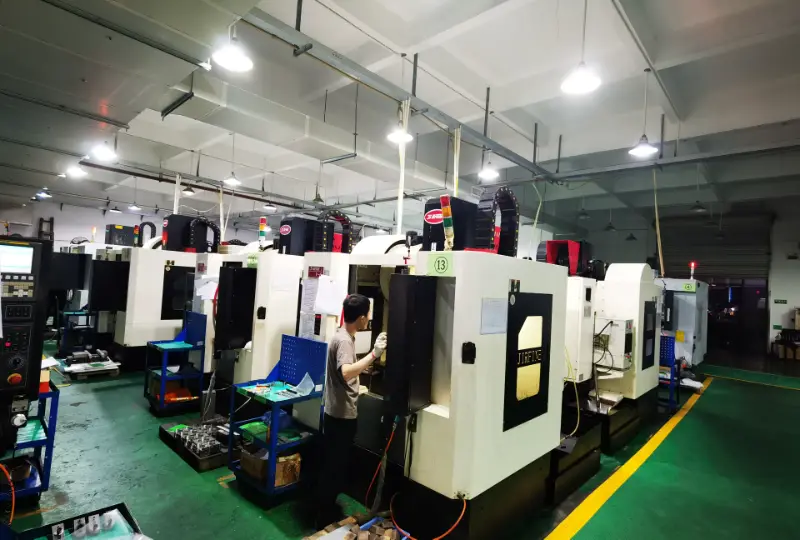
Both PET-P and PETG can be CNC machined, but they differ in cutting stability, heat sensitivity, and dimensional control.
PET / PET-P CNC Machining
- Cutting performance: PET-P has high rigidity and good support during cutting, making it suitable for milling, turning, drilling, and precision contour machining.
- Dimensional accuracy: Low thermal expansion and moisture absorption help maintain hole positions, flatness, and fit dimensions.
- Surface finish: Sharp tools and appropriate feed rates can produce a stable, clean machined surface.
- Drilling and threading: PET-P is well suited to drilling, reaming, tapping, and turned threads, with relatively stable hole walls and thread profiles.
- Deformation risk: Thin-wall parts or components with large amounts of material removed may warp as internal stresses are released.
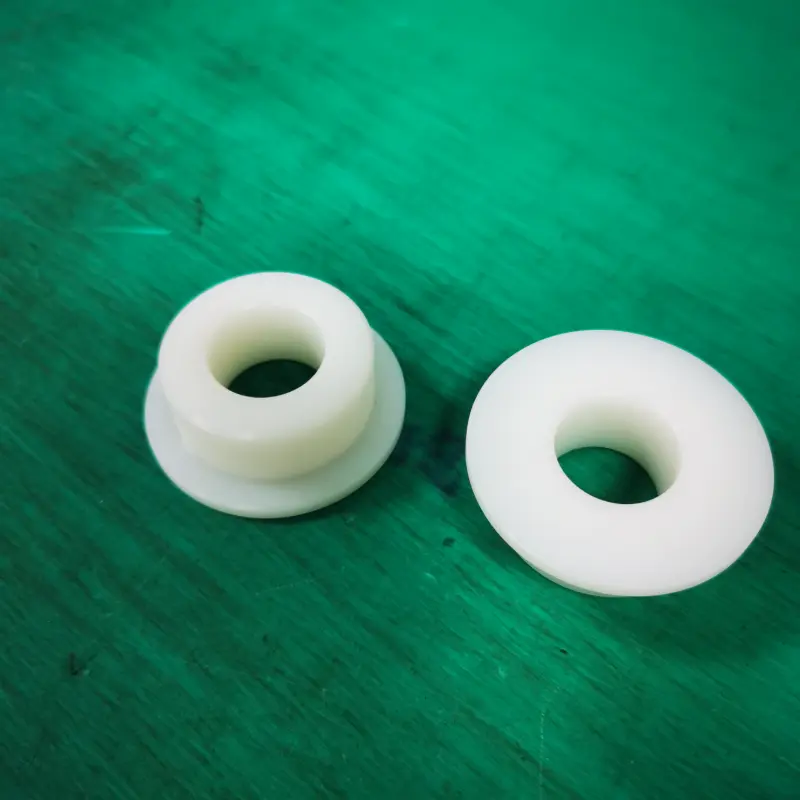
- Typical parts: Gears, bushings, rollers, guides, insulators, and precision structural components.
PETG CNC Machining
- Cutting performance: PETG can be milled, drilled, cut, and turned, but it is softer and more sensitive to frictional heat.
- Dimensional accuracy: Cutting temperature and clamping pressure can have a greater effect on final dimensions.
- Surface finish: Transparent surfaces are susceptible to scratches, clamp marks, tool marks, and localized whitening.
- Drilling and threading: Chips should be removed frequently during drilling to prevent heat buildup. Threads are best used for light-duty fastening.
- Deformation risk: Thin sheets and transparent parts may distort under excessive clamping force.
- Typical parts: Viewing windows, machine guards, transparent panels, instrument housings, and display components.
CNC Machining Tips for PET and PETG
PET / PET-P Machining Tips
- Use sharp carbide tools: Sharp cutting edges reduce cutting force, heat generation, and burr formation.
- Maintain a stable feed rate: A feed rate that is too low increases friction, while an excessive feed may damage edges.
- Remove material in stages: Avoid deep cuts when machining thin-wall or high-precision parts.
- Evacuate chips promptly: Chip buildup in deep holes and slots can cause localized heating and surface damage.
- Control clamping force: Thin plates, slender parts, and precision components should not be over-clamped.
- Leave a finishing allowance: Allow the part to stabilize after rough machining before final finishing.
PETG Machining Tips
- Use sharp, polished tools: This reduces material pulling, tool adhesion, and melted edges.
- Maintain sufficient feed: Avoid allowing the cutting tool to rub repeatedly in the same area.
- Control spindle speed: Excessive speed combined with insufficient feed can soften the material.
- Use compressed air: Compressed air improves cooling and chip evacuation without adding excessive liquid coolant.
- Protect transparent surfaces: Retain the protective film or use soft pads to prevent scratches and clamp marks.
- Use peck drilling: Periodically retract the drill to remove chips and reduce heat buildup.
- Reduce clamping pressure: Thin sheets and transparent covers should be supported with even, low-pressure clamping.
PET or PETG: Which One Should You Choose?
Choose PET / PET-P When You Need
- Higher rigidity
- Tight dimensional tolerances
- Better wear resistance
- Long-term load-bearing performance
- Higher operating temperatures
- Precision milling, turning, drilling, or tapping
- Gears, bushings, rollers, and guide components
Choose PETG When You Need
- High transparency
- Better impact resistance
- Transparent machine guards or viewing windows
- Good surface appearance
- Secondary heat bending or thermoforming
- Light-duty transparent structural parts
- Components with moderate tolerance requirements
PETG should not replace PET-P solely because of its higher impact toughness, and PET-P cannot satisfy applications that require high transparency. Final material selection should consider mechanical load, operating temperature, dimensional tolerances, friction conditions, chemical exposure, and appearance requirements.
Conclusion
Although PET-P and PETG belong to the same polyester family, they serve different engineering purposes. PET-P is better suited to precision mechanical parts requiring rigidity, wear resistance, creep resistance, and dimensional stability. PETG is more suitable for transparent, impact-resistant, and lightly loaded components such as guards, panels, and viewing windows.
Weldo Machining provides CNC milling, turning, drilling, and custom machining services for PET-P, PETG, and other engineering plastics. Submit your drawings and application requirements to receive material recommendations and a machining quotation based on part geometry, performance requirements, and manufacturing complexity.