5083 aluminum is widely used for marine components, transportation structures, welded assemblies, and other parts that require high corrosion resistance, dependable strength, and good weldability. However, these material advantages do not create a standard CNC machining price. The cost of a finished part depends on the complete manufacturing route—from the size of the starting blank and the amount of metal removed to setup, machine time, inspection, secondary processing, and delivery.
Two parts made from the same 5083 plate can therefore have very different prices. A relatively heavy plate with simple features may be quick to machine, while a lighter housing cut from a thick blank may require extensive roughing, deep-pocket machining, staged finishing, and repeated dimensional checks. Finished weight alone does not show how much material was purchased or how many hours the machine was occupied.
This guide explains how 5083 aluminum CNC machining costs are built, why part design and order quantity change the unit price, and how buyers can compare quotations on a consistent basis. It also uses a six-part, 3-axis machining project completed by Weldo Machining to show how fixed and variable costs behave in a real small-batch order.
Is There a Standard Price for 5083 CNC Machining?
There is no universal per-part or per-kilogram price for machining 5083 aluminum. A supplier must evaluate the actual drawing, 3D model, material condition, blank form, quantity, tolerance requirements, surface finish, inspection scope, and delivery terms before calculating a meaningful quotation.
For a simple plate, the starting material and blank preparation may represent a large share of the total cost. For a deep housing, thin-walled enclosure, multi-sided component, or tightly toleranced part, programming, fixturing, machine time, dimensional control, and manufacturing risk can be more important than the raw material price.
The specified material condition also matters. Requirements such as H116 or H321 temper, large-format thick plate, a particular material standard, mill certificates, batch traceability, or marine-grade approvals can reduce the number of available sources. Small-quantity purchases may also carry minimum order, cutting, and freight charges, which means the same geometry can be quoted differently when the material specification or delivery scope changes.
How Is 5083 Aluminum CNC Machining Cost Calculated?
A complete quotation normally combines the costs of material, preparation, programming, setup, machining, tooling, finishing, inspection, and delivery. These items should be considered together because a lower machine rate can be offset by additional setups, longer cycle time, more outside processing, or a wider inspection scope.
Total Cost = Material + Setup + Machine Time + Tooling + Finishing + Inspection + Packaging and Shipping
The proportion of each item varies with the part. Material and cutting may dominate a large, simple plate, whereas complex precision components are more likely to be driven by setup, cycle time, specialized tools, and quality control.
Raw Material and Blank Preparation
Material cost is calculated from the starting blank rather than the finished-part weight. The blank must include enough stock for sawing or waterjet cutting, clamping, datum creation, and machining allowance. As blank dimensions and removal volume increase, both the amount of material purchased and the time required for roughing usually increase.
Material Utilization = Finished Part Weight ÷ Blank Weight × 100%
This ratio explains why a lightweight finished housing can still be expensive: much of the original thick plate may become chips. Low material utilization affects the quotation twice—first through the weight of the blank and again through the machine time needed to remove the excess material.
Standard plate thicknesses and readily available sizes are generally easier to purchase. Non-standard thickness, a specified temper, small cut pieces, certificates, or traceability can introduce minimum purchase quantities, cutting charges, additional freight, and a longer material lead time. The supplier should therefore confirm both the finished geometry and the commercial availability of the proposed blank.
Programming, Setup, and Fixturing
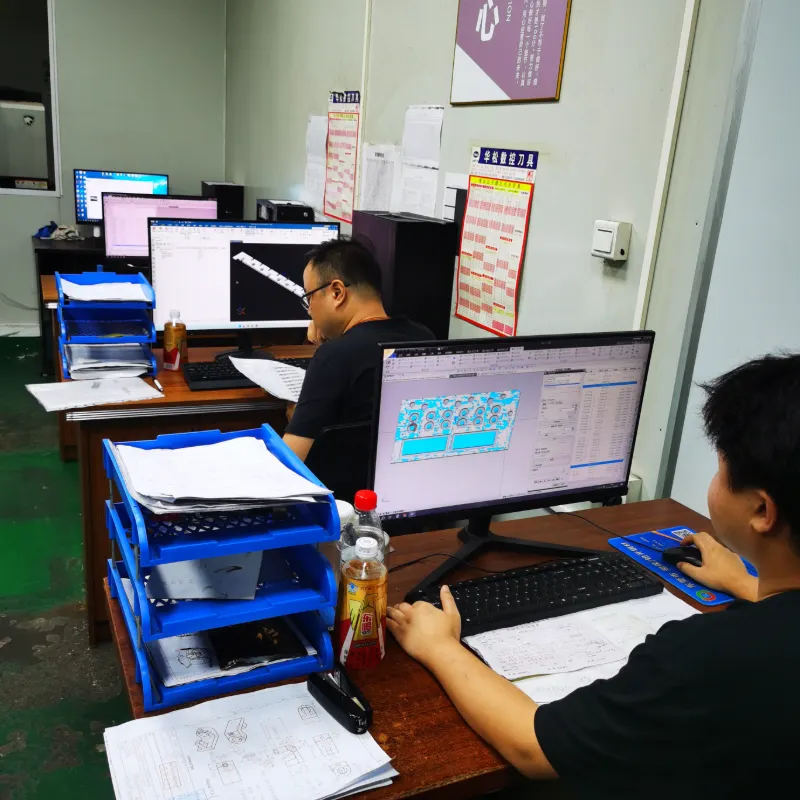
CAM programming, process planning, datum selection, setup, alignment, and first-piece prove-out are front-end costs that must be completed before stable production begins. These costs are largely fixed for a given revision, so they have a strong effect on prototypes and small batches.
Unit Setup Cost = Total Setup and Fixture Cost ÷ Order Quantity
Parts with features on several faces usually require more positioning work. A 3-axis process may use multiple setups, soft jaws, vacuum fixtures, or dedicated tooling to reach each direction while maintaining repeatable datums. Every additional setup adds handling, alignment, tool clearance checks, and the possibility of accumulated positional error.
A purpose-built fixture raises the initial cost but can shorten loading time and improve consistency during batch or repeat production. The correct choice is therefore not always the fixture with the lowest upfront price; it is the arrangement that gives the best total cost and process stability for the expected quantity.
CNC Machine Time
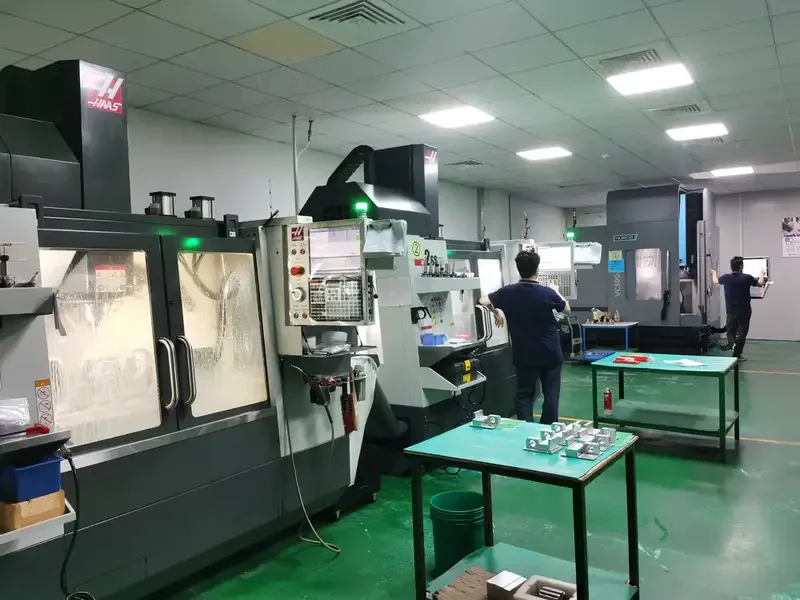
Machine time is often one of the largest components of the quotation because it reflects how long production equipment is occupied. The hourly rate must cover the machine, operator support, power, maintenance, depreciation, and production overhead, while the cycle time reflects the actual cutting and auxiliary operations required by the part.
Machine Cost = Cycle Time × Machine Hourly Rate
Cycle time includes roughing, finishing, drilling, tapping, tool changes, probing, part flipping, and in-process measurement. High material removal, deep cavities, small corner radii, long finishing paths, and multiple machining directions all increase machine occupancy. Thin walls and tight flatness requirements may also require staged cutting and waiting or re-clamping between operations.
Three-axis, four-axis, and five-axis machines have different hourly rates, but a higher-axis machine does not automatically produce a higher total price. For a multi-sided component, a four- or five-axis process may reduce fixtures, part handling, repeated alignment, and intermediate inspection. The economical decision must compare the total process time and support costs rather than the hourly rate alone.
Tooling and Manual Finishing
Standard cutters and routine consumables are often absorbed into the machine rate, but particular features can require additional tools. Deep pockets may need long-reach end mills; small internal corners require smaller cutters; precision holes may require drills, boring tools, reamers, or thread mills; and special threads can require dedicated tooling.
Long tool overhang, small cutter diameter, and interrupted cutting reduce process stability and may require lighter cutting parameters or additional finishing passes. These conditions increase cycle time, tool wear, and the risk of chatter or dimensional variation.
Manual deburring, edge breaking, local blending, and cosmetic finishing also add labor. If the drawing requires controlled edge conditions, no visible tool marks, or protected cosmetic surfaces, the supplier must account for handling and inspection beyond the programmed cutting cycle. Buyers should confirm whether special tooling and edge finishing are included in the quoted unit price.
Inspection and Quality Documentation
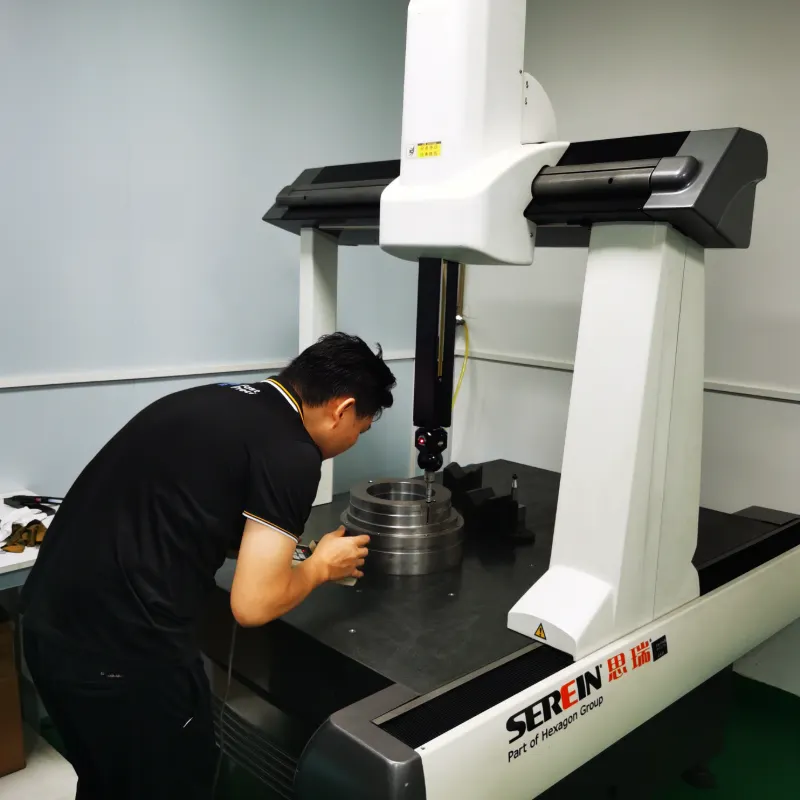
Basic dimensional checks are usually included in a standard machining quotation, but strict geometric tolerances can require dedicated inspection planning and equipment. Hole position, concentricity, flatness, profile, and datum relationships may need a coordinate measuring machine (CMM), custom inspection programs, or staged checks during machining.
The following items may be priced separately:
First-article inspection and report: Verification of the first completed part before the remaining batch is released.
Full CMM dimensional report: Programmed measurement of the specified drawing characteristics.
100% inspection of critical dimensions: Repeated verification on every part rather than sample inspection.
Material certification and batch traceability: Documents linking the delivered parts to the purchased material lot.
Final inspection report: Recorded release data provided with the shipment.
Customer-specific quality documentation: Reports prepared in a required template, language, or approval format.
The inspection scope should be defined during the RFQ stage. If requirements are unclear, a supplier may either reserve cost for a stricter interpretation or quote only basic inspection and add documentation charges later. Clear agreement on critical dimensions, sampling frequency, and report format makes quotations more accurate and comparable.
Finishing and Outside Services
Secondary processes such as bead blasting, anodizing, hard anodizing, powder coating, welding, and specialized cleaning are normally calculated separately from machining. The final cost can include not only the treatment itself but also minimum lot charges, masking, racking, thread protection, transport to an outside processor, and post-treatment inspection.
Color matching, local masking, controlled appearance, or strict cosmetic acceptance criteria increase handling time and rejection risk. When coating thickness affects holes, threads, datum faces, or fitted surfaces, the machining dimensions must be adjusted in advance and verified again after finishing.
Outside processing can also affect lead time. A low treatment price is not necessarily economical if it introduces an extra minimum charge, additional transport, or an unstable schedule. For this reason, the machining quotation should state which finishing operations are included, which are subcontracted, and whether final inspection occurs before or after treatment.
How Part Design Changes the Quoted Price
Part design determines the size of the blank, the amount of metal removed, the available tool access, the number of setups, and the risk of distortion or scrap. Small design choices can therefore change the manufacturing route even when the overall dimensions remain the same.
Material removal and pocket depth: A high removal volume requires a larger blank and longer roughing time. Deep cavities may also need long tools, layered cutting, conservative parameters, and more frequent chip evacuation.
Machining directions and number of setups: Features on multiple faces can require flipping, dedicated fixtures, and repeated alignment. 4- or 5-axis machining may reduce these auxiliary operations and limit accumulated positioning error.
Thin walls, flatness, and tight tolerances: These requirements often call for staged machining, reserved finishing stock, balanced material removal, controlled clamping, and intermediate inspection. They also increase the risk of distortion, rework, or scrap.
Small internal corners and complex details: An unnecessarily small corner radius forces the use of a small-diameter cutter and additional finishing paths. Cutting efficiency falls, while tool deflection, wear, and breakage risk increase.
Appearance and surface requirements: No tool marks, no clamp marks, uniform blasting, or a strict color standard requires additional protection, manual review, and controlled packaging throughout production.
Tight tolerances should be concentrated on features that control assembly, positioning, sealing, motion, or another defined function. Applying the same high precision to every dimension adds machining and inspection cost without necessarily improving part performance.
How Order Quantity Affects Unit Cost
Order quantity affects the unit price through two different mechanisms: fixed costs are distributed across more parts, and production becomes more efficient once the process is stable. It does not, however, remove the material, cutting, finishing, and inspection costs required for each component.
Unit Cost = Variable Cost per Part + Fixed Cost ÷ Order Quantity
Single prototype: Programming, setup, fixturing, prove-out, and first-piece inspection are carried by one component, so the unit price is normally the highest.
Small-batch production: The same program and setup strategy can be reused after the first part is approved. Fixed costs are distributed across the batch, and the unit price usually falls noticeably.
Larger production batch: Dedicated fixtures, multi-part loading, optimized toolpaths, controlled tool replacement, and batch material purchasing can reduce handling time and improve consistency.
Repeat order: Existing programs, process knowledge, and fixtures may be reused when the revision and requirements remain unchanged. A repeat order can therefore have a lower front-end cost, although the machine must still be set up and every part still incurs variable cost.
The unit price will not continue falling in direct proportion to quantity. Material, actual cutting time, tool consumption, finishing, routine inspection, packaging, and freight remain necessary for each delivered part. At higher volumes, the price approaches the variable manufacturing cost rather than falling toward zero.
Example Cost Scenario
Small-Batch Production of 6 PCs of 5083 Aluminum Parts
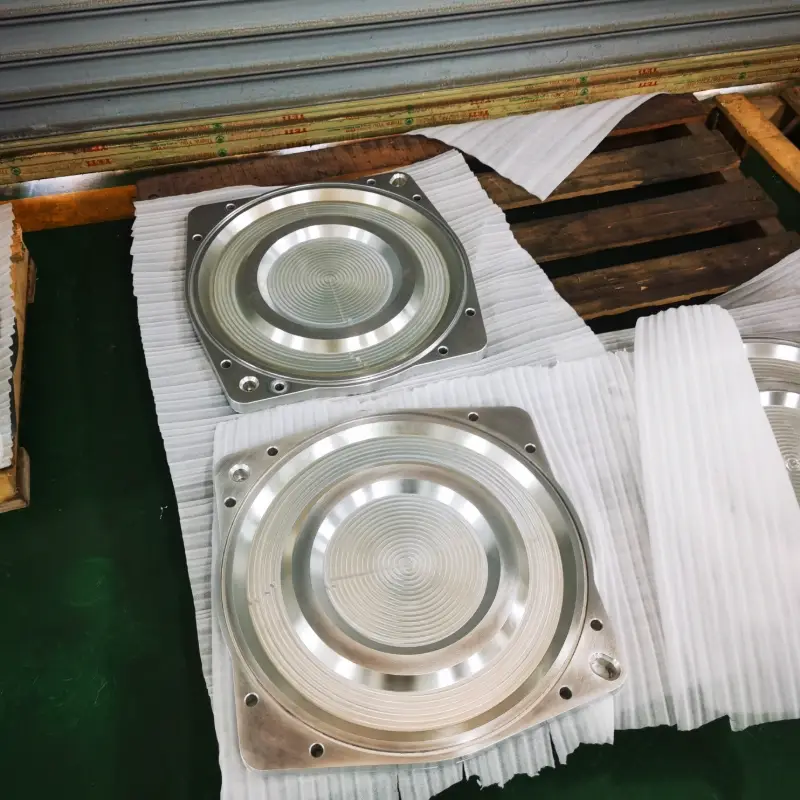
The part shown in the accompanying image belongs to a batch of six 5083 aluminum components completed by Weldo Machining. Each part was produced from a thick plate blank and includes a large circular cavity, concentric steps, an annular groove, and multiple mounting holes. Because the principal features are oriented in the same machining direction, the main operations could be completed on a 3-axis CNC machine without paying for unnecessary higher-axis capacity.
Front-end work included CAM programming, process planning, datum selection, setup alignment, and first-piece prove-out. After the first component was machined, the team checked hole positions, concentricity, step dimensions, and flatness. Once the result was confirmed, the same program and fixture strategy were used to manufacture the remaining five parts, which allowed the setup and first-article costs to be spread across the batch.
The largest project costs still came from the thick plate blanks, the substantial amount of material removed, and the machine time needed for roughing and finishing. Although all six parts shared one production plan, each component still required material, cutting time, tool capacity, deburring, and final inspection. The small batch reduced the fixed-cost share of each part; it did not reduce all production expenses in direct proportion to the quantity.
Why Quotes from Different CNC Manufacturers Vary
Large differences between quotations usually come from the manufacturing plan, the items included in the price, and the required lead time.
Manufacturing plan: Multiple 3-axis setups and a four- or five-axis strategy have different hourly rates, setup requirements, and production efficiencies. Blank purchasing, material utilization, fixture design, and the proportion of subcontracted work can also change the total.
Quotation scope: Confirm whether deburring, finishing, inspection reports, material certificates, packaging, and freight are included. Unit prices are not directly comparable when the suppliers are quoting different delivery scopes.
Lead-time requirement: A normal lead time allows coordinated material purchasing, machine scheduling, and outside processing. A rush order may require emergency material procurement, schedule interruption, overtime, or expedited finishing, so the price is usually higher.
How to Compare 5083 CNC Machining Quotes
All suppliers should calculate their quotations from the same technical revision and commercial delivery conditions. A lower number is only meaningful when the underlying material, quality, and service scope are equivalent.
Standardize material and quantity: Confirm the 5083 temper, blank form, material standard, certificates, and order quantity. Separate first-production pricing from repeat-order pricing where programming or fixtures may be reused.
Standardize quality requirements: Identify critical tolerances, sampling or 100% inspection, first-article reporting, CMM documentation, and batch traceability. Ensure each supplier has priced the same acceptance criteria.
Standardize the delivery scope: Check deburring, surface treatment, packaging, freight, and the target lead time. This prevents a low machining-only price from becoming more expensive after required services are added.
Only after these conditions are aligned does the quoted unit price provide a useful basis for supplier selection.
How to Reduce 5083 CNC Machining Costs
Cost reduction should remove unnecessary manufacturing effort without weakening the function, quality, or traceability of the part.
Optimize non-critical features: Increase non-functional corner radii, avoid unnecessarily deep pockets, and reduce machining directions where the design allows. Simpler tool access and fewer setups shorten both programming and production.
Use tolerances selectively: Apply tight limits to assembly, locating, sealing, and other functional features. Use realistic general tolerances for dimensions that do not control performance.
Consolidate repeat demand: Combine frequent small orders into an economical batch when inventory and demand permit. More parts can then share programming, setup, fixture, and first-article costs.
Separate one-time charges: Ask suppliers to distinguish programming, dedicated fixtures, and first-article approval from the repeat-production unit price. This makes long-term purchasing cost easier to evaluate.
Allow a normal lead time: Adequate scheduling supports normal material purchasing, stable machine allocation, and coordinated finishing. It reduces the need for emergency procurement, production interruption, and rush processing.
What Information Is Needed for an Accurate Quote?
Complete and consistent RFQ information reduces supplier assumptions and produces a more accurate, comparable quotation.
2D drawing and 3D model: The 3D model supports toolpath and cycle-time evaluation, while the 2D drawing defines tolerances, datums, threads, surface roughness, and requirements that the model cannot fully communicate.
Material requirements: Specify the 5083 temper, applicable standard, blank form, and whether material certification or batch traceability is required.
Purchase quantity: Provide the current batch, expected annual demand, and likely repeat-order pattern so the supplier can distinguish fixed charges, unit pricing, and quantity breaks.
Inspection and secondary processing: State whether critical dimensions require sample or 100% inspection and whether CMM reports, bead blasting, anodizing, welding, or other added operations are needed.
Delivery conditions: Give the target lead time, packaging requirements, and delivery location. Rush production, special protection, and transport arrangements can change the final cost.
If the drawing revision, order quantity, material condition, quality scope, or delivery requirements change, the supplier should reconfirm both price and lead time rather than applying an old quotation to a different manufacturing requirement.
FAQ
Does 5083 Cost More to Machine Than 6061?
Not necessarily. Compared with 6061-T6, 5083 can be less predictable in chip control and machining stability, but the final cost still depends on temper, material availability, geometry, tolerances, and purchase size. When a component requires marine corrosion resistance, weldability, or low-temperature performance, 5083 is selected for functional reasons rather than by comparing material or machining price alone.
Does 5-Axis Machining Always Cost More?
No. Five-axis equipment normally has a higher hourly rate, but a complex multi-sided part may need fewer fixtures, flips, and repeated alignments. The correct comparison is the total machine and auxiliary cost of the complete process, not the equipment rate in isolation.
Are Repeat Orders Always Cheaper?
Repeat orders can often reuse proven programs, process knowledge, and fixtures, so the fixed cost may be lower. However, material prices, quantities, drawing revisions, inspection requirements, finishing, and lead time can change; repeat-order pricing should therefore be reconfirmed before release.
Conclusion
5083 aluminum CNC machining cost is determined by the complete manufacturing route: material and blank dimensions, material removal, part geometry, setup strategy, machine time, tooling, order quantity, inspection, secondary processing, packaging, and lead time. It cannot be estimated reliably from finished weight or alloy designation alone.
Buyers should compare quotations using the same drawing revision, material condition, quantity, quality requirements, and delivery scope. Optimizing non-critical features, assigning tight tolerances selectively, consolidating repeat demand, defining inspection clearly, and allowing a normal lead time can reduce total procurement cost without compromising function or quality.
Weldo Machining can evaluate 5083 aluminum components from 2D drawings, 3D models, purchase quantities, and delivery requirements, then provide a detailed quotation covering material, machining, inspection, and secondary processing.