
Copper has good electrical conductivity, thermal conductivity, and corrosion resistance. It is commonly used in wires, electrical components, heat exchangers, and mechanical parts.
Melting point is an important parameter in copper processing. It affects melting, casting, welding, and brazing processes. At standard atmospheric pressure, the melting point of pure copper is 1084.62°C (1984.32°F or 1357.77 K).
Pure copper has a definite melting point. Copper alloys such as brass, bronze, and cupronickel usually melt over a temperature range. Therefore, when discussing the melting point of copper, pure copper and copper alloys must be distinguished.
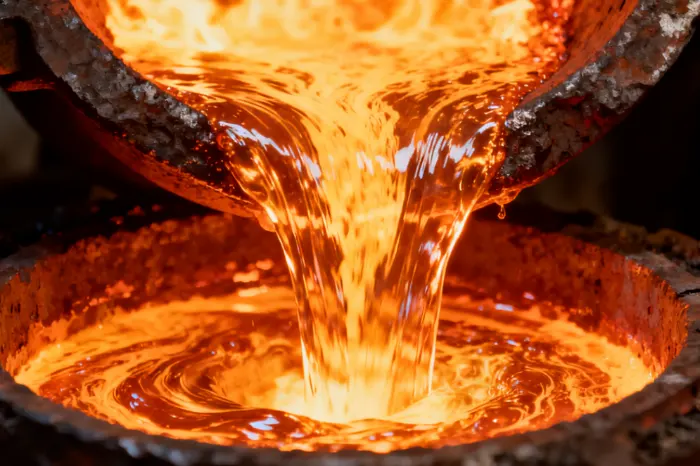
What Is the Melting Point of Copper?
High-purity copper has a standard melting point of 1084.62°C. Once this temperature is reached, solid copper begins to transform into a liquid.
| Temperature Unit | Melting Point of Copper |
| Celsius | 1084.62°C |
| Fahrenheit | 1984.32°F |
| Kelvin | 1357.77 K |
General articles can state the melting point as approximately 1085°C or 1984°F. For engineering calculations and technical documentation, the more precise value is preferable.
The International Temperature Scale of 1990 (ITS-90) uses 1084.62°C as the freezing point of copper. For high-purity copper, the melting point and freezing point correspond to the same solid-liquid equilibrium temperature.
Why Do Some Sources List 1083°C, 1084.5°C, or 1085°C?
These differences mainly result from data precision, rounding methods, and earlier temperature scales.
Using “approximately 1085°C” in general content is acceptable. When precise data is required, 1084.62°C is recommended. Copper purity, testing equipment, and the test environment may also cause slight variations.
What Happens When Copper Is Heated to Its Melting Point?
Copper absorbs heat and undergoes thermal expansion as it is heated. At this stage, the material remains solid.
Once the temperature reaches the melting point, solid and liquid copper coexist. The copper continues to absorb heat, but its temperature temporarily remains near the melting point. This heat is mainly used to complete the solid-liquid phase transition.
After the copper has fully melted, continued heating raises the temperature of the molten copper. If copper is heated in air, it also oxidizes. Oxidation generally becomes more pronounced as the temperature rises.
Do Purity and Pressure Affect the Melting Point of Copper?
The melting temperature of high-purity copper is close to the standard value. Industrial copper may contain oxygen, sulfur, lead, or other elements. These elements can alter its melting behavior.
Some copper materials no longer melt at a single temperature but gradually melt over a range. Therefore, actual production should refer to the specific grade, chemical composition, and material data sheet.
Pressure also affects the melting point of copper. However, pressure variations in ordinary industrial environments are small, so their effect can be ignored. The melting point changes significantly only under extremely high pressure.
Why Is the Melting Point of Copper Alloys Different from That of Pure Copper?
Brass, bronze, and cupronickel contain elements such as zinc, tin, aluminum, or nickel. These elements alter the melting temperature of copper.
Most copper alloys do not have a single melting point. Instead, they gradually melt between the solidus and liquidus temperatures.
Solidus: The temperature at which a liquid phase first appears in the alloy.
Liquidus: The temperature at which the alloy becomes completely liquid.
Below the solidus, the material remains solid. Between the two temperatures, solid and liquid phases coexist. Above the liquidus, the material is completely molten.
For example, zinc in brass generally lowers the melting temperature. The melting temperature of copper-nickel alloys is closer to or higher than that of pure copper.
Melting Temperature Ranges of Common Copper Alloys
| Copper Material | Alloy Type | Solidus | Liquidus |
| Pure Copper | Pure copper | 1084.62°C | 1084.62°C |
| C26000 | 70/30 brass | Approx. 916°C | Approx. 954°C |
| C51000 | Phosphor bronze | Approx. 954°C | Approx. 1049°C |
| C95400 | Aluminum bronze | Approx. 1027°C | Approx. 1038°C |
| C70600 | 90/10 copper-nickel alloy | Approx. 1099°C | Approx. 1149°C |
The values in the table illustrate the differences between grades. Even within the same brass or bronze category, different grades may have different melting ranges.
Actual production should follow the data provided by the material supplier. The process temperature is generally above the liquidus, but fluidity, oxidation risk, and the casting method must also be considered.

How Does the Melting Point of Copper Affect Manufacturing Processes?
The melting point determines the temperature required for copper to undergo a solid-liquid transition. However, copper conducts heat very quickly, so actual processing cannot be based on the melting point alone.
Copper Casting
When casting pure copper, the melting temperature must be higher than its melting point. This ensures that the copper melts completely and has sufficient fluidity.
The pouring temperature is not the same as the melting point. A temperature that is too low may cause incomplete mold filling. A temperature that is too high increases oxidation, gas absorption, and energy consumption.
The specific temperature must also be determined according to the part size, mold material, and casting method.
Copper Welding
Copper rapidly conducts heat away from the welding zone. Thick-walled copper parts generally require preheating, and the welding equipment must also provide concentrated, stable heat.
Welding parameters should be adjusted according to the copper grade, material thickness, and welding method. Common processes include TIG welding, MIG welding, and laser welding.
Copper Soldering and Brazing
Soldering and brazing use filler metals with melting points lower than that of the copper base metal. During heating, the filler metal melts while the copper base metal remains solid.
Soldering is generally performed below 450°C. Brazing is performed above 450°C, but still below the melting point of the copper base metal.
CNC machining temperatures are far below the melting point of copper. Normal cutting does not melt the entire copper part. Therefore, the melting point has little direct effect on CNC machining.
However, localized heat is generated in the cutting zone. Some copper materials tend to adhere to the cutting tool and form a built-up edge. This may cause surface scratches and dimensional deviations.
Using sharp cutting tools, appropriate cutting parameters, and a suitable cooling method can improve machining quality.
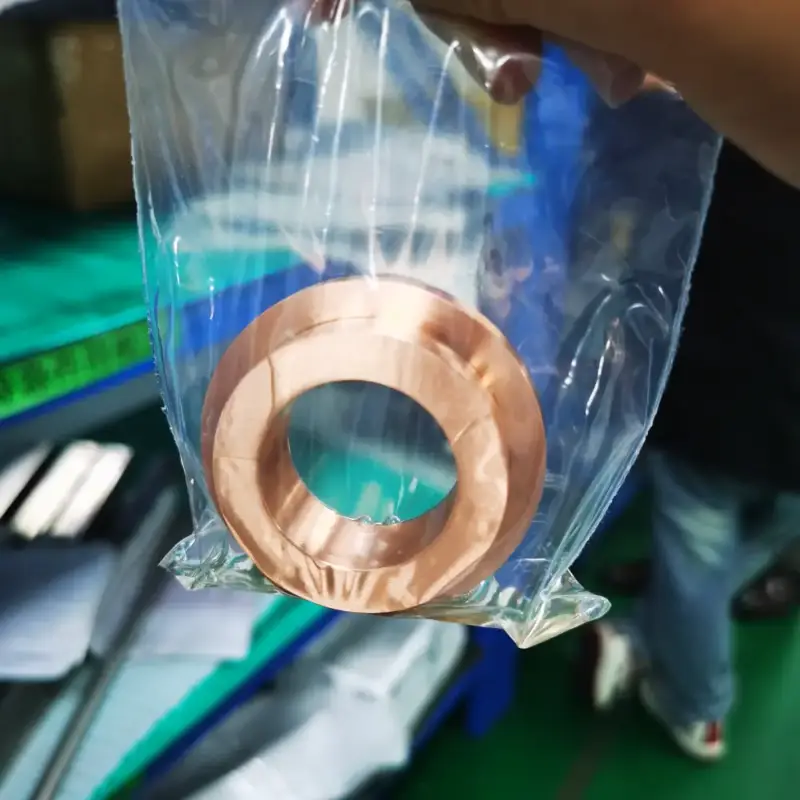
Comparison of Copper’s Melting Point with Other Metals
| Metal | Melting Point |
| Aluminum | Approx. 660.32°C |
| Silver | Approx. 961.78°C |
| Gold | Approx. 1064.18°C |
| Copper | Approx. 1084.62°C |
| Iron | Approx. 1538°C |
Copper has a higher melting point than aluminum, silver, and gold, but a lower melting point than iron. A higher melting point does not mean that a material has better overall performance.
Material selection must also compare strength, electrical conductivity, thermal conductivity, corrosion resistance, machining difficulty, and cost.
FAQ
Can an Ordinary Flame Melt Copper?
A candle or an ordinary lighter cannot melt copper. The flame temperature of some high-temperature gas torches may exceed the melting point of copper, but flame temperature is not the only condition.
Copper conducts heat very quickly. Whether a copper part can be melted also depends on heating power, part size, and heat dissipation conditions. Melting larger quantities of copper generally requires a high-temperature furnace or oxy-fuel equipment.
Why Is a Small Copper Sheet Easier to Melt Than a Large Copper Block?
A small copper sheet and a large copper block made from the same material have the same melting point. The small sheet has less mass and requires less total heat to reach the melting point, so it is easier to heat and melt.
Is Copper’s Pouring Temperature the Same as Its Melting Point?
No. The melting point is the temperature at which pure copper undergoes a solid-liquid transition. The pouring temperature is generally higher to ensure that the molten copper can flow smoothly into and completely fill the mold.
What Is the Melting Point of Copper Carbonate?
Copper carbonate does not have a melting point in the conventional sense. When heated, it decomposes instead of melting like metallic copper:
CuCO₃ → CuO + CO₂
Common basic copper carbonate also releases water when heated. Therefore, a decomposition temperature, rather than a “melting point,” is more appropriate for describing this type of material.
Conclusion
At standard atmospheric pressure, the melting point of pure copper is 1084.62°C (1984.32°F or 1357.77 K). General content can simplify this value to approximately 1085°C.
Copper alloys generally do not have a single melting point. Actual processing requires checking the solidus and liquidus temperatures of the specific grade. When designing casting, welding, and brazing processes, copper’s thermal conductivity, purity, oxidation risk, and part size must also be considered.