Custom Copper Machining

CNC Copper Machining Services

Copper combines high electrical and thermal conductivity with corrosion resistance and useful ductility. Send your drawing for alloy selection, manufacturability review and a clear quotation.

Upload Your Drawing  →
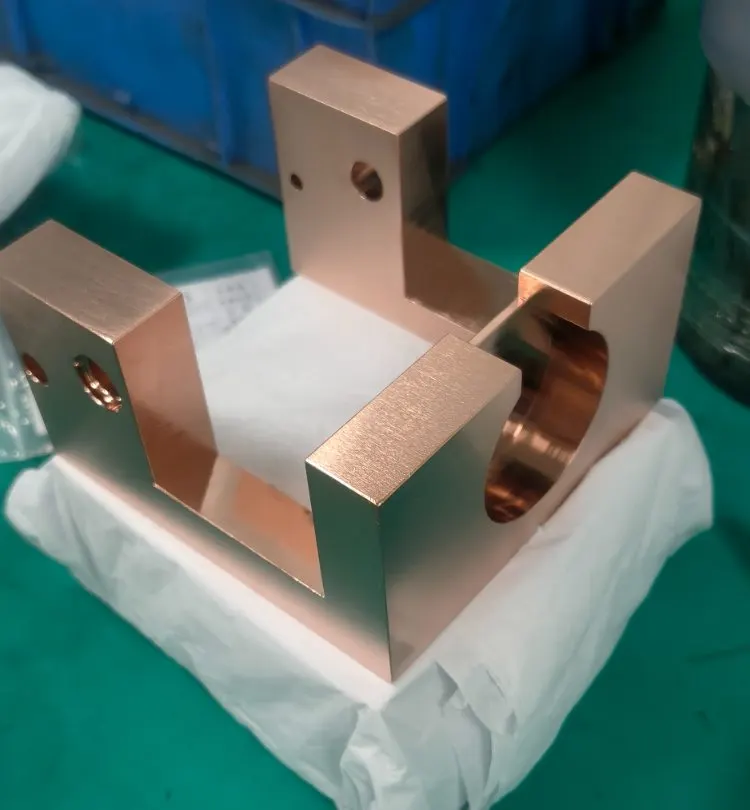
Precision CNC-machined copper component

Material Performance

Key Properties of Copper

Typical ranges cover commercially pure copper and common machinable copper alloys. Grade and temper determine the final values.
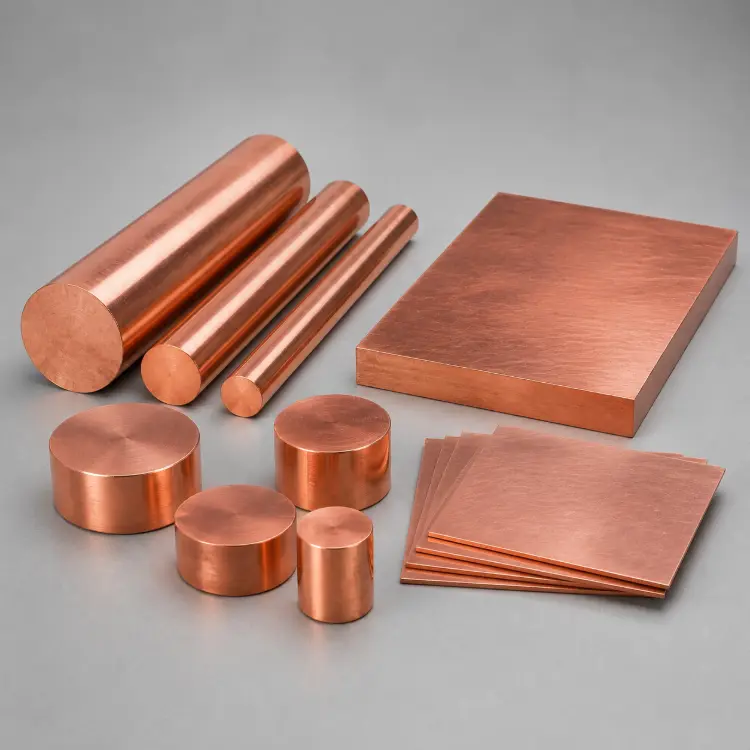
Copper bars, plates and billets for CNC machining
Density8.30–8.96 g/cm³
Electrical Conductivity15–101% IACS
Thermal Conductivity105–401 W/m·K
Tensile Strength200–1,400 MPa
Yield Strength50–1,200 MPa
Elongation2–50%
Hardness35–400 HB
High Conductivity Corrosion Resistant Ductile Plateable

Copper Grade Selection

Common Copper Alloys for CNC Parts

Select the grade around conductivity, strength, machinability and wear.
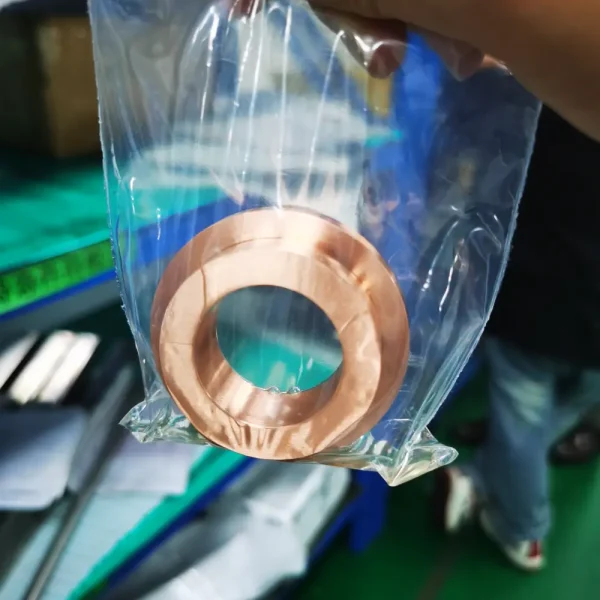
Oxygen-free copper component

C10100 / C10200 Oxygen-Free Copper

Very high conductivity and excellent ductility for demanding electrical parts.
Conductivity100–101% IACS
Tensile Strength200–350 MPa
Hardness35–110 HB
Applications: Busbars, vacuum parts, heat-transfer parts and contacts.
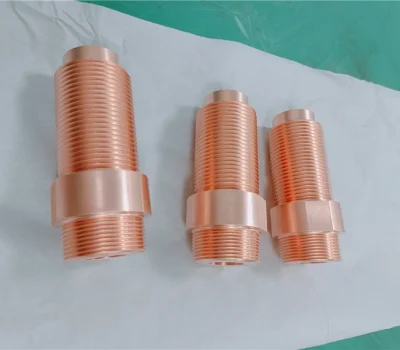
C11000 copper component

C11000 Electrolytic Tough-Pitch Copper

Widely available copper with high conductivity and good forming performance.
Conductivity97–101% IACS
Tensile Strength220–380 MPa
Hardness40–115 HB
Applications: Terminals, connectors, cooling plates and power components.
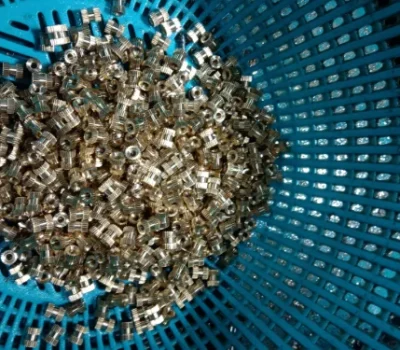
C14500 tellurium copper inserts

C14500 Tellurium Copper

High conductivity with improved chip control for precision turning and threading.
Conductivity85–95% IACS
Tensile Strength300–500 MPa
MachinabilityHigh
Applications: Contact pins, inserts, terminals and precision fittings.
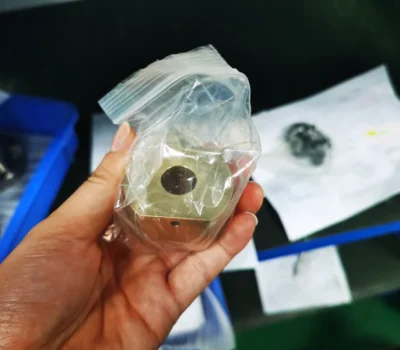
C17200 copper alloy parts

C17200 Beryllium Copper

Heat-treatable copper alloy with high strength, fatigue resistance and useful conductivity.
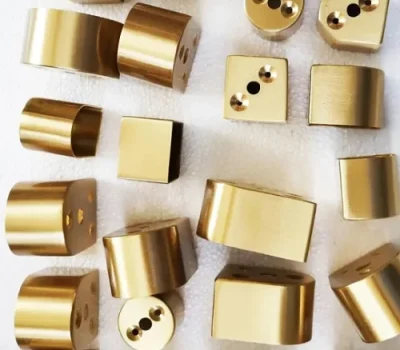
Conductivity15–25% IACS
Tensile Strength650–1,400 MPa
Hardness150–400 HB
Applications: Springs, mold inserts, contacts and wear parts.
C18150 chromium zirconium copper part

C18150 Chromium Zirconium Copper

High conductivity with improved strength and resistance to thermal softening.

Conductivity75–85% IACS
Tensile Strength400–650 MPa
Hardness100–180 HB
Applications: Welding electrodes, contacts, heat sinks and mold parts.
Need C17510, C18200, C19400 or another copper alloy?
Discuss Another Copper Grade  →

Machining Capability

Copper CNC Machining Parameters

Key size and precision ranges used during quotation review.

Maximum Part Size3000 × 1600 × 1000 mm
Machined DiameterØ1–200 mm
Maximum Turned Length1000 mm
Minimum Wall Thickness0.5 mm
Standard Tolerance±0.05 mm
Precision FeaturesDown to ±0.005 mm
Surface RoughnessRa 0.2–3.2 μm

Final capability is confirmed from grade, temper, geometry, flatness and inspection requirements.

Machining Guidance

Control Burrs, Heat and Distortion

Copper machining quality depends on tooling, workholding and thermal control.

01

Use Sharp Tooling

Positive cutting geometry reduces smearing, built-up edge and heavy burrs.

02

Control Cutting Heat

Stable feeds and effective coolant protect dimensions and surface quality.

03

Support Thin Features

Light, distributed clamping limits marks and deformation.

04

Allow for Plating

Critical fits must include the specified coating thickness.

Machined Projects

Custom CNC-Machined Copper Parts

Copper parts from prototypes and small batches to repeat production.

Machining & Inspection

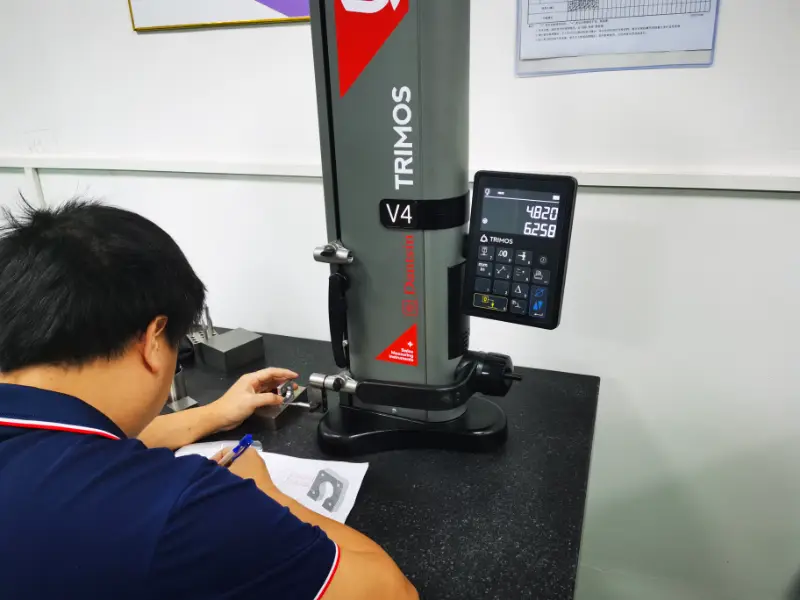
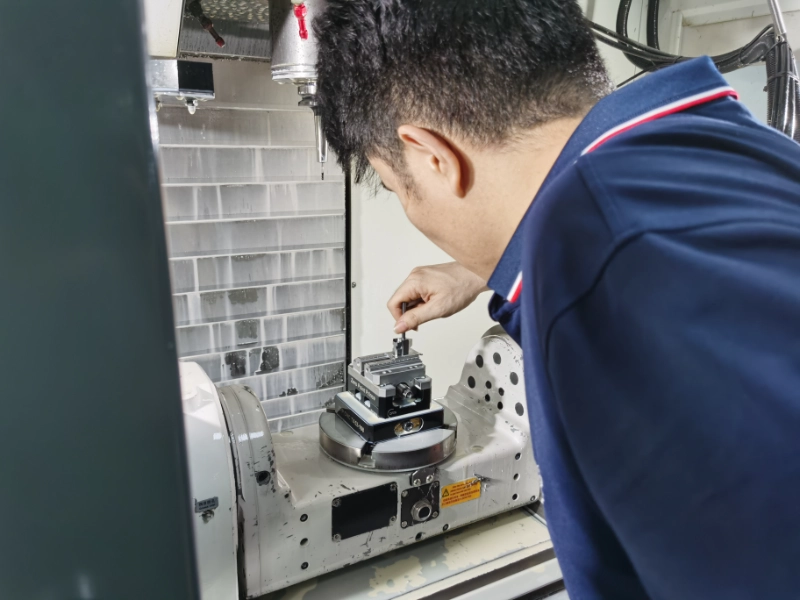
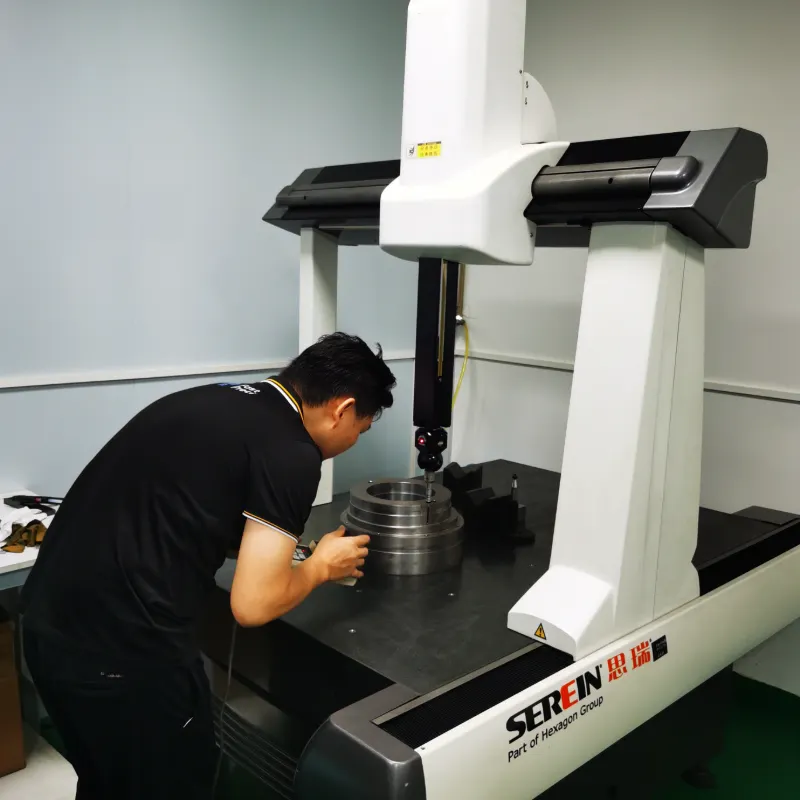
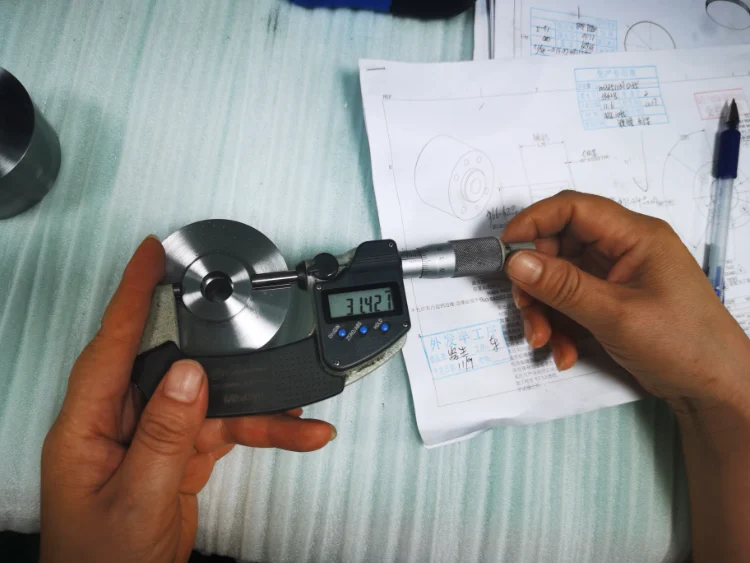
From Process Review to Final Inspection

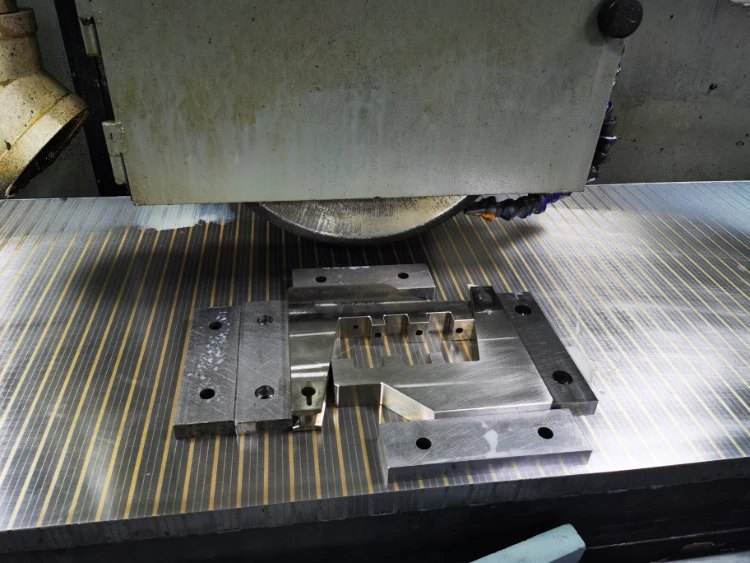
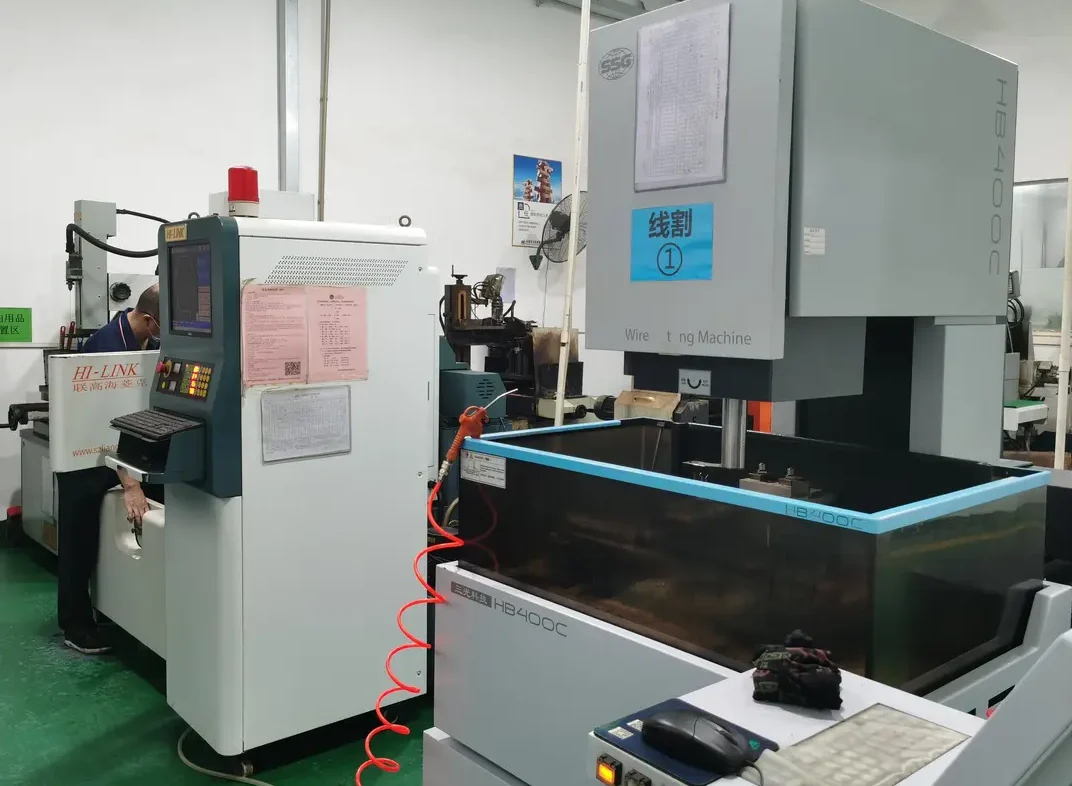
Machining, grinding, EDM and dimensional inspection support controlled copper-part production.
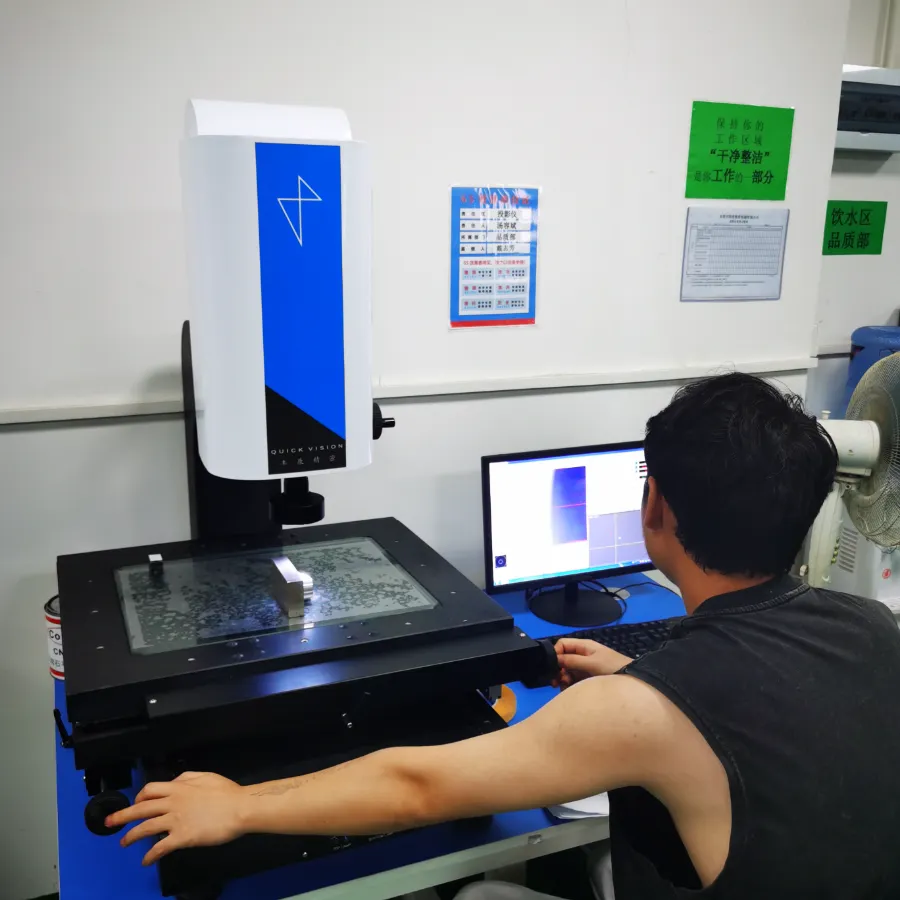
Optical projector inspection
Machining equipment
CNC production equipment
CMM inspection
Precision equipment
CNC grinding
EDM equipment

Copper Machining FAQ

Questions Before Production

Is copper difficult to CNC machine?

Pure copper can smear, form burrs and retain cutting heat. Sharp tools, controlled feeds, coolant and light workholding improve stability.

Which copper grade has the best machinability?

C14500 tellurium copper provides improved machinability while retaining high electrical and thermal conductivity.

How are copper burrs and deformation controlled?

Use sharp cutting edges, staged machining, supported thin walls, balanced stock removal and controlled deburring.

Can machined copper parts be plated?

Yes. Tin, nickel, silver and gold plating support solderability, contact performance, wear resistance and corrosion protection.