Custom 3D Printing Services
Turn CAD models into physical prototypes and low-volume parts with process selection, material guidance, printing, post-processing and inspection coordinated around your application.
*Build size, accuracy, wall thickness and material availability depend on the selected process, geometry, orientation and post-processing.
3D Printing Technologies
Process selection should follow material, accuracy, surface, size, strength, quantity and budget—not technology name alone.
FDM / FFF
Melts thermoplastic filament layer by layer. Best for economical concept models, fixtures and functional prototypes.
SLA
Cures liquid photopolymer resin with light. Best for fine details, smooth surfaces and presentation models.
SLS
Fuses polymer powder without conventional support structures. Best for complex nylon parts and functional low-volume builds.
Metal Powder Bed Fusion
Uses a laser to fuse metal powder. Best for complex metal geometries, lightweight structures and consolidated components after engineering review.
Materials for 3D Printing
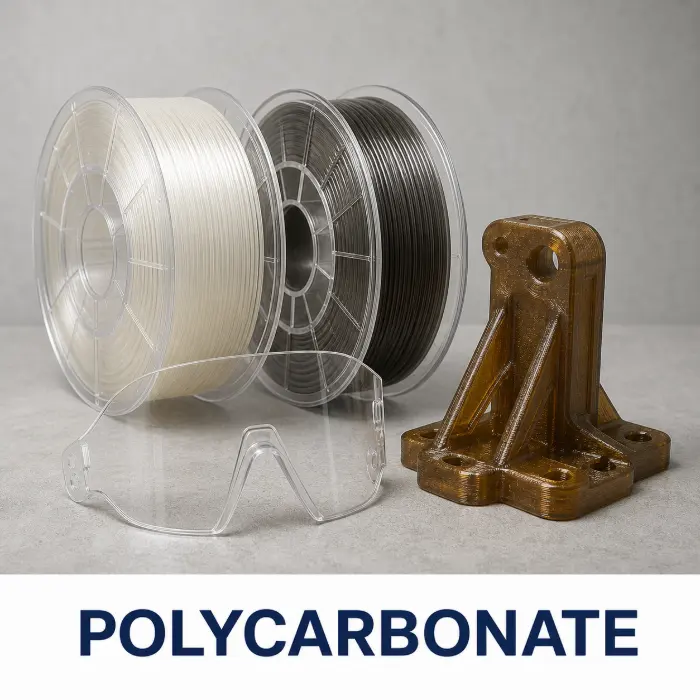
Material choice must match the printing process and required strength, temperature, flexibility, finish and certification.
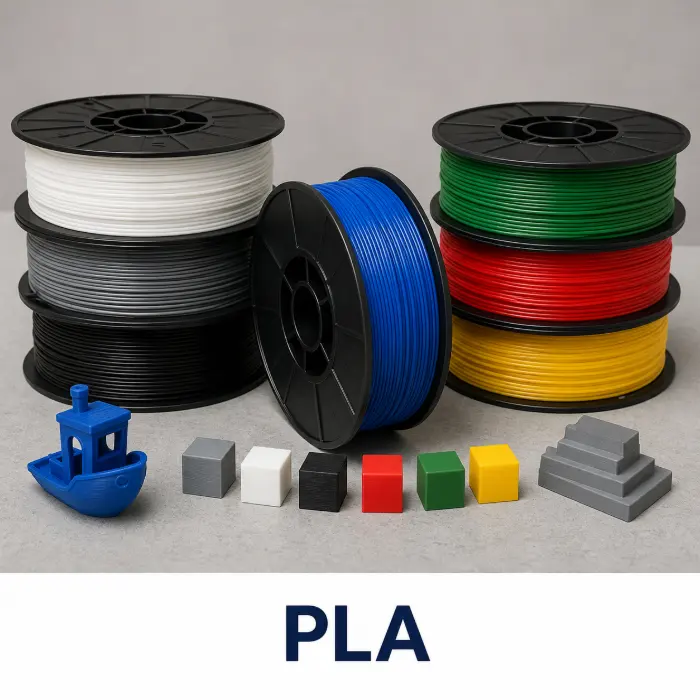
PLA
Rigid, easy to print and economical for visual models, fixtures and low-load prototypes.
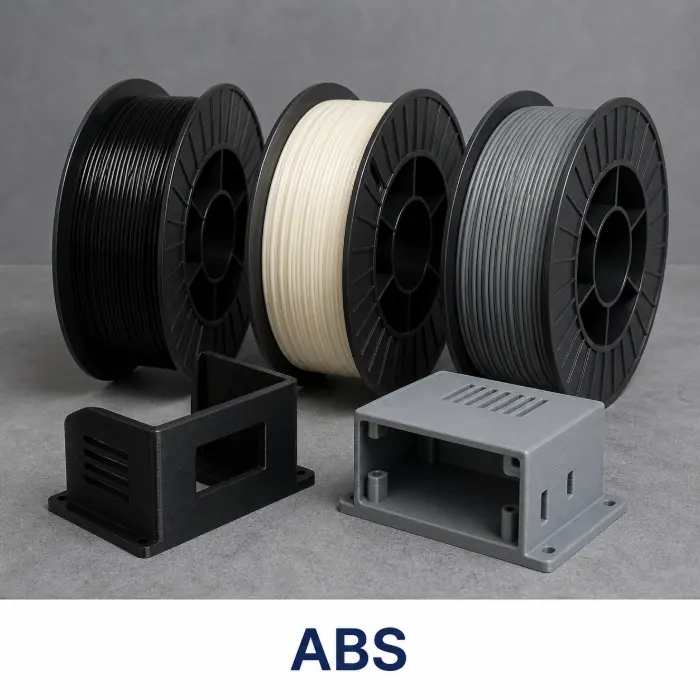
ABS
Impact-resistant thermoplastic for functional prototypes, enclosures and snap-fit development.
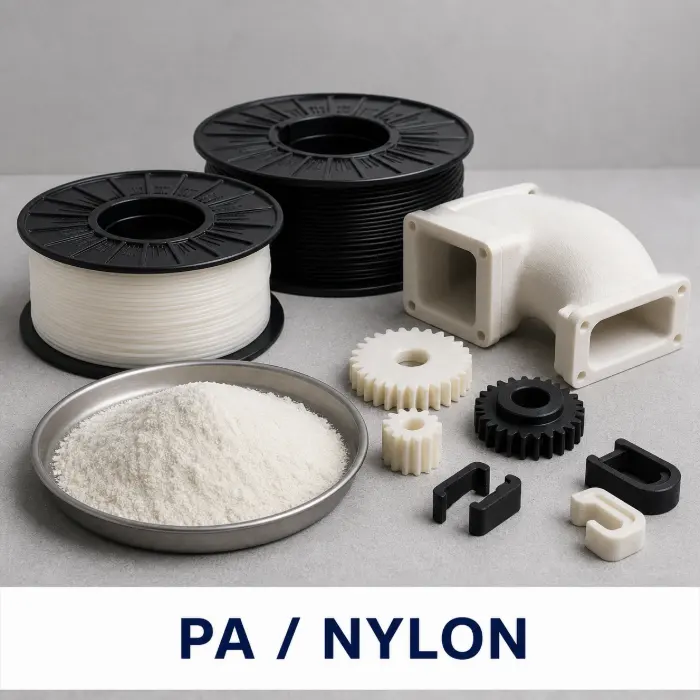
PA / Nylon
Strong, wear-resistant material for clips, gears, housings and functional SLS parts.
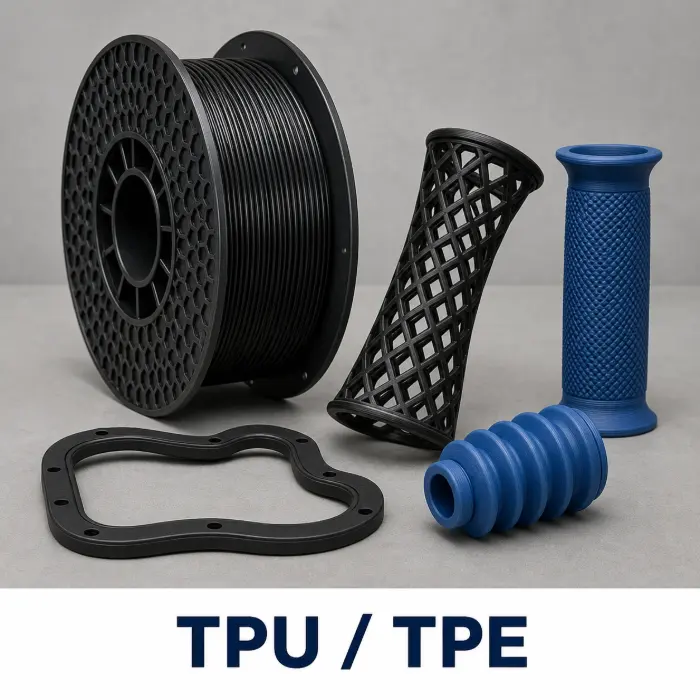
TPU / Flexible
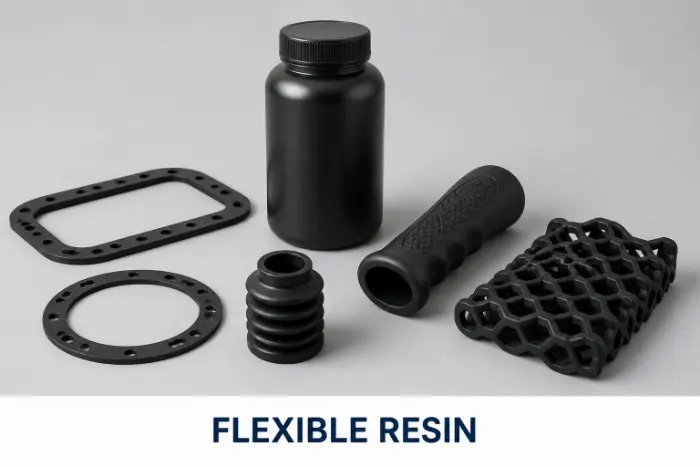
Elastic material for seals, protective covers, grips and flexible prototypes.
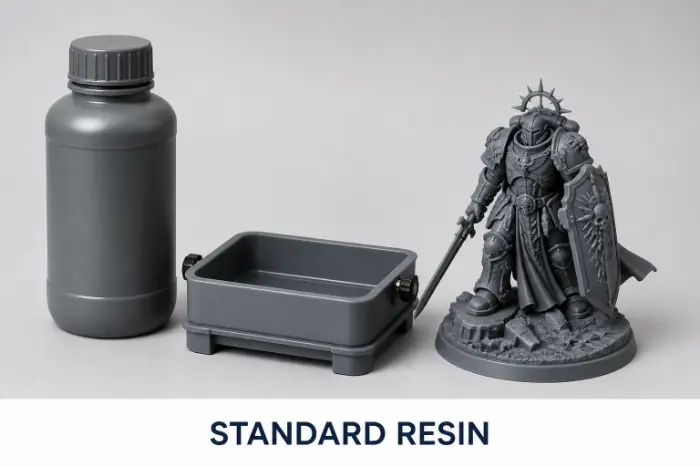
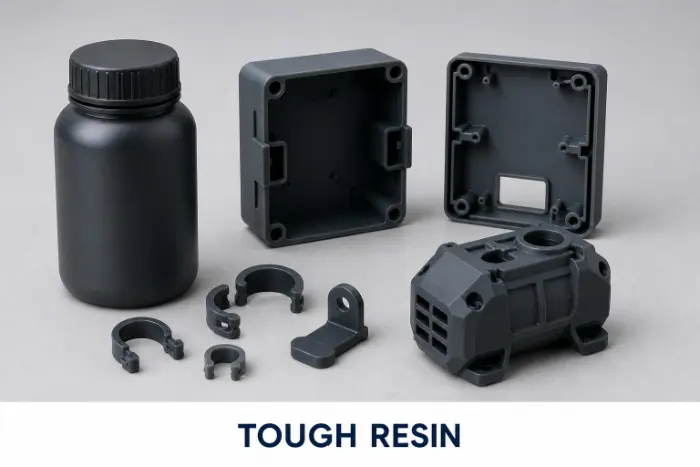
Photopolymer Resin
Standard, tough, clear, castable and heat-resistant grades for detailed SLA parts.
Metal Powders
Aluminum, stainless steel, tool steel and titanium grades subject to process and application review.


POM, PE, PP and HDPE require specialized materials and equipment; availability should be confirmed instead of treating their CNC grades as directly printable.
3D Printing Capabilities
Final capability is confirmed from the selected printer, material, orientation, support strategy, feature size and inspection method.
| Maximum build reference | 750 × 550 × 550 mm |
| Precision reference | Up to about ±0.05 mm for suitable processes and geometry |
| Standard tolerance | About ±0.3 mm |
| Precision tolerance | About ±0.1 mm after process review |
| Minimum wall reference | FDM ≥0.8 mm; SLA ≥0.3 mm |
| Minimum hole reference | About ≥1.5 mm before post-machining |
Rapid Prototypes
Evaluate form, fit and ergonomics without production tooling.
Complex Geometry
Produce internal channels, lattices and integrated features where supported.
Low-Volume Parts
Build repeat parts when tooling is not justified by quantity or schedule.
Hybrid Manufacturing
Add CNC machining and finishing to critical printed features.
3D Printing Design Guidelines
Good print design balances feature size, orientation, support, surface quality and downstream finishing.
Wall Thickness
Use process-appropriate walls and avoid large unsupported thin surfaces.
Orientation
Balance accuracy, strength, support marks, build time and visible surfaces.
Overhangs
Add support or redesign unsupported geometry to reduce sagging and cleanup.
Holes and Fits
Allow for shrinkage and post-machine critical holes, threads and bearing fits.
Layer Strategy
Use fine layers for detail and thicker layers for faster concept builds.
Moisture Control
Dry hygroscopic materials and maintain stable storage and printing conditions.
Post-Processing and Quality Control
Post-processing is selected by material, function, appearance and dimensional requirements rather than applied uniformly to every print.
Support Removal
Remove soluble, breakaway or machined supports without damaging critical surfaces.
Sanding and Polishing
Reduce visible layers and improve fit or cosmetic appearance.
Blasting and Dyeing
Create a uniform texture or color for suitable polymer prints.
Resin Post-Cure
Wash and UV-cure SLA parts according to the selected resin.
Metal Heat Treatment
Stress relief or HIP may be specified for qualified metal-print applications.
CNC Finish Machining
Machine datums, bores, threads and sealing faces requiring tighter control.
3D Printing Advantages and Applications
3D printing is most valuable for rapid iteration, customized parts, complex geometry and low-volume production without dedicated tooling.

Medical
Anatomical models, surgical guides, dental models and patient-specific prototypes.
Automotive
Concept parts, assembly fixtures, airflow models and customized interior prototypes.
Consumer Electronics
Housing concepts, internal brackets and ergonomic product-development models.
Architecture
Scale models, complex façade studies and presentation components.
Education
Hands-on teaching models and demonstrators for three-dimensional concepts.
Industrial Equipment
Jigs, fixtures, guards, ducts and low-volume functional components.
Frequently Asked Questions
Concise guidance on surface quality, materials, warping, file formats and process selection.
How can the surface of a 3D-printed part be improved?
Use a finer layer height, suitable orientation and process-specific sanding, polishing, blasting, coating or resin post-curing.
What post-processing is used for metal prints?
Typical steps may include powder removal, stress relief, HIP, support removal, blasting and CNC finish machining.
Should I choose PLA or ABS?
Choose PLA for economical visual models and low-load prototypes; choose ABS for tougher functional prototypes and enclosures.
How can warping be reduced?
Use dry material, stable chamber temperature, correct bed adhesion, balanced geometry and process-appropriate orientation.
Which files are suitable for printing?
STEP is preferred for engineering review; STL or 3MF can be used when mesh quality and units are clearly controlled.
When should CNC machining replace 3D printing?
Use CNC when material properties, tight tolerances, smooth surfaces or production economics are better served by subtractive machining.
Start Your 3D Printing Project
Upload the model and identify the material, quantity, finish, critical dimensions and intended use.
Upload 3D Printing Files