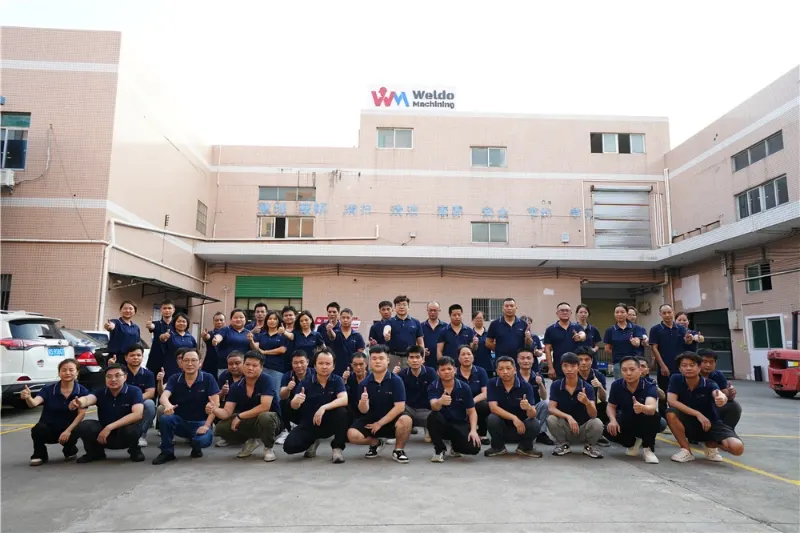
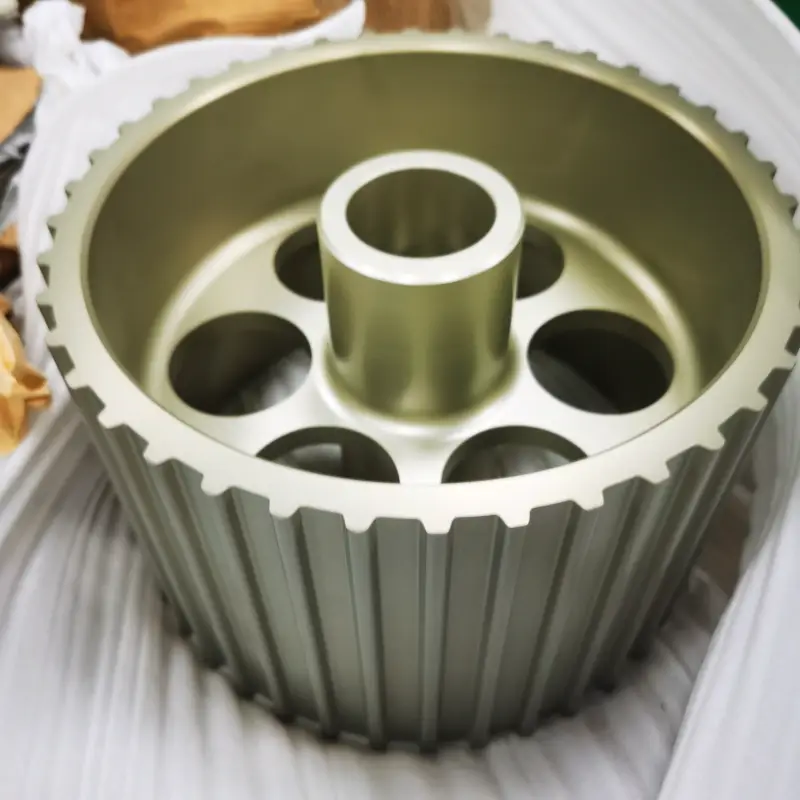
6061-T6 aluminum is widely used for electronic, robotic, automotive, and aerospace components due to its balanced machinability, strength, corrosion resistance, and finishing compatibility. However, CNC machining suppliers differ significantly in equipment capacity, tolerance control, inspection capabilities, lead times, and production volume. This article compares top 7 6061-T6 CNC machining suppliers, highlighting their capabilities, key advantages, and potential limitations to help buyers make a more informed choice.
Top 7 6061-T6 CNC Machining Suppliers
The following seven companies include online manufacturing platforms, managed supply chains, and direct machining factories. They serve different sourcing needs, including rapid quoting, prototype development, complex precision parts, and volume production.
| Company | Location | Primary Model | Main Feature |
| Xometry | United States | Digital manufacturing platform | Online quoting and flexible capacity |
| Protolabs | United States | Rapid digital manufacturing | Rapid prototyping and low-volume production |
| Fictiv | United States | Managed manufacturing network | Supply chain and project management |
| RapidDirect | China | In-house factory and manufacturing network | Prototyping through volume production |
| Weldo Machining | China | Direct precision machining factory | Tight tolerances and complex parts |
| eMachineShop | United States | Online design and manufacturing | CAD design and straightforward customization |
| VMT | China | Direct CNC machining factory | Multi-axis and mill-turn machining |
1. Xometry
Founded in 2013 and headquartered in Maryland, United States, Xometry is a digital manufacturing platform that connects buyers with manufacturing partners. After uploading CAD files, customers can obtain online quotes for CNC machining, sheet metal fabrication, 3D printing, injection molding, and other services.
Its aluminum material options include 6061-T6x, T651, and T6511, supporting one-off prototypes, low-volume orders, and production orders.
Advantages: Fast online quoting, a broad range of material and post-processing options, and the ability to allocate capacity flexibly across different regions through its manufacturing network.
Limitations: Parts may be machined by different partner factories. For repeat orders, the production location, material traceability, and quality consistency requirements should be confirmed in advance.

2. Protolabs
Founded in 1999, Protolabs initially provided rapid injection mold services and later expanded into CNC machining, 3D printing, and sheet metal fabrication.
6061-T651/T6 is one of its commonly used aluminum alloys and can be used to mill and turn housings, brackets, mounting components, and functional test parts. After submitting design files, customers can receive a quote and DFM feedback, primarily for rapid prototypes and low-volume projects.
Advantages: Fast quotes and DFM feedback can help identify design issues involving thin walls, deep holes, internal corner radii, and tool accessibility at an early stage.
Limitations: Parts must comply with its automated production rules. Special tolerances, complex post-processing, or larger-volume orders may require additional manual review.
3. Fictiv
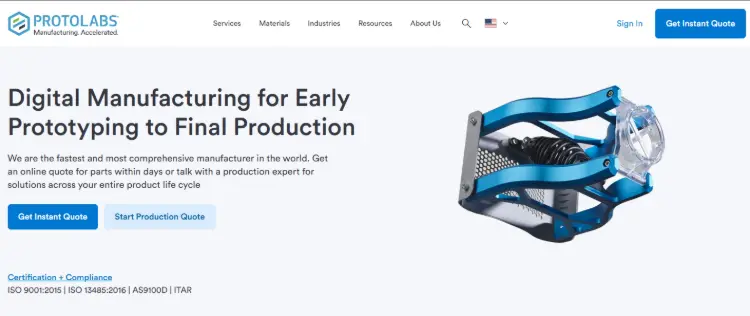
Founded in 2013, Fictiv primarily uses a digital platform to help engineering teams manage custom-part sourcing, supplier collaboration, and production progress.
Its manufacturing network supports the milling and turning of 6061-T6 aluminum for design validation, rapid prototypes, and production parts. Aluminum parts can also be finished with Type II or Type III anodizing, Alodine chemical conversion coating, electroless nickel plating, sandblasting, and powder coating.
Advantages: Quoting, production tracking, quality inspection, and supply chain management are consolidated on one platform, making it suitable for managing multiple part types or production stages.
Limitations: Actual machining is generally completed by partner factories. For long-term projects, buyers should confirm whether the same production factory, machining process, and inspection methods will be used.
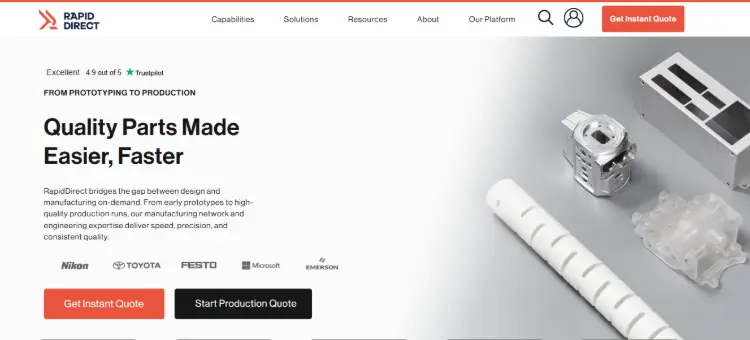
4. RapidDirect
Founded in 2009, RapidDirect operates machining facilities in China and accepts international orders through a combination of in-house equipment and a manufacturing network.
Its 6061-T6 machining capabilities include 3-axis, 4-axis, and 5-axis milling, CNC turning, drilling, EDM, and precision grinding. Orders can scale from rapid samples to volume production, with post-processing options such as anodizing, electroplating, sandblasting, polishing, and powder coating.
Advantages: A relatively broad selection of machining processes and surface treatments allows part manufacturing, dimensional inspection, and post-processing to be completed through one supplier.
Limitations: Rapid delivery generally applies to parts made from in-stock materials with relatively simple structures. Complex geometries and multiple post-processing operations will extend the production lead time.
5. Weldo Machining
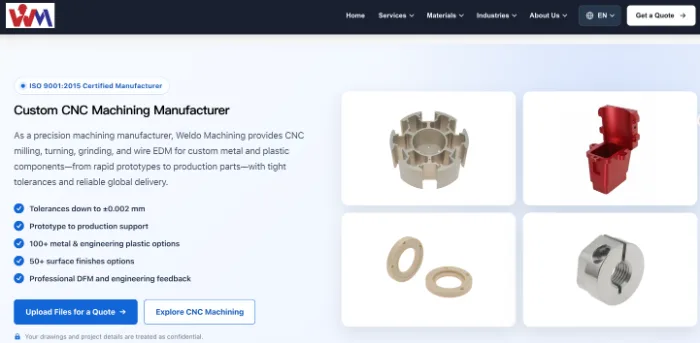
Founded in 2012 and located in Dongguan, China, Weldo Machining primarily manufactures custom metal and engineering plastic parts for overseas customers.
Its 6061-T6 machining services include 3-axis, 4-axis, and 5-axis milling, CNC turning, precision grinding, high-speed wire EDM, and slow-wire EDM, covering prototypes, low-volume production, and repeat production runs. It also supports DFM analysis, surface treatment, and CMM dimensional inspection.
Advantages: Customers can communicate directly with the engineering team. When part geometry, material condition, and inspection conditions permit, precision dimensional tolerances can reach ±0.002 mm.
Limitations: A fully automated instant quoting system is not currently used. Engineering evaluation is required based on the drawings, quantity, tolerances, and post-processing requirements.
6. eMachineShop
Founded in 1999, eMachineShop was one of the earlier manufacturing companies to combine part design, price calculation, and online ordering.
Customers can upload CAD files or use its free CAD software to order CNC-milled, CNC-turned, laser-cut, and waterjet-cut parts. Its 6061 aluminum is available for prototype and production orders, but the specific heat-treatment condition must be confirmed during the inquiry process.
Advantages: CAD design, manufacturability checks, price estimates, and online ordering are closely integrated, making it suitable for engineers, designers, and small to medium-sized projects.
Limitations: Some material pages list only 6061 without clearly distinguishing T6, T651, and T6511. The material condition and material certificates must be confirmed through direct communication.
7. VMT
VMT states that it was founded in 2008. Located in Shenzhen, China, the company primarily manufactures custom metal parts and precision assemblies.
Its equipment includes 3-axis to 5-axis machining centers, CNC lathes, mill-turn machines, and Swiss-type lathes for machining 6061-T6 parts with complex geometries. Its order range covers one-off samples, low-volume production, and volume production, with support for anodizing, powder coating, polishing, and dimensional inspection.
Advantages: DFM analysis, multi-axis machining, mill-turn machining, post-processing, and quality inspection can be integrated to accommodate aluminum parts with different geometries.
Limitations: Extreme tolerances, rapid lead times, and volume capacity are affected by part complexity, equipment scheduling, and post-processing operations.
Why 6061-T6 Is Suitable for CNC Machining
1. Basic Characteristics of 6061-T6
6061-T6 is an aluminum alloy strengthened through solution heat treatment and artificial aging. It offers a good balance of strength, weight, corrosion resistance, and machinability. Compared with some high-strength aluminum alloys, its material cost and machining difficulty are relatively moderate, so it is widely used for prototype manufacturing and volume part production.
| Property | Typical Reference Value |
| Density | Approx. 2.70 g/cm³ |
| Tensile strength | Approx. 290–310 MPa |
| Yield strength | Approx. 240–276 MPa |
| Brinell hardness | Approx. 95 HBW |
| Modulus of elasticity | Approx. 69 GPa |
| Thermal conductivity | Approx. 167 W/m·K |
These are common typical values and do not apply to every 6061-T6 product. Actual properties are affected by product form, dimensional range, applicable standards, and supply condition. The relevant standard and material certificate should be used for procurement.
2. CNC Machining Advantages of 6061-T6
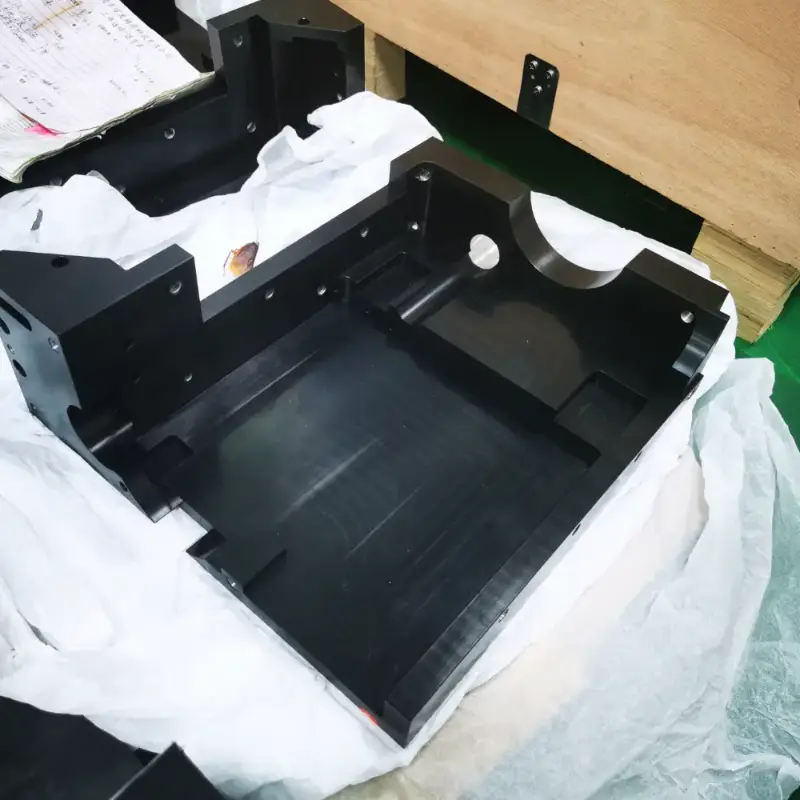
6061-T6 has good machinability. With suitable tools, cutting parameters, and cooling methods, it can achieve stable dimensional accuracy and surface quality, making it suitable for milling, turning, drilling, tapping, and multi-axis machining.
Its moderate hardness generally places a lower load on cutting tools than high-strength aluminum alloys such as 7075. After machining, parts can also undergo anodizing, chemical conversion coating, sandblasting, polishing, powder coating, and laser engraving.
However, thin-walled parts, large flat plates, and deep-cavity parts may still be affected by residual material stress, clamping force, and cutting heat. When machining such parts, roughing, semi-finishing, and finishing should be sequenced appropriately, and the material removal sequence should be controlled.
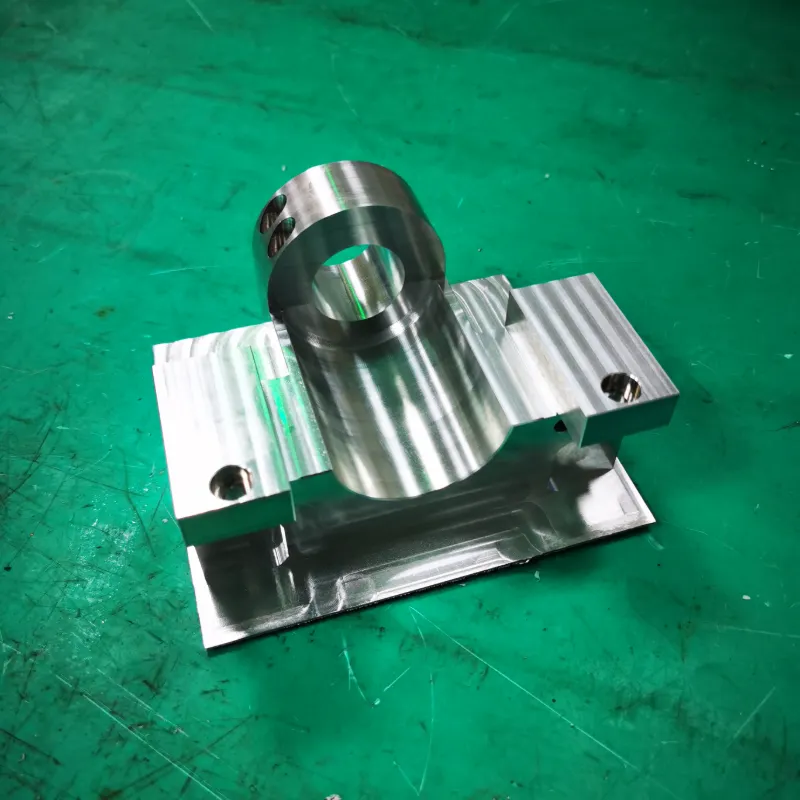
3. Common Applications of 6061-T6 CNC Machining
Electronic equipment housings and heat-dissipation components
Robot brackets and connectors
Industrial equipment mounting plates and fixtures
Automotive structural and functional parts
Auxiliary aerospace structural components
Bicycle and sporting equipment parts
Automation equipment frames and precision components
Selection Criteria for These 7 Suppliers
This selection primarily considers the following four aspects:
Material support: Whether the supplier explicitly provides 6061-T6, T651, or T6511 and supports material certificates and batch traceability.
Manufacturing capabilities: Whether the supplier offers CNC milling, turning, multi-axis machining, and production capabilities from prototypes through volume production.
Quality control: Whether the supplier provides dimensional inspection, first article inspection, CMM reports, or other quality documents.
Sourcing convenience: Whether the supplier can provide DFM support, post-processing, clear quotations, and relatively transparent delivery terms.
The order of the list is primarily used to organize the article and does not represent an absolute quality ranking among the companies.
How to Choose a 6061-T6 CNC Machining Supplier
1. Verify the Material and Actual Machining Experience
The drawing should clearly specify 6061-T6, T651, or T6511 rather than simply stating “6061 aluminum.” For parts requiring high dimensional stability, the material’s product form, residual-stress condition, material certificate, and batch traceability should also be confirmed.
Having the relevant equipment is only a basic requirement. Buyers should also check whether the supplier has machined parts with similar dimensions, geometries, and tolerances, particularly thin-walled, deep-cavity, large-flat-surface, and complex multi-axis parts.
2. Evaluate Tolerance and Inspection Capabilities
A supplier’s advertised maximum precision does not apply to every part. Whether critical tolerances can be achieved depends on part dimensions, structural rigidity, datum design, clamping method, machining environment, and inspection method.
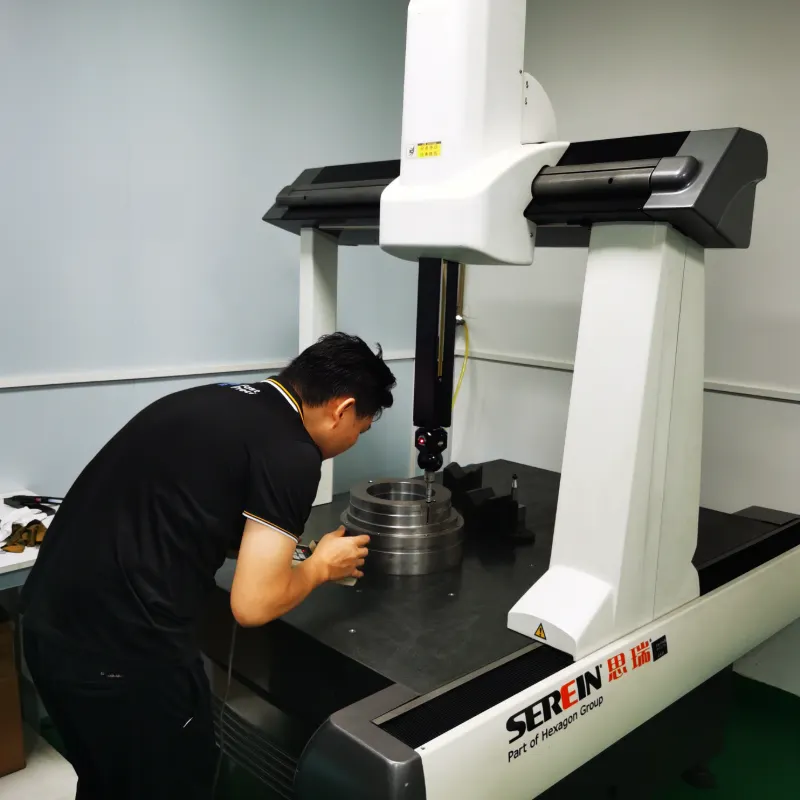
Buyers should ask the supplier to evaluate each critical dimension and confirm whether it has a CMM, contour measuring instrument, surface roughness tester, and other necessary inspection equipment. Before volume production, actual capabilities can be verified through first article inspection or a low-volume trial run.
3. Check Certifications and Quality Documents
For general industrial projects, ISO 9001 quality management system certification can be checked first. Aerospace and medical projects may also involve AS9100, ISO 13485, or other industry-specific certifications.
When verifying certificates, check their validity period, certification scope, company name, production address, and issuing body rather than reviewing only an image of the certificate. Buyers should also determine whether the supplier can provide material certificates, first article inspection reports, CMM reports, and batch inspection records as required by the project.
4. Compare Lead Time and Total Procurement Cost
If parts require anodizing, sandblasting, chemical conversion coating, or powder coating, confirm the color, coating thickness, masking areas, appearance standards, and post-treatment dimensional changes in advance.
Quotations should not be compared solely on unit price. Material, programming, fixtures, inspection, post-processing, packaging, shipping, and duties should also be included. For repeat orders, batch consistency, delivery reliability, and engineering communication efficiency are equally important.
Information Required When Submitting an RFQ
Complete RFQ information helps the supplier evaluate the process, lead time, and cost more accurately. It is recommended to provide at least the following six items:
2D engineering drawings and 3D models in formats such as STEP and IGES
The specific material condition, such as 6061-T6, T651, or T6511
Critical dimensions, tolerances, datums, and GD&T requirements
Surface roughness, appearance standards, and post-processing requirements
Sample quantity, production quantity, and estimated annual demand
Inspection documents, packaging method, target lead time, and delivery location
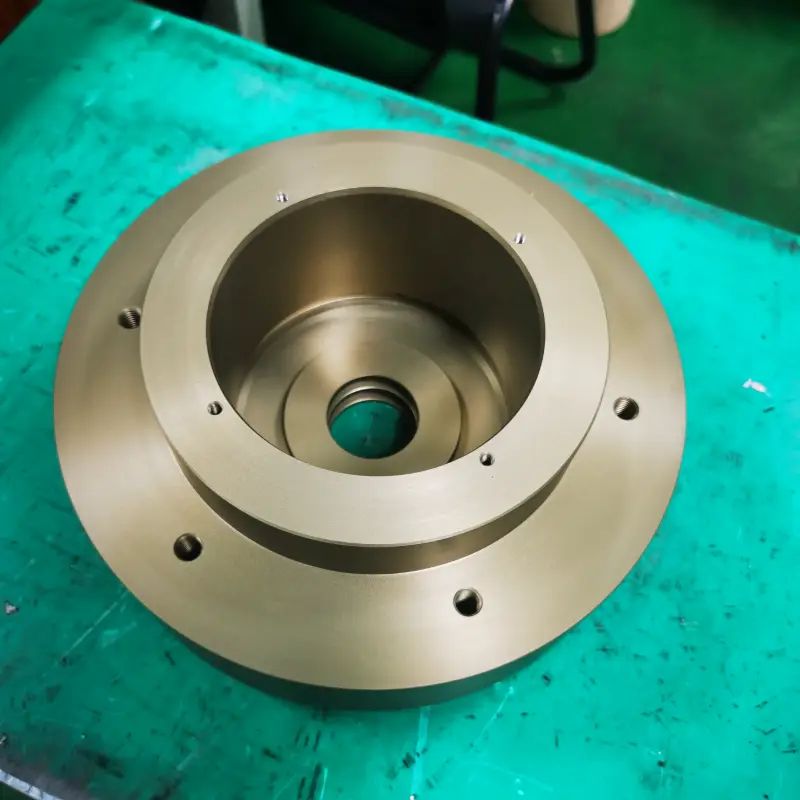
Thin walls, deep cavities, precision mating surfaces, and critical dimensions after anodizing should be marked separately on the drawings. The more complete the information, the easier it is for the supplier to provide targeted DFM recommendations and an accurate quotation.
FAQ
Is 6061-T6 Suitable for High-Precision CNC Machining?
Yes. 6061-T6 has good machinability and a relatively stable material condition, making it suitable for high-precision milling, turning, and multi-axis machining.
However, tolerance capability must be assessed for the specific part. Thin-walled structures, large flat surfaces, complex clamping, and poorly designed datums can all reduce final accuracy.
What Is the Difference Between 6061-T6 and 6061-T651?
Both undergo solution heat treatment and artificial aging. 6061-T651 additionally receives stress relief by stretching, so its residual stress is generally lower.
6061-T651 is commonly used for plate and for parts requiring greater flatness and dimensional stability after machining. The specific selection also depends on the material standard and product form.
Can 6061-T651 Replace 6061-T6 Specified on a Drawing?
Common methods include removing material symmetrically, machining in stages, reducing clamping force, retaining an appropriate finishing allowance, and arranging a stress-relief process when necessary.
For large flat plates or high-precision thin-walled parts, the stock condition, machining sequence, and re-clamping plan after flipping the part must also be evaluated.
How Can Deformation of Thin-Walled 6061-T6 Parts Be Reduced?
Common methods include removing material symmetrically, machining in stages, reducing clamping force, retaining an appropriate finishing allowance, and arranging a stress-relief process when necessary.
For large flat plates or high-precision thin-walled parts, the stock condition, machining sequence, and re-clamping plan after flipping the part must also be evaluated.
Conclusion
These seven 6061-T6 CNC machining suppliers use different business models. Xometry, Protolabs, and eMachineShop focus more on digital quoting or rapid ordering; Fictiv emphasizes supply chain and project management; RapidDirect, Weldo Machining, and VMT provide more direct machining and production support.
Before placing a formal order, it is recommended to verify the material condition, critical tolerances, surface treatment results, and quality documents through samples or a low-volume order. For long-term projects, batch consistency, delivery reliability, and nonconformance handling capabilities should also be examined closely.
If you need custom 6061-T6 precision parts, you can submit 2D engineering drawings, 3D models, and quantity requirements to Weldo Machining to receive DFM recommendations, a machining plan, and a transparent quotation.
The supplier information, comparison results, and selection recommendations above are provided for reference only and do not constitute an absolute ranking or purchasing decision. Each company’s machining capabilities, certifications, material supply, lead times, and service scope may change. Before entering into a formal partnership, verify these details against the project drawings, material condition, tolerance requirements, quality documents, and total procurement cost.