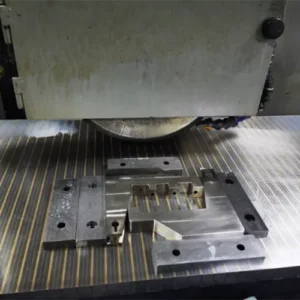
16MnCr5 CNC machining plays a critical role in the production of high-strength, wear-resistant mechanical components used in demanding industrial environments. As a widely applied case hardening steel, 16MnCr5 offers excellent machinability in the soft state and outstanding surface hardness after heat treatment, making it a preferred material for precision components requiring long service life.
This article provides a comprehensive overview of 16MnCr5 CNC machining, covering material properties, machining processes, surface treatments, applications, cost considerations, EDM capability, tooling selection, and proven machining solutions.

What Is 16MnCr5 Steel?
16MnCr5 is a low-carbon alloy steel specified under EN 10084 standards and commonly used as a heat treatment steel for carburized parts. Its balanced chemical composition provides good hardenability while maintaining a tough and shock-resistant core.
Typical chemical composition includes:
- Carbon (C): 0.14–0.19%
- Manganese (Mn): 1.0–1.3%
- Chromium (Cr): 0.8–1.1%
This combination makes 16MnCr5 CNC machining especially suitable for parts requiring a hard, wear-resistant surface with a ductile interior.
Physical and Mechanical Properties of 16MnCr5
Physical Characteristics
- Density: ~7.85 g/cm³
- Thermal conductivity: Moderate
- Magnetic behavior: Ferromagnetic
These characteristics support stable cutting behavior during precision CNC machining, particularly under controlled thermal conditions.
Mechanical Performance
In the untreated state, 16MnCr5 offers good machinability and moderate strength. After carburizing and quenching:
- Surface hardness can reach 58–62 HRC
- Core retains high toughness and fatigue resistance
- Wear resistance is significantly enhanced
These properties explain why 16MnCr5 CNC machining is widely used in power transmission and motion systems.
Precision CNC Machining Processes for 16MnCr5
CNC Milling and Turning
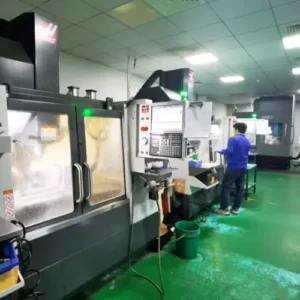
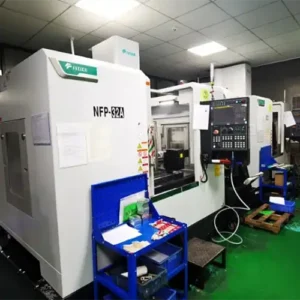
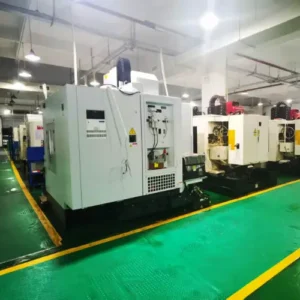
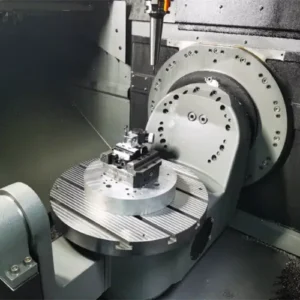
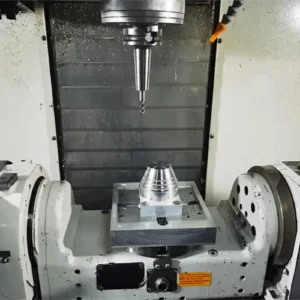
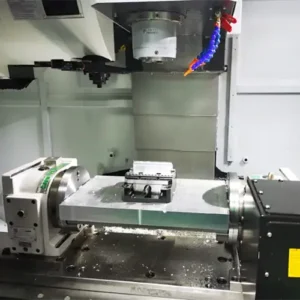
In the annealed or normalized condition, CNC milling and CNC turning of 16MnCr5 can be performed efficiently with stable tool life and predictable cutting behavior. Multi-axis machining is often used for complex geometries requiring tight tolerances.

EDM Machining Capability
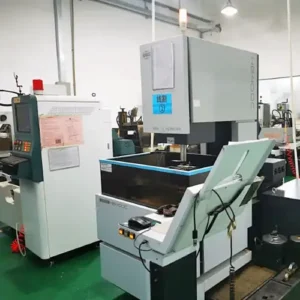
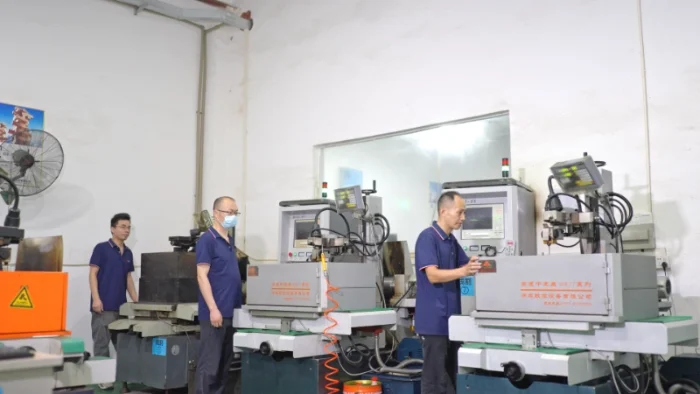
16MnCr5 CNC machining fully supports EDM machining, including wire EDM and sinker EDM. EDM is particularly effective:
- After heat treatment
- For deep slots, sharp corners, and internal profiles
- When conventional cutting tools cannot access hardened features
EDM is a key complementary process for precision components made from hardened 16MnCr5.
CNC Grinding for Final Precision
For applications requiring high dimensional accuracy and low surface roughness, CNC grinding is commonly applied after heat treatment. Grinding ensures dimensional stability and precise fits for functional components.

Heat Treatment and Surface Treatment Options
Heat Treatment Processes
Heat treatment is essential in 16MnCr5 CNC machining. Common processes include carburizing, quenching, and tempering. These treatments significantly increase surface hardness while preserving a tough and fatigue-resistant core, making the material suitable for high-load and wear-intensive applications.
Supported Surface Treatments and Their Functions
In addition to heat treatment, 16MnCr5 CNC machining supports multiple surface treatments, selected based on wear resistance, corrosion protection, friction control, and service conditions:
- PVD Coating (Physical Vapor Deposition)
Enhances surface hardness, wear resistance, and friction performance, ideal for gears, sliding components, and precision parts under high contact stress. - Black Oxide
Provides light corrosion resistance, reduces glare, and improves oil retention on steel surfaces. - Phosphating
Improves corrosion resistance and lubrication retention, commonly used for moving or assembled components. - Shot Blasting
Cleans surface scale after heat treatment and improves fatigue resistance by inducing compressive surface stress. - Polishing
Reduces surface roughness and improves contact performance for precision assemblies. - Anti-Corrosion Oil Coating
Provides temporary protection during storage and transportation without affecting dimensional accuracy.
The appropriate surface treatment in 16MnCr5 CNC machining is selected based on operating environment and functional requirements.
Applications of 16MnCr5 CNC Machined Parts
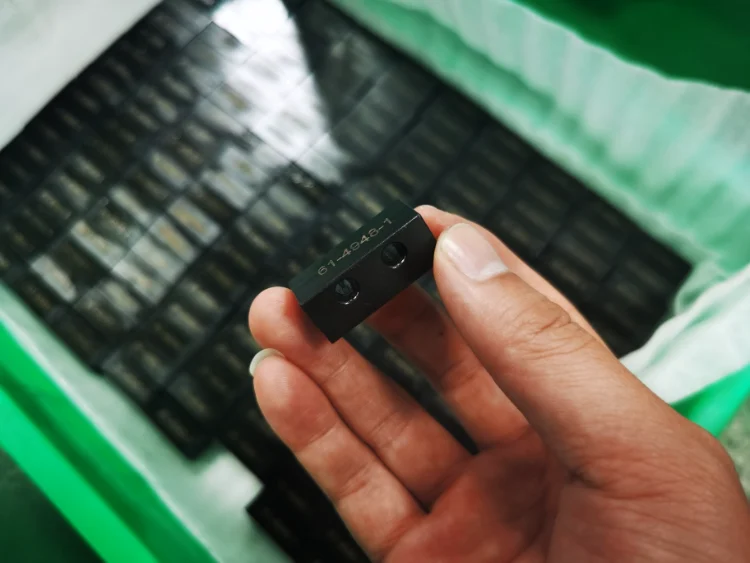
Due to its balanced mechanical performance, 16MnCr5 CNC machining is commonly used for:
- Gears and pinions
- Shafts and splines
- Bushings and sleeves
- Automotive transmission components
- Industrial drive and motion systems
Machining Cost Considerations
The total cost of 16MnCr5 CNC machining depends on:
- Material condition (soft vs. heat treated)
- Part complexity and tolerance requirements
- Heat treatment and surface finishing processes
- Tool wear and machining time
Machining in the soft state before heat treatment is generally more cost-effective, while post-treatment grinding and EDM increase cost but improve performance and accuracy.
Machining Challenges and Proven Solutions
Common Challenges
- Increased tool wear after carburizing
- Distortion caused by heat treatment
- Difficulty machining hardened surfaces
Effective Solutions
- Perform rough machining before heat treatment
- Leave sufficient grinding allowance
- Use EDM machining for hardened features
- Apply controlled heat treatment to minimize distortion
These practices improve consistency and efficiency in 16MnCr5 CNC machining.
End Mill Material Selection for 16MnCr5
Tool selection is critical for stable results:
- Carbide end mills are recommended for most operations
- TiAlN or AlCrN coatings improve heat resistance and tool life
- HSS tools are not recommended for hardened material
- Cutting parameters should balance surface quality and tool wear
Proper tooling reduces production cost and improves repeatability.

Quality Control and Dimensional Accuracy
High-quality 16MnCr5 CNC machining requires strict inspection, including:
- CMM dimensional verification
- Hardness testing after heat treatment
- Surface roughness measurement
These controls ensure compliance with drawings and performance requirements.
Conclusion and Manufacturing Support
16MnCr5 CNC machining is an optimal solution for high-strength, wear-resistant components when combined with proper machining strategy, controlled heat treatment, and appropriate surface finishing such as PVD coating. From CNC milling and EDM machining to grinding and final inspection, a systematic manufacturing approach ensures long-term reliability and cost efficiency.
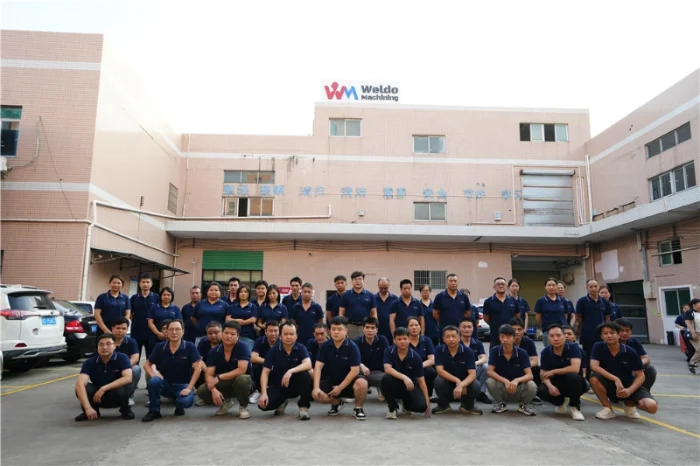
If you are looking for a professional partner for 16MnCr5 CNC machining, Weldo Machining provides comprehensive support—from material selection and process optimization to precision manufacturing and inspection. Contact us today for more technical details and a competitive quotation.