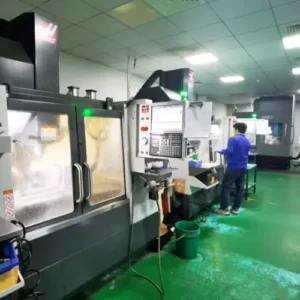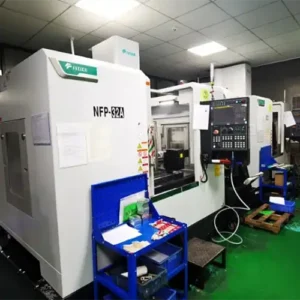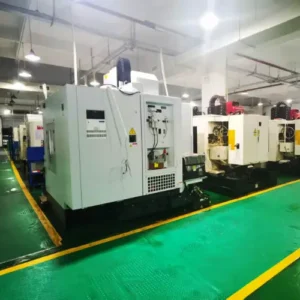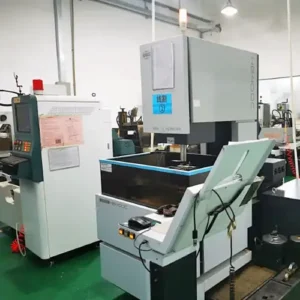
A professional 5 axis CNC machining manufacturer plays a critical role in producing complex, high-precision components that cannot be efficiently manufactured using conventional machining methods. Compared with traditional CNC processes, 5-axis machining enables simultaneous multi-directional cutting, tighter tolerances, and superior surface quality—making it essential for advanced industries such as aerospace, medical, automotive, and industrial equipment manufacturing.

What Is 5 Axis CNC Machining?
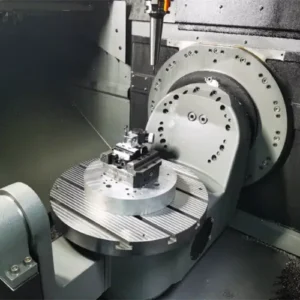
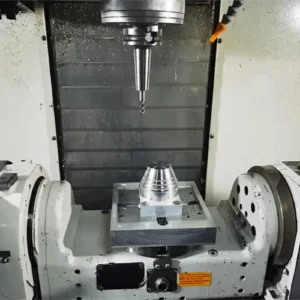
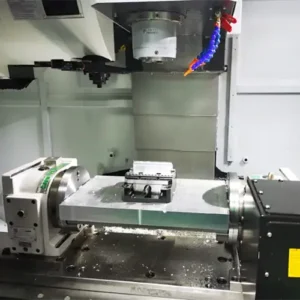
A 5 axis CNC machining manufacturer uses CNC machines capable of moving a cutting tool or workpiece along five independent axes simultaneously—typically X, Y, Z, plus two rotational axes (A and B or C).
This allows the tool to approach the part from virtually any direction, enabling:
- Machining of complex geometries in a single setup
- Reduced repositioning and fixturing
- Improved dimensional accuracy and consistency
As a result, a qualified 5 axis CNC machining manufacturer can deliver parts with tighter tolerances and shorter lead times than 3-axis machining alone.
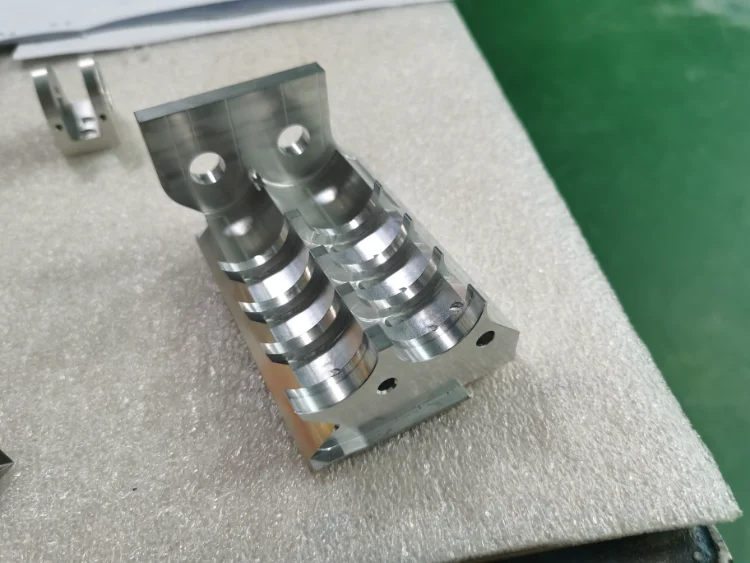
Key Advantages of a 5 Axis CNC Machining Manufacturer
Choosing an experienced 5 axis CNC machining manufacturer offers several technical and commercial advantages:
- One-setup machining for complex parts
- Reduced cumulative tolerance stack-up
- Improved surface finish on contoured features
- Shorter overall cycle times
- Greater design freedom for engineers
These advantages make five-axis machining ideal for parts with deep cavities, compound angles, and intricate profiles.
Critical Considerations in 5 Axis CNC Machining
While powerful, five-axis machining requires careful planning and expertise.
Programming and Tool Path Strategy
A reliable 5 axis CNC machining manufacturer must optimize tool paths to avoid collisions, excessive tool engagement, and unstable cutting forces.
Fixturing and Workholding
Improper fixturing can negate the accuracy benefits of 5-axis machining. Stable, repeatable fixturing is essential for precision results.
Tool Selection
Tool length, rigidity, and coating directly impact machining stability, especially during multi-axis interpolation.
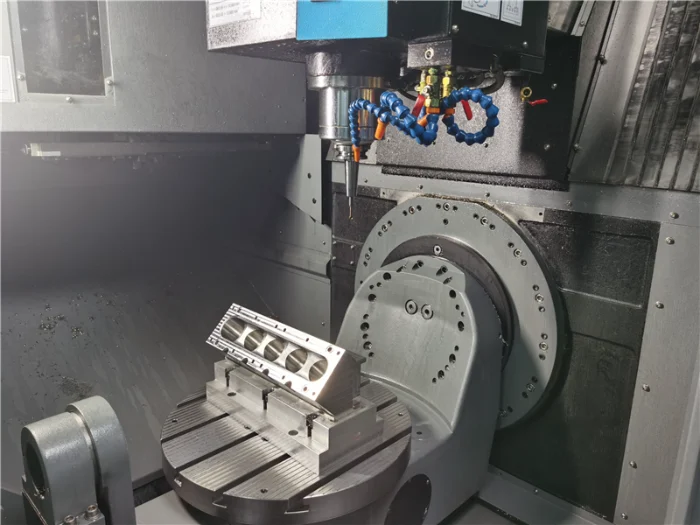
5 Axis CNC Machining Operation Guidelines
Professional operating practices distinguish a high-level 5 axis CNC machining manufacturer from a basic supplier.
Best-Practice Guidelines
- Use shorter tools whenever possible to reduce vibration
- Maintain consistent chip load across simultaneous axes
- Simulate tool paths before production
- Control thermal expansion during long cycles
These guidelines help ensure stable machining and repeatable quality.
Common Difficulties in 5 Axis CNC Machining and Solutions
Even advanced CNC systems face challenges. An experienced 5 axis CNC machining manufacturer proactively manages these risks.
Collision Risk
Solution: Full machine simulation and verification before cutting.
Tool Deflection
Solution: Optimized cutting parameters and high-rigidity tooling.
Programming Complexity
Solution: Skilled CAM engineers and post-processor optimization.
Higher Equipment Cost
Solution: Strategic use of 5-axis machining only where it delivers measurable value.
Applications and Components Machined by 5 Axis CNC Machining Manufacturers
A qualified 5 axis CNC machining manufacturer supports a wide range of industries.
Typical Applications
- Aerospace structural components
- Turbine blades and impellers
- Medical implants and surgical instruments
- Automotive performance parts
- Complex industrial housings
These components often feature undercuts, compound curves, and multi-angled features that are impractical with 3-axis machining alone.
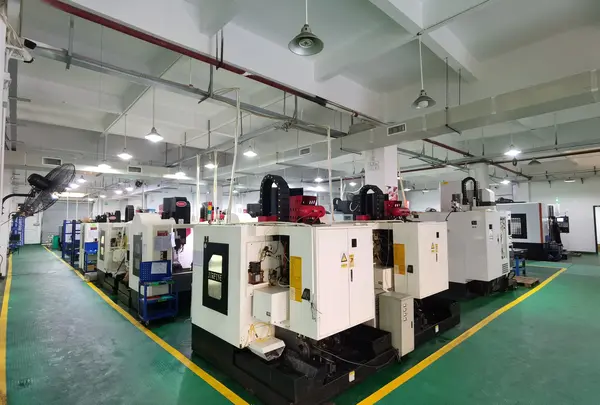
5 Axis vs 3 Axis CNC Machining: Advantages and Limitations
Advantages Over 3 Axis
A 5 axis CNC machining manufacturer can machine complex geometries in fewer setups, reducing errors and improving surface quality.
Limitations Compared to 3 Axis
- Higher machine and programming cost
- Longer setup preparation time
- Not cost-effective for simple prismatic parts
3-axis machining remains ideal for flat, straightforward geometries and high-volume production.
5 Axis vs 4 Axis CNC Machining Comparison
Four-axis machining adds rotational capability but still limits tool access.
| Aspect | 3 Axis | 4 Axis | 5 Axis |
|---|---|---|---|
| Setup Count | High | Medium | Low |
| Geometry Complexity | Low | Medium | High |
| Surface Finish | Standard | Improved | Excellent |
| Programming Difficulty | Low | Medium | High |
A skilled 5 axis CNC machining manufacturer understands when five-axis capability is truly required—and when it is not.
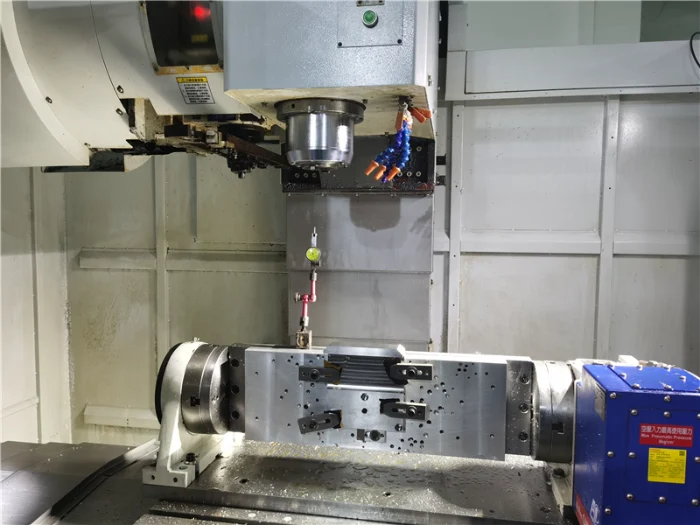
Collaborative Strategy: 5 Axis and 3 Axis Machining Together
An advanced 5 axis CNC machining manufacturer does not rely exclusively on five-axis machines. Instead, it integrates three-axis and five-axis machining strategically.
Synergistic Advantages
- Rough machining on three-axis for cost efficiency
- Precision finishing on five-axis for accuracy
- Reduced five-axis machine time
- Optimized total production cost
This hybrid approach delivers the best balance between precision and cost.
Synergy Between 5 Axis CNC Machining and Wire EDM machining
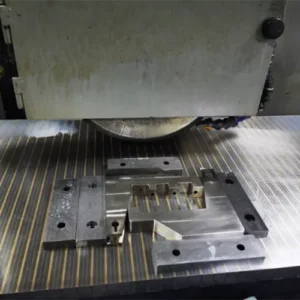
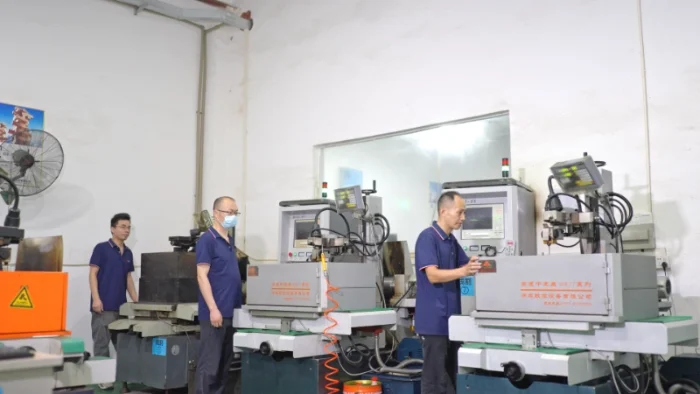
An advanced 5 axis CNC machining manufacturer often combines five-axis machining with EDM (Electrical Discharge Machining) to achieve features that cannot be produced efficiently by cutting alone. This integrated approach extends the capability of five-axis machining when dealing with sharp internal corners, deep narrow slots, or hardened materials.
In practical production, 5 axis CNC machining is typically used for roughing and semi-finishing complex geometries, while wire EDM or sinker EDM is applied to complete high-precision internal features without cutting force. This combination eliminates tool deflection issues and preserves dimensional accuracy.
Advantages of 5 Axis Machining Combined with EDM
- Enables machining of sharp internal corners and fine features
- Improves accuracy in hardened steels and difficult-to-machine alloys
- Reduces rework caused by tool access limitations
- Enhances overall process reliability for complex parts
For aerospace, mold and die, medical tooling, and high-tolerance industrial components, the synergy between five-axis CNC machining and EDM provides a balanced solution that maximizes precision while controlling cost.
At Weldo Machining, five-axis CNC machining and EDM processes are coordinated during DFM planning to ensure manufacturability, dimensional stability, and efficient production flow.
Quality Control in 5 Axis CNC Machining
Quality assurance is critical for any 5 axis CNC machining manufacturer.
Key inspection practices include:
- CMM dimensional verification
- Surface finish measurement
- In-process probing
- First-article inspection
These controls ensure consistency from prototype to production.
Why Choose Weldo Machining as Your 5 Axis CNC Machining Manufacturer
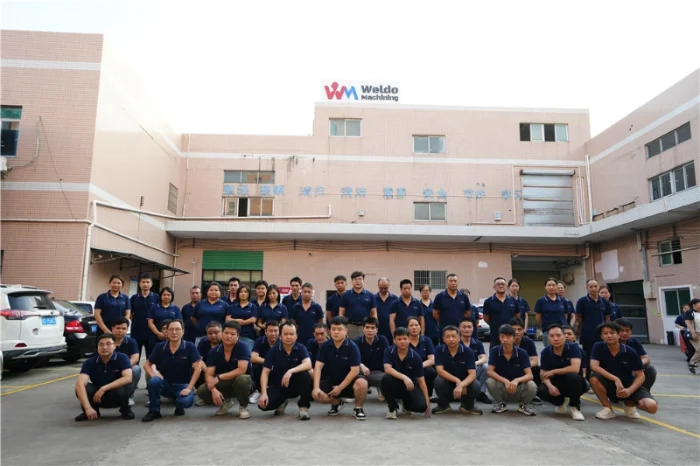
Weldo Machining is a trusted 5 axis CNC machining manufacturer delivering high-precision components for demanding industries. Our capabilities include advanced CAM programming, strict process control, and seamless integration of 3-axis, 4-axis, and 5-axis machining.
From complex prototypes to production parts, Weldo Machining provides reliable 5-axis solutions optimized for accuracy, efficiency, and cost. Contact Weldo Machining today to discuss your project requirements and receive a competitive quotation.
FAQ of 5 axis cnc machining manufacturer
When should I choose a 5 axis CNC machining manufacturer?
When your part has complex geometries, tight tolerances, or requires multi-angle machining in one setup.
Is 5 axis CNC machining always more expensive than 3 axis?
Not always. While machine rates are higher, reduced setups and rework can lower total cost.
What materials can be machined using five-axis CNC?
Can 5 axis and 3 axis machining be combined in one project?
Yes. Many manufacturers use three-axis for roughing and five-axis for finishing.
What tolerances can a 5 axis CNC machining manufacturer achieve?
Typically ±0.005 mm to ±0.01 mm, depending on material and geometry.