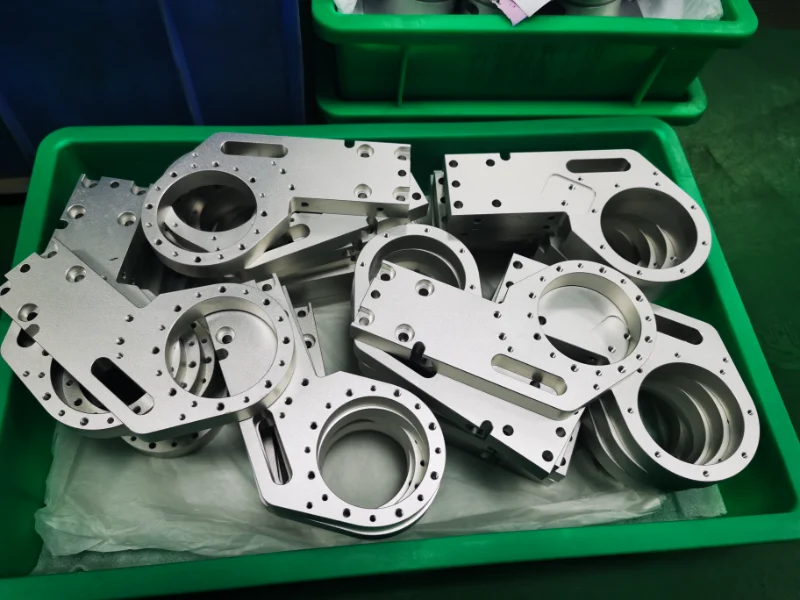
In industrial manufacturing, 5052 and 6061 are two of the most commonly compared aluminum alloys: 5052 belongs to the 5xxx Al–Mg series, while 6061 belongs to the 6xxx Al–Mg–Si series. They differ significantly in formability, strength, machinability, and surface-finishing compatibility. Understanding their alloy systems, temper differences, and the matching processing and finishing methods helps make better material choices early in product design and reduces later machining and structural risks.
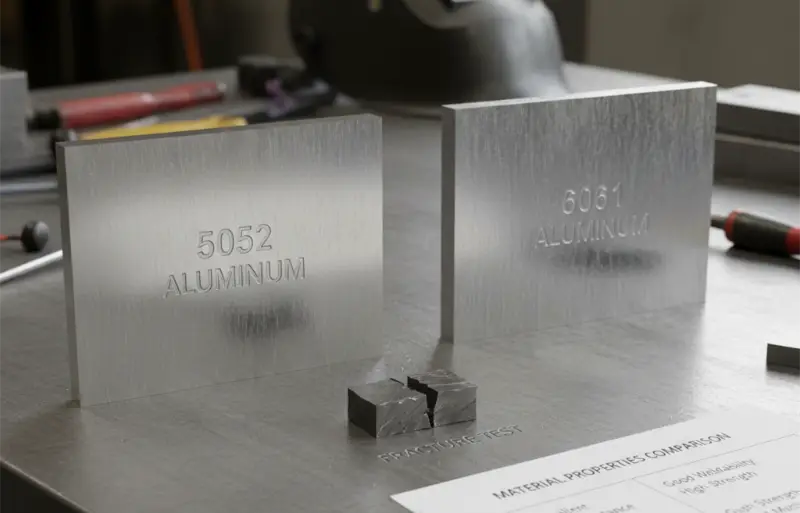
I. Composition Comparison of 5052 Aluminum VS 6061
Before discussing specific machining processes and applications, it is necessary to first understand the strengthening mechanisms of the two materials. The strengthening method determines the upper limit of material strength, welding behavior, and heat-treatment possibility, and also directly affects its compatible manufacturing path.
5052 (5xxx Series Al-Mg)
5052 belongs to a non-heat-treatable strengthened aluminum alloy; its performance improvement relies on cold-work hardening. This characteristic determines its advantageous position in the sheet metal and corrosion-resistance fields.
Mg content is about 2.2–2.8%
Magnesium increases material strength through solid-solution strengthening, while significantly enhancing resistance to seawater and salt-spray corrosion. The relatively high Mg content gives the material good toughness, but it is prone to tool sticking (built-up edge) during cutting, so during machining it is necessary to optimize tool geometry and lubrication methods.
Cannot be strengthened through heat treatment
5052 lacks a precipitation-strengthening mechanism and cannot increase strength through aging treatments such as T6. This means that welding or local heating will not destroy the strengthening phase, and post-weld performance is more stable, making it suitable for welded sheet-metal structures.
Strength increase relies on work hardening
Different H tempers represent different degrees of cold-work hardening (5052-H34 / H36 / H38). Strength increases as work hardening increases, but elongation decreases. In engineering design, it is necessary to reasonably select the temper according to the bending radius and forming difficulty.
High toughness and good crack resistance
Cracks are not easy to occur during complex bending and stamping processes, which makes it a commonly used material for housings and cover parts.

6061 (6xxx Series Al-Mg-Si)
Different from 5052, 6061 is a typical heat-treatable strengthened aluminum alloy. Its strengthening mechanism is precipitation strengthening, so the strength improvement path is more obvious.
Mg and Si form the Mg₂Si precipitation-strengthening phase
After solution treatment, fine precipitates are formed through artificial aging, significantly improving yield strength. This is also the core reason why 6061-T6 strength is obviously higher than 5052.
Supports multiple heat-treatment tempers
Tempers such as O, T4, T6, and T651 can be flexibly selected according to the manufacturing stage. For example, it can be formed in the O temper first, and then treated to T6 to obtain high strength.
Welding will affect the strengthened temper
The welding heat-affected zone will cause dissolution of the precipitation-strengthening phase, thereby reducing local strength. Structural design needs to avoid making the weld seam the main load-bearing path.
Strong structural load-bearing capacity
Under the same cross-sectional conditions, the yield strength of 6061-T6 is obviously higher than 5052-H32, making it more suitable for structural support parts.
Characteristics of 5052 aluminum alloy
As a non-heat-treatable alloy, the performance of 5052 is mainly controlled through H tempers. Understanding the differences between each temper helps accurately match actual accessory/part applications.
5052-O
The O temper is a fully annealed state and is the form of 5052 with the best ductility.
- Highest ductility: The material can withstand relatively large plastic deformation without cracking, suitable for deep-drawn structures.
- Lowest strength: Not suitable for load-bearing structures, but has obvious advantages in the forming stage.
- Large bending safety margin: Can achieve small-radius bending without cracking, suitable for complex contour parts.
- Can be machined after forming: After forming is completed, subsequent cutting or welding can be performed.
- Typical application parts: Deep-drawn housings, covers, container cover plates, electronic housings, etc.
5052-H32
H32 is the most common engineering temper in industrial applications.
- Balance of strength and forming performance: Compared with the O temper, strength is significantly improved, while still maintaining good bending performance.
- Stable corrosion resistance: Suitable for long-term outdoor or marine environment applications.
- Suitable for batch sheet-metal manufacturing: Stamping and bending consistency is good, and yield rate is high.
- Stable machining performance: Under reasonable lubrication conditions, drilling and simple cutting can be completed.
- Typical application fields: Chassis panels, battery housings, marine components, fuel tank structures, industrial enclosures.
5052-H34 / H36 / H38
These tempers represent higher levels of work hardening.
- Higher strength: Suitable for light-load structures or support plate applications.
- Reduced elongation: The bending radius needs to be appropriately increased to avoid cracking.
- Stronger deformation resistance: More suitable for relatively flat panel structures.
- Suitable for light structural parts: While ensuring certain strength, it maintains the corrosion-resistance advantage.
Characteristics and Application Fields of 6061 Tempers/Grades
The temper selection of 6061 directly affects processing methods and application direction, so it needs to be clearly specified at the design stage.
6061-O
- Better plasticity: Suitable for forming processing, lower strength.
- Suitable for subsequent heat-treatment strengthening: T6 treatment can be performed after forming to increase strength.
- Machining performance is acceptable: Easy to cut and drill.
- Applied to complex bent structural parts: Commonly seen in parts that are strengthened after forming.
6061-T4
- Medium strength: Takes into account plasticity and structural performance.
- Elongation is better than T6: Suitable for light forming.
- Can continue artificial aging: Suitable for parts that need secondary strengthening.
- Used for medium load-bearing structural parts
6061-T6
T6 is the most common structural-temper aluminum alloy material and a frequent guest in the machining field.
- High yield strength: Suitable for load-bearing structural parts and mechanical brackets.
- Excellent cutting performance: Surface quality is stable, and machining takt/cycle time is controllable.
- Strong thread load-bearing capacity: Suitable for direct tapping structures.
- Good dimensional stability: Suitable for precision CNC part machining.
- Typical application parts: Automation equipment brackets, industrial bases, drone structural parts, mechanical connection plates, etc.
6061-T651 / T6511
These tempers are used to eliminate internal stress.
- Low internal stress: Low risk of deformation in large-size machining.
- Suitable for thick-plate machining: Commonly used for mold plates and mounting plates.
- High dimensional stability: Beneficial for high-precision assembly.
- Reduces subsequent deformation correction costs
- Application field parts: Mainly used for mold base plates, large equipment mounting plates, high-precision CNC structural parts, automation equipment load-bearing platforms, and thick-plate machined structural parts.
Processing Technology Support Capability
The processing compatibility of materials directly affects manufacturing cost and stability, so selection needs to be made according to the processing technology.
Sheet Metal and Forming Processing
- 5052 aluminum alloy: Has excellent bending performance and is suitable for complex housings; strong deep-drawing capability, high stamping yield rate; small springback, predictable dimensions, suitable for batch sheet-metal production.
- 6061 aluminum alloy: The bending ability of T6-grade material is limited; it can be formed in the O temper and then heat-treated; springback is obvious and compensation design is required, and it is more suitable for thick-plate structural bending.
CNC Machining Capability
- 5052: Cutting easily causes tool sticking and requires sharp tools and lubrication; thin plates are easy to deform and fixture design needs to be optimized; tapping/threading has relatively high processing risk; this aluminum alloy is more suitable for light-load structural parts.
- 6061: Excellent cutting performance and smooth chip evacuation; supports high-RPM machining; thread machining is stable; suitable for precision structural parts.
Welding Capability
- 5052 aluminum alloy has excellent welding performance. Post-weld performance changes little. Suitable for thin-plate welded structures. High structural stability.
- 6061 aluminum alloy shows an obvious strength decrease after welding. It can be restored by re-heat treatment. Design needs to avoid stress concentration on the weld seam. More suitable for non-critical load-bearing welded structures.
Post-Processing Process Options
Post-processing of aluminum alloys not only improves appearance, but also strengthens corrosion resistance and wear resistance.
Surface Treatments Supported by 5052
Anodizing (Anodizing)
Can improve corrosion resistance and enhance surface hardness, suitable for enclosure-type and outdoor products. Decorative anodizing effect is relatively uniform, but hard anodizing wear resistance is average.
Sandblasting / Brushing Treatment
Suitable for decorative surfaces, with fine and uniform texture, commonly used for electronic device housings and panel parts.
Powder Coating (Powder Coating)
Improves weather resistance and anti-corrosion capability, suitable for outdoor equipment housings and industrial protective parts.
Painting / Electrophoretic Coating
Provides dual functions of color and protection, commonly used for products with relatively high requirements for appearance and environmental protection.
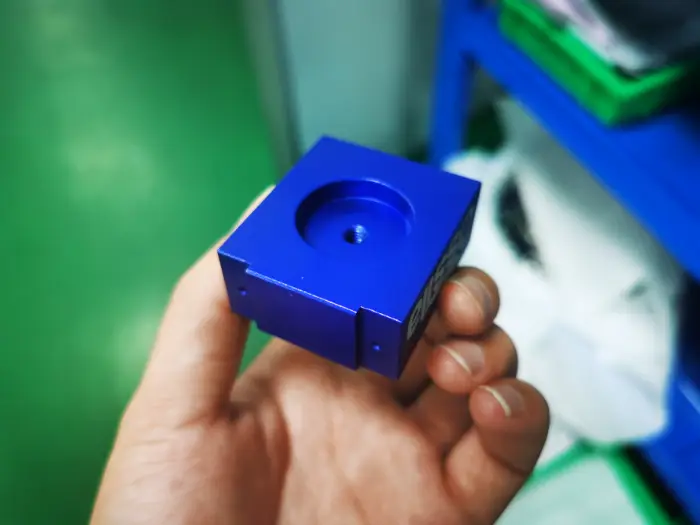
Surface Treatments Supported by 6061
Anodizing (standard anodizing & hard anodizing)
Hard anodizing effect is excellent and can significantly improve wear resistance, suitable for structural parts and mechanical parts.
Sandblasting / Polishing Treatment
Polishing performance is better than 5052 and can achieve relatively high finish, suitable for high-end structural appearance parts.
Powder Coating
Commonly used for industrial frames and equipment structural parts, enhancing long-term corrosion resistance capability.
Electroplating (such as nickel plating)
In special applications, it can improve conductivity or wear resistance, but pretreatment needs to be done well.
Summary of Engineering Material Selection Logic
In engineering, material selection should focus on part function, load requirements, manufacturing process, and service environment—not just strength values. 5052 is better suited for forming and corrosion resistance, while 6061 is preferred for structural strength and precision machining. Defining the part’s core function is key to choosing the right material.
Typical Scenarios for Choosing 5052
Mainly sheet-metal structures
When the product is mainly formed through sheet-metal processes such as bending, stamping, and flanging, and it undertakes enclosure or covering functions, 5052 has more advantages.
Its good ductility and crack-free bending can improve batch production yield rate and reduce forming risks.
Complex bent housings
For structures with multiple bends or small-radius bends, material plasticity is more important than strength.
5052 still maintains relatively good elongation in the H32 temper, suitable for thin-wall housings and complex shape parts.
Marine or high-humidity environments
In salt-spray or coastal environments, corrosion resistance has a higher priority.
5052 has stronger salt-spray resistance and is commonly used in marine accessories, outdoor enclosures, and other long-term exposure scenarios.
Welded thin-sheet parts
5052 has small performance changes after welding, and strength attenuation in the heat-affected zone is limited.
Suitable for non-high-load welded parts such as enclosures, fuel tanks, and sheet-metal welded structures.
Typical Scenarios for Choosing 6061
CNC structural parts
When parts are mainly based on machining processes such as milling and tapping, 6061 machining performance is more stable.
The T6 temper has high strength, and surface quality and dimensional consistency are easier to control.
Load-bearing brackets
If the part bears structural loads or serves as a load-bearing connector, 6061 has more advantages.
It can provide higher yield strength under the same cross section, reducing deformation risks.
Automation equipment components
Automation equipment emphasizes a balance between structural strength and machining accuracy.
6061 is suitable for equipment frames, slide-table bases, and structural support parts.
High-precision machined parts
For parts with high requirements for flatness and assembly tolerance, 6061-T651 has lower internal stress.
In thick-plate machining and large structural parts, dimensional stability is better.
Comprehensive Judgment Principles
- Emphasize forming and corrosion resistance → choose 5052
- Emphasize structural strength and precision machining → choose 6061
The core of material selection is to match material characteristics with part functions, rather than simply comparing parameter levels.
Pros and Cons of 5052 and 6061
Pros and Cons of 5052 Aluminum Alloy
✅ Pros
- Excellent formability: High ductility, not easy to crack during bending and stamping processes, especially suitable for complex housings and thin-sheet structural parts.
- Outstanding corrosion resistance: Stable performance in marine or high-humidity environments, salt-spray resistance is better than most structural aluminum alloys.
- Good weldability: Post-weld strength change is relatively small, and there is no heat-treatment strengthening failure problem, suitable for welded sheet-metal structures.
- Suitable for decorative surface treatment: Anodizing and brushing effects are relatively uniform, commonly used for appearance parts.
❌ Cons
- Relatively limited strength: Yield strength is lower than 6061-T6, not suitable for high load-bearing structural parts.
- Cannot be heat-treated for strengthening: Performance improvement mainly relies on work hardening, and the strength upper limit is limited.
- Average cutting performance: During machining it is easy to produce built-up edge, with higher requirements for tools and lubrication.
- Weaker thread load-bearing capacity: Not suitable for high-strength threaded connection structures.
Pros and Cons of 6061 Aluminum Alloy
✅ Pros
- Higher strength (T6 temper): Yield strength is obviously higher than 5052, suitable for structural load-bearing parts.
- Heat-treatable strengthening: Stable and controllable mechanical properties can be obtained through T6 or T651 treatment.
- Excellent machining performance: Cutting is stable, surface quality is easy to control, suitable for precision CNC machining.
- Excellent hard anodizing effect: Strong surface wear resistance, suitable for mechanical contact parts.
❌ Cons
- Obvious strength decrease after welding: The strengthening phase in the heat-affected zone dissolves, and local load-bearing capacity decreases.
- Corrosion resistance is slightly inferior to 5052: In high salt-spray environments, it is necessary to add surface protection measures.
- Forming ability is limited in the T6 temper: Elongation is relatively low, not suitable for complex bending structures.
- Material cost is slightly higher: Especially in high-precision thick plates or stress-relieved tempers, the cost is higher.
Cost Analysis of 5052 aluminum vs 6061
Engineering material selection not only looks at performance, but also needs to consider cost and machining efficiency. The prices of 5052 and 6061 are close, but due to process differences, the overall cost structure is different and should be comprehensively evaluated.
Material price range of 5052
5052-H32 sheet price is about: $3.5 – $6.0 USD / lb
It does not involve heat-treatment strengthening processes, and the production process is relatively simple, so under the same specifications it is usually lower than 6061-T6.
Costs are mainly affected by thickness, specification size, and market aluminum price fluctuations.
Overall, 5052 has dual advantages of material and manufacturing cost in large-batch sheet-metal structures.
Cost of 6061
Material price range (reference common market range)
6061-T6 / T651 sheet price is about: $4.0 – $6.5 USD / lb
Because it requires solution treatment and artificial aging, heat-treatment processes increase production costs.
In thick plates, precision specifications, or high-temper materials, the price is usually higher than 5052.
Although the unit price of 6061 is slightly higher, in the fields of structural load-bearing and high-precision machining, its performance advantages can bring higher manufacturing efficiency and reliability.
Comprehensive judgment principles (performance + cost)
- Emphasize forming capability and corrosion resistance, while controlling large-batch manufacturing costs → prioritize 5052
- Emphasize structural strength, machining stability, and assembly accuracy → prioritize 6061
- If it is a thin-sheet welded housing product, 5052 usually has an overall cost advantage
- If it is a load-bearing or high-precision mechanical structural part, 6061 has more value in comprehensive performance and machining efficiency
From an engineering perspective, 5052 is more suitable for “formed and protective structures,” and 6061 is more suitable for “load-bearing and precision structures.” The material cost difference usually fluctuates in the 5–15% range.
Conclusion of 5052 aluminum vs 6061
5052 and 6061 respectively represent two engineering approaches: forming-oriented and structure-oriented. The former emphasizes corrosion resistance and machining toughness, and the latter emphasizes strength and structural stability. In the actual material selection process, a comprehensive judgment should be made by combining part function, machining path, post-processing requirements, and service environment, so that material performance and manufacturing processes form a synergistic match, thereby achieving the best balance between performance and cost. If you want to learn more information and quotations about 5052 and 6061 precision machining, you can contact us.