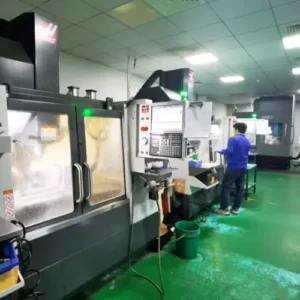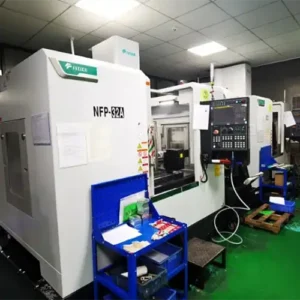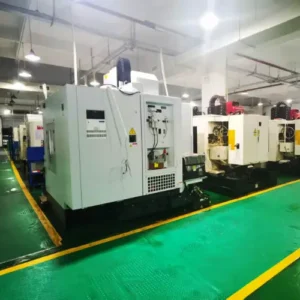









In cnc machining medical devices, CNC machining has become a core technology for industry innovation due to its high precision, high consistency, and flexible adaptability. It can provide customized solutions for both metallic strength and non-metallic biocompatibility, meeting complex medical needs. This article will explore the application characteristics, advantages, and typical scenarios of metallic and non-metallic materials in precision medical devices.
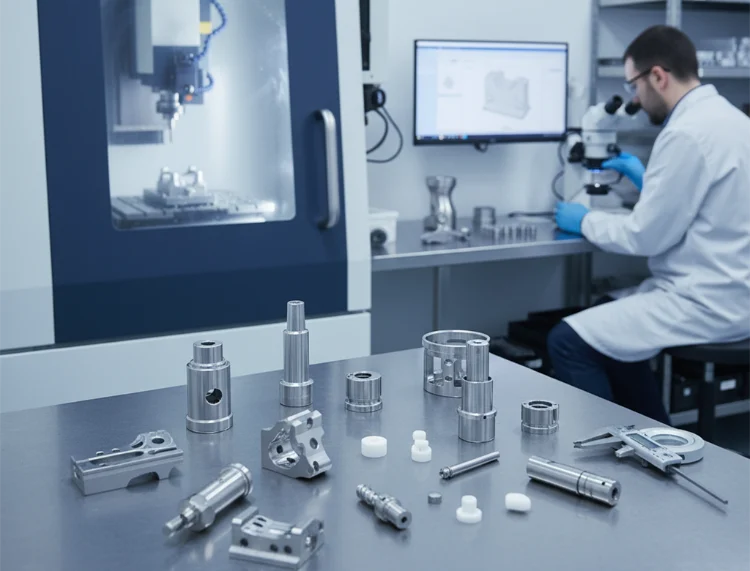
Common Precision Medical Device Materials:
Metallic Materials: Strength and Durability
Titanium Alloys
Characteristics: Titanium alloys are known for their high strength, low density, corrosion resistance, and biocompatibility. Their elastic modulus is close to that of human bone, reducing stress shielding effects.
Application Areas:
Orthopedic Implants: Such as hip joint prostheses, knee joint components, and spinal fixation systems, which need to withstand long-term loads and come into direct contact with human tissue.
Dental Implants: Personalized matching is achieved through CNC micromachining, improving implant success rates.
Surgical Instruments: Such as biopsy forceps and blade clamps, which require autoclaving and maintaining sharpness. Machining Advantages: CNC 5-axis linkage technology enables mirror polishing of complex curved surfaces (such as joint spherical surfaces), achieving a surface roughness of Ra0.2 and reducing the coefficient of friction.
Stainless Steel
Characteristics: With corrosion resistance and cost-effectiveness as its core advantages, the 316L model is the preferred choice for medical-grade applications due to its low carbon content.
Applications:
Temporary Implants: Such as bone plates and screws, used for fracture fixation, and removable post-operatively.
Surgical Equipment: Such as surgical scissors and forceps, requiring frequent sterilization and maintaining structural stability.
Fluid Connectors: Such as syringe needles and catheter connectors, requiring resistance to chemical corrosion.
Machining Advantages: A combination of CNC turning and milling processes efficiently completes thread machining, ensuring thread accuracy and a surface free of microcracks.
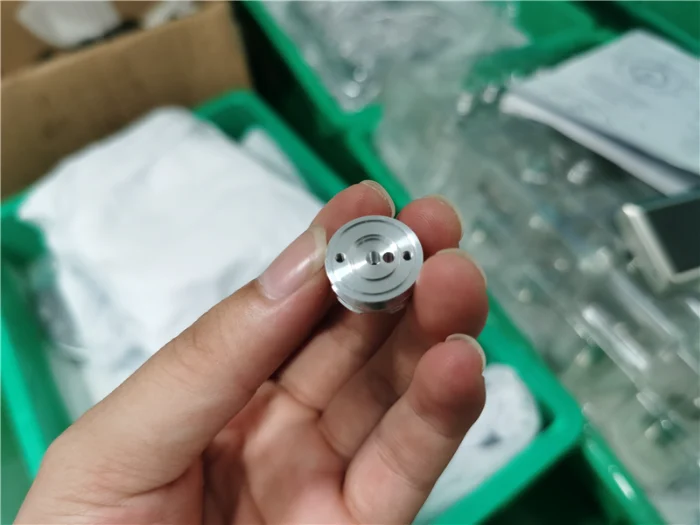
Cobalt-Chrome Alloys
Characteristics: Combines high strength and wear resistance, with fatigue resistance superior to titanium alloys.
Applications:
Joint Prostheses:Such as artificial knee joints and acetabular cups, suitable for high-load applications.
Cardiac stents: require micron-level precision achieved through laser cutting and CNC polishing.
Processing advantages: Specialized cutting tools and cooling technology solve the problem of tool sticking caused by their high toughness, ensuring dimensional tolerances within ±0.005mm.
Non-metallic Materials (Plastic for cnc machining):Biocompatibility and Functional Innovation
PEEK(Polyetheretherketone)
Properties: Elastic modulus similar to bone tissue (3-4 GPa), high temperature resistance (260℃), chemical corrosion resistance, and excellent X-ray transmittance.
Applications:
Spinal fusion devices: Replaces traditional metal implants, reducing postoperative imaging interference.
Cranial fixation screws: Used in neurosurgical repair, avoiding metal artifacts affecting diagnosis.
Customized prostheses: Combines 3D scanning and CNC machining to achieve lightweight and personalized fit.
Processing advantages: Micro-CNC technology can manufacture components with feature dimensions less than 50 micrometers, such as micro-gears and orthopedic surgical saw guide plates.
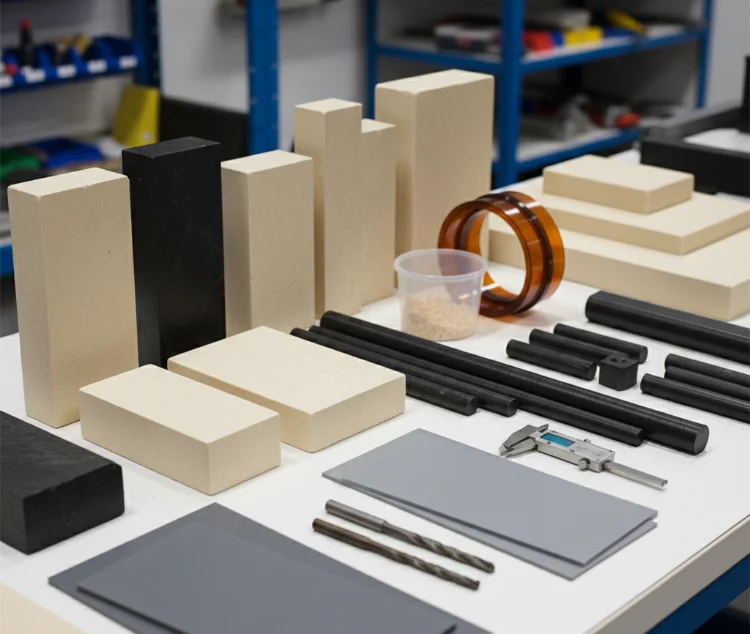
PLA(Polylactic Acid)
Properties: Biodegradable, gradually decomposes into water and carbon dioxide in the body, avoiding secondary surgery.
Applications:
Ligament fixation nails: Used in sports medicine repair, such as anterior cruciate ligament reconstruction.
Drug release carriers: Controls drug release rate through CNC microporous machining.
Machining Advantages: CNC milling can achieve complex geometries, ensuring the degradation rate matches the tissue healing cycle.
PTFE(Polytetrafluoroethylene)
Properties: Extremely chemically inert, low coefficient of friction (0.04-0.1), high temperature resistance (260℃).
Applications:
Seals: Used in in vitro diagnostic equipment (such as PCR instruments) to prevent reagent leakage.
Catheter Liners: Reduces contact between blood or drugs and metal surfaces, lowering the risk of thrombosis.
Machining Advantages: CNC turning can manufacture ultra-thin-walled tubes (0.1mm wall thickness), meeting the needs of minimally invasive surgery.
Common Machining Steps for CNC Machining Medical Devices
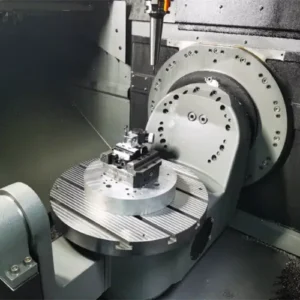
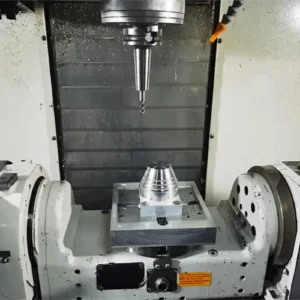
3 Axis CNC: Plane/Hole Machining
Applicable Materials: Aluminum alloy, stainless steel, titanium alloy, engineering plastics (such as PEEK).
Machining Requirements:
Basic Forming: Rapidly cuts the initial contour of the workpiece, such as cutting bracket tubing, rough milling of bone plate outlines, achieving simple structural material removal such as planes, steps, and grooves.
Hole Machining: Drilling and milling standard vertical holes (such as threaded bottom holes, locating holes). Complex hole systems require multi-axis machine tools.
Efficiency Priority: Suitable for large material removal; accuracy and surface quality depend on subsequent processes.
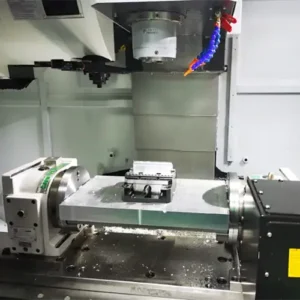
4 Axis CNC: Micro-hole and Angled Hole Positioning Milling
Applicable Materials: Titanium alloy, PEEK, stainless steel, and other materials requiring micro-hole or angled hole machining.
Machining Requirements:
Angled Hole Machining: Adjusts the tool angle via the rotary axis to solve the “overcutting” or “undercutting” problems of three-axis machining, such as angulated threaded holes in bone screws.
Micro-hole machining: Achieve micro-holes with a diameter ≤0.5mm, controlling hole diameter tolerance and coaxiality error.
5 axis CNC: Complex surface and multi-faceted precision machining
Applicable materials: Difficult-to-machine metals and composite materials such as titanium alloys, cobalt-chromium alloys, stainless steel, and ceramics.
Machining requirements:
3D surface machining: Forming complex structures such as the wavy framework of heart valve stents and the ball-and-socket surfaces of joint prostheses, avoiding interference and ensuring shape accuracy.
Multi-faceted machining: Completing multi-faceted cutting in a single clamping, reducing positioning errors, suitable for thin-walled and easily deformable workpieces.
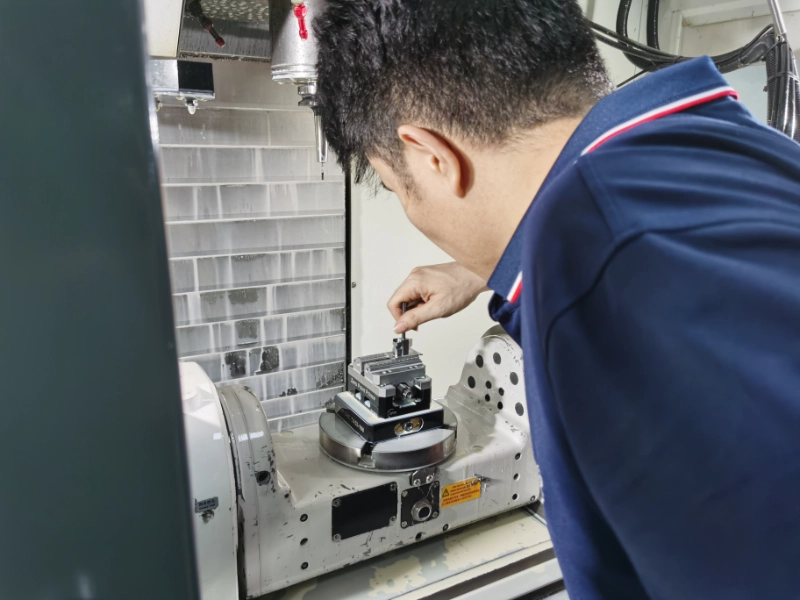
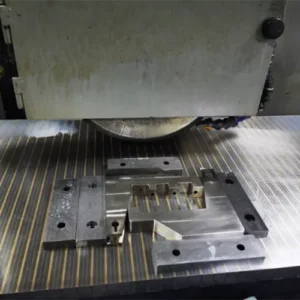
CNC grinding: Ultra-precision surface treatment and large-area material removal
Applicable materials: Materials requiring high surface quality such as titanium alloys, cobalt-chromium alloys, ceramics, and cemented carbide.
Machining requirements:
Surface polishing: Reducing roughness to below Ra0.2, eliminating tool marks and stress concentration, and improving biocompatibility.
Edge treatment: Chamfering and deburring the edges of stents and the tips of bone screws to prevent tissue scratches.
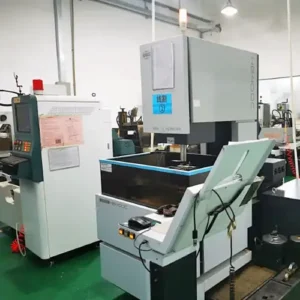
Wire Electrical Discharge Machining (EDM): Machining of Enclosed Cavities and Brittle Materials
Applicable Materials: Nickel-titanium alloys, stainless steel, cemented carbide, conductive ceramics, etc.
Machining Requirements:
Enclosed Cavity Machining: Etching enclosed areas such as drug elution chambers on stents and slender grooves for surgical instruments, controlling cavity dimensional tolerances.
Brittle Material Machining: Microstructural machining of ceramics and cemented carbide, avoiding chipping caused by mechanical cutting.
CNC Turning: Removal of Excess Material from Rotating Parts
Applicable Materials: Stainless steel, titanium alloys, PEEK, glassy carbon, and other materials requiring high coaxiality.
Machining Requirements:
Thread Machining: Turning high-precision threads for bone screws, catheter connectors, etc., controlling pitch error to meet ISO standards.
Tapering and End Face Finishing: Machining the taper or end face flatness of stent connection ends to ensure assembly clearances meet requirements.
Process Summary:
- 3-Axis CNC: Rough cutting of pipes or plates, forming the initial outline and leaving allowance; mainly three-dimensional machining of single surfaces.
- 4-Axis CNC: Machining micro-holes and angled holes, ensuring positioning angles and hole diameter accuracy.
- 5-Axis CNC: Finish machining of complex curved surfaces and structures, controlling critical dimensional accuracy.
- CNC Grinding: Thinning the workpiece, removing excess material, polishing the surface, and improving surface finish.
- Wire EDM: Etching closed cavities, controlling wall thickness uniformity.
- CNC Turning: Finishing roundness, taper, and threads to ensure assembly and functional reliability.
Advantages of CNC Machining: Precise Control from Prototype to Mass Production
Complex Structure Realization: 5-axis linkage technology can machine curved surfaces (such as the spherical surface of joint prostheses) and microporous structures (such as drug-eluting stents) that are difficult to achieve using traditional methods.
Material Adaptability: From titanium alloys to PEEK, CNC machining ensures the integrity of the performance of different materials by adjusting tooling and cutting parameters.
Quality Consistency: Online inspection systems monitor dimensions and surface roughness in real time, with tolerance control down to ±0.01mm, meeting international standards such as ISO 13485.
Rapid Iteration Capability: Combined with CAD/CAM software, CNC machining can complete design modifications and prototype production within hours, accelerating product launch.
Summary: How CNC Machining is Reshaping the Future of Medical Device manufacturing
CNC machining deeply integrates metallic and non-metallic materials, driving the upgrade of medical devices towards high precision, personalization, and functional integration. From mirror polishing of titanium alloy joint prostheses to microporous molding of PEEK spinal fusion devices, CNC technology not only strictly adheres to medical safety standards but also improves patient experience through material and process optimization. With the integration of 3D printing and CNC machining (such as initial printing and finishing), the efficiency of customized implants is improved and the cost is reduced, accelerating the implementation of personalized medicine.
FAQ of CNC machining medical devices
How does CNC machining ensure the biocompatibility of medical devices?
By selecting materials certified to ISO 10993 (such as medical-grade titanium alloys and PEEK) and avoiding contamination during processing (e.g., using dedicated coolants and cleanrooms), the final product ensures compliance with biosafety requirements.
What are the main differences between metallic and non-metallic materials in CNC machining?
Metallic materials require high-rigidity cutting tools and cooling technologies to cope with high cutting forces, while non-metallic materials (such as PEEK) require low speeds and high feed rates to prevent melting or deformation.
Can CNC machining enable mass production of customized medical devices?
Yes. Through the rapid retrieval of CAD model libraries and CNC programs, the same production line can efficiently switch between machining different patients or different models of parts, balancing personalized and large-scale needs.
Which international standards regulate the quality of CNC-machined medical devices?
Key standards include ISO 13485 (Medical Devices Quality Management System), ISO 14744 (Medical Devices Usability Engineering), and ASTM F2999 (Guidelines for the Fabrication of Orthopedic Implants).
What are the advantages of CNC machining in the manufacture of minimally invasive surgical instruments?
CNC machining can manufacture microstructures with diameters less than 1 mm (such as endoscopic forceps tips) and improve bone integration performance through surface treatments (such as sandblasting and acid etching), meeting the dual requirements of precision and functionality in minimally invasive surgery.