
CNC turn mill compound machining is a manufacturing technology that integrates multiple processes such as turning, milling, and drilling on the same machine tool, completing the machining in a single setup. It is particularly suitable for parts with complex structures and high precision requirements, and can significantly improve machining accuracy and production efficiency.
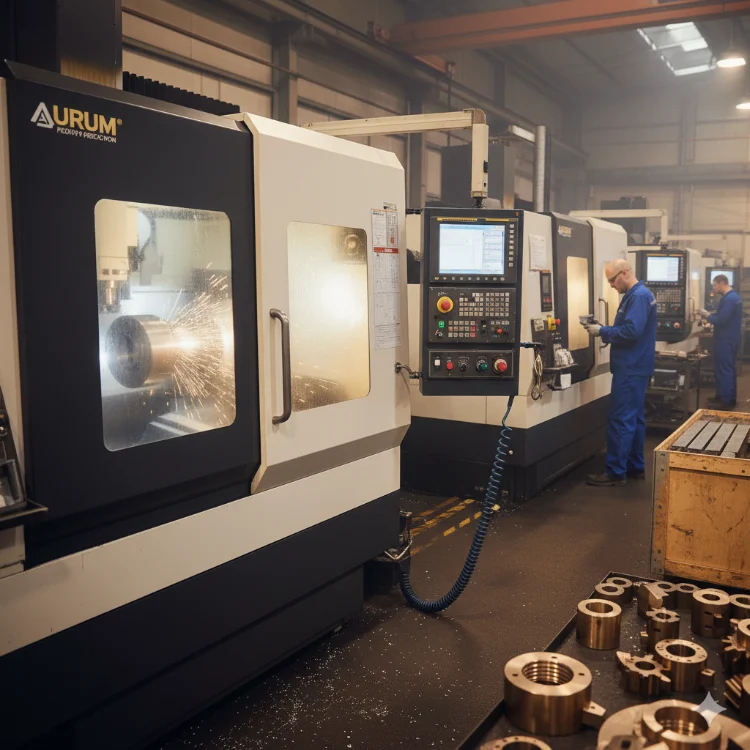
Advantages of turn mill compound machining:
Reduced clamping times: A single part can be machined on the same mill-turn machine tool, including external diameter machining, internal hole machining, slot machining, drilling, and milling of planes. This avoids multiple pick-and-place operations and positioning errors.
High machining accuracy: Due to fewer positioning errors and better machine tool rigidity, geometric tolerances are easier to control.
Shorter process chain: Mill-turn machining reduces the steps from roughing, semi-finishing, to finishing, facilitating faster delivery.
Adaptability to complex geometry and difficult-to-machine materials: For parts with complex geometries, irregular holes, or thin-walled structures, mill-turn machines offer greater advantages than traditional separate turning/milling machines.
Case Study: WELDO PTFE + 15% Graphite Fittings
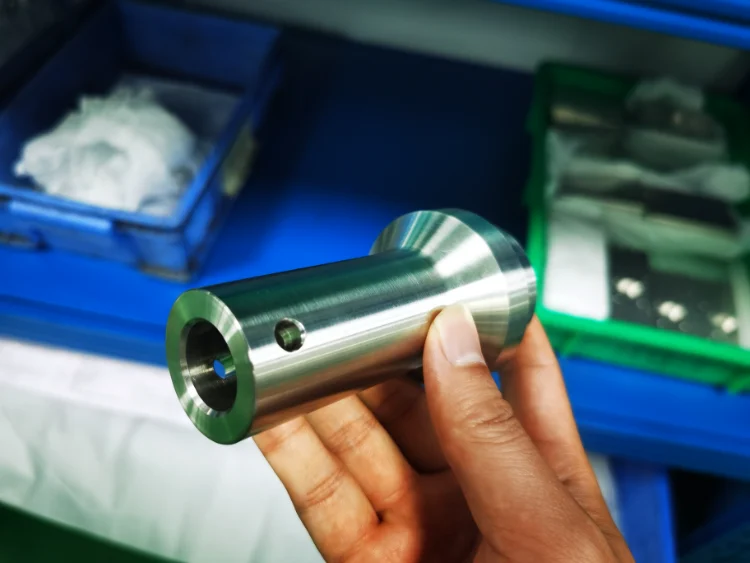
The following is a typical application case from WELDO Machining (WELDO) illustrating the practical value of mill-turn machining in dissimilar composite material parts.

Fitting Material/Specifications
Material: PTFE matrix + 15% graphite filler (enhances wear resistance/sliding properties)
Part Type: Bushing-disc composite structure, including features such as outer diameter, inner hole, slotting, and milled surfaces
Quantity: From prototype to batch production (approximately 10,000 pieces)
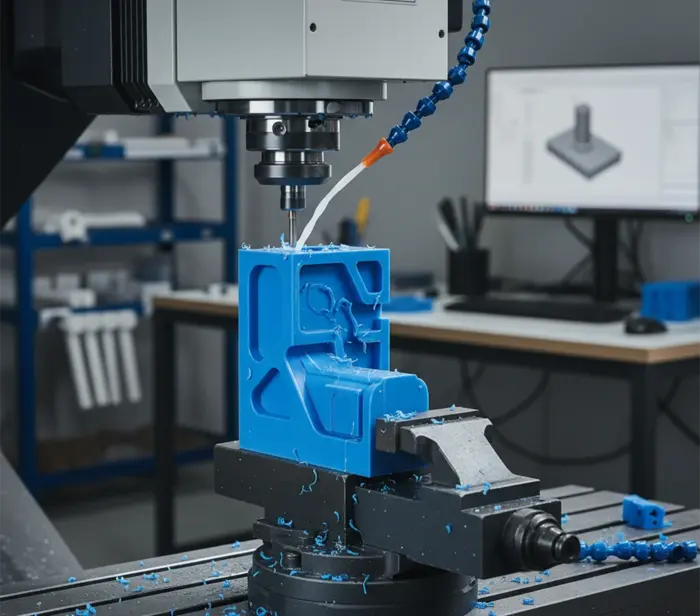
Machining Method
WELDO uses a mill-turn machining center to complete the following processes in a single setup:
Outer diameter roughing (turning)
Outer diameter milling and slotting
Surface milling and drilling
Surface finishing and inspection
Results
The number of setups was reduced from 3 to 1, reducing positioning errors by approximately 30%.
The machining cycle time was shortened by approximately 40%.
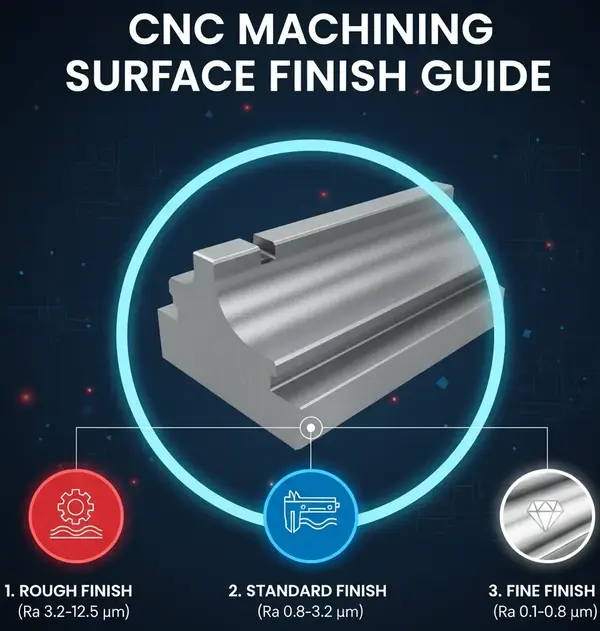
Finished part tolerances are controlled within ±0.02 mm, and surface roughness Ra ≤ 1.6 μm.
The material (PTFE + 15% graphite) has complex sliding and thermal expansion characteristics; milling-turning reduces the risk of deformation.
Why choose milling-turning?
Because this part is made of composite plastic/graphite filler, it is prone to thermal deformation, cutting vibration, and micro-displacement during machining. The high rigidity, single-fixture completion, and multi-process linkage advantages of milling-turning machines make it easier to control risks such as thermal expansion and cutting deformation. WELDO engineers point out: “Completing multiple milling-turning steps in a single setup not only improves efficiency but also significantly enhances machining consistency.”
Typical Applicable Part Types:
Shaft Parts: Such as automotive drive shafts, machine tool spindles, motor rotor shafts, etc. These parts often require machining of external diameters, threads, and planes. Milling-turning can complete multiple processes in a single setup, ensuring coaxiality and accuracy.
Disc Parts: Including flywheels, flanges, valve covers, etc. End face turning, slot milling, and drilling can be performed on the same machine, reducing changeover time.
Sleeves and ring-shaped parts:such as hydraulic cylinder liners, bearing sleeves, and mechanical seal rings. Milling-turning can complete the machining of inner and outer circles, oil grooves, and threads in one operation, ensuring high concentricity.
Irregularly shaped parts:such as aerospace structural components, medical components, and robot joints. Due to their complex shapes, including those with inclined holes or curved surfaces, multi-axis operation is required; milling-turning effectively achieves high-precision machining.
Threaded or splined shafts:such as gear shafts and hydraulic control rods. Traditional methods require multiple machine tools, while milling-turning technology can achieve one-time forming, significantly improving efficiency.
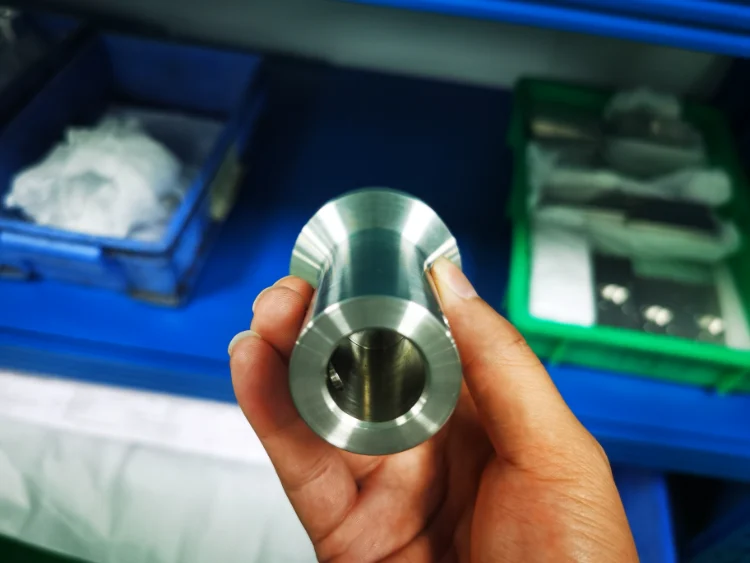
Industry Applications of cnc turn mill compound machining
Aerospace: High-precision parts such as turbine shafts and connectors.
Automotive Manufacturing: Components requiring consistency, such as drive shafts, flanges, and connecting rods.
Medical Devices: High-surface-quality parts such as valve cores and implants.
Industrial Equipment: Parts requiring concentricity of inner and outer bores, such as valve bodies and cylinder liners.
Operator Precautions
To ensure smooth, stable, and efficient operation of turn mill compound machining, operators should focus on the following:
Machine Tool Calibration and Fixture Design: Ensure excellent machine tool geometric accuracy, high fixture rigidity, and good positioning repeatability.
Program Optimization: Mill-turn machining commonly uses multi-axis/powered tools, placing high demands on tool compensation, cutting parameters, and tool magazine management. Program verification and simulation should be performed in advance.
Material Property Understanding: As in the case above with PTFE+graphite, thermal expansion, cutting heat, and toughness differ from metals, requiring the selection of correct tool coatings and cutting conditions.
Cutting Parameter Setting: When switching between turning and milling on the same workpiece, the impact of different cutting conditions, cutting directions, and tool entry/exit on workpiece deformation must be considered.
Cooling/Lubrication Management: Especially when cutting composite materials or filler-reinforced plastics, lubrication and cooling conditions directly affect surface quality and deformation.
Workpiece Temperature and Deformation Monitoring: During continuous machining, pay attention to workpiece temperature rise and deformation trends, and use intermediate or online measurement control when necessary.
Safety and Machine Tool Protection: During the milling and turning process, there are many actions such as tool switching, spindle direction changes, and the intervention of power tools. Operators should pay attention to safety protection, automatic tool changing status, and collision prevention.
Problems and Solutions
| Problem | Solution |
| Multiple operations/tool switching lead to complex programming and high error risk. | Utilize dedicated CAM software to support mill-turning machines, conduct simulation verification, and set safe collision avoidance paths. |
| Workpiece deformation/thermal expansion during a single clamping operation causes decreased accuracy. | Optimize fixture design (deformation reduction fixtures, cooling fixtures), control cutting temperature, perform segmented machining, and provide online measurement feedback. |
| Material properties (e.g., composite plastics, filler-reinforced materials) cause tool wear/unstable machining. | Select tools suitable for the material, adjust cutting speed and feed, increase lubrication or use cooling media, and monitor tool wear. |
| Complex workpiece geometry and difficulty in accessing the milling area. | Utilize 5-axis or power tool configurations to allow tools to directly reach difficult-to-machine positions, reducing tool/clamp changes. |
| High equipment investment and personnel training costs. | Develop an ROI model, initially piloting on typical parts; train operators and programmers, and then expand the program after accumulating experience. |
The Machining Process for Turn-Mill Composite Machining
- Drawing and Process Review: Review the 2D drawing and 3D model to confirm the material, dimensional tolerances, datums, and surface requirements. The part is also evaluated for turn-mill machining.
- Programming and Setup: Plan the sequence for turning, milling, drilling, and tapping. Suitable tools and fixtures are selected to minimize repeated setups.
- Turning: Machine rotational features such as outside diameters, internal bores, end faces, steps, grooves, and threads.
- Milling: Produce flats, keyways, side holes, eccentric holes, and complex profiles on the same machine without frequently repositioning the workpiece.
- Finishing and Secondary Operations: Finish-machine critical mating surfaces and precision features. Deburring, cleaning, and specified surface treatments are then completed as required.
- Quality Inspection: Use micrometers, calipers, height gauges, or a coordinate measuring machine (CMM) to inspect dimensions, concentricity, position, and surface quality before packaging and shipment.
Summary
Turn mill compound machining, as a significant trend in modern machining technology, can significantly improve machining efficiency, accuracy, and the ability to handle complex parts. In the WELDO PTFE+graphite component case study above, we can see the value brought by single-setup, multi-process coordinated operation.
If you have similar parts that need machining, and you are currently focused on machining speed, quality, and cost, you can contact us for assistance.
FAQ of cnc turn mill compound machining
What types of parts are suitable for mill-turn machining?
Parts that simultaneously possess rotating external/internal diameter features, as well as planar, slotted, hole, and milling features. This is especially suitable for irregularly shaped parts, thin-walled structures, difficult-to-machine materials, and applications requiring multiple operations in a single setup.
What cost savings can be achieved using mill-turn machining?
Main savings include: fewer setups, less manual handling and tool/clamp change time, less machining time, and fewer fixtures. Furthermore, improved accuracy reduces rework/scrap rates, thereby lowering quality control costs.
What is the biggest risk compared to traditional separate turning and milling?
The biggest risk is workpiece deformation or dimensional inconsistencies due to a single setup failure or improper fixture/programming design. Poor control of tool switching, machine rigidity, and vibration can also lead to quality fluctuations.
What parameters should operators focus on monitoring during mill-turn machining?
The following should be monitored: tool condition (wear, breakage), workpiece temperature/thermal expansion, machine tool vibration, spindle load, cutting force/feed, fixture positioning stability, and online measurement feedback. If there is a temperature rise or deformation trend, calibration should be paused immediately.