








A professional surface finish guide is critical for engineers, OEM buyers, and product designers who require reliable CNC machined parts across industrial, medical, aerospace, and consumer applications. This surface finish guide explains not only why surface finish is essential in machining, but also provides a comprehensive overview of all major surface treatment types, their functions, application scenarios, and relative costs.
Why a Comprehensive Surface Finish Guide Is Necessary
A modern surface finish guide goes far beyond basic appearance control. Surface finish directly influences:
- Mechanical performance
- Corrosion and chemical resistance
- Fatigue life and stress concentration
- Assembly accuracy and sealing
- Regulatory and industry compliance
Without a structured surface finish guide, surface treatment selection often becomes inconsistent, over-specified, or cost-inefficient.
Relationship Between Surface Finish and CNC Machining Quality
In CNC machining, surface finish is an output of both process capability and post-machining treatment. A reliable surface finish guide considers:
- Tool path strategy and cutting stability
- Material machinability
- Heat generation and burr formation
- Secondary finishing requirements
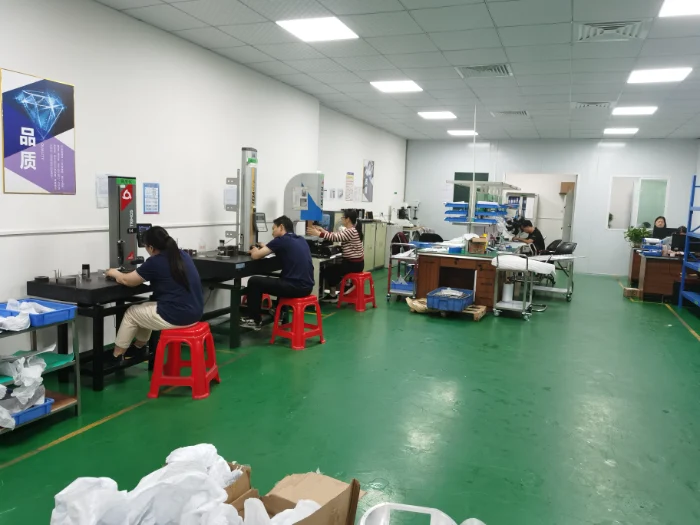
Weldo Machining controls surface finish at both the machining and finishing stages to ensure consistency from prototype to production.
Standard Surface Finish Metrics Used in Industry
A technically correct surface finish guide always references standardized measurements.
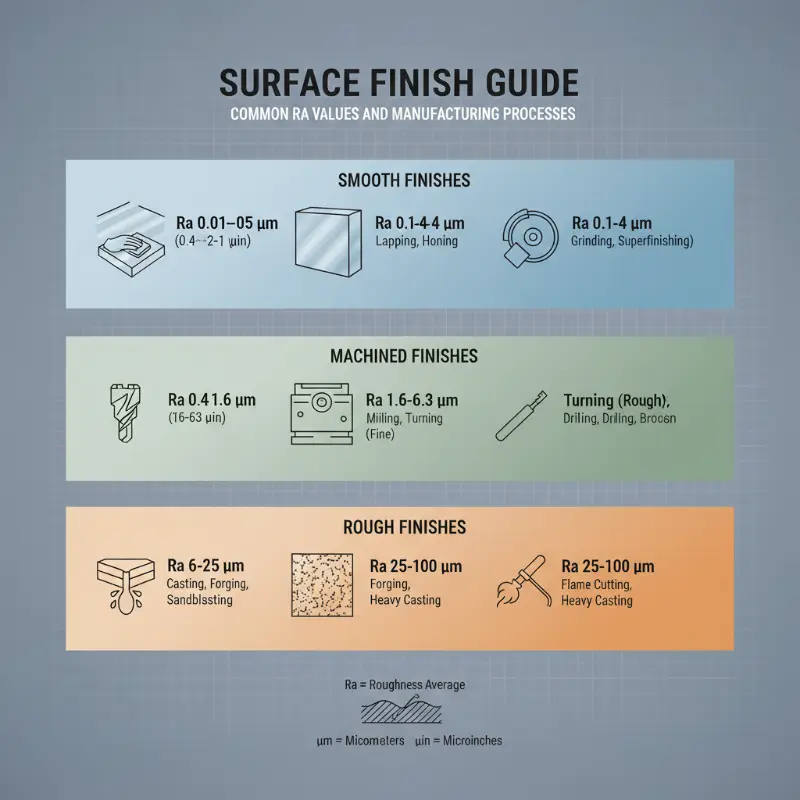
Ra (Surface Roughness Average)
- Most common specification on engineering drawings
- Typical CNC ranges: Ra 0.8–6.3 µm
Rz, Rt, and Functional Roughness
- Used in sealing, sliding, or fatigue-sensitive parts
- Often required in aerospace and automotive applications
Clear roughness definition avoids misinterpretation between buyer and supplier.
Core Machined Surface Finish Types
This surface finish guide starts with foundational machining finishes.
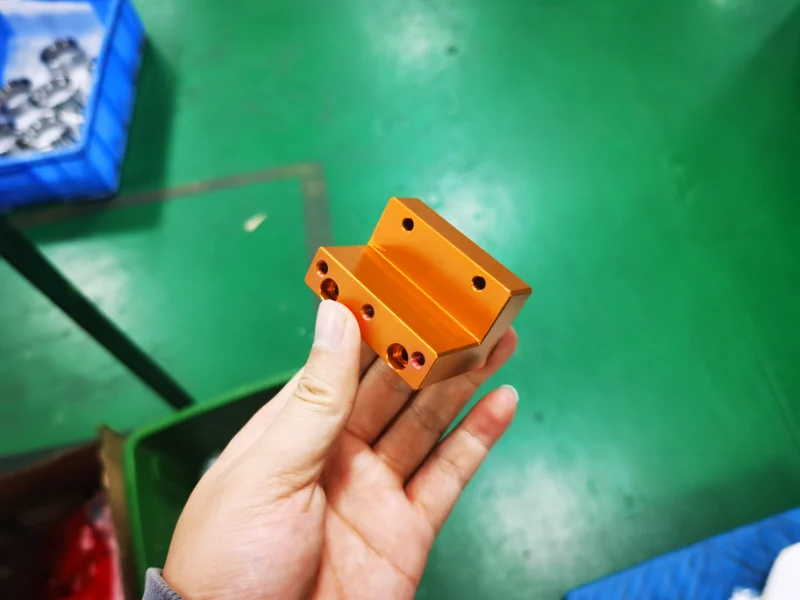
As-Machined Finish
- Function: Dimensional accuracy
- Application: Structural, internal parts
- Cost impact: Minimal
Fine Machining / Tool-Optimized Finish
- Reduced tool marks
- Improved surface consistency
- Slightly higher machining cost
Mechanical Surface Finishing Methods
Mechanical processes physically modify surface texture and appearance.
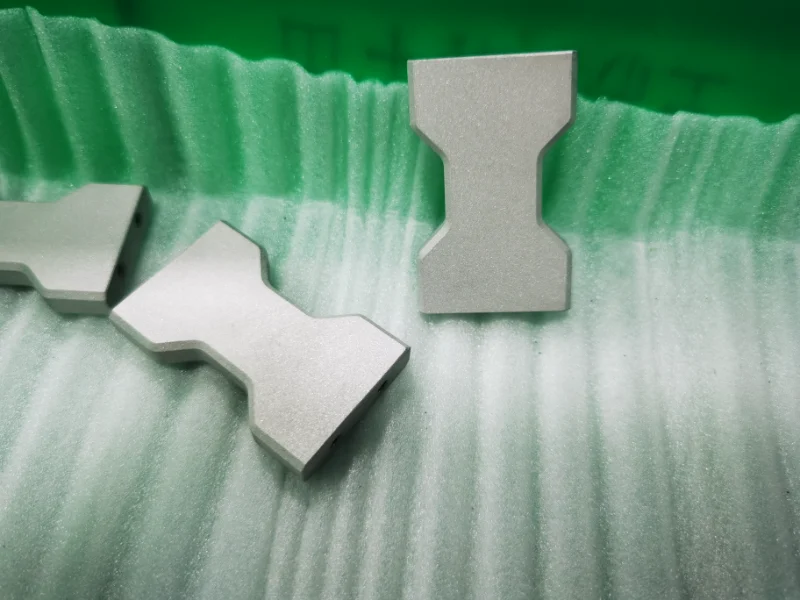
Bead Blasting
- Uniform matte surface
- Removes tool marks
- Widely used for aluminum and stainless steel
Sand Blasting
- More aggressive than bead blasting
- Used for large steel parts or surface cleaning
Brushing
- Directional satin finish
- Common in stainless steel panels and enclosures
Tumbling / Vibratory Finishing
- Edge rounding and burr removal
- Ideal for small batch parts
- Improves handling safety
Chemical and Electrochemical Surface Treatments
A complete surface finish guide must include chemical-based processes.
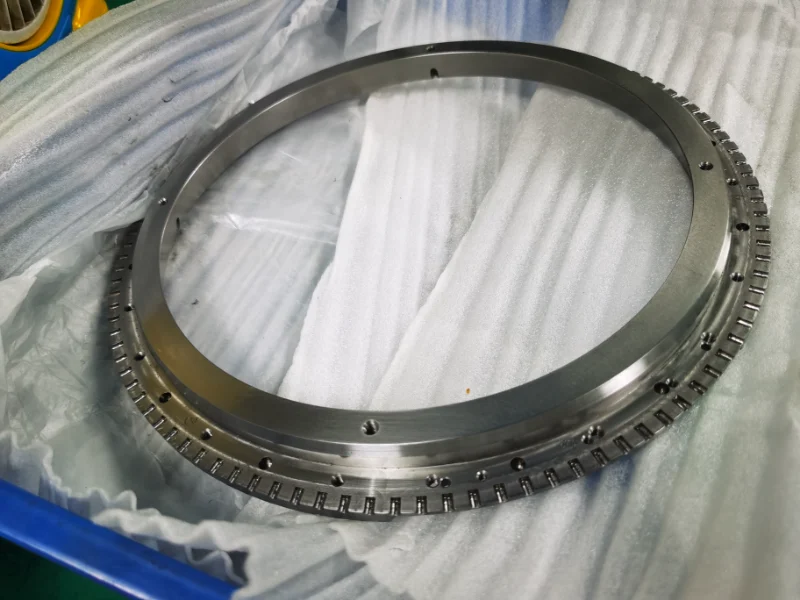
Anodizing (Aluminum)
- Type II: Decorative, corrosion resistance
- Type III (Hard Anodizing): Wear resistance
- Cost: Medium
Chromate Conversion (Alodine)
- Conductive corrosion protection
- Aerospace and electronics applications
- Lower thickness than anodizing
Passivation (Stainless Steel)
- Removes free iron
- Enhances corrosion resistance
- Mandatory for medical and food-grade parts
Coating-Based Surface Finish Options
Coatings add functional layers to machined surfaces.
Powder Coating
- Thick, durable protective layer
- Wide color options
- Common in outdoor and industrial parts
Liquid Painting
- Cosmetic branding
- Lower durability than powder coating
- Cost-effective for low volume
PTFE / Teflon Coating
- Low friction
- Chemical resistance
- Used in valves, seals, sliding components
Plating and Metallic Surface Finishes
This surface finish guide includes plating solutions for performance-critical parts.
Electroless Nickel Plating
- Uniform thickness
- Corrosion and wear resistance
- Used in aerospace and oil & gas
Electroplating (Chrome, Zinc, Nickel)
- Improved conductivity or corrosion protection
- Decorative and functional variants
Hard Chrome Plating
- Extreme wear resistance
- Hydraulic and industrial components
Advanced and Specialized Surface Finishes
For high-end applications, this surface finish guide includes advanced treatments.
Electropolishing
- Microscopic smoothing
- Reduces contamination
- Medical and semiconductor industries
Laser Surface Texturing
- Controlled micro-patterns
- Improves lubrication retention
DLC (Diamond-Like Carbon) Coating
- Ultra-low friction
- High hardness
- Automotive and precision mechanisms
Surface Finish Guide for Plastics and Composites
Surface finish selection differs significantly for plastics.
Common finishes include:
- Fine machining
- Vapor polishing (PMMA, PC)
- Light bead blasting
Applications:
- Medical housings
- Optical components
- Chemical-resistant parts
Weldo Machining applies material-specific surface finish strategies for engineering plastics like PEEK, PTFE, and POM.
Surface Finish Cost Comparison Overview
This surface finish guide emphasizes cost control.
Relative cost ranking:
- As-machined
- Tumbling / bead blasting
- Anodizing / passivation
- Powder coating / plating
- Polishing / electropolishing / DLC
Cost drivers include surface area, geometry complexity, and quality standards.
How to Choose the Right Surface Finish
A professional surface finish guide aligns finish choice with real requirements:
- Function first, appearance second
- Avoid over-specification
- Match finish to material behavior
- Consider lifecycle cost, not just unit price
Early supplier involvement reduces both risk and expense.
Why Engineers Choose Weldo Machining for Surface Finishing
Weldo Machining integrates CNC machining and surface finishing into a single quality-controlled workflow. Using this surface finish guide approach, we help customers:
- Select optimal surface treatments
- Reduce unnecessary finishing costs
- Meet ISO, aerospace, and medical standards
- Achieve consistent batch-to-batch quality
From anodizing and plating to advanced coatings, we support both prototypes and production.
Conclusion: A Practical Surface Finish Guide for Real Projects
This surface finish guide provides a complete framework for understanding machining surface treatments, their functions, and costs. Correct surface finish selection improves performance, reliability, and manufacturability. For expert guidance and competitive pricing on CNC machining and surface finishing, contact Weldo Machining to discuss your project requirements.