
Stainless steel CNC machining services are widely used across aerospace, medical, automotive, industrial equipment, and consumer products due to their strength, corrosion resistance, and long-term dimensional stability. As demand for precision metal components increases, stainless steel CNC machining services play a critical role in delivering tight tolerances, repeatable quality, and scalable production.
This article explains U.S. stainless steel material grades, physical properties, common applications, and how advanced CNC machining processes work together to improve efficiency and reduce manufacturing cost.

Overview of Stainless Steel CNC Machining Services
Stainless steel CNC machining refer to precision subtractive manufacturing using computer-controlled equipment to machine stainless steel parts from solid stock. Compared with casting or forming, stainless steel CNC machining services provide superior accuracy, flexible geometry, and excellent surface integrity.
Key advantages of stainless steel CNC machining services include:
- High mechanical strength and wear resistance
- Excellent corrosion and oxidation resistance
- Compatibility with tight tolerances and complex geometries
- Suitability for low-volume prototypes and high-volume production
Because stainless steel work hardens easily, professional stainless steel CNC machining services require optimized cutting strategies, tooling selection, and process sequencing.
U.S. Standard Stainless Steel Grades and Properties
In stainless steel CNC machining services, material selection directly affects machinability, cost, and part performance. The following grades are commonly used under U.S. standards (ASTM / AISI).
Austenitic Stainless Steel (300 Series)
Common Grades: 303, 304, 316, 316L
Physical Characteristics
- Density: ~7.9 g/cm³
- Tensile strength: 515–620 MPa
- Excellent corrosion resistance
- Non-magnetic (annealed condition)
Machining Notes
Austenitic steels are tougher to machine due to work hardening. Stainless steel CNC machining services typically use sharp carbide tools, lower feed rates, and controlled heat dissipation.
Applications
- Medical device housings
- Food processing equipment
- Valves, fittings, fasteners
- Marine and chemical components
Martensitic Stainless Steel (400 Series)
Common Grades: 410, 420
Physical Characteristics
- Higher hardness after heat treatment
- Moderate corrosion resistance
- Magnetic structure
Machining Notes
These grades machine more easily than 300-series materials, making them cost-effective for stainless steel CNC machining services requiring hardness.
Applications
- Shafts and pins
- Pump components
- Cutting tools and mechanical parts
Ferritic Stainless Steel
Common Grades: 430
Physical Characteristics
- Good corrosion resistance in mild environments
- Lower nickel content
- Magnetic
Applications
- Automotive brackets
- Appliance components
- Decorative hardware
Precipitation-Hardening Stainless Steel
Common Grade: 17-4PH (AISI 630)
Physical Characteristics
- Tensile strength up to 1100 MPa
- Excellent strength-to-corrosion balance
- Stable after heat treatment
Applications
- Aerospace fittings
- Oil and gas components
- High-load structural parts
17-4PH is a premium material frequently specified in high-end stainless steel CNC machining .

CNC Machining Processes Used in Stainless Steel Manufacturing
High-quality stainless steel CNC machining services rely on multiple machining processes working together. Each process contributes to dimensional accuracy, surface finish, and cycle-time reduction.
CNC Milling
CNC milling is the primary process in stainless steel CNC machining services for producing pockets, contours, slots, and complex surfaces.
- Multi-axis milling enables complex geometries
- Adaptive toolpaths reduce work hardening
- High-pressure coolant improves tool life
CNC Turning
Turning operations are essential in stainless steel CNC machining for cylindrical components.
- Ideal for shafts, bushings, and threaded parts
- Ensures concentricity and roundness
- Supports high repeatability in volume production
Drilling, Tapping, and Threading
Hole-making is critical in stainless steel CNC machining services.
- Rigid tapping ensures accurate threads
- Optimized peck drilling minimizes heat buildup
- Suitable for UNC, UNF, and metric threads
Boring and Precision Hole Finishing
Boring improves hole accuracy after drilling.
- Achieves tight diameter tolerances
- Enhances surface finish
- Common in hydraulic and valve components
CNC Grinding
Grinding is used in stainless steel CNC machining services when ultra-tight tolerances or fine finishes are required.
- Surface grinding for flatness
- Cylindrical grinding for roundness
- Achieves Ra ≤ 0.4 µm in critical areas
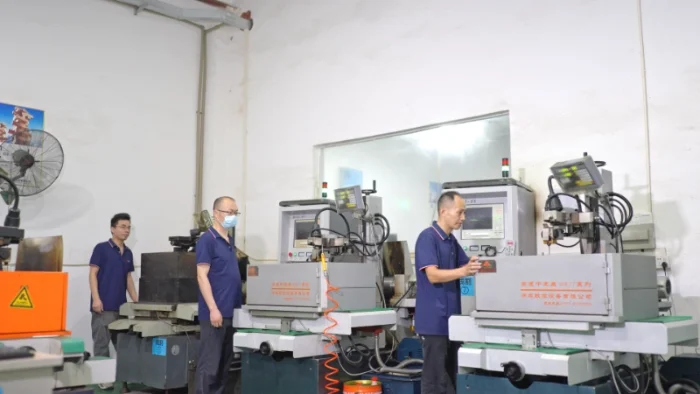
Electrical Discharge Machining (EDM)
EDM machining supports stainless steel CNC machining for complex internal features.
- Wire EDM for sharp corners and thin walls
- Sink EDM for deep cavities
- No cutting force, reducing distortion
Process Integration to Maximize Efficiency and Reduce Cost
Advanced stainless steel CNC machining services do not rely on a single process. Instead, efficiency is achieved by coordinating multiple machining methods.
Key Optimization Strategies
- Process sequencing: Rough milling → heat control → finish machining
- Toolpath optimization: Reduces tool wear and cycle time
- Material-specific parameters: Feed, speed, and depth tuned to grade
- Fixture standardization: Improves setup efficiency
By integrating turning, milling, drilling, grinding, and EDM, stainless steel CNC machining services reduce rework, scrap rates, and labor cost.
Cost Drivers in Stainless Steel CNC Machining Services
Understanding cost structure is essential when sourcing stainless steel CNC machining .
Major Cost Factors
- Material grade (316 and 17-4PH cost more than 304 or 410)
- Machining time and tool wear
- Tolerance requirements
- Surface finish specifications
- Secondary processes and inspection
Cost-efficient stainless steel CNC machining services focus on design-for-manufacturing (DFM) to minimize unnecessary complexity.
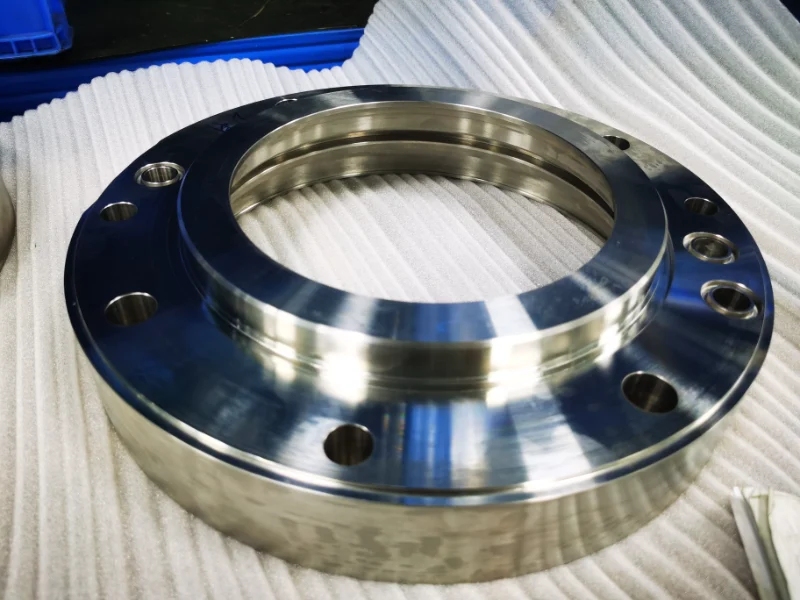
Typical Components Produced Using Stainless Steel CNC Machining Services
- Precision shafts and couplings
- Medical instrument components
- Aerospace brackets and fittings
- Valve bodies and pump housings
- Industrial fasteners and connectors
These components demand reliability, consistency, and compliance with U.S. industry standards.
Quality Control in Stainless Steel CNC Machining Services
Professional stainless steel CNC machining include:
- In-process inspection
- Coordinate Measuring Machine (CMM) verification
- Material traceability to ASTM standards
- Surface roughness and hardness testing
Quality systems ensure every part meets drawing and functional requirements.
Conclusion
Stainless steel CNC machining services are essential for producing high-performance components across demanding industries. By selecting the correct stainless steel grade, integrating milling, turning, drilling, grinding, and EDM processes, and optimizing machining strategies, manufacturers can achieve superior quality while controlling cost.
If you are evaluating stainless steel CNC machining for prototypes or production parts, working with an experienced CNC machining partner ensures efficient manufacturing, stable quality, and long-term reliability.
