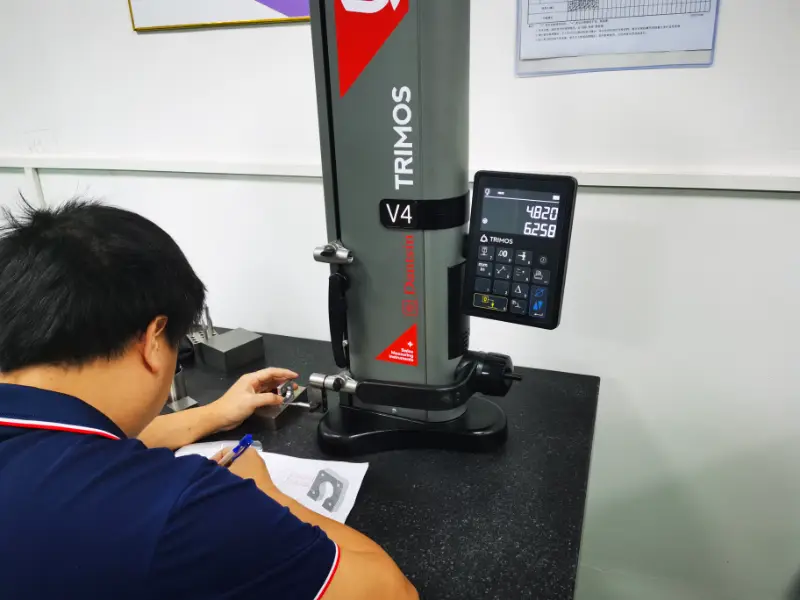
Orthopedic OEMs, labs, and instrument teams use cnc orthopedic plastics to produce light, corrosion-free polymer components with fast design iteration. The best outcomes come when cnc plastics is treated as a regulated manufacturing workflow—material selection, machining strategy, inspection, and documentation—not simply “cutting plastic.”

Definition: What CNC Orthopedic Plastics Covers
cnc orthopedic plastics refers to orthopedic-related polymer parts made by subtractive machining (milling/turning), typically inside a controlled medical CNC machining environment and documented medical CNC machining controls. Most Orthopedic CNC plastic parts fall into three use classes:
- Sterile-field instruments (handles, housings, tray inserts)
- Procedure aids (cutting blocks, drill guides)
- Clinical evaluation items (trial implants, sizing sets)
Your use class drives resin grade, sterilization compatibility, and the inspection plan for cnc orthopedic plastics.
Material Portfolio for CNC Orthopedic Plastics
Selecting the right polymer is the highest-leverage decision in Orthopedic plastic CNC machining. Material selection drives performance more than any machining parameter in cnc orthopedic plastics. Below are the materials most commonly specified in orthopedics, with their mechanical and biological behaviors.
PEEK: Stiff, Stable, and Sterilization-Ready
Many teams begin orthopedic CNC plastics with PEEK machining and repeatable PEEK machining workholding because PEEK offers high stiffness, strong fatigue performance, and reliable dimensional stability.
Mechanical behavior
- High modulus relative to typical engineering plastics
- Low creep versus PC/nylon in many geometries
- Good fatigue performance for long-life instrument structures
Biological and clinical considerations
- Available in medical/implant-adjacent grades with traceability
- Radiolucent for imaging workflows in certain designs
Typical applications
- Rigid surgical guide bodies and drill guide features
- Trial components requiring stiffness
- Instrument frames exposed to repeated sterilization
Process note: PEEK machining is sensitive to heat buildup; controlled chip evacuation is a core control point in peek CNC machining.

UHMWPE: Low-Friction and Wear-Focused
For sliding interfaces and wear-dominant features, cnc orthopedic plastics commonly uses UHMWPE and stable UHMWPE stock control.
Mechanical behavior
- Very high impact resistance
- Low friction coefficient and strong abrasion resistance
- High ductility that can complicate precision edges
Biological considerations
- Widely used in orthopedic bearing contexts (grade- and indication-dependent)
Typical applications
- Trial liners, wear pads, protective interfaces
- Low-friction instrument contact surfaces
Machining note: UHMWPE can deflect; careful UHMWPE clamping and functional gauging are normal for cnc plastics.
PPSU / PSU: Autoclave-Resistant Instrument Plastics
When the priority is repeated steam sterilization, orthopedic plastics often shifts to PPSU or PSU for instrument components.
Mechanical behavior
- Retains toughness at elevated temperature
- Good impact resistance for handling and drops
Clinical considerations
- Strong steam autoclave durability for reusable instrument parts
Typical applications include instrument housings, handles, and sterilization tray inserts within cnc orthopedic plastics.
PEI (Ultem), PC, Acetal, Nylon, PTFE: Prototyping and Support Roles
For fit/form work, CNC machined medical plastic parts may use lower-cost polymers under a documented medical CNC machining plan and validated medical part machining routings.
- PEI / PC: fixtures and prototype housings
- Acetal (POM): precision jigs
- Nylon / PTFE: niche cases; validate stability
Use these where risk is low, and reserve PEEK machining or PPSU/PSU for production-intent cnc orthopedic plastics.
Application Names Common in CNC Orthopedic Plastics
Sourcing conversations for precision orthopedic plastics often include these labels:
- Orthopedic surgical guides and cutting blocks
- Trial implants and sizing tools
- Reusable instrument components and tray inserts
Naming the application clarifies whether cnc plastics must prioritize stiffness, wear, or sterilization life—and keeps orthopedic plastic part requirements aligned across teams.
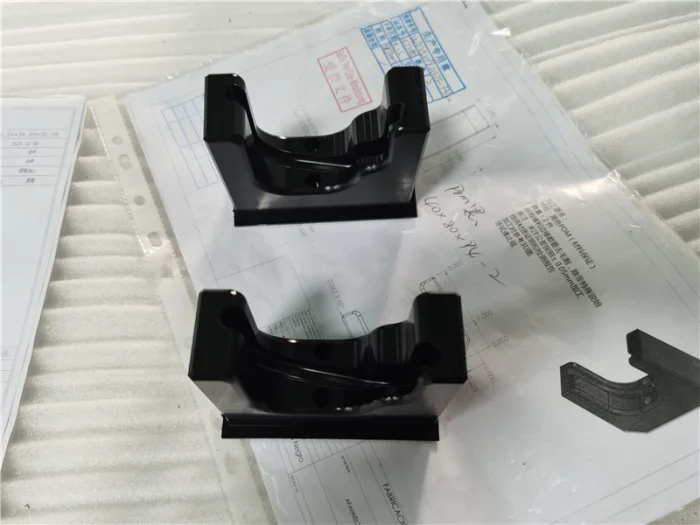
How to Choose a Material for Prototype vs. Batch Production
A repeatable decision flow prevents late-stage redesign in cnc orthopedic plastics.
1) Confirm intended use and documentation requirements
Prototype-only parts can use broader materials, but clinical workflows require resin traceability, revision control, and inspection records. A capable medical CNC machining supplier will align documentation to your program expectations for cnc orthopedic plastics.
2) Lock the sterilization pathway early
Sterilization is a frequent failure mode for cnc orthopedic plastics:
- Steam autoclave: PPSU/PSU, and many PEEK grades (validate by grade) and proven PEEK machining parameters
- EtO: broad compatibility; manage aeration and packaging
- Gamma/e-beam: may embrittle some plastics; test by material and dose
If autoclave is required, prioritize PPSU/PSU or PEEK machining for cnc orthopedic plastics.
3) Select by dominant functional requirement
Use this selection shortcut in cnc orthopedic plastics:
- Stiffness / stability: PEEK machining (or PEI where appropriate)
- Wear / low friction: UHMWPE (or PTFE when tolerances allow)
- Reusable instruments: PPSU/PSU for sterilization life
4) Avoid prototype-to-production mismatch
If you prototype in PC but produce in PEEK, you may re-validate tolerances, sterilization, and fit. For many cnc orthopedic plastics programs, moving to production-intent resin earlier reduces total lead time. For complex features, validate medical CNC machining capability early—especially for PEEK machining stiffness parts and UHMWPE wear parts.
Tolerances and Accuracy Levels for CNC Orthopedic Plastics
In regulated cnc orthopedic part, tolerance targets must be tied to CTQs, inspection method, and polymer behavior; for high-risk orthopedic plastics features, lock inspection early so disciplined medical CNC machining and validated PEEK machining routines make the biggest difference.
Tolerance capability in cnc orthopedic plastics depends on polymer behavior (thermal expansion, creep), part geometry, and inspection approach. Many teams define “accuracy levels” for orthopedic CNC plastics and drawings:
Level A: Critical interfaces
For metal-to-polymer mating features, pins, and alignment datums:
- Typical target: ±0.02–0.05 mm on CTQs (material/geometry dependent)
- Common resins: PEEK, PPSU, acetal
Level B: Functional features
For housings, covers, and non-critical fits:
- Typical target: ±0.05–0.10 mm
- Common resins: PPSU/PSU, PEI, PC, many PEEK components
Level C: Compliant or wear plastics
For designs dominated by elastic recovery or creep:
- Typical target: ±0.10–0.20 mm or functional gauging
- Common resins: UHMWPE, PTFE, and wear-tested UHMWPE grades, certain nylon designs
In medical CNC machining, the inspection plan (CMM, optical, gauges) should be tied to CTQs and the risk profile of the cnc orthopedic plastics component.

Machining and Quality Notes That Prevent Field Issues
Heat control and stress management
Polymers respond strongly to heat. In cnc orthopedic plastics, use staged rough/finish passes, sharp tooling, and controlled chip evacuation—especially in PEEK machining and high-precision PEEK machining finishing.
Deburring without contamination
In medical CNC machining, PEEK machining edges and UHMWPE edges often need different deburr strategies to avoid fiber pull and dimensional change.
If parts enter the sterile field, cnc orthopedic plastics should avoid shedding media and uncontrolled fibers. Controlled deburring, clean handling, and sealed packaging are standard in high-discipline medical CNC machining, including repeatable medical CNC machining inspection.
DFM that protects yield
To improve yield and cost in cnc orthopedic plastics:
- Avoid ultra-thin ribs that chatter
- Add fillets to reduce notch sensitivity
- Keep wall thickness consistent to reduce warpage
Traceability and quality alignment
Many buyers expect ISO 13485-aligned practices for traceability and change control. For cnc orthopedic plastics, that means resin certification, lot tracking, and inspection records that match your release requirements.
Common Questions About CNC Orthopedic Plastics
Can cnc orthopedic plastics replace metal in instruments?
Often for non-load-bearing features, yes. cnc orthopedic plastics can reduce weight and eliminate corrosion, but load paths, wear interfaces, and sterilization life must be validated through medical CNC machining documentation and testing within medical CNC machining protocols.
Is UHMWPE suitable for tight tolerances?
UHMWPE is excellent for wear, but not ideal for ultra-tight thin-wall features. Many cnc orthopedic plastics designs treat UHMWPE with functional gauges rather than extremely tight numeric tolerances.
When should I choose PEEK?
Choose PEEK machining when stiffness and validated PEEK machining repeatability, dimensional stability, and sterilization durability are primary drivers. For some housings, PPSU/PSU or PEI can meet requirements at lower cost, while keeping cnc orthopedic plastics performance stable.
Summary
Successful cnc orthopedic component depends on matching resin behavior to clinical intent—often balancing UHMWPE wear performance, PPSU/PSU sterilization life, and production-grade PEEK machining for rigidity and cost-controlled PEEK machining cycles. With the right tolerance strategy and disciplined medical CNC machining controls, teams can scale cnc orthopedic plastics from prototypes to batch production with predictable quality and documentation. Our medical CNC machining cells standardize PEEK machining heat control and UHMWPE fixturing to protect CTQs across lots.
If you are planning a new cnc orthopedic plastics build—surgical guides, trial sets, or orthopedic instrument components—contact Weldo Machining with your drawings, target tolerances, and sterilization method. We will provide DFM feedback, material recommendations, and a competitive quotation for prototype and production volumes.