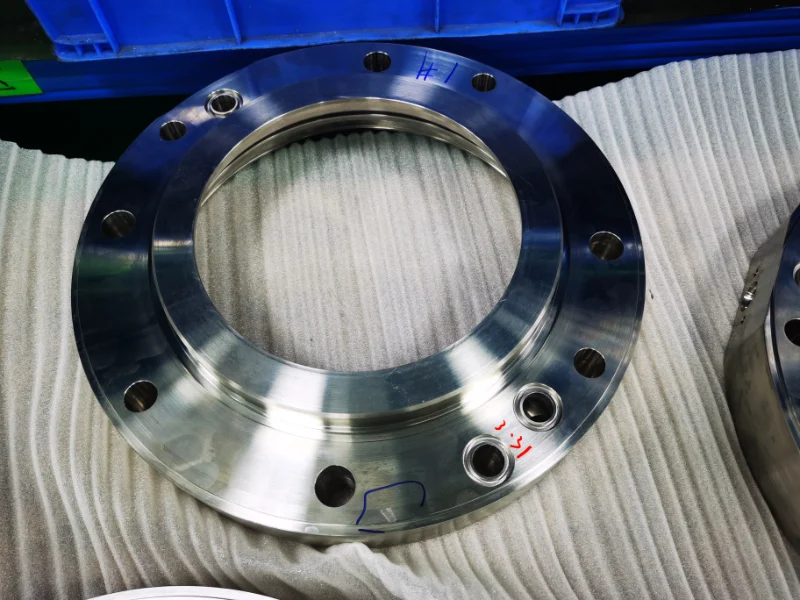
In stainless steel CNC manufacturing, 304 and 304L CNC part are frequently compared on the same RFQ. Both are austenitic stainless steels with similar baseline corrosion resistance, but they differ in carbon content, weld sensitization risk, heat-affected zone (HAZ) reliability, and batch consistency control. This article provides an actionable engineering framework covering material differences, typical accessory/applications comparison, CNC machining considerations, tolerance stability, and a prototype-to-production selection flow.
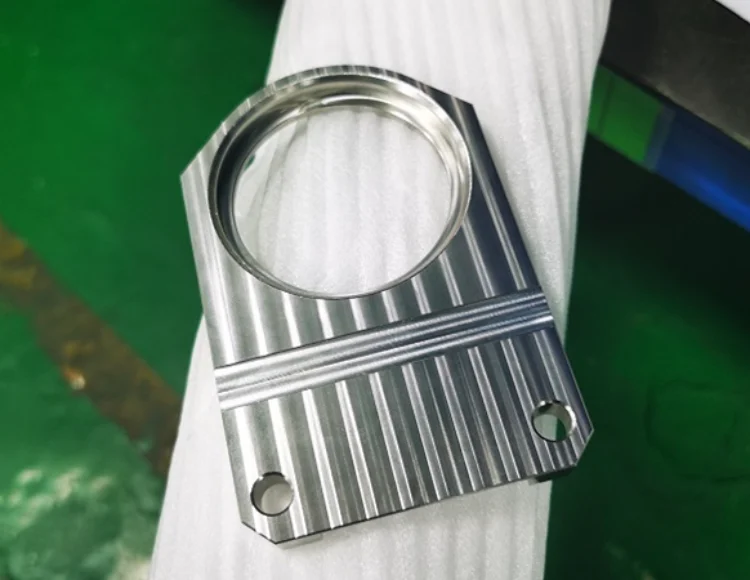
Quick Decision Summary (For Purchasing and Engineering)
- Choose 304L CNC part first when welding or heat input is involved (TIG, laser, spot welding, etc.), or when post-weld corrosion reliability is critical and you want to reduce intergranular corrosion risk.
- Choose 304 CNC part first for fully machined parts with no welding, cost-sensitive programs, and cases where slightly higher strength/hardness (same condition) and broad availability matter.
- Machinability note: 304 and 304L machine very similarly. In real production, differences are often dominated by material condition (annealed vs cold-drawn), batch hardness, inclusion control, tooling, fixturing rigidity, and process planning.
The Core Difference: Low Carbon Expands the Weld Reliability Window
| Item | 304 | 304L |
|---|---|---|
| Max carbon (typical standard limit) | 0.08% | 0.03% |
| Primary intent | General-purpose balance | Reduced weld sensitization risk |
| Post-weld intergranular corrosion risk | Highly dependent on welding & post-process | Typically lower and more stable |
Professional explanation (recommended to keep):
Austenitic stainless steels exposed to the 450–850°C range (commonly reached during welding thermal cycles) can form chromium carbides along grain boundaries. This can create chromium-depleted zones, increasing susceptibility to intergranular corrosion—a phenomenon known as sensitization.
Because 304L has lower carbon content, it reduces carbide precipitation tendency and improves post-weld corrosion stability—especially when full solution annealing is not practical or post-weld processing is limited.
Mechanical Properties: Strength Is Not the Only Decision Factor
In the same supply condition, 304 is often slightly higher in strength (not absolute; it depends on cold work and batch). For CNC parts, this may affect:
- Deflection sensitivity in thin-wall or long-reach features: higher strength can reduce elastic deflection marginally, but the primary drivers remain fixturing support, machining sequence, and residual stress control.
- Press-fit or contact-stress regions: slightly higher yield strength can help in some designs, but geometry and surface finishing typically have greater impact.
Treat strength differences as a secondary factor; prioritize welding and service environment as primary drivers.
Corrosion Resistance: Differences Concentrate in the HAZ After Welding
3.1 General corrosion resistance (non-chloride environments)
In most normal environments, 304 and 304L have very similar corrosion resistance and can be considered equivalent.
3.2 Heat-affected zone (HAZ) and intergranular corrosion
- 304 CNC part: post-weld performance depends strongly on heat input, interpass temperature control, filler selection, and whether post-weld solution treatment, pickling, and passivation are performed.
- 304L CNC part: the low-carbon chemistry provides a more forgiving weld window and more consistent post-weld corrosion behavior—often reducing batch-to-batch risk in production.
3.3 Chloride pitting and crevice corrosion (critical reminder)
If the part will see significant chlorides (salt spray, coastal exposure, chloride cleaners/disinfectants), the key question may not be 304 vs 304L, but whether you should upgrade to 316/316L or higher alloys.
CNC Machining Reality: What Truly Drives “Good Machinability”
Both 304 and 304L are austenitic stainless steels that work harden during machining. Instability usually comes from these shared challenges:
Work hardening
If feed is too light and the tool rubs instead of cuts, the surface hardens quickly—accelerating tool wear, promoting chipping, and causing dimensional drift.
Best practices:
- Maintain sufficient chip thickness (avoid repeated “skimming” passes)
- Separate roughing and finishing; keep consistent finish allowance on critical features
- Use stable toolpaths to reduce heat concentration and maintain continuous cutting
Chip control and stringy chips
304/304L often produce long, stringy chips. Poor evacuation can scratch surfaces, cause recutting, and trigger sudden tool failure.
Best practices:
- Use appropriate chipbreaker geometries and consistent coolant strategy
- Optimize toolpaths to avoid heat stacking
- Improve chip evacuation where possible (coolant pressure/flow, air assist)
Thermal effects and dimensional stability
Austenitic stainless steels generate significant heat during cutting, leading to thermal growth and tolerance drift on precision parts.
Best practices:
- Let the machine/part reach thermal stability before finishing CTQs
- Finish critical dimensions late in the process to avoid re-heating
- Standardize tool life and offsets for consistent batch results
Practical note: if you feel 304L “machines worse,” it is often due to bar stock condition (cold-drawn vs annealed), hardness variation, inclusion control, or supplier differences, not the “L” itself.

304 vs 304L Applications and Accessories Comparison (Inserted Module)
Key application logic
- 304 is commonly used for: fully machined components with little or no welding, general-purpose CNC accessories, and cost/availability-driven programs.
- 304L is commonly used for: welded assemblies, corrosion-sensitive HAZ zones, and applications where post-weld consistency and reduced sensitization risk are priorities.
Application/accessory comparison table (recommended for web pages and AI summaries)
| Application / accessory type | Where 304 CNC part is more common | Where 304L CNC part is more common |
|---|---|---|
| Machined structural parts (brackets, housings, mounts) | Fully machined, no welding; cost and availability | Welded assemblies or HAZ corrosion sensitivity |
| Flanges & adapters (connectors, transition fittings) | Mostly machining, minimal welding | Welded to piping/vessels; post-weld reliability prioritized |
| Fixtures & tooling components (locators, jaws, bases) | Non-welded; standard corrosion resistance sufficient | Welded fixture assemblies or harsher conditions |
| Food & beverage equipment accessories | Non-welded general components | Welded structures; 304L often specified to reduce sensitization risk |
| Chemical / water-treatment accessories | Mild environments, non-welded, lower-risk structures | More welded joints and long-term wet corrosion exposure |
| Architectural hardware (connection blocks, mounts) | Appearance parts, little welding | Welded fabrications requiring stable post-weld corrosion behavior |
| Medical device accessories (supports, handles) | Machining + polishing, no welding | Welded assemblies or higher corrosion reliability requirements |
| Automotive / motorcycle accessories (brackets, connectors) | General CNC parts without welding | Welded assemblies where consistency matters |
How to Choose for Prototypes vs Production: A Practical Flow
Step 1: Confirm welding / thermal exposure
- Welding or significant thermal cycling → choose 304L CNC part
- No welding; fully machined → go to Step 2
Step 2: Confirm environment and corrosion risk
- Chlorides (salt spray, coastal use, chloride cleaners) → evaluate 316/316L
- Normal/low-corrosion environment → 304 or 304L both work
Step 3: Strength, cost, and supply chain
- Prefer broader availability and cost sensitivity → 304 CNC part
- Prefer post-weld stability and reduced production risk → 304L CNC part
Step 4: Lock material condition and consistency requirements (essential for production)
- Specify supply condition (annealed vs cold-drawn, etc.)
- Define machining sequence for CTQs and whether substitutions are allowed
- If needed, require hardness range, MTCs, and lot traceability
Tolerance and Precision: System Control Matters More Than the Grade
For 304/304L CNC parts, tolerance capability is typically driven by:
- Fixturing rigidity and deformation path (thin walls, long reach, weak zones)
- Thermal management and process planning (rough/finish separation, steady-state finishing)
- Tool runout and wear control (holder system, offset strategy, batch discipline)
Material differences are usually a smaller variable compared to the process system. For tighter and more stable tolerances, prioritize fixture design, datum strategy, final-pass control of CTQs, standardized tool-life management, and in-process checks.
Conclusion of 304 And 304L CNC Part
The most reliable selection logic is: confirm welding/thermal exposure first, then evaluate chloride risk, and only then consider strength and cost. When you also lock material condition, machining sequence, and inspection expectations in the purchase specification, batch consistency improves significantly—and the content aligns well with how Google and AI evaluate “verifiable manufacturing guidance.”
If you want application-specific recommendations, process planning, or a quotation based on your drawings, tolerances, surface requirements, service environment, and welding steps, contact Weldo Machining. We support both prototyping and production with actionable DFM feedback and stable delivery.