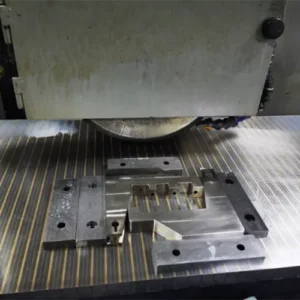
CNC 5 axis machining is an advanced manufacturing method used to produce complex, high-precision parts with fewer setups and superior geometric accuracy. Compared with traditional multi-step machining, 5 axis machining enables simultaneous movement along multiple axes, allowing manufacturers to achieve complex features efficiently and consistently.
This article explains the definition of CNC 5 axis machining, its advantages and limitations, how it works together with 3-axis machining and EDM, how it differs from 4-axis machining, and how to choose the most suitable machining method.

What Is CNC 5 Axis Machining?
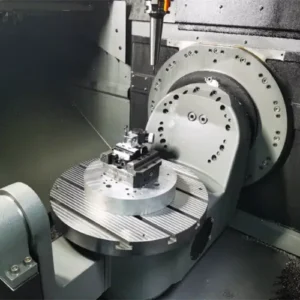
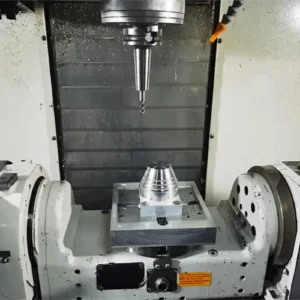
CNC 5 axis machining refers to a machining process in which a cutting tool or workpiece moves along five different axes simultaneously. In addition to the standard X, Y, and Z linear axes, CNC 5 axis machining adds two rotational axes, enabling the tool to approach the part from virtually any direction.
This capability allows 5 axis machining to produce complex contours, deep cavities, undercuts, and multi-angle features in a single setup.
Key Advantages of CNC 5 Axis Machining
5 axis machining offers significant benefits compared with conventional machining methods.
Higher Geometric Accuracy
By reducing repositioning and re-clamping,
5 axis machining minimizes cumulative tolerance errors.
Reduced Setup Time
Complex parts can often be completed in one setup, improving production efficiency.
Superior Surface Finish
Shorter tools and optimal cutting angles improve surface quality and tool life.
Capability for Complex Parts
5 axis machining is ideal for aerospace, medical, automotive, and precision industrial components.
Limitations of CNC 5 Axis Machining
Despite its advantages, 5 axis machining is not always the best solution.
- Higher machine and programming cost
- More complex CAM programming requirements
- Not cost-effective for simple geometries
For these reasons,
5 axis machining is often combined strategically with other machining processes.

CNC 5 Axis Machining vs. 3 Axis Machining
3-axis machining remains widely used for simple and prismatic parts.5 axis machining does not replace 3-axis machining but complements it.
How They Work Together
- 3-axis machining handles roughing and basic features
- CNC 5 axis machining completes complex angles and critical surfaces
This hybrid approach balances cost and capability while maximizing productivity.
CNC 5 Axis Machining vs. 4 Axis Machining
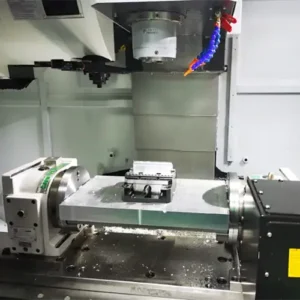
4-axis machining adds one rotational axis to standard 3-axis machining, allowing indexed rotation.
Key Differences
- 4-axis machining rotates the part but typically cuts in one plane at a time
- 5 axis machining allows continuous simultaneous movement, improving precision
4-axis machining is suitable for repetitive rotational parts, while
5 axis machining excels at free-form geometries and compound angles.
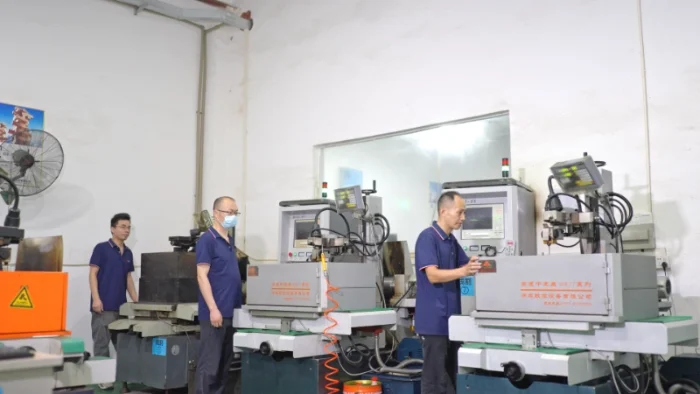
CNC 5 Axis Machining and EDM Collaborative Applications
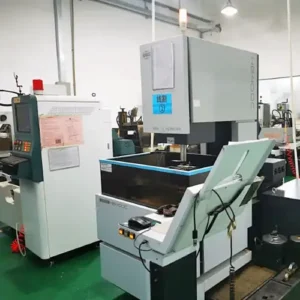
Electrical Discharge Machining (EDM) is often used alongside CNC 5 axis machining for features that are difficult to cut mechanically.
Collaborative Use Cases
- CNC 5 axis machining produces external geometry and major cavities
- EDM creates sharp internal corners, deep slots, or hardened features
This collaboration improves design freedom and ensures dimensional accuracy for complex components.
Typical Applications of CNC 5 Axis Machining
5 axis machining is commonly used for:
- Aerospace structural components
- Medical implants and surgical tools
- Turbine blades and impellers
- Complex molds and tooling inserts
- Precision housings with multi-angle features
These parts benefit from the flexibility and accuracy provided by 5 axis machining.
How to Choose the Right Machining Method
Selecting the correct machining approach depends on part complexity, tolerance requirements, and cost objectives.
When to Use CNC 5 Axis Machining
- Complex geometry with multiple angles
- Tight tolerances across multiple faces
- High surface finish requirements
When 3-Axis or 4-Axis Is Better
- Simple prismatic parts
- High-volume production
- Cost-sensitive components
When to Add EDM
- Sharp internal corners
- Deep or narrow cavities
- Hardened materials
An optimized combination of processes often delivers the best result.
Process Optimization Through Machining Integration
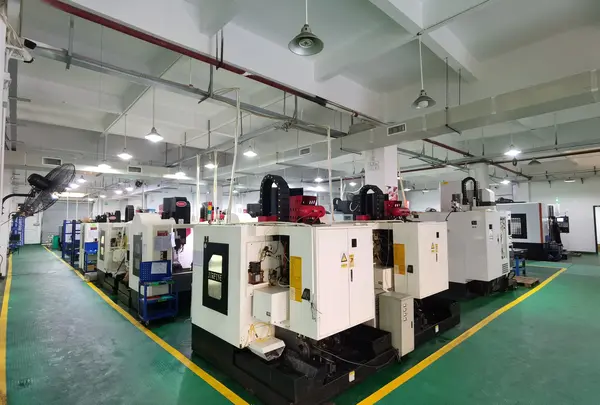
Efficient manufacturing does not rely on CNC 5 axis machining alone. Instead, it combines:
- 3-axis machining for roughing
- 5 axis machining for complex finishing
- EDM for precision internal features
This integrated strategy reduces machining time, lowers tooling cost, and improves overall part quality.
Conclusion
CNC 5 axis machining provides unmatched flexibility and precision for complex components, while working most efficiently when combined with 3-axis machining, 4-axis machining, and EDM processes. Understanding the strengths and limitations of each method allows manufacturers to select the most cost-effective and reliable production strategy.
If you are evaluating 5 axis machining for your next project, Weldo Machining offers advanced multi-axis machining capabilities, process integration expertise, and competitive pricing. Contact Weldo Machining to discuss your part requirements and request a tailored quotation.