








The aerospace industry relies on outstanding accuracy, traceability, and repeatability, making cnc machining aerospace technology a foundational pillar for modern aircraft and spacecraft production. From flight-critical structures to lightweight interior components, precision machining guarantees reliability in environments where performance cannot fail. As aerospace programs push toward lighter materials, tighter tolerances, and more complex geometries, cnc machining aerospace becomes even more essential for delivering consistent, high-strength, and mission-ready parts.
Why CNC Machining Aerospace Applications Demand Extreme Precision
Aerospace systems operate under intense conditions including high vibration, heat, pressure, and long mission cycles. These extremes require parts produced with precision measured down to microns. CNC machining aerospace workflows ensure each surface, angle, and internal feature aligns perfectly with demanding engineering standards. With multi-axis capabilities and advanced simulation tools, machinists can meet the strictest dimensional requirements while optimizing material efficiency.
In addition, aircraft manufacturers depend on traceability from raw material to finished part. CNC machining aerospace technologies support full documentation, certification, and inspection to satisfy global aviation compliance such as AS9100, NADCAP, and ISO standards.
CNC Machining Aerospace Parts Manufacturer Capabilities
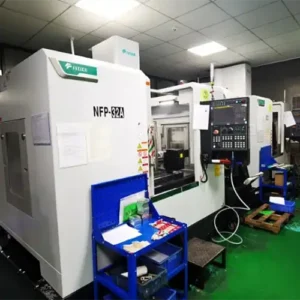
A professional cnc machining aerospace parts manufacturer must deliver a wide range of capabilities. These include high-precision milling, turning, multi-axis machining, complex geometry creation, prototyping, small-batch production, and full-scale serial manufacturing. Aerospace OEMs expect manufacturers to master diverse materials such as aerospace-grade aluminum, titanium, stainless steel, nickel alloys, Inconel, and engineering plastics.
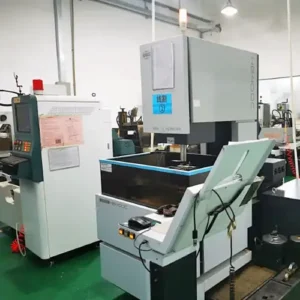
A skilled cnc machining aerospace parts manufacturer also integrates digital inspection systems, CMM verification, and surface-treatment processes like anodizing, passivation, polishing, and coating. These additional finishing operations ensure parts meet all mechanical, thermal, and corrosion-resistant requirements.
Aerospace Components Commonly Produced With CNC Machining Aerospace Workflows
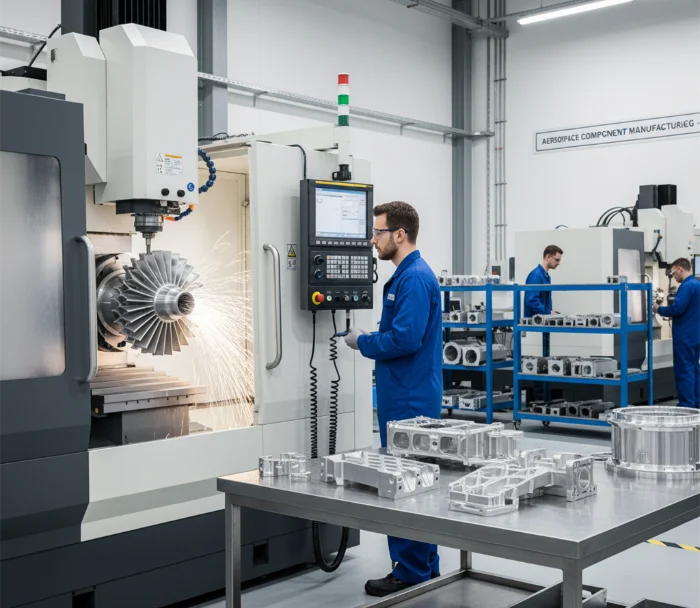
CNC machining aerospace systems produce thousands of components for both commercial and defense sectors. Typical examples include:
- Engine housings and turbine components
- High-load brackets and structural fittings
- Landing gear components
- Fuel system valves and connectors
- Avionics frames and heat-dissipation structures
- Seating components and cabin interiors
- Satellite and UAV structural elements
Each category of cnc machining aerospace parts requires strict process control, dimensional accuracy, and material performance to withstand operational stress.

CNC Machining Aerospace Parts: Material Considerations
Material selection significantly impacts the final performance of aerospace components. CNC machining aerospace parts often use materials engineered for strength and temperature capability:
Aluminum Alloys
Lightweight, corrosion-resistant, and cost-efficient for machining. Ideal for avionics housings, brackets, and interior components.
Titanium
High strength-to-weight ratio and excellent fatigue resistance. Essential for structural airframe parts, engines, and landing gear.
Stainless Steel
Strong and corrosion-resistant; used for hydraulic, fuel, and mechanical assemblies.
Inconel & Nickel Superalloys
High-temperature performance suitable for turbo engines, propulsion, and aerospace energy systems.
Skilled manufacturability ensures every cnc machining aerospace parts manufacturer can match the right material with the intended operational environment.
Multi-Axis Machining and Its Impact on Aerospace Efficiency
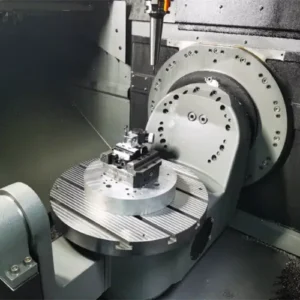
Multi-axis machining, particularly 4-axis and 5-axis machining, transforms how the aerospace sector produces complex geometries. By reducing multiple setups and improving surface integrity, 5-axis technology ensures dimensional stability and reduces lead time. This approach greatly improves the production quality of cnc machining aerospace parts by maintaining tight tolerances across intricate angles, deep pockets, and curved surfaces.
Prototyping and Rapid Development in CNC Machining Aerospace
Innovation moves fast in aerospace engineering. Prototyping enables new designs to be tested under real conditions before full-scale manufacturing begins. CNC machining aerospace systems deliver accurate prototypes quickly, allowing engineers to optimize performance, weight, and manufacturability.
This rapid iteration cycle is essential for reducing development risk, ensuring safety, and maintaining efficiency throughout the aircraft build process.
Quality Control and Certification in CNC Machining Aerospace Environments
Every component for aviation must undergo stringent quality control processes. The aerospace sector demands full verification, including dimensional inspection, material testing, structural validation, and surface evaluation. A qualified cnc machining aerospace parts manufacturer often uses CMM systems, optical scanners, and advanced metrology tools to ensure accuracy.
Certification standards relevant to cnc machining aerospace include:
- AS9100
- ISO 9001
- NADCAP (for special processes)
- DFARS material compliance
- Material traceability documentation
Meeting these standards builds trust with aerospace OEMs and ensures long-term program reliability.
Digital Transformation and Smart Production
Modern factories are adopting Industry 4.0 technologies to enhance cnc machining aerospace productivity. Real-time monitoring, data analytics, and automation help manufacturers reduce waste, shorten lead times, and maintain consistent quality.
Examples include:
- Digital twins
- Tool-life management systems
- Automated robotic loading
- Predictive maintenance
- AI-driven simulation for machining paths
These advancements increase efficiency and support continuous improvement for next-generation aerospace components.

How CNC Machining Supports Lightweight Aerospace Structures
Reducing aircraft weight is critical for improving fuel efficiency and payload capacity. CNC machining enables complex lightweight designs such as:
- Topology-optimized brackets
- Pocketed structures
- Thin-wall components
- High-precision ribs and stiffeners
By producing extremely accurate geometries with minimal material waste, cnc machining aerospace methods support weight reduction strategies while preserving structural integrity.
Selecting a CNC Machining Aerospace Parts Manufacturer
Choosing the right cnc machining aerospace parts manufacturer requires evaluation of:
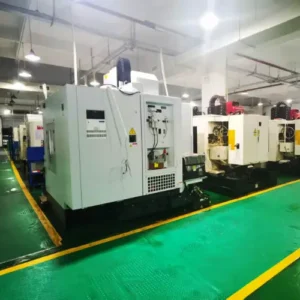
- Facility capability (multi-axis, large-scale machining, inspection)
- Certifications and aerospace compliance
- Engineering support and design optimization
- Material expertise with titanium, aluminum, Inconel
- Production scalability
- Lead time and communication efficiency
Partnership with a trustworthy manufacturer ensures consistent performance and promotes long-term success across aerospace projects.
FAQ of cnc machining aerospace
What is CNC machining aerospace used for?
It produces high-precision aircraft components including structural parts, engine elements, and avionics housings.
Why choose a cnc machining aerospace parts manufacturer?
Certified manufacturers ensure tight tolerances, material expertise, and compliance with AS9100 and aviation standards.
What materials are used for cnc machining aerospace parts?
Common materials include aluminum, titanium, stainless steel, and Inconel for high-strength and high-temperature performance.