








When evaluating precision manufacturing options, CNC machining bronze cost is a major topic for engineers, project managers, and procurement teams. Bronze is valued for its high wear resistance, excellent corrosion resistance, and dimensional stability under heavy loads. However, machining bronze requires specialized expertise and often costs more than machining aluminum or plastics. This guide explains what drives CNC machining bronze cost, how bronze types differ, and how tolerance, applications, and surface finishes influence final pricing.
Why CNC Machining Bronze Cost Matters
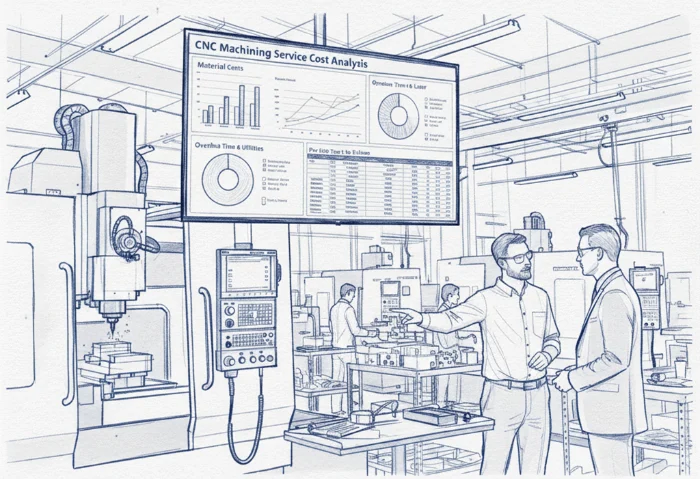
Bronze components are used in demanding environments where reliability and durability are essential. Because of its density and hardness, CNC machining bronze cost can be higher compared with machining softer materials. Material selection, tool wear, tolerance control, and finishing requirements all affect price. Understanding these factors helps buyers request more accurate and competitive quotes.
Main Factors Influencing CNC Machining Bronze Cost
Material Grade and CNC Machining Bronze Type
Bronze includes many alloy categories, and each CNC machining bronze type affects machining difficulty differently:
Aluminum bronze: high strength, challenging to cut, high tool wear
Phosphor bronze: good corrosion resistance, medium machinability
Leaded bronze: excellent chip control, easier machining
Silicon bronze: durable but tougher on tooling
More difficult materials increase machining time and raise CNC machining bronze cost.
Machine Time, Tool Life, and Cutting Conditions
Bronze demands slower cutting speeds and strong tooling, which increases machining time and tool consumption. These factors directly impact CNC machining bronze price.
Complex Geometry and CNC Bronze Part Tolerance Requirements
One of the most important cost drivers is cnc bronze part tolerance. Tight tolerance zones—such as ±0.01 mm or ±0.001 inch—require multiple passes, precision tooling, and extensive inspection.
For example, thin-walled parts, deep cavities, and finely threaded components significantly increase machining time, which raises CNC machining bronze cost. When allowable, loosening tolerance requirements can effectively reduce cost without compromising functionality.

Cost Differences Among Common CNC Machining Bronze Types
Aluminum Bronze
High strength but difficult to machine, therefore among the highest CNC machining bronze price ranges.
Phosphor Bronze
Excellent for marine and electrical parts with medium machining cost.
Leaded Bronze
Most cost-effective due to great machinability, resulting in lower CNC machining bronze cost.
Silicon Bronze
Durable but tool-intensive, placing it at the higher end of the price spectrum.
Choosing the right CNC machining bronze type helps balance performance and cost.

CNC Bronze Part Application Across Industries
Marine & Offshore Components
Corrosion resistance makes bronze ideal for bushings, fittings, propeller elements, and valve parts.
Industrial Machinery
Widely used for gears, bearing sleeves, and friction components.
Electrical and Electronic Parts
Phosphor bronze is essential for connectors, terminals, and spring elements.
Aerospace & Automotive
Bronze components provide stability in high-rotation and high-load assemblies.
Each CNC bronze part application may require different precision and finishing levels, influencing the total cost.
CNC Bronze Part Surface Finish and Its Cost Impact
Popular CNC Bronze Part Surface Finish Options
Typical CNC bronze part surface finish choices include:
Standard machined surface
Hand or machine polishing
Mirror finish for sliding applications
Bead blasting for matte texture
Protective or anti-corrosion coatings
The more specialized the finish, the higher the CNC machining bronze cost.
Relationship Between Surface Finish and CNC Bronze Part Tolerance
High-quality finishes often require extremely tight cnc bronze part tolerance. Smooth mating surfaces or functional fits may need precision machining steps that increase production cost.
Understanding CNC Machining Bronze Price Structure
Several components contribute to total CNC machining bronze price:
Bronze alloy cost
Machining time
Tool wear
Tolerance and precision requirements
Surface finishing
Quantity and production batch size
Inspection processes (CMM measurement, QC reporting)
Prototype quantities have higher per-unit pricing, while larger batches significantly reduce cost per piece.

How Weldo Machining Controls CNC Bronze Cost and Achieves High Precision
For buyers seeking cost-effective, precision bronze components, manufacturing capability matters as much as material selection. Weldo Machining specializes in high-accuracy bronze components and can achieve cnc bronze part tolerance as tight as 0.001 inch.
This level of precision is especially critical for:
Bearing sleeves
Hydraulic components
High-performance bushings
Aerospace and marine hardware
Our optimized process planning enables us to maintain competitive CNC machining bronze cost without sacrificing accuracy or consistency. This helps clients obtain both high performance and cost efficiency.
How to Reduce CNC Machining Bronze Cost
To optimize spending:
Choose more machinable bronze alloys if performance allows
Relax cnc bronze part tolerance where possible
Simplify geometry and reduce unnecessary features
Select essential rather than decorative finishes
Increase order quantity to reduce setup cost
Provide accurate drawings and clear tolerance details

Conclusion
Understanding CNC machining bronze cost helps buyers choose the right bronze alloy, determine appropriate tolerance levels, and select the most suitable finishing options. Material type, tolerance requirements, machining complexity, surface finish, and application all influence price.
If you are searching for precision bronze machining with reliable cost control, Weldo Machining can achieve CNC bronze part tolerances down to 0.001 inch while maintaining competitive pricing.
To get an accurate quote or discuss your bronze machining project, feel free to contact us for technical consultation, cost evaluation, or sample production. Our engineering team is ready to support your requirements from prototype to mass production.
FAQ of cnc machining bronze cost
What factors have the biggest impact on CNC machining bronze cost?
The main factors include the bronze alloy type, machining time, tool wear, part geometry, required tolerance, and surface finish. Harder alloys and tighter cnc bronze part tolerance typically increase overall CNC machining bronze cost.
Why is CNC machining bronze more expensive than machining aluminum or plastics?
Bronze is harder, denser, and requires slower cutting speeds, which increases cycle time and tool consumption. These machining challenges naturally push CNC machining bronze cost higher compared with softer materials.
How do tolerance requirements affect CNC machining bronze cost?
Strict tolerance requirements—such as ±0.01 mm or ±0.001 inch—require more precision passes, fine tooling, and additional inspection. As a result, tighter cnc bronze part tolerance significantly increases CNC machining bronze cost.
Can Weldo Machining reduce CNC machining bronze cost while keeping high precision?
Yes. Weldo Machining optimizes process engineering and tool paths to balance accuracy and efficiency. We can achieve cnc bronze part tolerance as tight as 0.001 inch while maintaining competitive CNC machining bronze cost. Buyers can contact our engineering team for a tailored quotation.