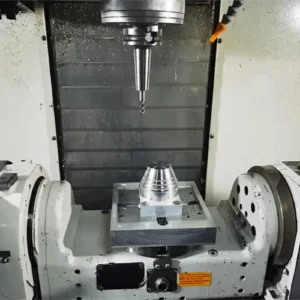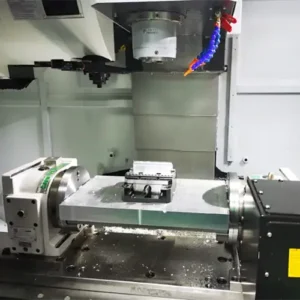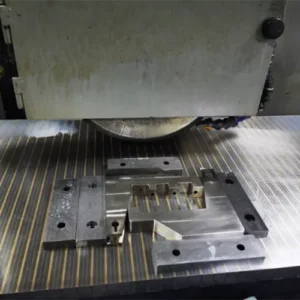

Engineering teams in automotive, aerospace, fluid control, and industrial equipment development frequently rely on a cnc machining flange prototype to validate new designs before committing to tooling or mass production. CNC machining offers accuracy, repeatability, and fast turnaround, allowing engineers to quickly test sealing performance, bolt-hole alignment, material strength, and overall fitment in real assemblies.
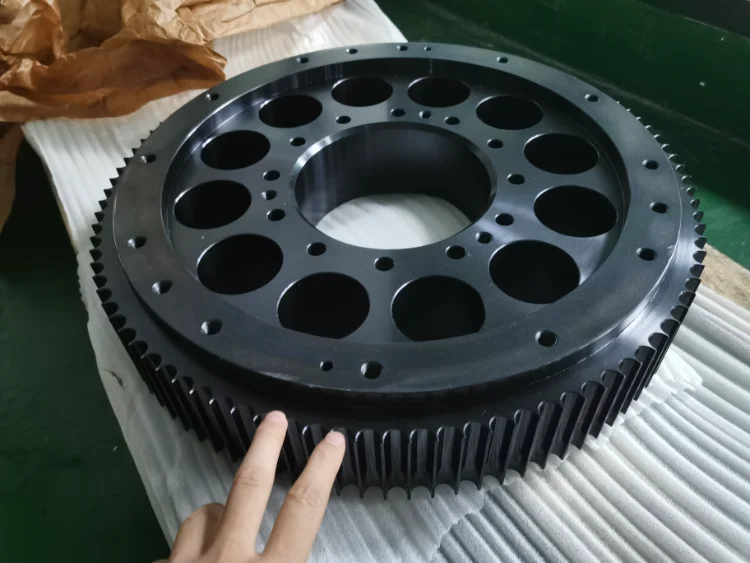
Why Flange Prototyping Matters in Engineering Projects
Flanges may look simple, but they are among the most critical components in pressure, flow, and connection systems. Their function depends on the flawless interaction of:
- Bolt-hole concentricity
- Surface flatness for gasket sealing
- Bore alignment
- Structural strength under load
Even slight deviations can cause leaks, vibration, premature wear, or assembly failure.
This makes the cnc machining flange prototype a vital step before production, helping engineers detect design flaws early.
Industries of CNC Machining Flange Prototypes
A cnc machined flange sample is commonly used in high-demand industries where reliability is essential.
Automotive Systems
Turbo, exhaust, and fluid routing systems require flanges that withstand heat and vibration. Prototypes help validate sealing behavior and alignment.
Industrial Pumps and Compressors
Pressure cycling and fluctuating loads make precision critical. CNC prototypes reveal sealing and durability issues.
Aerospace Ducting and Airflow Components
Lightweight aluminum or titanium cnc machining flange parts must pass vibration, airflow, and clearance tests.
Oil & Gas and Fluid Handling
Steel or stainless flanges are tested for corrosion resistance, bolt tension behavior, and long-term sealing integrity.
A Practical, Workshop-Based View of Flange Development
Instead of a textbook list, it’s helpful to look at how machinists approach a flange prototype once the CAD model arrives.
Material Considerations
Different materials affect machining strategy:
- Stainless steel: tough, suited for corrosive environments
- Carbon steel: strong and economical
- Aluminum: lightweight, easy to machine
- Brass/Bronze: excellent sealing performance
- PEEK/POM: used in insulating or non-metal applications
Material choice directly affects the final performance of the cnc machining flange prototype.
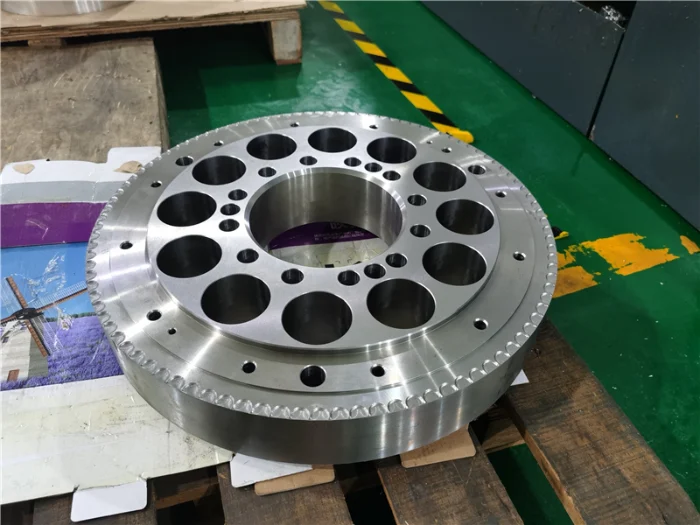
Critical Surfaces in Flange Machining
Machinists focus on a few critical faces:
- The sealing surface
- Bolt-hole circle
- Bore diameter
- Mating surface flatness
These determine whether a flange performs correctly in testing.
Managing Cutting Forces and Stability
Large-diameter flanges involve heavy stock removal.
Shops adjust:
- Fixturing
- Feed rates
- Spindle speed
- Cutting passes
to maintain symmetry and accuracy in each cnc machined flange sample.
A Goal-Driven Look at the Machining Process
Instead of a rigid step-by-step method, flange machining revolves around engineering goals.
Goal 1 — Perfect Symmetry
Turning operations establish accurate OD, ID, and facing.
Goal 2 — Reliable Sealing
Flatness-controlled finishing ensures proper gasket contact.
Goal 3 — Bolt-Hole Precision
Indexed drilling or multi-axis milling keeps bolt patterns accurate.
Goal 4 — Structural Strength
Smooth toolpaths and correct material selection ensure durability for pressure and vibration tests.
This approach ensures every cnc machining flange part behaves like a production-ready component.
Common Machining Challenges and How They Are Solved
Warping During Roughing
Solution: Split into multiple roughing passes and control heat.
Misaligned Bolt Holes
Solution: On-machine probing and precision drilling cycles.
Surface Flatness Issues
Solution: Fine facing + optional grinding.
Tool Chatter on Large Diameters
Solution: Optimized fixturing and adaptive spindle speeds.
Tolerance Accumulation
Solution: Proper machining sequence to reduce compounded deviation.
Cost Structure of CNC Machined Flange Prototypes
The cost of a cnc machining flange prototype is influenced by:
- Material: Stainless steel > carbon steel > aluminum
- Diameter & thickness: Larger parts require more machining time
- Tolerance requirements: Tighter flatness or concentricity increases cost
- Bolt pattern complexity: More holes or non-standard spacing adds cycles
- Surface finishing: Sealing surfaces often require additional grinding
- Quantity: Single prototypes are more expensive than batch runs
Understanding these factors helps engineers budget effectively during R&D.
Design Guidelines for Better CNC-Machined Flange Parts
To improve manufacturability and avoid unnecessary cost:
- Use standard bolt patterns if possible
- Avoid ultra-deep grooves
- Keep wall thickness consistent
- Add fillets to reduce stress concentration
- Specify surface finish only on sealing-critical zones
- Apply GD&T to essential features, not the entire drawing
Following these guidelines ensures a more efficient and reliable cnc machining flange prototype.

How to Choose a Reliable CNC Flange Machining Partner
Selecting the right supplier is crucial for ensuring your prototype meets test requirements. A dependable machining partner should have:
1. Precision capability
Able to hold tight tolerances on sealing surfaces and bolt-hole patterns.
2. Full turning + milling capacity
Equipped to machine both simple and complex cnc machining flange parts.
3. Strong quality control
CMM measurement, flatness checks, and dimensional reports for each cnc machined flange sample.
4. Material expertise
Experience machining stainless steel, carbon steel, aluminum, brass, and engineering plastics.
5. Clear communication
Straightforward pricing, realistic lead times, and fast technical response.
A supplier meeting these criteria greatly reduces risk and ensures your flange prototypes perform as intended.