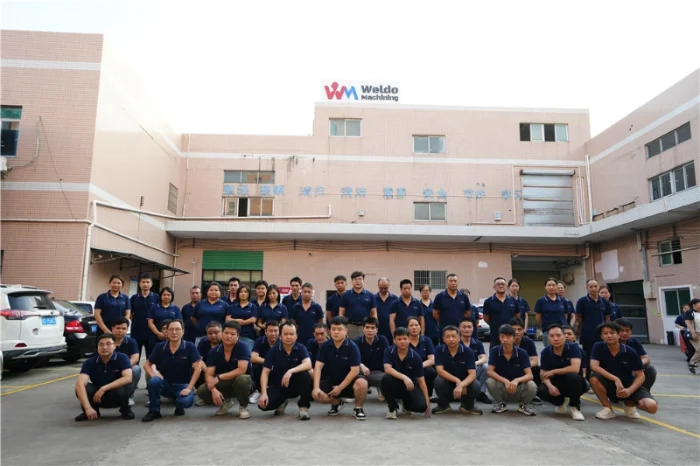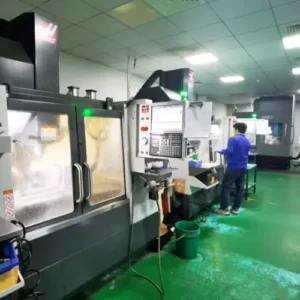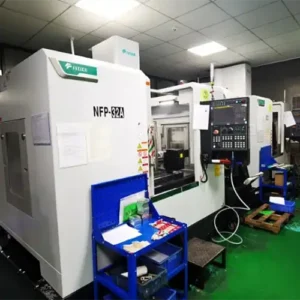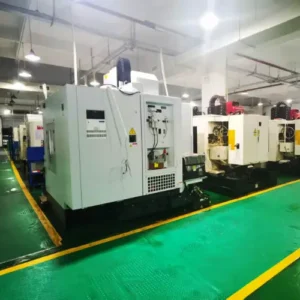
Finding a trustworthy cnc machining parts manufacturer is a key step when you want stable quality, realistic pricing, and predictable delivery. The right cnc machining manufacturer is not just a factory or a company that cuts metal; it becomes a long-term partner that understands your drawings, your schedule, and your standards.
What is a cnc machining parts manufacturer
A professional cnc machining manufacturer acts as a machining service provider and supply chain partner at the same time. The manufacturer does far more than simply operate machines. A capable cnc machining manufacturer will:
- Review 2D drawings and 3D models and give clear DFM advice
- Choose or confirm material grades and heat treatment with you
- Plan operations for milling, turning, EDM, grinding, and finishing
- Control process parameters and inspection for precision machining
- Package and label each batch of custom CNC parts with traceability
Choosing a cnc machining manufacturer early in your project reduces risk for later production changes.
When you talk with a cnc machining parts manufacturer for the first time, pay attention to how the team asks questions. A serious manufacturer behaves like a partner, not a simple job shop.
Why the manufacturer choice matters
For buyers, the choice of a cnc machining supplier has direct impact on warranty claims, assembly efficiency, and long-term cost. A stable cnc machining manufacturer keeps dimensions, finishes, and packaging consistent from batch to batch so your own production line stays smooth. When a cnc machining parts manufacturer can respond quickly to design changes, you shorten development cycles and avoid excess inventory. In global supply chains, a dependable cnc machining parts manufacturer also reduces risk in logistics, customs, and documentation. Instead of switching vendors every few months, many companies choose one strategic cnc machining parts manufacturer as a lead partner and then build long-term cost and delivery plans together.

Materials handled by a cnc machining parts manufacturer
The variety of materials a cnc machining parts manufacturer can handle shows the depth of its process capability. Metals and engineering plastics each need different tools, parameters, and inspection methods. Your cnc machining parts manufacturer should confirm which metals are most efficient for your design.
Metal materials
Most buyers expect their cnc machining parts manufacturer to machine common industrial metals, for example:
- Aluminum alloys such as 6061 and 7075 for light structural custom CNC parts
- Stainless steels such as 304, 316, and 17-4PH for corrosion-resistant components
- Carbon and alloy steels such as 1018, 1045, and 4140 for strong shafts and flanges
- Titanium alloys for high strength-to-weight ratio and critical performance parts
- Copper and brass for thermal, conductive, and sealing components
Always ask the cnc machining parts manufacturer which materials are standard in the factory and which require special process development.
Plastic materials
For housings, insulators, and lightweight fixtures, many customers need plastic custom CNC parts. A good cnc machining parts manufacturer will understand the behavior of POM/Delrin, Nylon, PEEK, PTFE, ABS, and PC, and will adjust feeds, speeds, and clamping so that the parts do not warp or crack during precision machining. A skilled cnc machining parts manufacturer will warn you when a plastic choice is risky for tolerance or stability.

Typical parts from a cnc machining parts manufacturer
To communicate clearly, you and your cnc machining parts manufacturer should speak a similar language about part types. Common categories include:
- Structural brackets, support plates, frames, and mounting blocks
- Rotating shafts, bushings, collars, spacers, and sleeves
- Fluid and gas manifolds, valve bodies, fittings, and adapters
- Enclosures, housings, covers, lids, and panels
- Tooling plates, jigs, nests, and custom inspection fixtures
When you send an RFQ to a cnc machining parts manufacturer, describe both the function and the mating parts so the supplier can suggest the most economical manufacturing route.
CNC milling services and milled parts
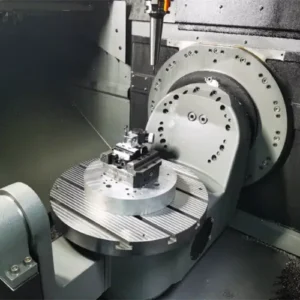
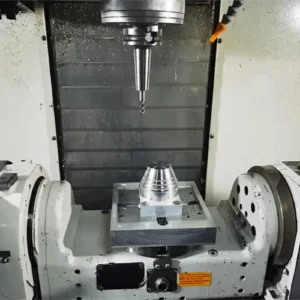
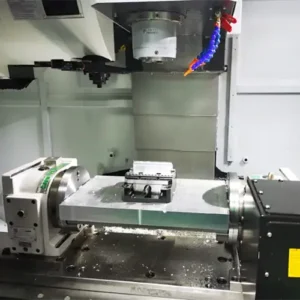
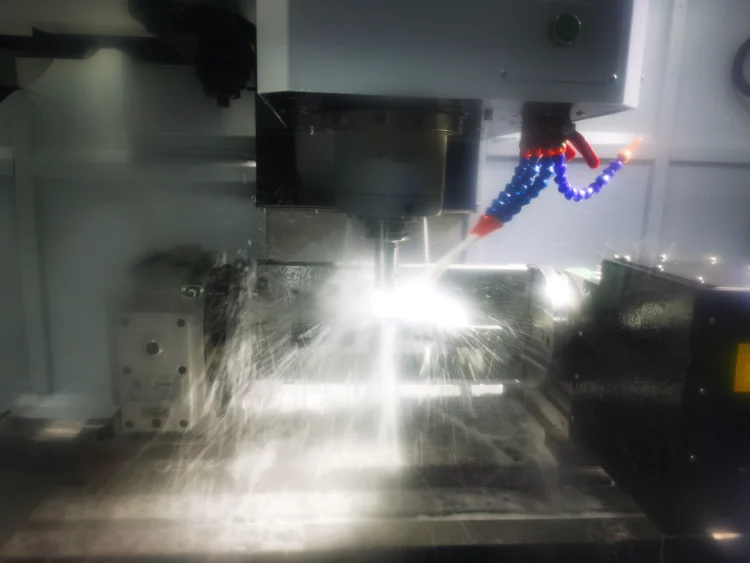
For prismatic parts with flat faces, pockets, slots, and complex contours, CNC milling services are usually the main process in the factory. A capable cnc machining parts manufacturer will select 3-axis, 4-axis, or 5-axis CNC milling services depending on geometry and tolerance.
Typical milled custom CNC parts include:
- Base plates with multiple hole patterns and counterbores
- L-shaped brackets and angle blocks with tight perpendicularity
- Housings with internal cavities, bosses, and threaded holes
- Heat-sink and cooling plates with surface features and channels
- Precision tooling plates for workholding and inspection
With the right cnc machining parts manufacturer, milled parts stay consistent from lot to lot. Ask how many setups are needed, which datums are used, and how the team controls flatness and position in CNC milling services.
CNC turning services and turned parts
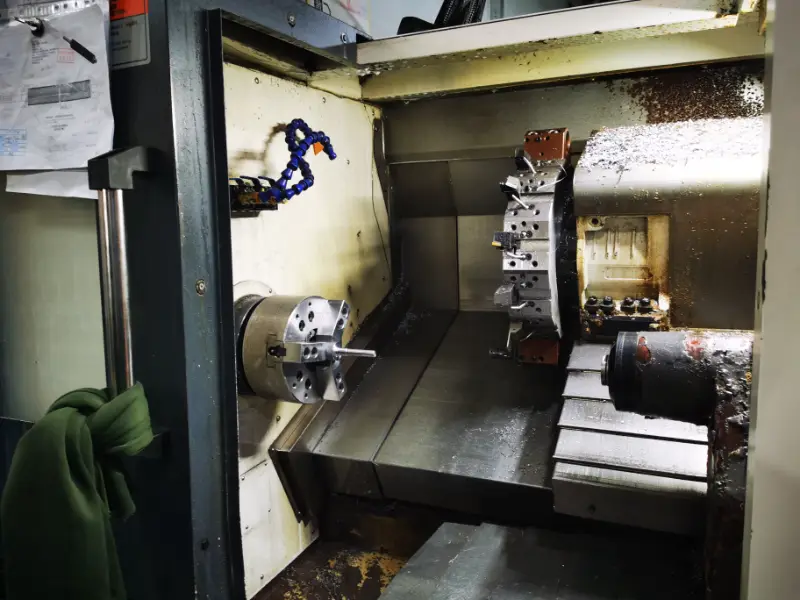
When the part is rotational, CNC turning services are more efficient than milling. A production-ready cnc machining parts manufacturer will design turning operations around concentricity, surface finish, and stable tool life.
Common turned custom CNC parts include:
- Stepped shafts with bearing seats and keyways
- Bushings and sleeves with critical IDs and ODs
- Threaded connectors, couplings, and nuts
- Valve spools, pistons, and hydraulic fittings
- Round sensor bodies and cylindrical housings
By working with one cnc machining parts manufacturer, you simplify logistics and version control. Many factories also provide live-tool CNC turning services so that cross-holes, flats, and simple milled details can be completed in one setup. When you review a quote from a cnc machining parts manufacturer, check whether live-tooling is included, because it often improves repeatability for precision machining.
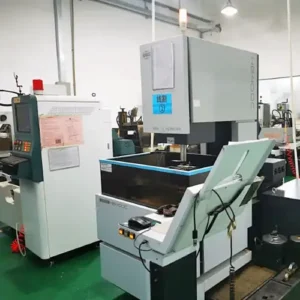
When to use EDM machining
EDM machining becomes valuable whenever traditional cutting tools struggle or when you need very sharp internal corners. A skilled cnc machining parts manufacturer will usually recommend EDM machining when:
- The material is hardened and difficult to mill or turn
- Thin walls or delicate sections would deform under cutting forces
- Very narrow slots or intricate internal profiles are required
- Burr-free edges are essential for function or safety
EDM machining is slower and more expensive than normal milling or turning, so an honest cnc machining parts manufacturer will only suggest it when it clearly protects quality or makes an impossible feature realistic.
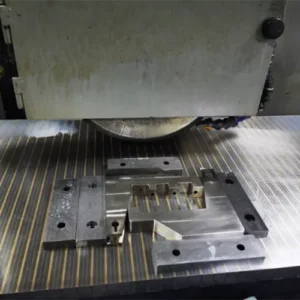
When to use CNC grinding
CNC grinding is a finishing process that a cnc machining parts manufacturer uses for the tightest dimensional and surface requirements. Grinding is especially important for:
- Bearing fits where roundness and diameter must be held within microns
- Seal surfaces that need a controlled surface roughness
- Flat reference faces that control assembly stack-up
- Hardened shafts that must stay accurate after heat treatment
Because CNC grinding adds cost, a practical cnc machining parts manufacturer will combine rough machining and grinding in a way that gives you the needed performance at the lowest total cost.

When to use conventional lathe and mill
Even in a modern factory, a cnc machining parts manufacturer still relies on conventional lathes and manual milling machines in specific cases:
- One-off repairs and engineering samples where programming time would dominate
- Very simple geometries where manual cutting is faster
- Large or awkward parts that do not fit comfortably in standard CNC equipment
The key is that the cnc machining parts manufacturer keeps the same level of inspection and documentation for conventional work so that traceability is maintained.
Quality inspection tools: pros and cons
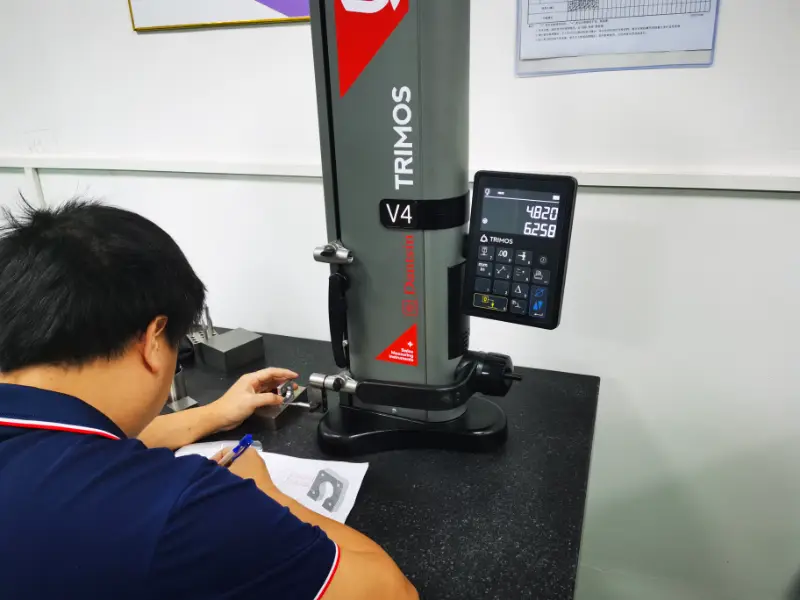
A serious cnc machining parts manufacturer invests in inspection equipment because measurement is the only way to prove quality.
- Calipers and micrometers are fast and flexible for basic dimensions. The advantage is speed on the shop floor; the disadvantage is that readings depend on operator skill and are not ideal for very tight tolerances.
- Plug gauges and ring gauges give a simple OK/NG result for holes, threads, and shafts. They are reliable and quick, but they do not show how close the part is to the limit.
- Height gauges and surface plates are good for checking flatness, step heights, and basic geometry, but they require careful setup and a clean environment.
- CMMs and optical systems provide high-accuracy 3D measurement and are powerful for complex precision machining and GD&T. The downside is higher cost and longer cycle time.
When you audit a cnc machining parts manufacturer, ask which tools are used for critical dimensions, how often they are calibrated, and whether inspection records can be shared for your custom CNC parts.
Cooperation tips with a cnc machining parts manufacturer
Good cooperation turns a cnc machining parts manufacturer into a long-term partner rather than a one-time supplier.
- Provide complete drawings, 3D models, material and finish requirements, and realistic quantities.
- Highlight the most critical dimensions so the cnc machining parts manufacturer can focus inspection effort.
- Agree on lead time, packaging, documentation, and acceptance criteria before placing the order.
- Start with a first article or pilot batch so both sides can confirm that the process is stable.
- Share feedback from assembly and field use so the cnc machining parts manufacturer can improve future batches.
Open communication helps both your company and the cnc machining parts manufacturer reduce risk, cost, and delays.
Summary
A reliable cnc machining parts manufacturer should combine strong process capability, clear inspection methods, and cooperative communication so that every batch of custom CNC parts supports your business goals. If you are comparing suppliers or planning a new project, contact Weldo Machining for more information and a quotation tailored to your parts and schedule.