As industries demand stronger mechanical performance and precise component geometry, the need for a reliable cnc machining pom prototype service continues to grow. Engineers rely on POM (Polyoxymethylene), also known as Acetal or Delrin, for prototypes that require tight tolerances, low friction, and excellent dimensional stability. This guide explains the advantages of POM prototyping, the workflow for creating a cnc machining pom sample, the properties of POM grades, and how to achieve the best results when developing a high-performance cnc machining pom part.

Why POM Is Ideal for CNC-Machined Prototypes
POM is one of the most widely used engineering plastics in precision manufacturing due to its strength, hardness, and low-friction performance. When producing a cnc machining pom prototype, its natural properties offer significant advantages over other plastics.
Key Benefits of POM for Prototyping
- Excellent dimensional accuracy
- Low moisture absorption
- Smooth, glossy machined finish
- High wear resistance
- Very low friction coefficient
- Good stiffness and mechanical durability
These characteristics make POM ideal for prototypes that will later evolve into production-ready cnc machining pom parts used in automotive, industrial automation, consumer electronics, and medical applications.
Main Applications of CNC Machining POM Prototypes
A high-quality cnc machining pom prototype can be used in many functional engineering tests before entering mass production.
1. Mechanical Assembly Validation
Engineers often test:
- Gear interaction
- Bearing movement
- Sliding blocks
- Structural fit relationships
2. Functional Stress Testing
Because POM prototypes behave similarly to final POM components, they help predict:
- Wear patterns
- Stress deformation
- Creep performance
- Friction behavior
3. Electronics & Device Fitment
POM is ideal for housings, small structural components, and spacer elements in electronics.
4. Automotive & Aerospace R&D
POM’s dimensional stability makes it suitable for prototypes exposed to:
- Moderate temperature variations
- Vibration
- Mechanical loading
5. Robotics & Automation Components
Typical cnc machining pom parts include:
- Rollers
- Linkages
- Bushings
- Linear guides
- Motion system brackets
POM Material Types Used for CNC Prototypes
The choice of POM grade determines performance. A professional machining team selects the grade according to the intended use of each cnc machining pom prototype.
POM-H (Delrin Homopolymer)
Features
- High stiffness
- Superior fatigue resistance
- Excellent sliding behavior
Best for:
High-load gears, cams, and precision functional prototypes.
POM-C (Acetal Copolymer)
Features
- Better chemical resistance
- Lower warping tendency
- Improved dimensional stability
Best for:
Valve components, rollers, fluid system parts.
PTFE-Filled POM
Features
- Ultra-low friction
- Enhanced wear resistance
Best for:
High-speed sliding parts and motion mechanisms.
Glass-Filled POM
Features
- Increased rigidity
- Reduced deformation
Best for:
Structural brackets, support blocks, and high-stress assemblies.
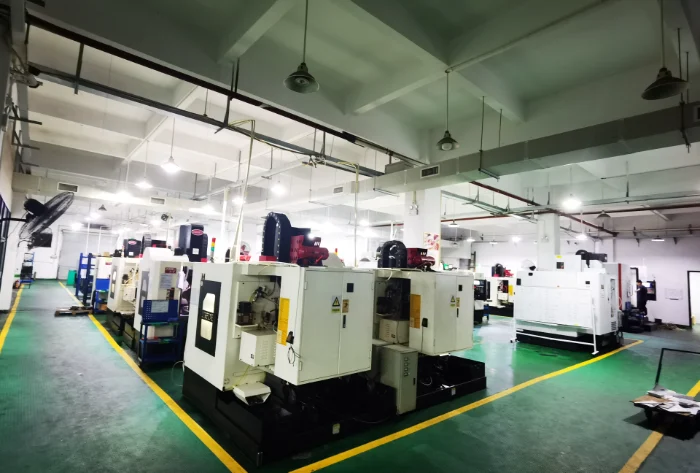
How CNC Machining POM Prototypes Are Manufactured
Producing a professional cnc machining pom prototype involves several precise steps that ensure accuracy and surface quality.
Step 1 — Engineering Review & DFM Optimization
Engineers evaluate:
- Tolerances
- Draft angles
- Thin-wall regions
- Tool accessibility
- Material selection
This ensures the resulting cnc machining pom sample functions as expected in real environments.
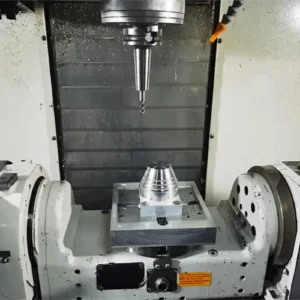
Step 2 — CNC Milling & Turning
CNC Milling
Used for:
- Pockets
- Contours
- Slots
- Structural surfaces
CNC Turning
Used for:
- Bushings
- Bearings
- Shafts
- Cylindrical housings
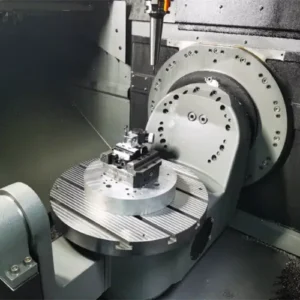
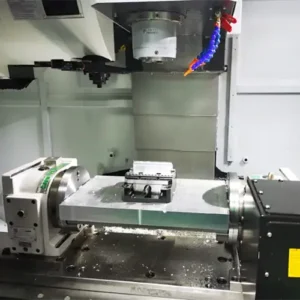
Multi-axis machining may be required for complex cnc machining pom parts.
Step 3 — Toolpath Optimization
Because POM melts under excessive heat, machining requires:
- Sharp tools
- High feed rates
- Fast chip evacuation
- Reduced friction
This results in clean, glossy surfaces.
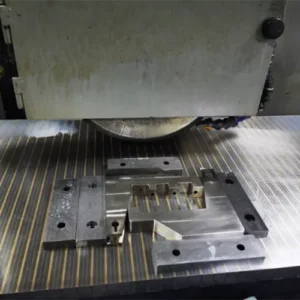
Step 4 — Surface Finishing
Even though POM machines smoothly, finishing removes burrs and sharp edges.
Typical finishing methods:
- Deburring
- Polishing
- Light sanding
- Laser marking
Step 5 — Dimensional Inspection
Quality inspection typically includes:
- CMM measurement
- Caliper-based validation
- Surface roughness evaluation
- Functional fitment testing
This ensures every cnc machining pom sample meets engineering requirements.

Cost Factors for CNC Machining POM Prototypes
Understanding what affects cost helps engineers plan prototype budgets.
1. Geometry Complexity
Deep pockets, fine threads, and sharp inside corners increase machining time.
2. Tolerance Requirements
- Standard: ±0.005–0.01 in
- Precision: ±0.002–0.003 in
- Ultra-precision: ±0.001 in
Higher tolerance → higher cost.
3. POM Material Grade
Glass-filled and PTFE-filled grades cost more to machine.
4. Finishing Requirements
Custom finishing such as engraving or high-gloss polishing adds cost.
5. Quantity
A single cnc machining pom prototype costs more per unit than a batch run.
How to Reduce CNC Machining POM Prototype Cost
A skilled engineering team can significantly reduce prototype cost while maintaining performance.
1. Use POM-C for Most Functional Tests
It machines faster and is more cost-effective than POM-H.
2. Increase Radii in Internal Corners
Sharp corners require slower machining speeds.
3. Avoid Unnecessary Tight Tolerances
Only critical surfaces need ultra-precision.
4. Use Hybrid Machining (5-Axis + 3-Axis)
This method is widely used to control cnc machining pom prototype cost:
- Use 5-axis for complex transitions
- Use 3-axis for simple faces and features
→ Reduces expensive 5-axis machine hours by 35–55%.
5. Combine Operations
Integrating drilling, chamfering, and finishing into one setup saves time.

Comparing CNC Machining POM Prototype With Other Plastics
If engineers need stiffness, precision, and mechanical stability, POM is preferred over:
| Material | Advantage | Disadvantage |
|---|---|---|
| ABS | Easy to machine | Lower stiffness |
| Nylon | Good strength | Absorbs moisture |
| PTFE | Chemical resistance | Difficult to machine |
| Acrylic | Transparency | Poor wear resistance |
Thus, POM is the best choice for cnc machining pom parts requiring dimensional accuracy and durability.
Why Choose Weldo Machining for CNC Machining POM Prototype Services
Weldo Machining specializes in high-precision engineering plastics and offers full-scale capabilities for cnc machining pom prototype development.
Our Advantages
- Expertise in POM-H, POM-C, PTFE-filled, and glass-filled grades
- Advanced 3-axis, 4-axis, and 5-axis machining
- Tolerance capability down to ±0.002 in
- Fast sampling and mass-production transition
- ISO-standard quality control
- Competitive pricing for cnc machining pom sample and production parts
Whether you need a single prototype or a full batch of functional cnc machining pom parts, our engineering team provides reliable solutions.