








Modern industrial parts are no longer purely milled or purely turned. As designs become more compact and functional requirements increase, many components combine rotational features with complex milled geometries. In this environment, a qualified cnc milling and turning manufacturer becomes a problem solver rather than a simple machining supplier, responsible for turning complex designs into stable, repeatable parts.
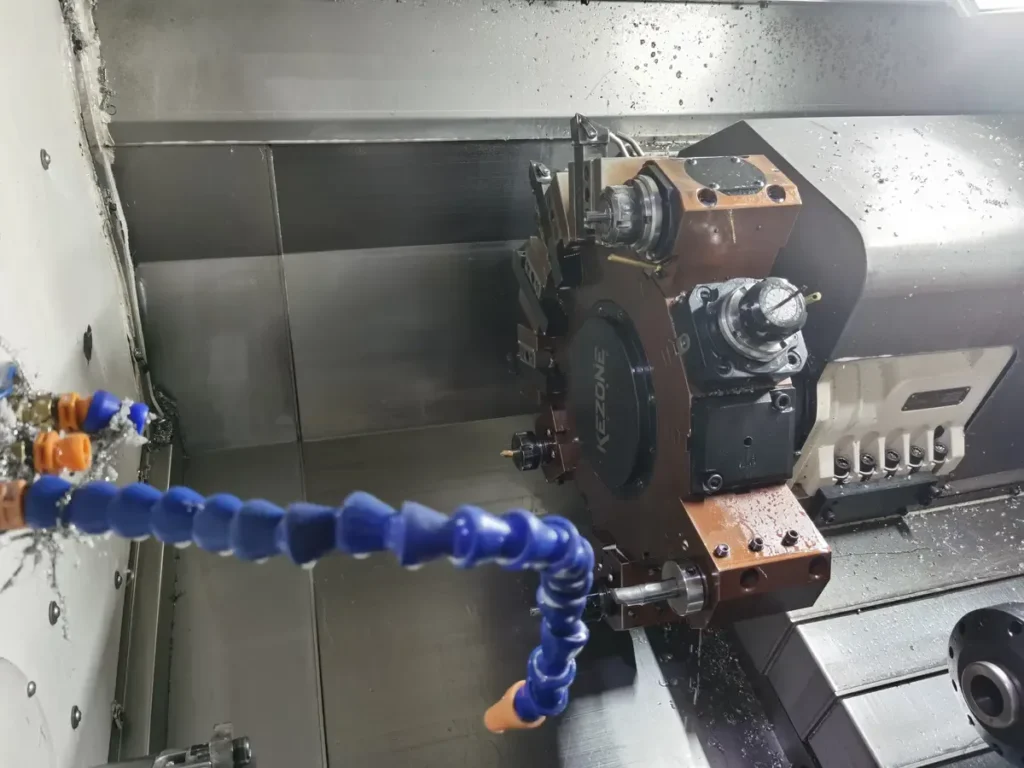
Why Complex Parts Require a CNC Milling and Turning Manufacturer
Complex mechanical parts often fail not because of poor materials, but because of poor process division. When turning and milling are handled separately, alignment errors, tolerance stacking, and inconsistent datums quickly appear.
A professional cnc milling and turning manufacturer solves these issues by planning the entire process as one continuous manufacturing strategy, not as isolated machining steps.
Key challenges integrated manufacturers address include:
- Feature alignment between round and prismatic geometry
- Controlled datum references through multiple operations
- Reduced cumulative tolerances
- Stable geometry under load and vibration
Manufacturing Strategy Instead of Isolated Machining
Traditional machining focuses on “how to cut.”
A modern cnc milling and turning manufacturer focuses on “how the part will function after machining.”
Feature Relationship Control
Rather than machining features independently, integrated manufacturers manage:
- Axial and radial feature relationships
- Concentricity between bores and faces
- Positional accuracy between threads and milled slots
This approach directly improves assembly performance.
Process Dependency Planning
Some features must be machined before others to avoid deformation or tolerance loss. A cnc milling and turning manufacturer plans:
- Which features require maximum rigidity
- Which operations generate heat
- Where stress is released during cutting

Parts That Benefit Most from CNC Milling and Turning Integration
Not all components require a combined approach. A cnc milling and turning manufacturer is most valuable for parts with mixed functional requirements.
Mixed-Geometry Components
Typical examples include:
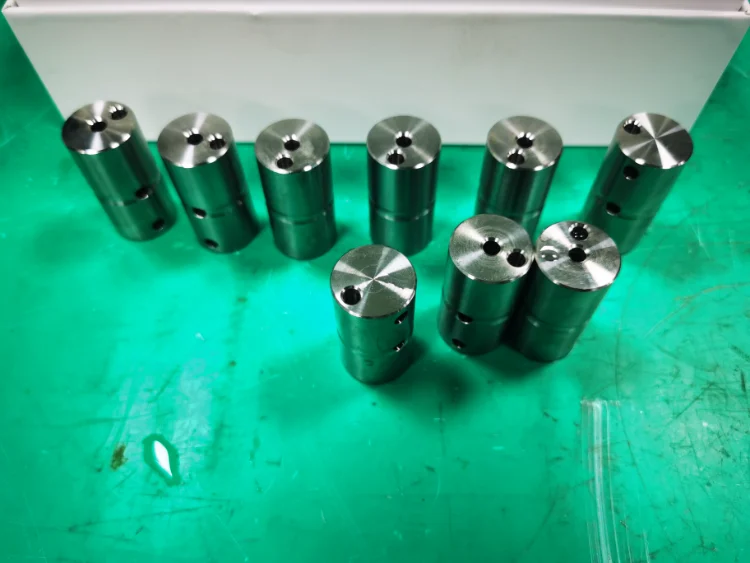
- Shafts with cross-holes, keyways, or flats
- Threaded housings with side pockets or ports
- Actuator components with milled slots and turned journals
- Drive components requiring balance and alignment
These parts benefit from one continuous setup.
Material Behavior as a Process Variable
Material choice changes how milling and turning interact.
A capable cnc milling and turning manufacturer does not treat material as static input but as a dynamic variable.
Metal Materials
- Aluminum alloys require chip evacuation control
- Stainless steel demands heat and tool-wear management
- Titanium requires sequencing to minimize distortion
Engineering Plastics
- POM and Nylon require vibration control
- PTFE requires feature support due to softness
- PEEK requires thermal stability management
Material-sensitive planning separates advanced manufacturers from basic job shops.
Accuracy Is Lost Between Processes—Unless Controlled
In complex parts, accuracy is often lost during transitions between operations.
A cnc milling and turning manufacturer preserves accuracy by:
- Maintaining a single datum system
- Avoiding unnecessary re-clamping
- Sequencing features from most critical to least critical
Practical Tolerance Control
Well-managed manufacturers commonly achieve:
- ±0.05 mm for general geometry
- ±0.02 mm for mating features
- ±0.005–0.01 mm where alignment is critical
This level of control is difficult when milling and turning are separated.
CNC Milling and Turning Manufacturer as a Design Partner
Advanced manufacturers are increasingly involved before machining begins.
Design Feedback Role
A skilled cnc milling and turning manufacturer helps identify:
- Features that unnecessarily increase cost
- Tolerances that offer no functional benefit
- Geometry that complicates tool access
This early interaction reduces revisions later.
Risk Reduction
Manufacturers flag risks such as:
- Thin walls near clamping areas
- Imbalanced rotating features
- Stress concentration points
Preventing issues is more valuable than repairing them.
Prototype-to-Production Continuity
The transition from prototype to production is a common failure point.
A capable cnc milling and turning manufacturer maintains:
- The same machining strategy
- The same datum logic
- The same quality checkpoints
This continuity avoids redesign when scaling up.
Quality Control as Part of the Machining Process
Inspection is not an endpoint for a professional cnc milling and turning manufacturer.
Quality is built through:
- In-process measurement
- Tool wear tracking
- Feature-to-feature inspection
- Controlled process documentation
This approach prevents drift during repeat production.
Industries That Depend on CNC Milling and Turning Integration
Industries relying on mixed-feature components include:
- Automotive and electric drivetrain systems
- Aerospace structural and actuator assemblies
- Medical equipment mechanisms
- Industrial automation and robotics
- Energy and fluid-control equipment
In these sectors, integrated machining is not optional—it is essential.
How to Evaluate a CNC Milling and Turning Manufacturer
Rather than evaluating suppliers by machine lists, buyers should assess:
- Ability to explain process logic
- Understanding of feature interactions
- Experience with similar geometry
- Stability across repeat orders
A reliable cnc milling and turning manufacturer demonstrates control, not just capability.
Conclusion
A modern cnc milling and turning manufacturer enables the reliable production of complex components by treating machining as a system, not a set of isolated processes. Through integrated planning, controlled transitions, and deep understanding of feature relationships, these manufacturers reduce risk, improve accuracy, and support scalable production. For complex parts where alignment, precision, and repeatability matter, integration is no longer a preference—it is a requirement.
Please feel free to contact with us Weldo,you can get more details and fast quote here.