








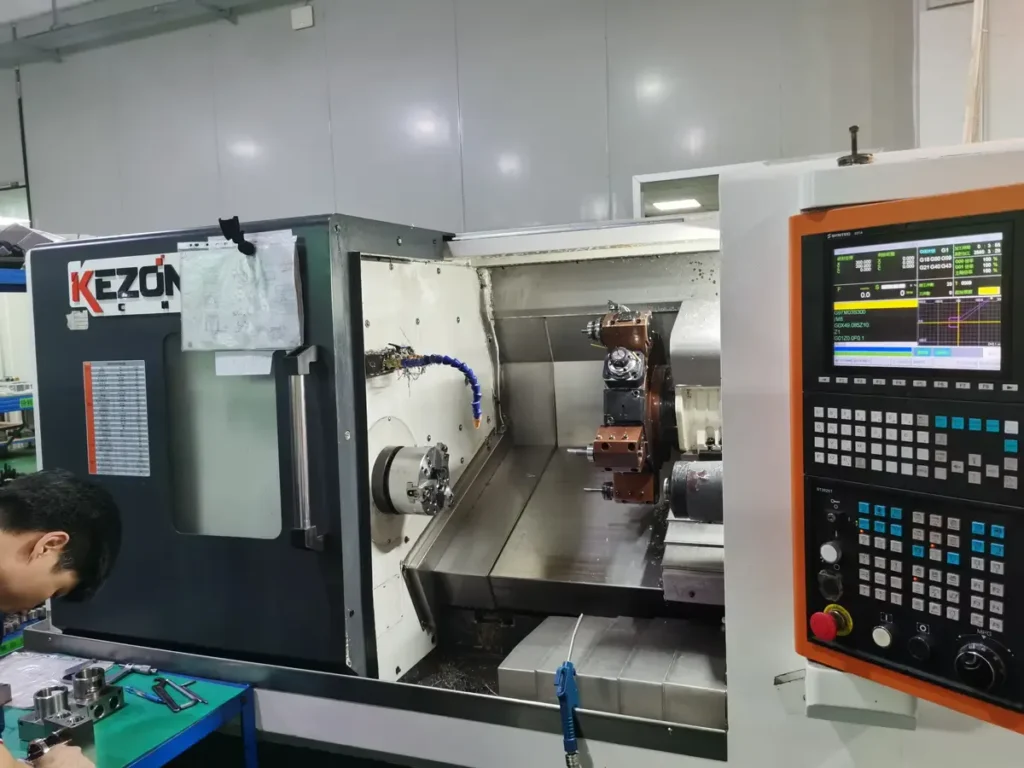
CNC Turning Parts Process Principles and Characteristics
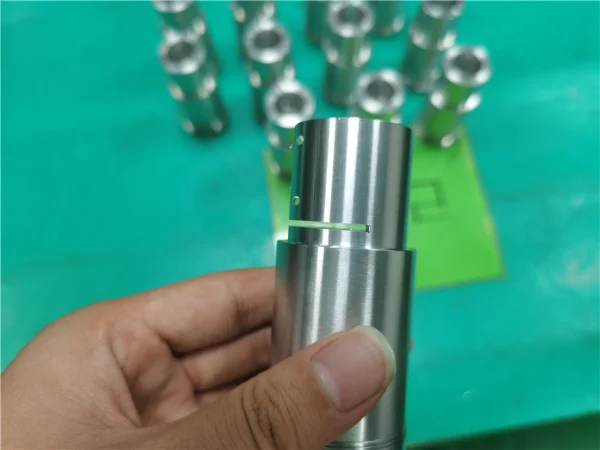
CNC turning parts is a precision machining process that uses computer programs to control lathe tools to cut rotating workpieces. During machining, the workpiece is fixed in the spindle chuck and rotates at high speed (800-2000 rpm), while the tool moves along the X/Z axes to form a cutting path, capable of machining cylindrical surfaces, conical surfaces, threads, etc.
Compared to traditional lathes, its advantages are significant: First, the machining accuracy reaches IT7-IT8 tolerance (±0.015-0.03mm), meeting precision fit requirements; second, it enables automated continuous production with seamless CAD/CAM integration, allowing for the mass production of complex parts; third, it offers high process flexibility, allowing for quick switching of product models with program changes, suitable for multi-variety, small-batch production.
Core Technical Features of CNC Turning Parts
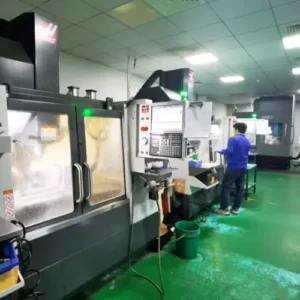
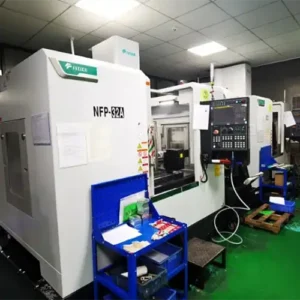
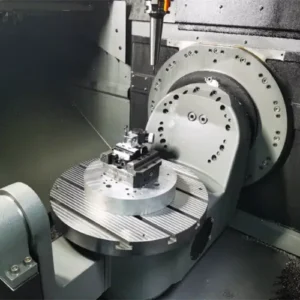
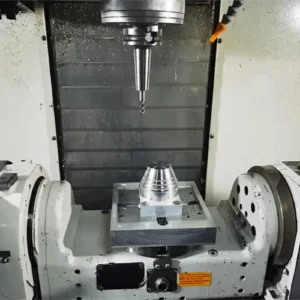
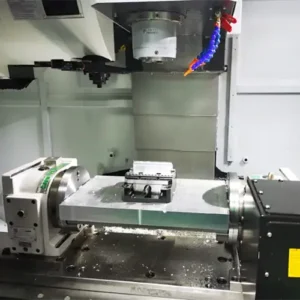
CNC turning centers are often equipped with a powered turret and a sub-spindle, enabling the completion of composite machining operations such as turning, milling, and drilling in a single setup. Our Weldo turning center boasts an X-axis positioning accuracy of ±0.003mm/300mm and a repeatability of ±0.001mm. Equipped with a 12-position servo turret, tool changes take only 0.3 seconds.
For complex parts like aero-engine fuel nozzles, containing a φ5mm internal hole (tolerance ±0.005mm), M8×1.25 precision threads, and three 0.5mm wide sealing grooves, traditional processes require three machines for sequential machining. CNC turning, however, can achieve this in a single operation, increasing efficiency by 40%.
Comparative Advantages of CNC Turning vs. Milling/Grinding
In CNC turning of shafts and disc/sleeve components, CNC turning offers significantly higher speeds than milling and grinding, while also simplifying operation. For example, a φ50mm×200mm 45# steel drive shaft achieves a material removal rate of 8-12cm³/min, 2-3 times that of milling, with a surface roughness consistently below Ra1.6μm, eliminating the need for grinding and reducing costs by 35%. When machining thin-walled non-ferrous metal parts such as aluminum alloy motor housings, low cutting force parameters in CNC turning can prevent deformation, increasing the pass rate from 75% to 98%.
Material selection affects the machining efficiency, cost, and performance of CNC-turned parts. In industry, the mechanical properties, machinability, and economy of materials must be comprehensively considered based on the function of the part. Metals account for approximately 85% of commonly used materials, with aluminum alloys, stainless steel, and brass being the preferred choices.
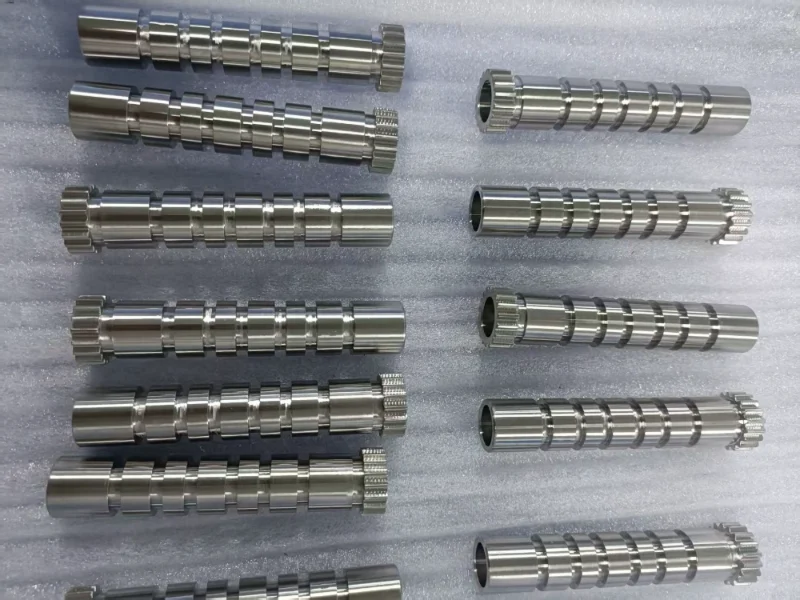
Material Selection and Machining Compatibility
The choice of materials for CNC turning parts directly affects machining efficiency, cost, and final performance. In industrial practice, CNC turning parts require a comprehensive evaluation of the mechanical properties, machinability, and economy of materials based on the functional requirements of the parts. Commonly used materials are mainly divided into two categories: metallic materials (accounting for approximately 85%) and non-metallic materials (15%). Among them, aluminum alloys, stainless steel, and brass are the preferred choices for CNC turning parts due to their excellent comprehensive performance.
Comparison of Machining Performance of Metallic Materials
Aluminum alloys are commonly used materials. For example, 6061-T6 has a tensile strength of 310MPa and a density of 2.7g/cm³, making it suitable for lightweight parts. Cutting speeds are 150-300m/min, tool life is 800-1200 pieces/cutting edge, and the cost is 40% lower than that of stainless steel. Stainless steel 304 has a hardness of HB187, is prone to work hardening, requires high-speed steel tools (such as W18Cr4V) and extreme pressure emulsion cooling, and has a cutting speed of 80-120m/min. H62 brass offers excellent machinability and chip-breaking performance, enabling high-speed cutting (200-400 m/min). It is commonly used in bathroom accessories and connectors.
Application Scenarios of Non-metallic Materials
Engineering plastics are seeing rapid growth in the application of CNC turning parts. POM (polyoxymethylene) has a coefficient of friction of only 0.04, making it suitable for transmission components; PEEK withstands high temperatures up to 260℃, enabling the machining of sensor housings for aero-engines; PTFE (polytetrafluoroethylene) exhibits strong corrosion resistance and is commonly used in seals for chemical equipment. A medical device company replaced stainless steel surgical instruments with PEEK turning parts, reducing weight by 60% and avoiding the risk of metal ion release. When machining plastics, using single-edged PCD tools with compressed air cooling can prevent overheating and deformation.
Material Selection Decision Process
The selection of materials for CNC turning parts follows a four-step decision-making process: 1. Define the part’s function; 2. Determine key parameters; 3. Evaluate machining economics; 4. Verify supply stability. For example, when a car parts manufacturer selects materials for the motor shaft of a new energy vehicle, it compares 45# steel, 40CrNiMoA and 6061-T6, and finally selects 40CrNiMoA based on torque requirements. Combined with induction hardening process, the life of the parts reaches 100,000 hours.
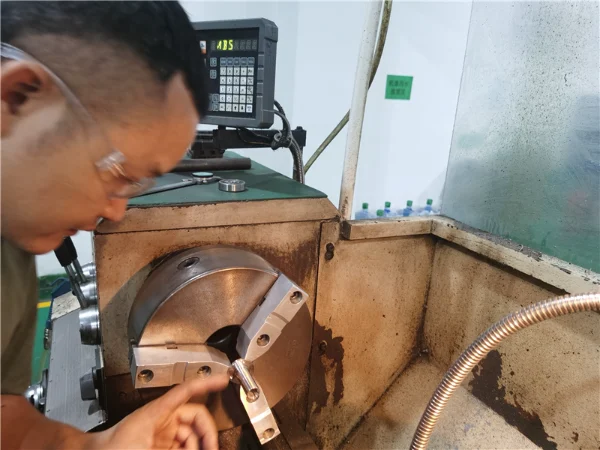
Optimization of Key Machining Parameters
The quality and efficiency of CNC turning parts depend on reasonable parameter settings. Core parameters include cutting speed (vc), feed rate (f), and depth of cut (ap). A manufacturer of aerospace structural components optimized these parameters, increasing the turning efficiency of 7075 aluminum alloy by 35% and reducing the surface roughness from Ra3.2μm to Ra0.8μm.
Scientific Setting of Cutting Parameters
Optimal cutting parameters vary depending on the material. For machining 45# steel, the recommended parameters are vc = 120-150 m/min, f = 0.15-0.25 mm/r, and ap = 1-3 mm. For TC4 titanium alloy, the parameters should be reduced to vc = 40-60 m/min, f = 0.05-0.1 mm/r, and ap = 0.5-1 mm. Parameter selection follows the principle of “high-speed, light cutting.” For example, increasing the velocity coefficient (VC) of 6061 aluminum alloy from 150 m/min to 250 m/min (while maintaining f = 0.2 mm/r and ap = 2 mm) reduces machining time by 35% while increasing tool consumption by only 12%.
Tool Selection and Life Management
When CNC turning parts, the tool material must match the workpiece: high-speed steel tools are suitable for ordinary steel and cast iron; cemented carbide tools have good versatility, and for machining stainless steel, ultra-fine grain grades should be selected; PCD tools are suitable for non-ferrous metals and non-metallic materials. Tool geometry is also important; for machining aluminum alloys, sharp inserts with a 35° rake angle and a 5° clearance angle are recommended, while for machining high-strength steel, a negative rake angle is required. A gear machining plant, using a tool life management system, increased the life of cemented carbide inserts from 30 pieces/cut to 45 pieces/cut, saving 50,000 USD in tool costs annually.
Cooling and Lubrication Optimization
Sufficient cooling and lubrication are crucial for ensuring the quality of CNC-turned parts. For machining steel parts, use emulsion (concentration 8-10%); for machining aluminum alloys, use semi-synthetic cutting fluid; for machining titanium alloys, use extreme pressure cutting oil. A certain aerospace company used a high-pressure cooling system (pressure 70 bar) to machine TC4 titanium alloy shaft parts, increasing tool life from 15 pieces to 28 pieces, and stabilizing the surface roughness at Ra1.6μm.

Quality Control and Inspection Standards
Quality control of CNC-machined parts is integrated throughout the manufacturing process, requiring 12 quality checkpoints from raw material intake to finished product output. After implementing comprehensive quality control, a certain automotive parts company saw its PPM (parts per mille) decrease from 350 to 80, and its customer complaint rate drop by 75%.
Dimensional Accuracy Control Methods
Achieving IT7-IT8 tolerance control requires ensuring machine tool accuracy (regular calibration with a laser interferometer), controlling process stability (using SPC statistical process control), and optimizing clamping (using follow-up rests and flexible centers for machining slender shafts). A precision bearing factory machined a φ12mm×300mm motor shaft with a stable cylindricity of 0.005mm, meeting fit requirements.
Factors Affecting Surface Quality
The surface roughness of CNC-machined parts is mainly affected by the feed rate and tool edge quality. The theoretical formula is Ra = (f²)/(8×rε), but in reality, due to vibration, it can increase to 2-3μm. Achieving a mirror-like finish (Ra≤0.05μm) requires diamond tools and micro-feed. An optical parts factory has achieved a Ra of 0.02μm in machining aluminum alloy mirrors, meeting laser reflection requirements.
Inspection Technology and Equipment Configuration
The inspection equipment configuration follows the “precision pyramid” principle: a coordinate measuring machine (CMM) measures key dimensions, a roundness meter inspects shaft-type parts, and a surface roughness meter assesses surface quality. An aerospace company has built a digital inspection workshop, achieving 100% full-size inspection, increasing efficiency by 60%, and online probes have reduced sampling time from 30 minutes to 2 minutes per piece.
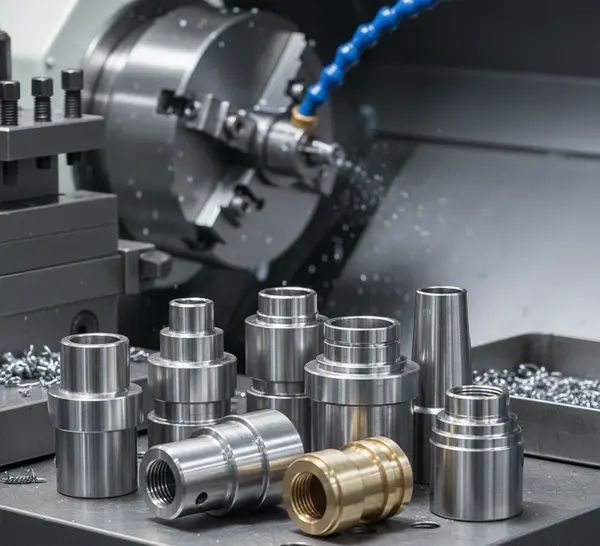
CNC Turning Parts Types
Shaft Parts
Transmission Spindles: such as motor shafts (φ10-100mm, tolerance ±0.01mm), reducer input shafts (45# steel/20CrMnTi material).
Precision Slender Shafts: medical equipment guide shafts (Ra≤0.8μm surface roughness), automated equipment lead screws (trapezoidal thread Tr20×4).
Disc and Sleeve Parts
Flanges: hydraulic system connection flanges (sealing groove accuracy ±0.02mm), motor end covers (bearing housing tolerance IT7 grade).
Sleeves/Bushings: automotive gearbox synchronizer sleeves.
Special-shaped functional parts
Threaded parts: Aviation pipe fittings (M16×1.5 fine thread, pitch diameter tolerance 4h), hydraulic valve cores (trapezoidal thread + sealing cone surface).
Complex contour parts: Turbocharger nozzle rings (blade profile accuracy ±0.05mm), watch movement gears (module 0.5-1.5).
Special material accessories
Non-ferrous metal parts: Aluminum alloy 6061-T6 motor housing (lightweight design, wall thickness 1.5-3mm), brass H62 bathroom valve cores (wear-resistant + corrosion-resistant)
Engineering plastic parts: POM transmission gears (friction coefficient 0.04), PEEK aviation sensor housings (high temperature resistance 260℃)

Typical Application Cases
CNC turning of parts is widely used in high-end fields such as automotive manufacturing, aerospace, and medical devices. Different industries have different technical requirements and solutions.
New Energy Vehicle Motor Shaft Machining
A leading new energy vehicle manufacturer’s drive motor shaft (40CrNiMoA) machining project required a diameter of φ35mm (tolerance ±0.01mm), cylindricity ≤0.005mm, and keyway symmetry ≤0.02mm. A dual-spindle turning center with single-clamp compound machining was employed, with carbide CBN inserts achieving a cutting speed of 180m/min, and an on-machine measurement system. After commissioning, the production cycle time decreased from 45 minutes/piece to 18 minutes/piece, with an annual capacity of 500,000 pieces and a defect rate ≤0.3%.
Aerospace Hydraulic Pipeline Joint Machining
Machining aerospace titanium alloy hydraulic joints (TC4 material) presents challenges such as difficult material cutting, high precision sealing cone surfaces, and complex internal oil circuits. An aerospace company used solid carbide drill bits to machine φ6mm deep holes, and used forming tools to machine the sealing conical surface with online monitoring, while also employing cryogenic cooling. This process increased the fatigue life of the joint from 1000 cycles to 5000 cycles, meeting the reliability requirements of aerospace hydraulic systems.
Medical Minimally Invasive Surgical Instrument Manufacturing
A medical device company’s laparoscopic surgical forceps (316L stainless steel) manufacturing project required a forceps head thickness of 0.3mm (tolerance ±0.01mm), a cutting edge sharpness ≤0.02mm, and a surface roughness Ra0.4μm. The project utilized precision CNC turning and ultra-thin cutting, high-speed steel tools, and electrolytic polishing of the cutting edges, with the entire process carried out in a cleanroom. The product is ISO 13485 certified, with a clinical cutting force ≤5N, a 60% reduction compared to traditional products.
CNC-machined parts are fundamental components in the equipment manufacturing industry, and their technological level affects the performance of high-end equipment. With the development of technologies such as five-axis milling and turning composites and intelligent process planning, future development will focus on high precision, lightweight design, and functional integration. If you would like to learn more about CNC turning and machining services, please contact Weldo for more information.
FAQ of cnc turning process
In CNC turning, how to select the appropriate tool material and geometry?
The selection of tool material and geometry directly affects machining efficiency, surface quality, and tool life. It must be determined based on the workpiece material characteristics:
Tool Materials:
Carbide: Suitable for machining common metals such as steel and cast iron; high cost-effectiveness.
Ceramic tools: High temperature resistant; suitable for high-speed cutting of hard materials (such as hardened steel).
Cubic boron nitride (CBN): For machining high-hardness materials (such as titanium alloys and nickel-based alloys).
Polycrystalline diamond (PCD): For machining non-metallic materials (such as aluminum alloys and plastics) or non-ferrous metals.
Geometric Angles:
Rake Angle: Increasing the rake angle reduces cutting force but weakens tool strength; a balance must be struck.
Clearance Angle: Reduces friction between the flank face and the workpiece, improving surface quality.
Principal Cutting Edge Angle: Affects the cutting force and chip removal direction; 90° is commonly used for roughing, and 45°~75° is commonly used for finishing.
What are the differences between CNC turning and conventional turning?
CNC turning is an automated process achieved through a computer numerical control system, while conventional turning relies on manual operation and adjustments. Key differences include:
Precision and Consistency: CNC turning, controlled by a program, achieves repeatability of ±0.001mm, while conventional turning relies on operator skill and has a larger margin of error;
Efficiency: CNC turning can run continuously for 24 hours, suitable for mass production, while conventional turning is inefficient and labor-intensive;
Complexity: CNC turning can machine complex curved surfaces, threads, and irregular holes, while conventional turning can only perform simple rotating body machining.
What materials is CNC turning suitable for?
CNC turning can machine a variety of materials, including:
Metals: Aluminum alloys, steel, stainless steel, titanium alloys, copper, etc.;
Plastics: Nylon, polyoxymethylene (POM), polycarbonate (PC), etc.;
Composite materials: Glass fiber reinforced plastics (GFRP), carbon fiber reinforced plastics (CFRP), etc.
Different materials require the selection of appropriate cutting tools and cutting parameters to optimize machining results.
What are the core steps of CNC turning?
A typical CNC turning process includes:
Programming: Designing the part model using CAD/CAM software and generating G-code;
Clamping: Fixing the workpiece on the lathe chuck or fixture;
Tool Setting: Determining the relative position of the tool and the workpiece;
Cutting: The lathe performs turning, boring, threading, and other operations according to the program;
Inspection: Verifying dimensional accuracy using measuring tools (such as calipers and coordinate measuring machines);
Post-processing: Deburring, cleaning, and surface treatment (such as polishing and plating).
How to improve the machining accuracy of CNC turning?
Key measures to improve machining accuracy include:
Machine tool maintenance: Regularly calibrate the lathe to ensure the accuracy of the spindle and guideways;
Tool selection: Select appropriate tool materials (such as cemented carbide, ceramic) and geometries based on material properties;
Cutting parameter optimization: Adjust spindle speed, feed rate, and depth of cut to reduce vibration and thermal deformation;
Clamping stability: Use dedicated fixtures or soft jaws to clamp the workpiece to avoid deformation;
Online inspection: Integrate a probe to monitor the machining process in real time and correct errors promptly.