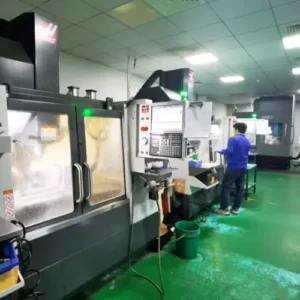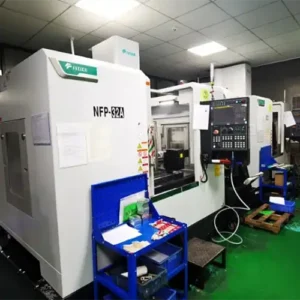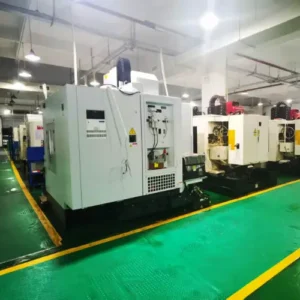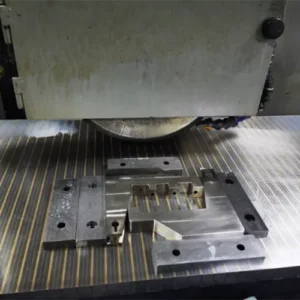
The CNC vertical machining pricing is influenced by several factors, including material selection, part complexity, surface finishing, and production volume. Below, we outline how these factors impact costs.

Material Types and Impact on CNC Vertical Machining Pricing
Materials play a significant role in CNC vertical machining pricing. The material chosen affects both machining time and cost:
- Aluminum: Lightweight and easy to machine, costing between $10 to $50 per part.
- Stainless Steel: Offers durability and corrosion resistance, with costs ranging from $50 to $150.
- Brass: Machinable and corrosion-resistant, typically priced from $40 to $120.
- Plastics: Used for low friction or chemical resistance applications, costing between $20 to $100 per part.
Surface Finishing Costs
Surface finishing enhances the durability and appearance of parts. Common finishes include:
- Anodizing: Adds $5 to $30 per part, enhancing corrosion resistance for aluminum.
- Electropolishing: Adds $20 to $60 for stainless steel parts, improving surface smoothness.
- Powder Coating: Adds $15 to $40 for a durable finish on aluminum.
- Passivation: Typically adds $10 to $50, enhancing corrosion resistance for stainless steel.
Sample Parts and Small Batches
- Sample Parts: Costs range from $50 to $200, mainly due to high setup costs.
- Small Batches: Costs range from $30 to $100 per part, benefiting from reduced setup costs but still impacted by small order volumes.
Bulk Production Pricing
- Large-Scale Production: Prices drop to $10 to $40 per part for orders of 100+ units due to economies of scale.
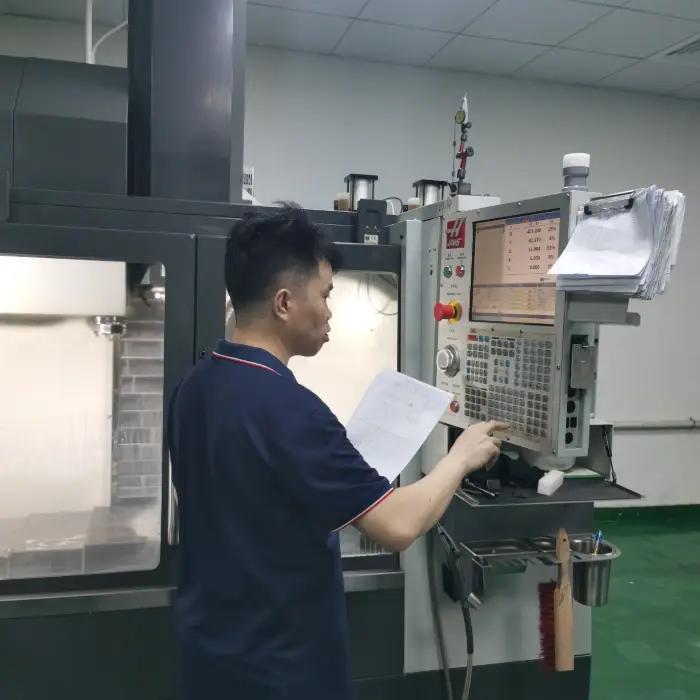
How to Reduce CNC Vertical Machining Pricing
Reducing CNC vertical machining costs is possible with the right strategies. Here’s a practical example:
Case Study: Reducing Costs in Aerospace Component Manufacturing
A client in the aerospace industry needed a complex part made from stainless steel, initially quoted at $100 per part due to the part’s intricacy and the required electropolishing finish. To reduce costs, the following adjustments were made:
- Material Change: By switching to a more readily available alloy, the material cost was reduced by 15%.
- Simplifying the Design: The part’s design was slightly altered to eliminate unnecessary features, reducing machining time by 25%.
- Batch Production: Instead of ordering 10 parts, the client placed an order for 100, spreading setup costs across more units. This reduced the cost per part to $60.
- Alternative Finishing: Instead of electropolishing, a less expensive passivation finish was chosen, saving another $15 per part.
By implementing these changes, the overall cost per part was reduced by 40%, from $100 to $60, without compromising quality.
Additional Strategies for CNC Vertical Machining Cost Reduction
- Material Selection: Opt for materials that are easier to machine or more readily available to reduce costs.
- Part Design Optimization: Simplify the design to reduce machining complexity and time.
- Volume Discounts: Larger orders can significantly reduce the cost per part due to economies of scale.
- Outsource Non-Critical Processes: Consider outsourcing secondary operations, such as surface finishing, to specialized providers that offer better rates.
Conclusion: Why Choose Weldo Machining?
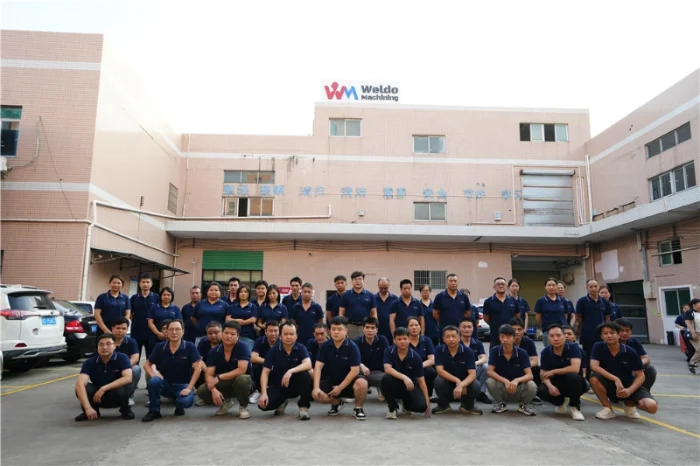
At Weldo Machining, we provide high-quality CNC vertical machining services, ensuring precise parts and competitive CNC vertical machining pricing. Whether you need a prototype, small batch, or large-scale production, our experts work with you to identify cost-saving opportunities while maintaining high standards of quality. Contact us today for a personalized quote and to learn how we can help reduce your manufacturing costs.