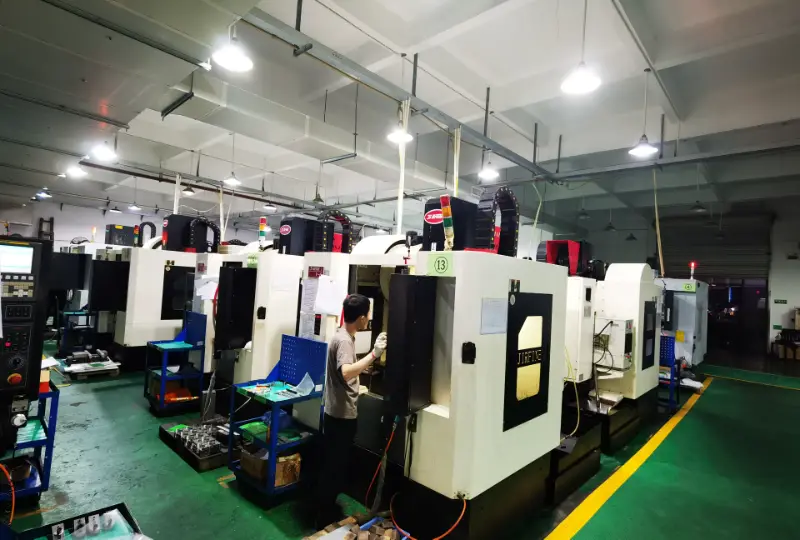
Knurling is a surface treatment technology widely used to enhance surface friction, improve grip, and add decorative effects to components. In various industries, knurling not only improves product performance but also enhances appearance quality. As industrial manufacturing continues to advance, the knurling process has evolved, particularly in automated production and precision machining. This article will explore the basic principles of knurling, its applications, cost optimization methods, and comparisons with other similar processes.

What is Knurling?
Basic Definition of Knurling
Knurling is a process that forms regular patterns or textures on the surface of materials like metals and plastics through pressing. This process is commonly used to enhance surface friction, improve grip, and add aesthetic qualities, particularly in components requiring improved surface performance and decoration.
Types of Knurling
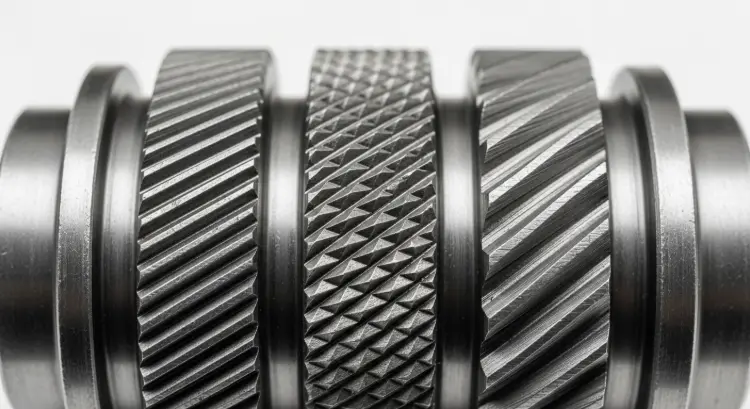
Knurling can be categorized into various types based on the surface texture. Each type has specific functions and applications, and selecting the appropriate texture can improve the performance or appearance of the component.
- Straight Knurling: The texture is arranged in a straight line along the axis of the workpiece, simple and clear, ideal for basic friction applications. It is commonly used on tool handles, nuts, screws, etc., especially where increased grip and anti-slip properties are needed.
- Cross Knurling: The texture is arranged in a cross pattern, increasing friction and decorative effect. It is used for parts with high friction requirements, such as rotating tools, bottle caps, handles, etc.
- Helical Knurling: The texture is distributed in a spiral shape along the axis of the workpiece, enhancing both grip and decorative effect. It is suitable for rotating parts like knobs, shafts, flywheels, etc.
- Bi-directional Knurling: Uses alternating textures in two directions, enhancing grip and making the surface texture more complex. Suitable for tool handles and mechanical connectors that require strong grip.
- Hexagonal Knurling: The texture forms a hexagonal grid, increasing surface friction while improving aesthetics. It is commonly used in products with high aesthetic requirements, such as tool handles and mechanical parts.
- Diamond Knurling: Forms a dense diamond grid pattern, providing excellent friction and decorative effect. Widely used for parts requiring strong friction, such as machine tool adjustment wheels and valves.
- Star Knurling: The texture forms star-shaped or similar patterns, providing good grip and unique appearance. Commonly used for high-end products, such as special mechanical devices and decorative components.
- Round Knurling: The texture is arranged in circular patterns, creating small protrusions or indentations to increase surface grip. It is suitable for products requiring delicate surfaces and aesthetics, such as high-end appliances and tools.
- Grid Knurling: Forms a uniform grid texture, improving friction and ensuring a smooth surface. It is widely used in hydraulic system parts and components that require uniform friction.
- Form Knurling: Uses deep cutting to form textures with varying depths, creating unique decorative effects. Mainly used for parts with special aesthetic requirements, such as automotive interiors and decorative components.
Tools and Parts Required for Knurling Machining
Knurling is a machining process that forms regular patterns on metal surfaces through extrusion, usually performed on a lathe or CNC turning machine. The following tools and parts are typically required to complete knurling machining:
1. Knurling Tool
The knurling tool is the core tool used in knurling machining and is used to press patterns onto the surface of the workpiece. The knurling tool is usually mounted on the lathe tool holder and applies pressure to the base surface of the workpiece through the knurling wheel to form patterns on the surface.
Types of Knurling Tools
Bump Knurling Tool: Applies radial pressure directly to the workpiece to form the knurling pattern. The structure is simple and commonly used on conventional lathes.
The advantage is simple structure and low cost.
Cut Knurling Tool: Forms knurling patterns through cutting rather than simply extruding the material.
This method reduces material deformation and is suitable for machining harder materials or precision parts.
Clamp / Scissor Knurling Tool: The clamp-type knurling tool uses two knurling wheels to clamp the workpiece from above and below during machining, similar to a scissor structure.
This design balances machining pressure and reduces the load on the lathe spindle and the workpiece, making it suitable for CNC lathes or thin-walled parts.
Straight Shank Knurling Tool: The straight shank knurling tool has a straight shank structure and can be directly installed on the lathe tool holder or tool holding system.
This type has a simple structure and is suitable for knurling in conventional turning environments.
Adjustable Knurling Tool: The adjustable knurling tool can adjust the position or pressure of the knurling wheel to adapt to workpieces of different diameters.
This tool has strong versatility and is suitable for knurling parts of various sizes.
2. Knurling Wheels
Knurling wheels are key components in the knurling tool. Their surfaces have specific tooth patterns that are rolled onto the workpiece surface to form different textures. Common types of knurling wheels include the following:
- Straight Knurling Wheel: The tooth pattern is parallel straight lines, forming straight anti-slip lines on the workpiece surface after knurling.
This type is commonly used for knobs, handles, or parts that require linear anti-slip patterns. - Diagonal Knurling Wheel: The tooth pattern forms angled diagonal lines and is usually divided into left-hand and right-hand types.
A single diagonal knurling wheel is often used for special texture machining and is also commonly combined with another wheel in the opposite direction. - Diamond Knurling Wheel: Formed by combining left and right diagonal knurling wheels to create diamond or cross patterns on the workpiece surface.
This is the most common knurling pattern and is widely used for knurled knobs, thumb nuts, and tool handles. - Coarse Knurling Wheel: The tooth pitch of the coarse knurling wheel is larger, producing rougher knurling patterns.
It is typically used for parts requiring stronger anti-slip performance. - Fine Knurling Wheel: This type of knurling wheel has a smaller tooth pitch and produces finer knurling patterns.
It is more suitable for precision parts or products with higher appearance requirements.
3. Lathe or CNC Turning Equipment
Knurling is usually performed on conventional lathes or CNC lathes. The machine tool provides rotational motion to rotate the workpiece, while the knurling tool applies radial pressure to create continuous patterns on the surface.
4. Coolant or Cutting Fluid
The most common method in knurling machining is the use of cutting fluid or lubricating oil. These fluids reduce friction between the knurling wheel and the workpiece, decrease heat and wear, and help produce clearer and more uniform knurling patterns, especially when machining steel, stainless steel, or large-diameter knurling.
Mist Cooling (MQL): can be used as an alternative. It sprays a small amount of lubricating oil into the machining area using compressed air, providing lubrication while reducing the amount of fluid used per unit time. It is commonly used in CNC machining or automated production lines.
High-Pressure Air Cooling : mainly provides heat dissipation and chip removal but offers almost no lubrication. Therefore, it is more suitable for small knurling operations on softer materials such as aluminum or brass. For harder materials or deep knurling patterns, lack of lubrication may accelerate knurling wheel wear.
5. Fixing and Clamping Devices
During knurling machining, various fixing and clamping devices are required to ensure stable rotation of the workpiece and uniform pattern formation while reducing workpiece deviation and vibration. Common devices include:
- 3-Jaw Chuck
The three-jaw chuck is the most common clamping device used on lathes. It automatically centers and clamps cylindrical workpieces and is suitable for most knurling machining scenarios. - 4-Jaw Chuck
The four-jaw chuck allows independent adjustment of each jaw and is suitable for clamping non-circular workpieces or parts requiring high-precision alignment. It is commonly used in precision knurling machining. - Collet Chuck
A collet chuck provides higher clamping accuracy and stability and is often used for knurling small-diameter or high-precision parts, such as precision knobs or small shafts. - Tailstock Center
For longer or slender workpieces, a tailstock center is usually used to support the other end of the workpiece to reduce vibration and bending, improving knurling quality. - Custom Fixtures
In mass production or complex part machining, custom fixtures are often used to secure workpieces in order to improve machining efficiency and ensure consistent knurling positions. If the workpiece shape is complex, our factory directly uses multi-axis CNC milling to manufacture dedicated fixtures. - Soft Jaws
Soft jaws are usually mounted on chucks and can be re-machined according to the shape of the workpiece to provide more stable clamping force. They are commonly used in precision or batch knurling machining.
Knurling Working Principles
Knurling Process
The core of knurling involves applying pressure using a special tool to plastically deform the surface of the metal, forming the desired texture. Typically, the tool rotates rapidly and applies pressure to the workpiece surface, creating regular protrusions or indentations.
Tool Selection for Knurling
Selecting the appropriate knurling tool is crucial. Common tool materials include carbide and high-speed steel, which are highly wear-resistant and suitable for various workpieces. The shape and size of the tool must be adjusted according to the desired texture type (e.g., straight knurling, cross knurling) to ensure that the desired texture effect is achieved during the machining process.
Knurling Program Parameter Settings and Their Impact
Feed Rate
The feed rate (F) is the speed at which the tool moves along the surface of the workpiece. A feed rate that is too high results in uneven texture, while a rate that is too low affects efficiency.
- Program Code:
F100 ; Set the feed rate to 100 mm/min
Cutting Speed
The cutting speed (S) is the relative speed between the tool and the workpiece. A cutting speed that is too high leads to tool wear, while a speed that is too low impacts the texture quality.
- Program Code:
S1500 ; Set the spindle speed to 1500 RPM
Cutting Pressure
Cutting pressure is controlled by the feed rate and cutting depth. Excessive pressure leads to deformation, while too little pressure results in unclear texture.
- Program Code:
Controlled by the feed rate.F120 ; Set the feed rate to 120 mm/min
Tool Angle
The tool angle affects the cutting force and texture depth. An incorrect angle causes the texture to be blurry or unclear.
- Program Code:
The angle is indirectly controlled by tool selection.
Common Applications of Knurling
Mechanical Industry
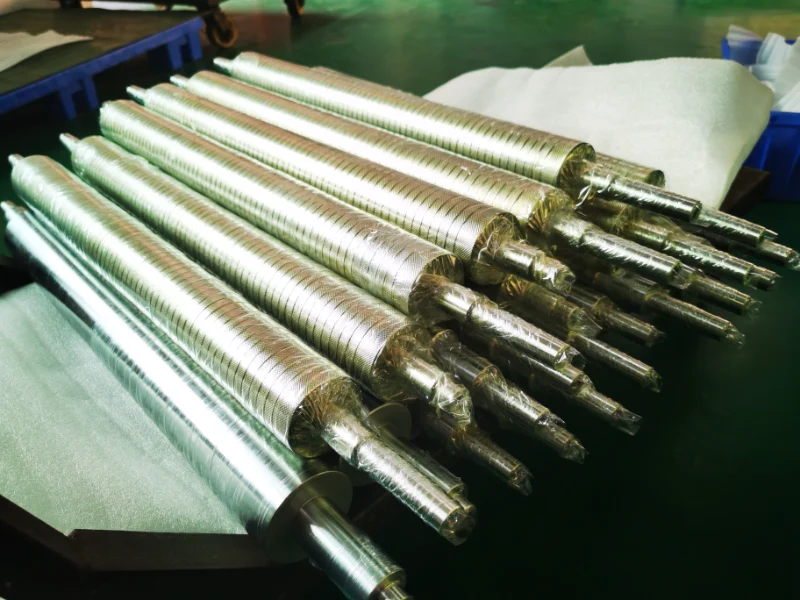
Knurling is widely used in the production of hand tools and mechanical parts, such as tool handles, screws, nuts, etc. It increases the grip on the workpiece, particularly in handheld tools, enhancing operational stability and safety for the user.
Automotive Industry
In the automotive industry, knurling is applied to various drive components, brake system parts, etc., such as brake pedals, gears, and more. Knurling helps increase friction, ensuring efficient operation and reliability.
Aerospace and Electronics
In aerospace, knurling is commonly used on aircraft casings and mechanical components, improving friction between parts while enhancing aesthetics. In electronics, knurling is applied to battery enclosures, electronic component housings, etc., enhancing surface texture for both decorative and anti-slip functions.
Building and Home Industry
Knurling has also gradually increased in use in the building and home industry, especially in non-slip floor components (e.g., stair treads, floor decorative pieces). Additionally, knurling is often used on window frames, door handles, and other components, enhancing both aesthetics and usability.
Medical Industry
Knurling is also widely used in the medical field, particularly in medical device components such as surgical instrument handles, injectors, etc. It effectively enhances stability during operations, ensuring precise handling.
Materials Suitable for Knurling
Metal Materials
- Aluminum Alloys: Lightweight and easy to process, suitable for tool handles, body parts, etc. Tool wear is minimal during knurling.
- Copper Alloys: Corrosion-resistant, suitable for electronic components, electrical connectors, etc. Careful attention to cutting speed is necessary to avoid surface damage.
- Stainless Steel: High strength and corrosion resistance, used in medical instruments, tools, etc. Requires wear-resistant tools and precise parameter control.
- Steel: High strength, widely used for bearings, gears, fasteners, etc. Ideal for mass knurling production.
- Titanium Alloys: High strength and corrosion resistance, used in aerospace and high-end equipment. Requires higher cutting force and durable tools for processing.
Plastic Materials
- Polypropylene (PP): Chemically resistant, suitable for packaging, containers, and interior vehicle decorations. Ideal for medium-depth knurling.
- Polyethylene (PE): Soft, commonly used for packaging and containers. Cutting speed needs adjustment to avoid uneven textures.
- Polyamide (PA, Nylon): Wear-resistant, suitable for gears, bearings, etc. Knurling enhances friction and is suitable for high-load applications.
- Polycarbonate (PC): High strength, used for electronic device housings, medical equipment, etc. Cutting speed and pressure need control to prevent thermal damage.
- Polyvinyl Chloride (PVC): Chemically resistant, commonly used in pipes and building materials. Knurling increases surface friction and anti-slip performance.
- Thermoplastic Elastomers (TPE): Flexible and wear-resistant, widely used for automotive handles, sports equipment, etc. Excessive pressure should be avoided to prevent material deformation.
Composite Materials
- Carbon Fiber Reinforced Plastics (CFRP): Extremely strong and lightweight, suitable for aerospace, automotive, and other high-performance applications. Requires high wear-resistant tools and precise control.
- Glass Fiber Reinforced Plastics (GFRP): Lightweight and strong, widely used in construction, automotive parts, etc. Cutting force needs to be controlled to avoid excessive tool wear.
Advantages of Knurling
Improved Grip
Knurling significantly increases the grip, especially in tool handles and mechanical parts that need to be hand-held, preventing slipping and enhancing user safety.
Enhanced Aesthetic Effect
Knurling not only improves functionality but also enhances the visual appeal of components. Various texture patterns, such as cross or spiral knurling, are used in high-end tools and decorative parts, offering both utility and visual appeal.
Increased Durability
By applying knurling, components become more wear-resistant, especially for parts that experience high friction, extending the product’s lifespan and reducing maintenance and replacement frequency.
Limitations of the Knurling Process
Limited Applicable Materials
Knurling is suitable for softer or medium-hard materials, such as aluminum, copper, and some plastics. For materials with higher hardness, such as stainless steel and titanium alloys, the knurling process may not achieve the desired results.
Lower Surface Precision
The surface finish after knurling is generally not as fine as other processes like grinding or polishing. Particularly in applications where high surface quality and precision are required, knurling may not meet the standards.
Limited Complexity of Patterns
Knurling typically produces linear or geometrically simple patterns (e.g., spiral or parallel lines). The process has limited adaptability for complex surface textures and cannot achieve intricate three-dimensional designs.
Equipment and Process Constraints
Knurling requires specialized tools and equipment, and there are high demands on the equipment during operation. If the tools are severely worn, it may affect the machining quality and lead to increased costs.
Batch Production Limitations
While knurling is well-suited for mass production, its efficiency is relatively low for small batch or custom one-off production.
Cost Reduction in Knurling
Choosing the Right Material
By selecting softer materials like aluminum alloys and copper alloys, tool wear during knurling can be reduced, cutting tool costs and improving machining efficiency.
Optimizing Machining Parameters
Adjusting parameters such as feed rate, cutting speed, and pressure can increase production efficiency and reduce waste, lowering overall costs.
Increasing Automation
Using CNC machines for knurling not only improves precision but also significantly boosts production efficiency, reducing manual intervention and lowering labor costs.
Extending Tool Life
Choosing durable, wear-resistant tools and conducting regular tool inspections extends their lifespan, reducing costs caused by frequent tool replacements.

Knurling vs. Thread Rolling
Knurling
- Principle: Forms regular patterns on the surface through pressure, used for increasing friction and aesthetic appearance.
- Applications: Ideal for tool handles, fasteners, rotating components, etc.
- Advantages: Suitable for mass production and providing high grip and friction. Requires high pressure for hard materials.
Thread Rolling
- Principle: Forms threads on a workpiece surface through pressure, used for producing bolts, nuts, and other threaded parts.
- Applications: Widely used for producing threaded fasteners.
- Advantages: Enhances thread strength and precision, ideal for mass production.
Knurling Safety Guidelines
- Personal Safety: When processing symmetrical cylindrical workpieces, always ensure that hands, clothing, or hair do not come into contact with rotating tools and machinery parts. Keep body parts away from rotating components.
- Protective Gear:
- Safety glasses: Protect eyes from flying metal debris.
- Ear protection: Prevent hearing damage from prolonged exposure to high noise.
- Protective gloves: Avoid injury from tools or metal debris.
- Anti-slip shoes: Prevent accidents from slipping.
- Equipment Inspection: Regularly check machinery for proper functioning, lubricate and clean to prevent malfunctions.
Common Knurling Defects and Solutions
Uneven Texture Depth
- Cause: Uneven texture depth can result from unstable feed rate, uneven pressure, or improper tool angle during the machining process.
- Solution:
- Ensure stable processing parameters, such as uniform feed rate and pressure, to avoid uneven textures.
- Check the tool angle and position to ensure proper tool setup and consistent texture depth.
- Regularly calibrate equipment accuracy, especially the machine tool’s positioning accuracy and tool alignment, to ensure uniform texture during processing.
Unclear Texture
- Cause: Worn tools, insufficient cutting force, or high material hardness can prevent the texture from being clearly defined.
- Solution:
- Replace dull tools to avoid unclear textures caused by tool wear.
- Adjust processing pressure and increase cutting force to ensure a clear texture.
- For harder materials, choose suitable tool materials or use equipment with higher cutting force for machining.
Workpiece Deformation
- Cause: Excessive pressure, high or uneven material hardness, or thin workpieces can lead to deformation during knurling.
- Solution:
- Control processing pressure to avoid excessive pressure on the workpiece, especially when machining softer materials. Reduce cutting depth.
- Use workpieces of appropriate thickness to avoid deformation in overly thin workpieces during knurling.
- For hard materials, use appropriate tools and adjust feed rate to minimize deformation caused by excessive force.
Uneven Knurling Texture
- Cause: Incorrect relative positioning between the tool and workpiece, uneven pressure, or fluctuations in feed speed can cause uneven knurling textures.
- Solution:
- Ensure tool and workpiece alignment to guarantee uniform texture during machining.
- Adjust workpiece fixtures before processing to secure the workpiece and prevent position shifts during knurling.
- Optimize feed speed and processing pressure to maintain consistent force during machining and reduce uneven texture formation.
Surface Cracks or Notches
- Cause: Excessive cutting force or defects on the workpiece surface (such as cracks or impurities) can cause surface cracks or notches during knurling.
- Solution:
- Choose appropriate processing parameters to avoid excessive force and ensure the surface remains undamaged.
- Ensure the workpiece surface is clean and free of oil, contaminants, or impurities to prevent cracks caused by surface irregularities.
- Perform pre-treatment of the workpiece, such as annealing, to reduce material brittleness and prevent crack formation.
Excessive Surface Roughness
- Cause: Improper processing parameters can lead to rough surfaces during machining. For example, low cutting speeds or excessive pressure can increase surface roughness.
- Solution:
- Optimize processing parameters, such as increasing cutting speed and adjusting feed rate, to reduce surface roughness.
- Regularly check the sharpness of tools to ensure they remain in good condition and provide smooth surface finishes.
- Use high-precision machines to maintain stability and surface quality during processing.
Inconsistent Knurling Pattern Direction
- Cause: Incorrect tool installation or mechanical deviations during machining can cause inconsistent knurling pattern direction.
- Solution:
- Ensure proper tool installation, checking the tool’s direction and angle to align with the workpiece axis.
- Regularly check machine calibration to ensure sufficient machine accuracy and prevent mechanical deviation during processing.
Conclusion
Knurling is a vital process that improves the grip, friction, and appearance of parts while extending durability. As manufacturing technologies evolve, the applications of knurling will expand, helping manufacturers improve product performance and reduce production costs.