
Understanding the peek cnc machining cost is essential for companies that rely on PEEK components for aerospace, medical, semiconductor, automotive, and high-temperature industrial applications. PEEK is one of the most advanced engineering polymers available, offering exceptional heat resistance, chemical durability, and mechanical stability. However, these properties also make it more challenging—and more expensive—to machine. This article provides a full breakdown of the factors affecting machining cost, differences between prototype and mass production, and what buyers should expect when sourcing PEEK components.

What Determines PEEK CNC Machining Cost?
The peek cnc machining cost is shaped by material behavior, part geometry, tolerances, and production needs. Compared with nylon, ABS, or POM, PEEK requires slower cutting speeds, high-quality tooling, and advanced heat control to maintain dimensional accuracy.
1. Material Grade & Price
PEEK itself is an expensive raw material. Prices vary depending on grade:
Common PEEK Grades
- Virgin PEEK: Pure polymer for medical & aerospace
Such applications include medical surgical instrument structural components, endoscope parts, implant support structures, medical equipment insulation components, and high-precision brackets, making them particularly suitable for applications requiring extremely high levels of cleanliness, safety, and stability.
In the aerospace field, they are commonly used to process various structural brackets, insulation components, fasteners, wear-resistant gaskets, and functional components for high-temperature environments, effectively replacing some metal parts, reducing weight, and improving system reliability.
- Glass-Filled PEEK (GF30): This is a high-performance engineering plastic made by reinforcing virgin PEEK resin with a certain proportion of glass fibers (usually 30%).
It offers higher mechanical strength, rigidity, and dimensional stability than virgin PEEK, making it particularly suitable for CNC machined parts requiring extremely high structural strength and long-term stability:Suitable for load-bearing structural components, support parts, frame components, equipment bases, positioning blocks, reinforced sliders, valve seats, valve core supports, high-pressure support rings, pump body structural components, bearing housings, and pressure-resistant isolation structures.
- Carbon-Filled PEEK (CF30): Strongest and most wear-resistant
It is a high-performance composite engineering plastic made by adding a certain proportion (usually 30%) of carbon fiber reinforcement to PEEK resin. It is suitable mainly used for high-load, high-wear, self-lubricating CNC parts such as bushings, bearings, sliding blocks, wear rings, gears, and other sliding or rotating components.
Reinforced grades add cutting difficulty, which directly increases peek cnc machining cost.
2. Part Geometry & Complexity
Parts requiring:
- Thin walls
Thin-wall PEEK parts require special cutting strategies and slower machining speeds to prevent deformation, which increases machining time and cost.
- Deep pockets
Deep pockets require long tools, multiple step-down passes, and longer machining time, significantly increasing CNC machining cost for PEEK parts.
- Tight radii
Tight internal radii require smaller tools and slower cutting speeds, which increases tool wear, machining time, and overall cost.
- Undercuts
Undercuts usually require special tools or multi-axis machining, adding setup complexity, machining steps, and extra cost.
- Multiple tool changes
will have higher machining cost due to longer cycle time.
Multiple tool changes increase machining time, programming complexity, and tool usage, which directly increases CNC machining cost.
3. Tolerance Requirements
PEEK can achieve tolerances of ±0.01–0.02 mm, but doing so requires:
- Precision temperature control
Precision temperature control is required during PEEK machining to avoid material deformation and internal stress, which adds process complexity and increases machining cost.
- Special cutting parameters
Special cutting parameters such as lower speeds and optimized feeds are required for PEEK, which reduces machining efficiency and increases overall machining time and cost.
- Multi-step finishing passes
Multi-step finishing passes are needed to achieve tight tolerances and good surface finish on PEEK parts, which significantly increases machining time and cost.
Tighter tolerances raise overall peek cnc machining cost.
4. Machining Challenges
PEEK generates heat easily. If overheated, it can warp or deform. Manufacturers must manage:
- Cutting temperature
- Tool material choice
- Chip evacuation
Efficient chip evacuation is critical in PEEK machining to prevent heat accumulation, re-cutting, and surface defects, which requires specialized toolpaths, air/coolant assistance, and more conservative cutting strategies, thereby increasing machining time and overall cost.
- Feed rate control
During the machining of PEEK, precise control of feed rate and spindle speed is required to balance workpiece temperature, extend cutter life, and prevent workpiece deformation. This reduces machining efficiency and thus increases processing costs.
These factors increase machining difficulty and cost.
5. Production Volume
Single-unit prototypes cost more per piece.
cnc machining peek prototype orders include engineering setup, unique fixturing, and additional inspection steps.
Larger orders—such as peek cnc machining bulk or peek cnc machining mass production—reduce cost significantly due to:
- Machine setup efficiency
Because PEEK parts typically require high precision and involve more complex fixturing and tool setting, inefficient fixture setups for securing the workpiece can increase changeover, calibration, and trial cutting times, leading to higher machining costs in small-batch production.
- Material purchasing at scale
Purchasing PEEK material at scale can significantly reduce raw material unit cost, while small-quantity orders suffer from much higher material cost per part, directly increasing total machining cost.
- Consistent machining programs
Frequently changing machining programs increases programming time costs, debugging costs, and trial cutting costs, while stable and reusable programs can significantly reduce overall average machining costs.
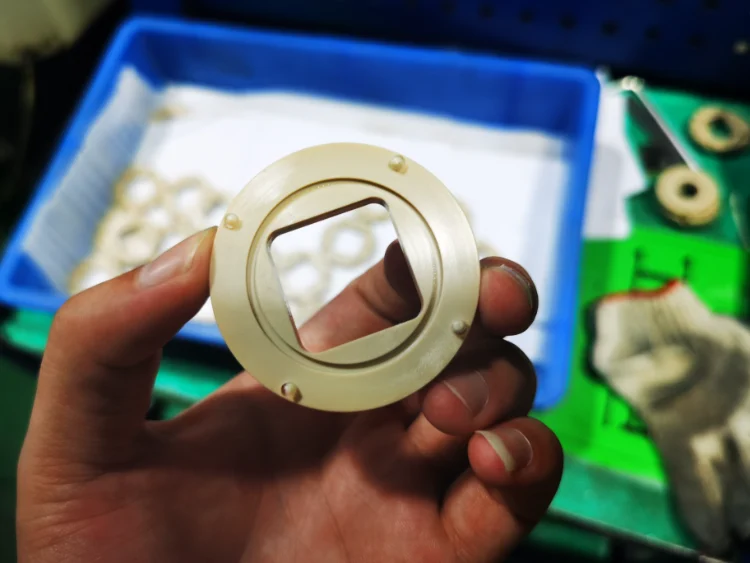
PEEK CNC Machining Cost Breakdown by Production Type
A professional evaluation of peek cnc machining cost must consider production scale.
1. CNC Machining PEEK Prototype Cost
Prototypes usually cost the most per part due to:
- One-time programming
- Minimal tooling optimization
- Slow, careful cutting
- Extra dimensional inspection
Typical range:
$80–$300+ per part, depending on material grade and complexity.
2. PEEK CNC Machining for Bulk Orders
When moving to peek cnc machining bulk, costs begin to decrease because:
- Tool paths are optimized
- Fixtures are reused
- Machining speeds increase
- Inspection time per part decreases
Typical range:
$20–$120 per part, depending on size and quantity.
3. Mass Production PEEK CNC Machining
For peek cnc machining mass production, factories may implement:
- Automated loading
- Multi-part fixtures
- Optimized tool life cycles
- Fully automated QC routines
Typical range:
$8–$60 per part, depending on lot size and design stability.
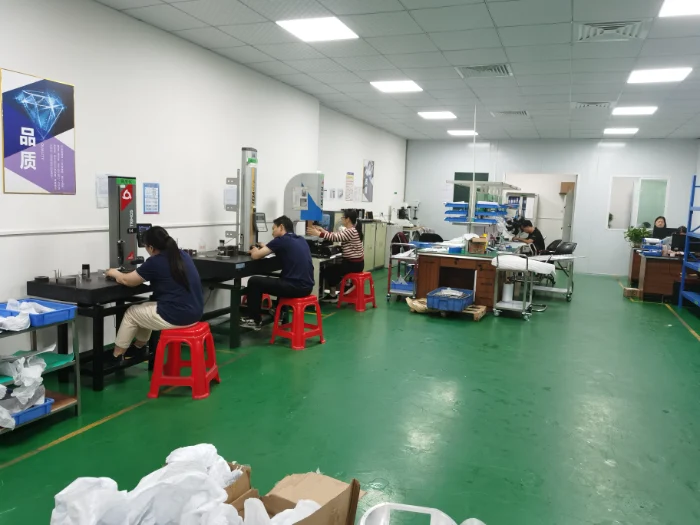
Additional Factors Influencing PEEK CNC Machining Cost
Beyond standard technical requirements, several other elements impact pricing.
Surface Finishing Requirements
Common options include:
- Micro-polishing: often required for PEEK parts with strict surface roughness requirements, and this additional manual or precision finishing process increases labor time and overall machining cost.
- Deburring:Careful deburring is necessary for PEEK parts to avoid particle contamination and edge defects, especially for precision or clean applications, adding extra finishing steps and increasing cost.
- Fine grinding:it is sometimes required to achieve tight tolerances and precise flatness or roundness, adding extra machining time and increasing overall production cost.
- Thermal stress relief:it may be required after rough machining to prevent deformation of PEEK parts. The parts are heated in a temperature-controlled oven and slowly cooled to release internal stress. This additional process increases machining time, energy consumption, and overall CNC machining cost.
Enhanced finishing increases peek cnc machining cost.
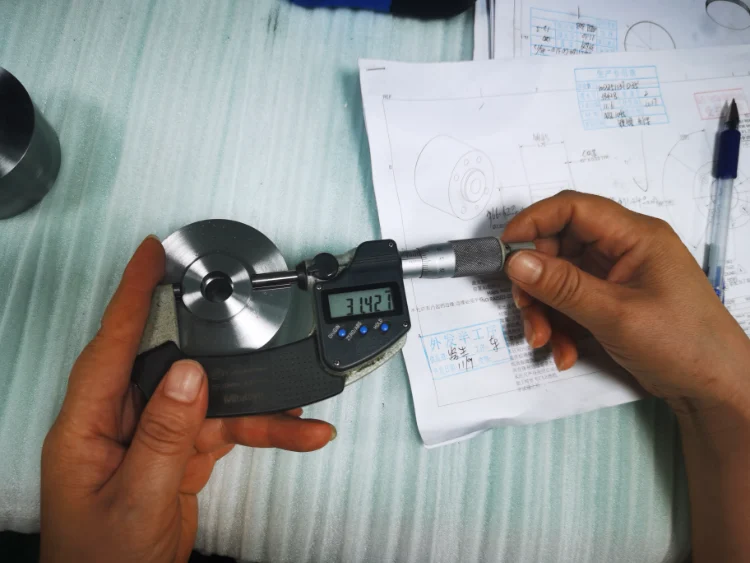
Inspection & Certifications
Industries such as aerospace and medical often require:
- ISO inspection
- Full dimensional reports
- Material traceability
- FAI documentation
These add time and labor to machining.
Tool Wear & Replacement
PEEK—especially filled grades—causes accelerated tool wear. Manufacturers must account for:
- High-performance carbide tools:PEEK machining requires the use of high-performance carbide tools to ensure the accuracy of grooves and holes and the surface quality of the PEEK workpiece. However, these tools are more expensive, which increases tooling costs.
- Frequent tool changes:Frequent tool changes are often needed due to tool wear and different machining stages, which increases machine downtime, setup time, and overall machining cost.
This is built into the final cost.
Common PEEK CNC Machined Components
Manufacturers typically machine PEEK for the following applications:
1. Aerospace Components
- High-temperature brackets
- Insulation elements
- Structural supports
2. Semiconductor Equipment Parts
- Wafer fixtures
- Precision insulators
- Chemical-resistant guides
3. Medical Device Components
- Surgical tool housings
- Implant-compatible parts
- Imaging system brackets
4. Automotive & EV Systems
- Transmission guides
- High-voltage insulation parts
5. Oil & Gas Components
- High-pressure valve seats
- Chemical pump parts
These parts justify higher peek cnc machining cost, given the extreme conditions they must withstand.

Machining Considerations When Working With PEEK
A skilled CNC shop uses advanced techniques to minimize deformation and ensure accuracy.
Temperature Control
- Air cooling preferred
- Avoid prolonged tool engagement
- Minimize heat buildup
Fixturing & Stability
- Rigid workholding to prevent vibration
- Controlled cutting forces
Gradual Roughing and Finishing Passes
Prevents:
- Surface burn
- Dimensional drift
- Micro-cracks
Tooling Selection
- Carbide or diamond-coated tools
- Custom end mills for filled PEEK
How to Reduce PEEK CNC Machining Cost
To optimize peek cnc machining cost, consider:
Simplifying Part Geometry
Avoid unnecessary pockets or excessively tight tolerances.Simplifying part geometry reduces machining complexity, tool changes, and machining time, which directly lowers CNC machining cost for PEEK parts.
Increasing Order Volume
Bulk machining dramatically reduces unit cost.Increasing order volume helps spread setup, programming, and tooling costs over more parts, significantly reducing the unit cost of PEEK CNC machining.
Choosing the Right PEEK Grade
Higher-grade reinforced PEEK increases tool wear—use only when required.Choosing the right PEEK grade avoids unnecessary material and machining costs, since over-specifying high-end PEEK (such as carbon-filled or medical-grade) increases both material and machining cost.
Sharing Complete Drawings
Accurate technical drawings reduce revisions and improve pricing accuracy.Sharing complete and accurate drawings reduces engineering clarification, programming revisions, and trial machining, helping to shorten lead time and reduce overall machining cost.
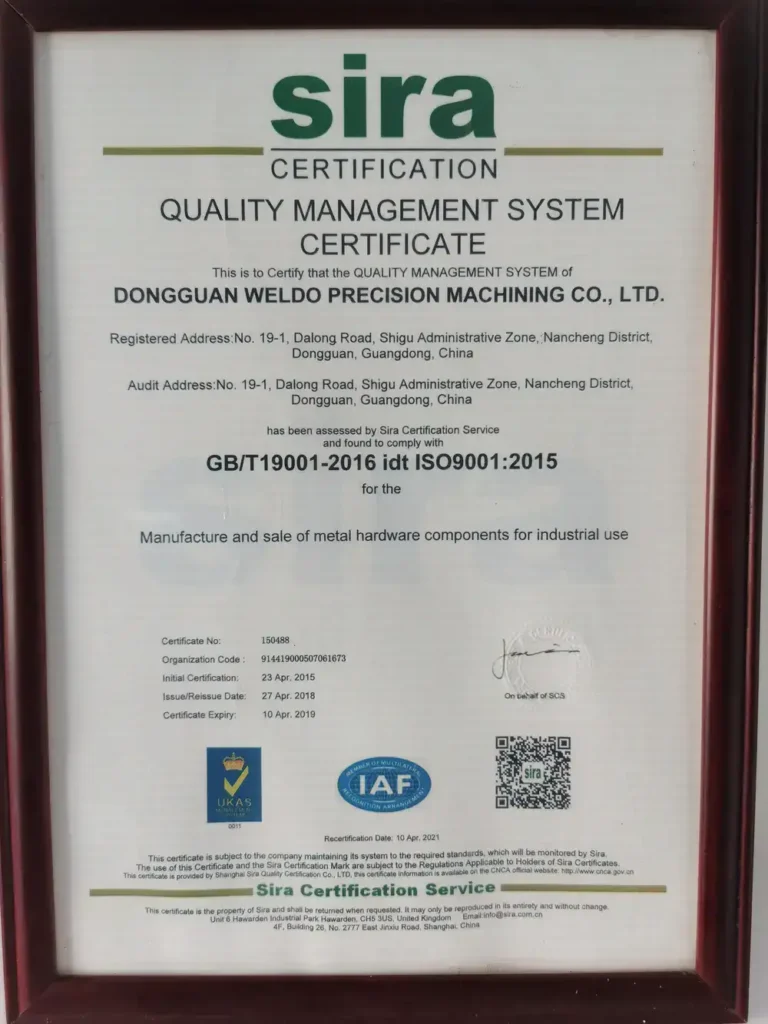
Request Accurate PEEK CNC Machining Cost — Contact Weldo Machining
For precision PEEK components, choosing the right machining partner ensures accuracy, repeatability, and cost efficiency. Weldo Machining specializes in PEEK machining from prototype to bulk production, offering stable tolerances, controlled thermal machining, and full inspection capabilities.
Contact us today for detailed pricing and professional support on your next PEEK CNC machining project.
FAQ of peek cnc machining cost
Why is PEEK CNC machining more expensive than other plastics?
Because PEEK requires slow cutting speeds, temperature control, and high-wear tooling, increasing machining time and complexity.
How much does a PEEK CNC prototype typically cost?
Prototype parts usually cost $80–$300+ depending on complexity, tolerances, and material grade.
Does bulk machining reduce the price significantly?
Yes. Bulk or mass production orders lower unit cost due to optimized tool paths, reduced setup time, and higher machining efficiency.