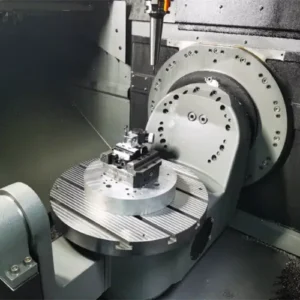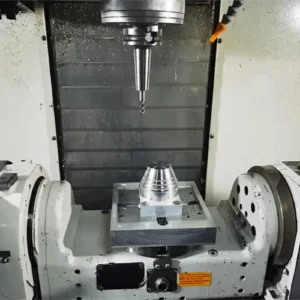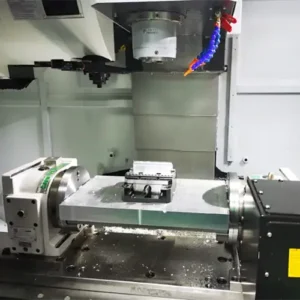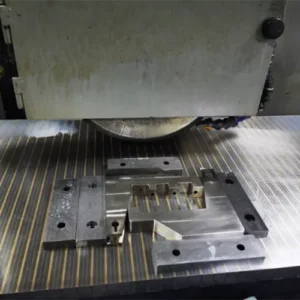
POM (Polyoxymethylene, also known as Acetal/Delrin) and Nylon (Polyamide/PA) are two of the most common engineering plastics for CNC-machined parts. Both machine well and offer good wear resistance, but they differ in surface finish, moisture absorption and dimensional stability, stiffness/precision retention, impact toughness, and long-term consistency. Selecting the wrong material can cause tolerance drift, sticking, noise, premature wear, or rework. This guide compares POM vs Nylon CNC Parts and outlines machining tips, selection criteria, and alternative materials.

Quick Comparison: POM vs Nylon CNC Parts
This section is designed for fast decisions: if you need “more stable and precise” vs “more tough and impact-resistant,” these criteria usually point to the right direction. Later sections explain the engineering implications and machining considerations.
| Category | POM CNC Parts (POM-C / POM-H) | Nylon CNC Parts (PA6 / PA66 / PA12 / MC / GF, etc.) |
|---|---|---|
| Appearance & feel | More uniform color (commonly white/black); harder and smoother feel; high surface finish after cutting | Color varies by grade (off-white/beige/black); tougher feel; more prone to stringing/burring |
| Moisture & dimensional stability | Very low water uptake; more stable dimensions in humidity changes | Higher water uptake (especially PA6/PA66); humidity may cause size drift |
| Rigidity & precision retention | Higher stiffness, less rebound; ideal for tight tolerances | High toughness but more elastic; needs tolerance/design compensation for precision fits |
| Wear & friction behavior | Stable friction, predictable wear curve; ideal for precision sliding pairs | Also wear-resistant; stronger in low-speed heavy-load and impact conditions |
| Impact resistance | Medium; “hard and stable” | High; “tough and impact-resistant” |
| CNC machinability | Easy to machine; good batch consistency | Machinable but more sensitive to deformation/moisture; process control is more critical |
| Typical strengths | Gears, bushings, locating blocks, precision sliders | Pulleys, guide blocks, buffers, impact guards, tough support parts |
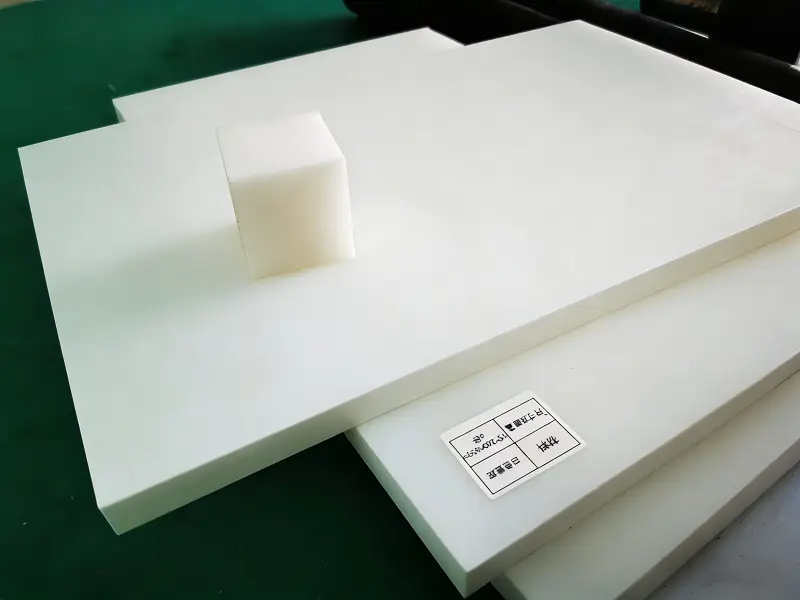
Appearance and Surface Behavior
Appearance is not only cosmetic—it affects friction feel, assembly fit, cleanliness, and how customers perceive precision, which is often a key point in RFQs.
- Color consistency and visual stability
POM is commonly produced in white/black with high color uniformity, giving a clean “precision part” look after machining. Nylon appearance varies more with grade, moisture condition, and batch, so specifying grade and moisture control improves consistency for appearance-critical parts. - Surface finish and tool-mark character
POM generally achieves a smoother finish with finer tool marks, making it suitable for functional mating surfaces or visible surfaces. Nylon can show mild stringing or edge fuzz; finishing requires sharper tooling, stable chip evacuation, and optimized cutting parameters to reduce secondary scratching from stringy chips. - Tactile feel and sliding “smoothness”
POM feels hard and slick with crisp sliding behavior, helping maintain consistent friction. Nylon feels more compliant and can damp vibration/noise, but humidity-driven dimensional changes must be evaluated in tight-clearance assemblies.
Base Physical Property Comparison
Physical properties determine stability limits in real environments, especially water absorption, density, and thermal behavior, which strongly influence long-term tolerances and running clearances.
| Physical Property | POM (Typical) | Nylon/PA (Typical) | Engineering Meaning |
|---|---|---|---|
| Density (g/cm³) | 1.40–1.43 | 1.12–1.15 (PA6/66) | Nylon is lighter—helpful for dynamic assemblies and reduced inertia |
| Water absorption (24h) | ≤0.2% | 1.2%–2.5% (PA6/66) | Nylon is more humidity-sensitive—precision fits need compensation |
| Thermal expansion trend (relative) | Lower and more stable | Higher and affected by moisture | POM is easier to control for tolerance under temperature/humidity changes |
| Continuous service temp (common) | -40 to 100°C | -30 to 120°C (grade-dependent) | Heat capability depends on specific PA grade and modifications |
Base Mechanical Property Comparison
Mechanical properties determine load capacity, deformation, and failure risk under impact. For engineering evaluation, consider strength + modulus together rather than strength alone.
| Mechanical Property | POM (Typical) | Nylon/PA (Typical) | Engineering Meaning |
|---|---|---|---|
| Tensile strength (MPa) | 60–75 | 70–90 (often higher for PA66) | Nylon isn’t necessarily weaker, but performance depends more on moisture and grade |
| Elastic modulus (MPa) | 2800–3200 | 2000–3000 | POM is stiffer—better for tight tolerance and rigidity-critical structures |
| Impact performance (qualitative) | Medium | High | Nylon is preferred for shock, vibration, and impact guard parts |
| Wear/friction stability | High and predictable | High but more condition-dependent | Precision sliding pairs often favor POM |

Modified Grades and Families: POM vs Nylon Options
Grades and modifications can dramatically change wear, stiffness, ESD performance, heat resistance, and dimensional stability. In many projects, selecting the right grade is more effective than switching the base polymer.
Note: Data are typical ranges for common industrial grades; brand, formulation, and filler % can vary significantly.
POM Modified Grades: Appearance, Physical, and Mechanical Data
| POM Type | Typical Appearance | Density g/cm³ | Tensile MPa | Friction Coef. (dry) | Continuous Temp °C |
|---|---|---|---|---|---|
| Standard POM (POM-C / POM-H) | Mostly white/black; uniform color; smooth machined surface | 1.40–1.43 | 60–75 | 0.20–0.35 | -40 to 100 |
| Wear-Modified POM (PTFE/silicone) | Often white/gray; more “slippery” feel | 1.42–1.46 | 55–70 | 0.12–0.25 | -40 to 100 |
| GF-POM (Glass Fiber 10–30%) | Dark/black; more matte; visible fiber texture | 1.48–1.60 | 80–110 | 0.25–0.45 | -40 to 110 |
| ESD/Anti-Static POM | Usually black; matte; harder feel | 1.42–1.55 | 55–80 | 0.20–0.40 | -40 to 100 |
| Conductive POM (carbon-filled) | Black; matte; may feel slightly grainy | 1.45–1.60 | 55–85 | 0.20–0.45 | -40 to 100 |
Additional note (recommended to keep):
Wear-modified POM typically trades a small drop in strength for lower friction and longer sliding life. GF-POM increases stiffness/strength significantly but reduces toughness and accelerates tool wear. ESD/conductive POM requires verification of both surface resistivity and mechanical performance for the actual application.
Nylon/PA Families and Modifications
| Nylon Type | Appearance | Density g/cm³ | Water Abs. 24h | Tensile MPa | Friction Coef. (dry) | Continuous Temp °C |
|---|---|---|---|---|---|---|
| PA6 | Off-white/beige/black; more prone to stringing | 1.12–1.14 | 1.5–2.5% | 60–80 | 0.25–0.40 | -30 to 100 |
| PA66 | Off-white/black; “harder” than PA6 | 1.13–1.15 | 1.2–2.0% | 70–90 | 0.25–0.40 | -30 to 120 |
| PA12 | Off-white with slight translucency; stable appearance | 1.01–1.04 | 0.3–0.8% | 45–60 | 0.25–0.40 | -40 to 110 |
| MC Nylon (cast nylon / oil-filled optional) | Beige/green/black; common for thick parts; finer surface | 1.13–1.16 | 0.8–2.0% | 70–90 | 0.15–0.30 | -30 to 110 |
| GF Nylon (PA6-GF/PA66-GF) | Dark/black; matte; fiber texture | 1.35–1.45 | 0.7–1.5% | 120–200 | 0.30–0.50 | -30 to 150 |
Additional note (recommended to keep):
PA6/PA66 water uptake affects dimensions and mechanical behavior. PA12 offers better dimensional stability. MC Nylon excels in low-speed heavy-load wear applications. GF Nylon boosts stiffness/strength but reduces impact toughness and requires careful tooling and corner-radius design.
Typical Components: What Each Material Is Commonly Used For
This section clarifies the “material–load–function” match so readers can map their parts to the right plastic family quickly.
POM CNC Parts: Common Components and Why
POM’s key strengths are low water uptake, dimensional stability, stable friction, and higher stiffness, so it is frequently used for precision fits and drive parts.
- Precision gears / small-module gears
High stiffness helps maintain meshing accuracy, reduces noise, and improves long-term consistency in light-to-medium load transmissions. - Bushings / sleeves / sliding bearing seats
Stable clearances reduce risk of binding or drift in long-term operation, especially when humidity varies. - Locating blocks / hard stops / fixture reference parts
Small dimensional drift supports repeatable positioning and reduces calibration frequency. - Precision sliders / guide blocks
Predictable wear behavior is beneficial for linear mechanisms sensitive to motion consistency and repeatability.
Nylon CNC Parts: Common Components and Why
Nylon’s key strengths are toughness, impact resistance, vibration damping, and noise reduction, making it suitable for buffering and low-speed heavy-load wear parts.
- Pulleys / rollers / guide wheels
Strong toughness and lower noise suit conveying, guiding, and frequent start-stop systems. - Guide blocks / wear pads
Good reliability under low-speed heavy-load friction, especially in noise-sensitive equipment. - Impact guards / buffers / protective covers
Less brittle under shock, increasing safety margin against misoperation or accidental impacts. - Support parts for moderate-precision assemblies
When ultra-tight tolerances are not required, Nylon offers cost-effective load capacity with better toughness.
Common CNC Machining Issues and Practical Fixes (Symptom–Cause–Solution)
Machining issues directly affect yield and lead time. The following are common risks and actionable process countermeasures for each material.
POM CNC Machining: Issues and Fixes
POM generally machines cleanly and consistently, but thin walls and heat buildup still require control.
- Symptom: localized heat leading to slight melting/glossy edges
Often caused by excessive surface speed, dull tools, or poor chip evacuation. Reduce surface speed, use sharp positive-rake tools, improve chip breaking/evacuation, and apply air or mist cooling as needed. - Symptom: thin-wall deformation or spring-back after clamping
Typically due to excessive clamping force or aggressive cuts. Use soft jaws/fixtures with distributed support, reduce clamping force, use multiple light passes, and leave finishing allowance for final sizing. - Symptom: burrs affecting assembly
Commonly from tool wear or mismatched feed. Maintain sharp tools, optimize feed/toolpath direction, and define chamfer/deburr standards in drawings or process documents.
Nylon CNC Machining: Issues and Fixes
Nylon’s main challenges come from toughness + moisture absorption, which drive stringing, deformation, and dimensional drift.
- Symptom: stringy chips, fuzzy edges, burrs
Toughness causes chips to remain unbroken. Use sharper tools and chip-break geometry, adjust toward higher feed/lower speed to encourage chip breaking, and optimize chip evacuation to prevent secondary scratching. - Symptom: post-machining dimensional instability (tight bores/fits especially)
Often from moisture swelling or stress relaxation. Dry and seal raw stock, equilibrate moisture condition before final machining, and apply tolerance compensation or consider PA12/stabilized nylon for precision fits. - Symptom: long/thin parts warp more easily
Nylon is more elastic and clamp-sensitive. Increase uniform support, use symmetric material removal and step machining, add re-fixturing for finishing, and introduce stabilization time before final finishing when required.

How to Choose Between POM and Nylon (Decision Matrix)
Material choice is about matching operating conditions and quality targets. Evaluate precision level, humidity exposure, load type, and maintenance constraints.
- Choose POM when
You need high dimensional stability and repeatability (precision bores, datum features, gear mesh accuracy), especially with humidity variation or long-term consistency requirements. - Choose Nylon when
You need impact resistance, vibration damping, noise reduction, or buffering, and you can manage moisture-related dimensional effects through tolerances and conditioning. - Precision + humid environment + long maintenance intervals
Often favors POM (or upgraded options like PET/PEEK) because Nylon moisture effects increase long-term tolerance-management cost. - Impact + low-speed heavy load + low noise
Often favors Nylon (especially MC Nylon/oil-filled or GF Nylon) due to higher toughness and better misoperation robustness.
Alternative Materials: When POM/Nylon Cannot Meet Boundary Requirements
When you face tougher requirements—higher temperature, stronger chemical resistance, ultra-low friction, or extreme dimensional stability—consider the following common alternatives.
- PET / PETP (lower water uptake, higher dimensional stability)
Suitable for precision locating and fixture parts; often a practical upgrade path from POM for humidity-sensitive precision. - UHMW-PE (ultra-wear, low friction, anti-stick)
Great for wear strips and guide liners, but lower stiffness than POM—use caution for precision fits. - PTFE (very low friction, excellent chemical resistance)
Common for seals, pads, and liners, but not ideal as a primary load-bearing structure due to low stiffness/strength. - PEEK (high strength, high temperature, chemical resistance)
A premium upgrade for harsh environments and high-end equipment; higher cost but excellent long-term performance. - PPS / PC / ABS (select by function)
PPS for heat/chemical environments, PC for impact/transparent needs, ABS for cost and general machinability—verify wear and friction behavior for your duty cycle.
Summary
In summary, POM is ideal for high-precision CNC plastic parts that need very low water uptake, long-term dimensional stability, and predictable friction/wear (e.g., gears, bushings, locating blocks, precision sliders). Nylon is better for tough, impact-resistant, noise-damping parts that perform well under low-speed heavy loads (e.g., rollers, guide blocks, buffers, impact guards). In practice, define the environment, load type, tolerance requirements, and maintenance limits, then choose the appropriate POM grade (standard/wear-modified/GF/ESD) or Nylon family (PA6/PA66/PA12/MC/GF) and machine accordingly. If neither fits, consider PET, UHMW-PE, PTFE, PEEK, or other engineering plastics to meet the application limits.
If you want to know more details or get an quick quote,you can also feel free to contact with us Weldo machining now.