S355 is a widely used structural steel in industrial machinery, structural steelwork, and large welded assemblies. It offers relatively high yield strength while maintaining a practical balance of impact toughness, weldability, and manufacturing cost. Common applications include machine bases, mounting plates, load-bearing brackets, connecting components, and large structural frames, many of which require precise S355 steel machining after cutting or welding.
However, S355 is not a single material with completely fixed properties. Different suffixes indicate specific impact requirements or delivery conditions, while material thickness also affects the guaranteed minimum yield strength. For this reason, material selection, structural design, and CNC process planning should consider the exact S355 grade, thickness, and delivery condition rather than relying on the general designation alone.
What Is S355 Steel?
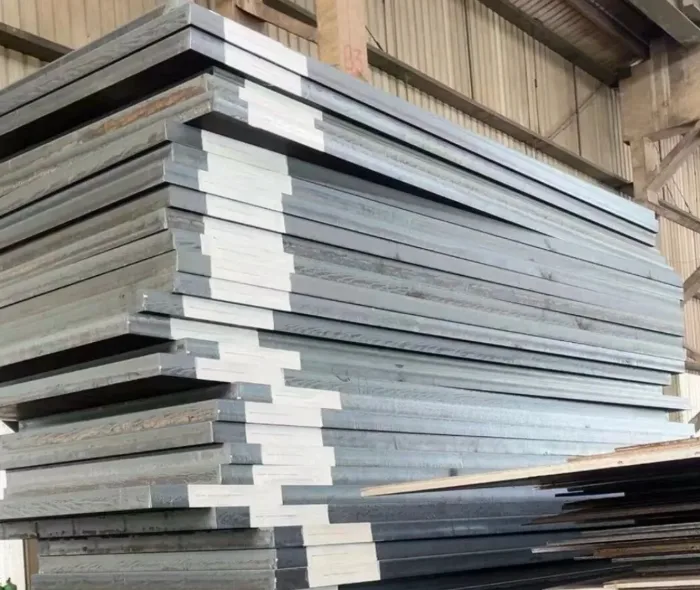
S355 is a structural steel grade defined within the European EN 10025 standard system.
- S stands for structural steel.
- 355 indicates a minimum yield strength grade of approximately 355 MPa within the specified thickness range.
S355 is generally classified as a carbon-manganese structural steel. Its standards primarily control minimum yield strength, tensile strength, ductility, and the impact toughness required for each grade. Rather than relying on high hardness to provide load-bearing capacity, S355 uses controlled chemical composition, rolling processes, and microstructure to balance strength, toughness, and weldability.
It is important to understand that 355 MPa is not a fixed yield strength for every thickness. For some S355 plate products, the minimum yield strength may be 355 MPa at thicknesses up to 16 mm, decrease to 345 MPa from 16 to 40 mm, and fall further to 335 MPa from 40 to 63 mm. The applicable product standard and material certificate should always be checked for the actual requirement.
Chemical Composition of S355 Steel
S355 is primarily iron-based, with controlled amounts of carbon, manganese, silicon, and residual elements used to achieve the required performance. Chemical limits vary by grade, thickness, and delivery condition. The following values provide a general overview of the common composition and the function of each element.
| Element | Typical Control Range | Main Effect on Material Properties |
|---|---|---|
| Carbon, C | Typically no more than 0.20%–0.24% | Increases strength and hardness, but excessive carbon reduces weldability and toughness |
| Manganese, Mn | Typically no more than 1.60% | Improves strength, toughness, and microstructural stability |
| Silicon, Si | Typically no more than 0.55% | Used for deoxidation and provides some solid-solution strengthening |
| Phosphorus, P | Typically no more than 0.025%–0.035% | Excessive phosphorus reduces ductility and low-temperature toughness |
| Sulfur, S | Typically no more than 0.025%–0.035% | Excessive sulfur can increase hot-shortness and cracking risk |
| Copper, Cu | No more than 0.55% in some grades | May provide a limited improvement in atmospheric corrosion resistance |
| Nitrogen, N | No more than 0.012% in some grades | Must be controlled to limit adverse effects on aging and toughness |
Some fine-grain S355 grades also contain small amounts of niobium, vanadium, or titanium. These microalloying elements refine the grain structure or form fine precipitates, improving strength and toughness without requiring an excessive increase in carbon content.
The actual chemical composition should always be evaluated according to the specific grade, such as S355JR, S355J2, S355N, or S355M.
Why Is S355 Widely Used?
The main advantage of S355 is its balanced overall performance.
Compared with lower-strength structural steels, S355 can carry higher loads, allowing designers to reduce certain section sizes or increase the load capacity of a component. Compared with hardened steels and high-alloy steels, it offers better weldability, formability, and manufacturing economy.
S355 is especially suitable for:
- Machine bases and mounting platforms
- Heavy-duty brackets and load-bearing connection plates
- Bridges and structural steelwork
- Lifting equipment and conveyor systems
- Large welded frames
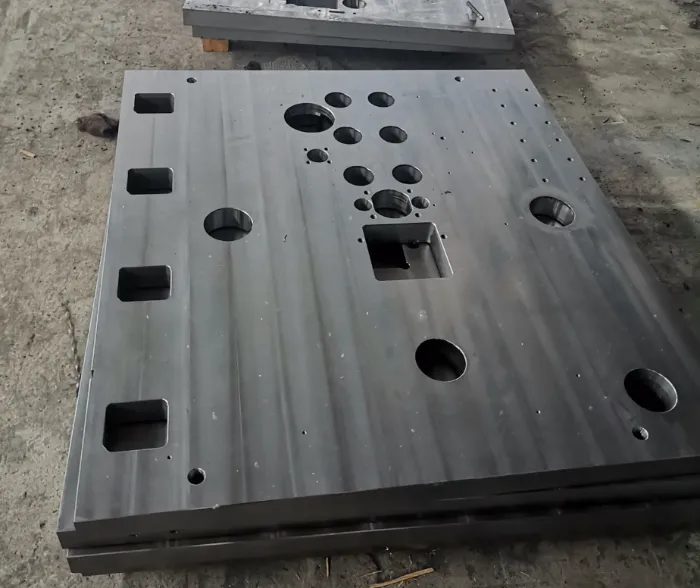
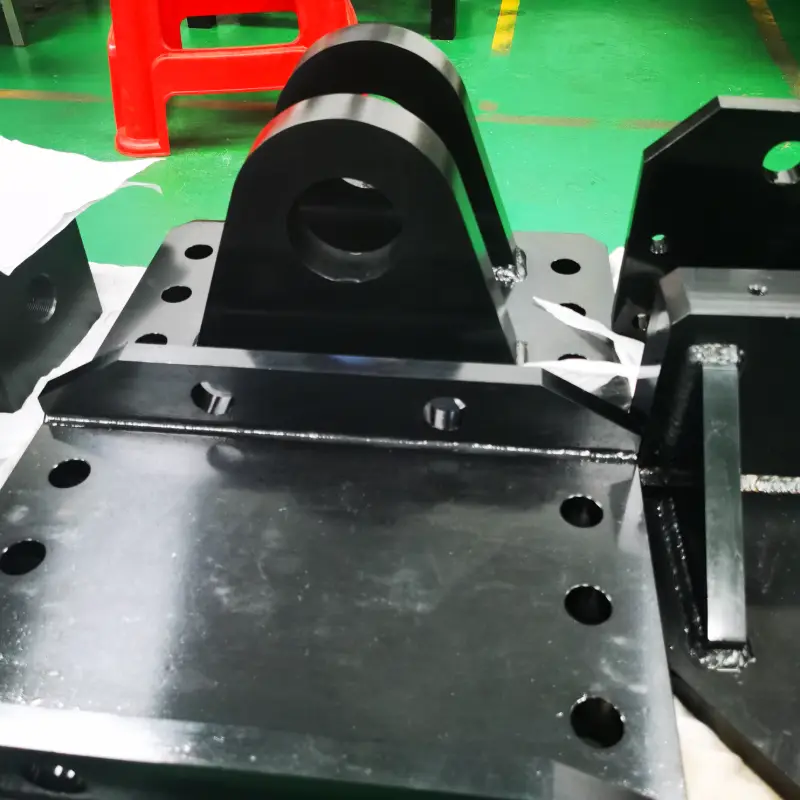
- Thick-plate components requiring precision-machined mounting surfaces and holes
These applications require the material to withstand static loading while also remaining suitable for welding, cutting, drilling, milling, and assembly. In such cases, the balanced properties of S355 are often more valuable than high hardness alone.
Common S355 Grades
S355JR
S355JR requires a minimum Charpy V-notch impact energy of 27 J at 20°C. It is commonly used for building structures, equipment frames, general brackets, and mechanical components operating at normal ambient temperatures.
S355J0
S355J0 requires a minimum impact energy of 27 J at 0°C. Compared with S355JR, it is more suitable for outdoor equipment and structural applications exposed to moderately lower temperatures.
S355J2
S355J2 requires a minimum impact energy of 27 J at −20°C. It is suitable for low-temperature environments, heavy welded structures, and components where resistance to brittle fracture is more important.
S355K2
S355K2 requires a minimum impact energy of 40 J at −20°C. Its low-temperature impact requirement is higher than that of S355J2, making it suitable for critical load-bearing structures and more demanding impact conditions.
S355N and S355NL
These grades are normalized or normalized-rolled fine-grain structural steels. Their microstructure and mechanical properties are generally more uniform, making them suitable for thick plates, large welded components, and applications requiring reliable low-temperature toughness.
S355M and S355ML
S355M and S355ML are produced through thermomechanical rolling. Controlled rolling temperature and deformation create a fine-grain microstructure with good weldability and toughness.
These grades are commonly used in bridges, large steel structures, and lifting equipment. S355 supplied in the +N or +M condition generally offers more consistent toughness than basic as-rolled material.
Main Mechanical Properties of S355 steel
The following values describe typical S355 performance. Actual results vary according to the specific grade, product thickness, rolling condition, and sampling direction.
| Property | Typical or Specified Value | Engineering Significance |
|---|---|---|
| Yield strength | Minimum of approximately 355 MPa for thinner sections | Determines the load at which permanent deformation begins |
| Tensile strength | Typically 470–630 MPa | Indicates the maximum stress the material can withstand before tensile fracture |
| Elongation after fracture | Typically about 20%–22% | Indicates the material’s ability to undergo plastic deformation |
| Charpy impact energy | 27 J or 40 J | Indicates the material’s ability to absorb impact energy at a specified temperature |
| Elastic modulus | Approximately 210 GPa | Determines elastic deformation under load |
| Brinell hardness | Typically about 150–200 HB | A general reference that affects cutting force and tool wear |
| Density | Approximately 7.85 g/cm³ | Used to calculate component weight, transportation loads, and fixturing requirements |
Some S355 plates between 5 and 16 mm thick may provide a minimum yield strength of 355 MPa, a tensile strength of 470–630 MPa, and a minimum elongation of approximately 21%–22%. However, the guaranteed minimum yield strength may decrease as thickness increases.
Understanding the Different Strength Properties of S355
“Strength” is not a single material property. Yield strength, tensile strength, impact toughness, hardness, and stiffness describe how the material responds under different loading conditions.
Yield Strength: Minimum of Approximately 355 MPa
Yield strength is the stress at which a material begins to undergo permanent deformation.
When a machine base, bracket, or connection plate is loaded below its yield strength, it will normally return to its original shape after the load is removed. Once the yield point is exceeded, the component may retain permanent bending or dimensional distortion.
The yield strength of S355 is produced through several strengthening mechanisms:
- Solid-solution strengthening from manganese and other elements
- Precipitation strengthening from niobium, vanadium, or titanium
- Grain-boundary strengthening through grain refinement
- A relatively uniform ferrite-pearlite microstructure produced by rolling or normalizing
These mechanisms increase strength without relying entirely on higher carbon content, which would otherwise reduce weldability.
From a CNC machining perspective, higher yield strength means that more force is required to form and separate the chip. If the machine, tool, or workholding system lacks sufficient rigidity, tool deflection, chatter marks, and dimensional variation may occur.
Tensile Strength: Approximately 470–630 MPa
Tensile strength is the maximum stress the material can withstand during a tensile test before fracture.
Because tensile strength is higher than yield strength, S355 can continue carrying additional load after plastic deformation begins. However, tensile strength should not normally be used as the allowable working limit in structural design because significant permanent deformation occurs before this value is reached.
Tensile strength is particularly relevant to:
- Connection plates subjected to tensile loading
- Lifting and hoisting structures
- Load-bearing areas near welded joints
- Support components used in construction and heavy machinery
In machining, higher tensile strength generally increases the mechanical load on the cutting edge. Excessive instantaneous cutting loads should be avoided during deep-slot milling, full-width cutting, and heavy roughing.
Impact Toughness: 27 J or 40 J
Impact energy is not a measure of static strength. It represents the amount of energy a material can absorb under sudden loading at a specified temperature.
One of the main differences between S355JR, J0, J2, and K2 is the required impact-test temperature and minimum absorbed energy. For example, S355J2 must provide at least 27 J at −20°C, making it more suitable than S355JR for cold environments or structures exposed to sudden impact.
Impact toughness is influenced by:
- Phosphorus, sulfur, and nonmetallic inclusion content
- Grain size
- The shape and distribution of ferrite and pearlite
- Rolling and normalizing processes
- The microstructure of the weld heat-affected zone
Fine grains generally improve both strength and toughness, while coarse grains, impurities, and nonuniform microstructures can increase the risk of brittle fracture.
Impact toughness does not directly determine cutting speed in the same way as hardness, but it is important for material selection. A low-temperature component selected only according to its 355 MPa yield strength may still fail to meet operating requirements if the required impact grade is ignored.
Hardness: Typically About 150–200 HB
Hardness indicates a material’s resistance to indentation, scratching, and localized plastic deformation.
S355 is a structural steel whose standards primarily guarantee yield strength, tensile strength, and toughness rather than a fixed hardness value. Therefore, 150–200 HB should be treated as a typical reference range, not as a universal acceptance requirement for every S355 product.
The hardness of S355 is mainly affected by:
- Carbon content
- Manganese and microalloying elements
- The proportion of ferrite and pearlite
- Grain size
- Cooling rate and localized thermal cycles
A higher pearlite content generally increases strength and hardness. Grain refinement can also increase strength while maintaining relatively good toughness.
Flame-cut or welded edges undergo rapid heating and cooling, which may locally alter the microstructure and produce a heat-affected zone that is harder than the base material. This is one reason cutting tools may wear rapidly or chip when machining thermally cut edges.
Stiffness: Elastic Modulus of Approximately 210 GPa
Stiffness describes a component’s resistance to elastic deformation. The relevant material property is the elastic modulus.
S355 has an elastic modulus of approximately 210 GPa, which is mainly determined by the atomic bonding characteristics of iron-based materials. Carbon and manganese content, grain size, and normal rolling microstructures can significantly affect strength and hardness, but they have only a limited effect on elastic modulus.
This means that although S355 has a higher yield strength than S235, the two materials will not show an equally large difference in elastic deflection when the component dimensions and applied load are the same.
Component stiffness is improved primarily by:
- Increasing plate thickness or cross-sectional size
- Adding reinforcing ribs
- Reducing unsupported or cantilevered length
- Optimizing the cross-sectional geometry
- Improving support and connection conditions
Therefore, when a machine base or long bracket experiences excessive elastic deflection, simply replacing a lower-strength steel with S355 may not solve the problem. The structural dimensions and support arrangement must also be reviewed.
Common S355 Delivery Conditions
+AR: As-Rolled Condition
+AR indicates that the steel is supplied in the as-rolled condition. It is generally economical and suitable for standard mounting plates, general frames, and structural components without demanding low-temperature toughness requirements.
For large precision-machined plates, residual stress and microstructural variation in the as-rolled material may increase the risk of distortion after machining.
+N: Normalized or Normalized-Rolled Condition
+N indicates a normalized or normalized-rolled delivery condition. Controlled heating, rolling, and cooling refine the grain structure and improve the uniformity of the mechanical properties.
S355J2+N is commonly used for thick plates, low-temperature structures, and components requiring improved weldability and dimensional stability.
It is important to distinguish between the following designations:
- S355N is a specific fine-grain structural steel grade.
- S355J2+N is S355J2 supplied in a normalized or normalized-rolled condition.
The two designations should not be treated as interchangeable.
+M: Thermomechanically Rolled Condition
+M indicates thermomechanical rolling. This process precisely controls deformation temperature and cooling to produce a fine-grain microstructure, often achieving the required strength with a relatively low carbon equivalent.
These materials are suitable for large welded structures, bridges, and components where the properties of the weld heat-affected zone are important.
Standard S355 grades generally do not rely on quenching and tempering to achieve their specified mechanical properties. Stress-relief treatment may be considered for large welded assemblies or precision-machined components, but the temperature must be controlled to avoid changing the original microstructure and mechanical performance.
Weldability of S355
S355 generally has good weldability and can be joined using common processes such as MAG/MIG welding, shielded metal arc welding, flux-cored arc welding, and submerged arc welding.
Carbon-manganese and fine-grain S355 grades can normally be welded using conventional procedures. Materials supplied in the +N or +M condition may also provide more consistent toughness.
The need for preheating should not be determined by the designation “S355” alone. Other factors must be evaluated, including:
- Material thickness
- Carbon equivalent
- Joint restraint
- Hydrogen content of the filler metal
- Ambient temperature
- Heat input and interpass temperature
Thin sections, low carbon equivalents, and lightly restrained joints are generally easier to weld. Thick plates, highly restrained assemblies, and welding in cold environments may require preheating and tighter control of interpass temperature.
When a welded structure also requires CNC machining, welding, straightening, and any necessary stress-relief treatment should normally be completed before the mounting surfaces, locating holes, and critical fits are finish-machined. This sequence reduces the effect of welding distortion on final dimensional accuracy.
Approximate S355 Grades in Other Countries
Materials from different standards should not be considered fully equivalent based only on yield strength. The following grades may be used for preliminary comparison, but chemical composition, applicable thickness, impact-test temperature, delivery condition, and product standard must be checked before substitution.
| Country or Region | Approximate or Historical Comparable Grade | Notes |
|---|---|---|
| Germany | St52-3 | An older DIN grade commonly compared with S355 |
| France | E36 series | Must be selected according to impact grade and delivery condition |
| United Kingdom | BS 4360 Grade 50 series | An approximate grade from the former British standard |
| Italy | Fe510 series | An older designation from the UNI system |
| Poland | 18G2A | Mainly used for historical or legacy-standard comparison |
| Czech Republic | ČSN 11 523 | A comparable grade from the former ČSN system |
| United States | ASTM A572 Grade 50 | Similar yield strength level, but not directly equivalent |
| China | Q355 series | Quality grade, impact temperature, and applicable standard must be checked |
| Japan | SM490 series | Similar strength level, but composition and impact requirements may differ |
Historical grade-conversion references should be treated as approximate only. A material described as the “closest equivalent” may still differ in chemical composition, impact properties, thickness limitations, or delivery condition.
CNC Machinability of S355
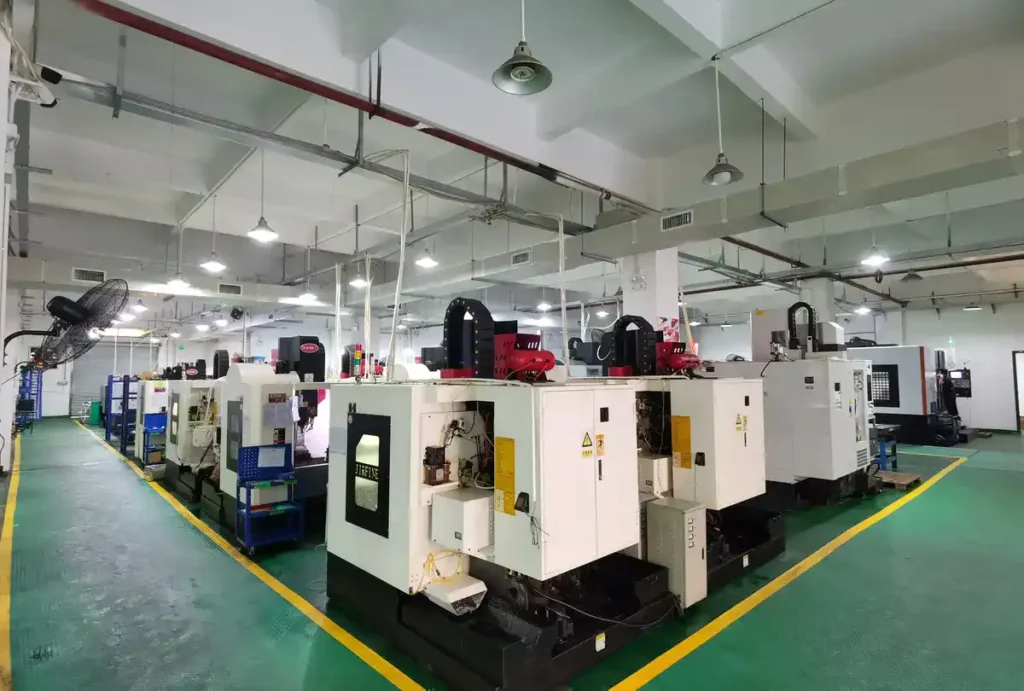
S355 can be CNC milled, turned, drilled, bored, and tapped using conventional tooling designed for steel.
Its machining difficulty is generally higher than that of lower-strength mild steel but lower than that of hardened steel or high-alloy tool steel. Common machining characteristics include:
- Relatively high cutting forces
- Increased spindle load during roughing
- Accelerated tool wear caused by mill scale
- Possible localized hardening along thermally cut edges
- Distortion of large plates as residual stress is released
- Dimensional instability in welded components depending on welding sequence
S355 itself is not normally considered a difficult-to-machine material. In production, many machining problems are caused not by the steel grade itself but by the condition of the blank, thermally affected surfaces, insufficient workholding rigidity, or an unsuitable machining sequence.
General CNC Milling Parameters for S355
When machining S355 with coated carbide end mills, the following values can be used as initial settings under stable, general-purpose conditions.
| Machining Parameter | Recommended Starting Range |
|---|---|
| Cutting speed | 180–280 m/min |
| Feed per tooth | 0.05–0.18 mm/tooth |
| Axial depth of cut | 0.3–1.0 times the tool diameter |
| Radial width of cut | 10%–40% of the tool diameter |
Cutting speed may be increased during stable side milling, when using a smaller radial engagement, or when machining with high-performance coated tooling.
When cutting through mill scale, flame-cut edges, deep slots, interrupted surfaces, or components with limited rigidity, the cutting speed may need to be reduced to approximately 120–180 m/min.
These values are not fixed standards for S355. Cutting speed and feed should be adjusted according to material hardness, delivery condition, tool material, cutter geometry, cooling method, and workholding stability.
Tool Selection and Cooling
Carbide tools designed for ISO P steel materials are generally preferred for machining S355.
Roughing tools should provide:
- Strong cutting edges
- Good resistance to chipping
- Adequate chip clearance
- Wear-resistant coatings
Finishing tools should prioritize:
- Sharp cutting edges
- Low tool runout
- High holder rigidity
- Dimensional consistency
Coatings such as TiCN, TiAlN, and AlTiN can improve wear resistance and high-temperature performance. However, the final selection should be based on the tool manufacturer, machining operation, cutting conditions, and coolant strategy.
Coolant helps control cutting temperature, improve lubrication, and remove chips. During deep-hole drilling, narrow-slot milling, or high-material-removal operations, coolant should reach the cutting edge effectively to prevent chip buildup and localized overheating.
Common Problems When Machining S355
Tool Wear Caused by Mill Scale
Hot-rolled blanks often have a layer of mill scale. This surface can be harder and more abrasive than the underlying steel.
The first cutting pass should engage below the scale rather than allowing the cutting edge to rub continuously along the surface.
Localized Hardening Along Thermally Cut Edges
Flame cutting and plasma cutting create a heat-affected zone. Rapid localized cooling may alter the microstructure and increase edge hardness, leading to premature tool wear, chipping, or unstable cutting.
When possible, the cut edge should be cleaned before machining, or sufficient machining allowance should be included during quoting and process planning.
Chatter and Surface Marks
Excessive tool overhang, inadequate workpiece support, or excessive radial engagement can cause vibration.
Machining stability can be improved by shortening tool overhang, increasing workpiece support, adjusting spindle speed, or reducing radial width of cut.
Burr Formation
Burrs commonly form at drill exits, along thin plate edges, and around intersecting holes.
Sharp tools, suitable feed rates, and planned chamfering operations can reduce the amount of manual deburring required.
Workpiece Distortion
Large plates, long components, and welded structures may distort as residual stress is released during material removal.
Common control methods include:
- Removing material symmetrically from both sides
- Leaving sufficient finishing allowance
- Re-fixturing the part after rough machining
- Separating roughing and finishing operations
- Machining critical mounting surfaces and holes last
- Evaluating stress-relief treatment when necessary
Common CNC-Machined S355 Components
S355 is commonly used to manufacture:
- Machine bases and mounting platforms
- Large connection plates
- Load-bearing brackets
- Flanges and bearing housings
- Lifting-equipment components
- Conveyor-system supports
- Mounting surfaces on welded frames
- Locating and fitted holes in thick steel plates
These components often have simultaneous load-bearing, welding, and assembly requirements. Machining quality must therefore address not only individual dimensions but also hole spacing, flatness, perpendicularity, and datum consistency.
For welded frames, a practical process is to complete welding and straightening first, then machine mounting surfaces, locating holes, and fitted areas. This sequence compensates for dimensional changes caused by welding heat.

What Should Be Specified When Purchasing S355 Machined Parts?
Simply specifying “S355” on a drawing is usually not enough. Requests for quotation and purchasing documents should identify the following information whenever possible:
| Item | Recommended Information |
|---|---|
| Material grade | S355JR, S355J2, S355N, or another specific grade |
| Delivery condition | +AR, +N, or +M |
| Material thickness | Required to determine minimum yield strength and applicable standard requirements |
| Blank type | Plate, bar, structural section, or welded assembly |
| Material certification | Whether an EN 10204 3.1 certificate is required |
| Critical tolerances | Hole position, flatness, perpendicularity, and fitted dimensions |
| Surface requirements | Surface roughness, chamfers, deburring, and surface treatment |
| Special requirements | Low-temperature impact testing, carbon equivalent, or post-weld treatment |
If flame-cut or plasma-cut blanks are permitted, the required machining allowance and edge quality should also be specified.
Thermal cutting can reduce material preparation and rough-machining costs, but the heat-affected zone may increase cutting loads and tool wear.
How Weldo Machining Processes S355 Components
Before developing the manufacturing process, Weldo Machining confirms the specific S355 grade, plate thickness, delivery condition, blank type, and critical tolerances. Cutting, workholding, and machining sequences are then planned according to the component geometry.
Standard plate components can be prepared by sawing, flame cutting, or plasma cutting, followed by face milling, drilling, boring, and contour machining. Large machine bases and welded frames are typically welded and straightened first, with mounting surfaces, locating holes, and critical datums machined afterward.
Key process controls include:
- Adjusting first-pass parameters for mill scale and thermally cut edges
- Selecting carbide tools suitable for ISO P steel materials
- Separating roughing, semi-finishing, and finishing operations
- Removing material symmetrically from large plates
- Re-fixturing or inspecting the component after rough machining
- Machining critical holes and mounting surfaces last
- Retaining a temporary process base on complex parts and removing it by wire EDM after machining
- Inspecting hole spacing, flatness, and datum locations
A temporary process base can improve workholding rigidity for complex components. After the main machining operations are complete, the base can be separated by wire electrical discharge machining, reducing repeated setups and the time required to remove excess material by conventional milling.
Conclusion
S355 is a European structural steel that offers a practical balance of strength, toughness, weldability, and machining cost. It is widely used for machine bases, connection plates, load-bearing brackets, and large welded assemblies. Successful material selection and CNC machining require the specific grade, thickness, and delivery condition to be clearly defined, while tooling, workholding, and roughing-to-finishing sequences should be planned around material strength, blank condition, and residual stress to control tool wear, workpiece distortion, and final dimensional accuracy.