Definition of Phosphor Bronze
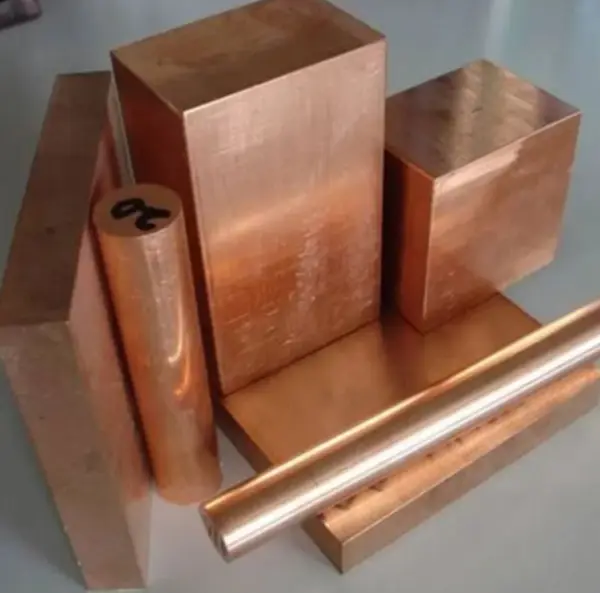
Phosphor bronze is a copper-based alloy to which tin and phosphorus have been added. The addition of phosphorus significantly enhances its strength, elasticity, wear resistance, and fatigue resistance; furthermore, the oxide film formed during the process boosts its corrosion resistance, resulting in overall performance superior to that of ordinary bronze.
How Phosphor Bronze is Manufactured
The production of phosphor bronze uses high-purity copper as the base, with tin and copper-phosphorus alloy added in proportion. Through high-temperature melting, deoxidation, and uniform stirring, phosphor bronze ingots are formed. During the process, temperature and aging must be strictly controlled to ensure uniform mixing of phosphorus and copper. Uneven mixing can lead to performance differences in different areas of the material. The chemical reaction between phosphorus and copper forms strengthening phases, ensuring the material’s strength and corrosion resistance.
After melting, the ingots undergo multiple rolling and heat treatment processes to optimize performance: hot rolling provides initial shaping and eliminates casting defects; cold rolling refines grains through plastic deformation, significantly improving strength, elasticity, and surface precision; annealing reduces internal stress, enhancing ductility and subsequent machinability. Finally, surface passivation or coating treatments are applied, resulting in a high-performance, wear-resistant elastic copper alloy.
Chemical Composition of Phosphor Bronze
Phosphor bronze is a copper-based alloy mainly composed of copper, tin, and phosphorus. Copper accounts for more than 90%, while tin improves strength and corrosion resistance. Phosphorus acts as a deoxidizer and strengthening element, improving fluidity in the molten state and enhancing wear resistance. Tin content typically ranges from 3.5% to 9.0%, and phosphorus content is generally between 0.03% and 0.35%. Additionally, trace amounts of lead, iron, zinc, and other impurity elements are present. The exact composition varies depending on the grade. The following is a reference table of typical compositions:
| Grade (%) | Cu | Sn | P | Pb(≤) | Fe(≤) | Zn(≤) |
|---|---|---|---|---|---|---|
| C50500 | ≈97 | 1.0–1.7 | 0.03–0.35 | 0.05 | 0.10 | 0.30 |
| C51000 | ≈93 | 4.2–5.8 | 0.03–0.35 | 0.05 | 0.10 | 0.30 |
| C51100 | ≈94 | 3.5–4.5 | 0.03–0.35 | 0.05 | 0.10 | 0.30 |
| C51900 | ≈92 | 5.5–7.0 | 0.03–0.35 | 0.05 | 0.10 | 0.30 |
| C52100 | ≈90 | 7.0–9.0 | 0.03–0.35 | 0.05 | 0.10 | 0.30 |
| C54400 | 81.55 | 9.0–11.0 | 0.03–0.35 | 3.5–5.5 | 0.10 | 1.5 |
What is the Density of Phosphor Bronze
Due to different composition formulas, phosphor bronze does not have a fixed density. According to the UNS standard, the density of commonly used phosphor bronze is generally between 8.80–8.86 g/cm³, with an overall range of about 8.7–8.9 g/cm³.
| Item | C50500 | C51000 | C51100 | C51900 | C52100 | C54400 |
|---|---|---|---|---|---|---|
| Density (g/cm³) | 8.86 | 8.86 | 8.86 | 8.84 | 8.80 | 8.80 |
What are the Physical Properties of Phosphor Bronze
Phosphor bronze has excellent elasticity and elastic stability. This is mainly due to the presence of 3.5%–9.0% tin (Sn) and 0.03%–0.35% phosphorus (P): tin forms an α solid solution with copper, while phosphorus forms a Cu₃P strengthening phase. This enables the material to achieve an elastic limit of 350–450 MPa and a fatigue strength of 150–200 MPa. It can withstand 10⁷ cyclic loads without permanent deformation in environments ranging from -40°C to 120°C, with an elastic recovery rate ≥95%. It is widely used in electronic connector springs, precision springs, and relay contacts.
Phosphor bronze also exhibits excellent wear resistance and anti-friction performance, due to its uniform and dense α + Cu₃P structure. The Cu₃P phase has a hardness of HV180–220, reducing the friction coefficient to 0.15–0.25 (without lubrication). Trace phosphorus (0.03%–0.35%) enhances anti-seizure capability. Under conditions of 50N load and 0.5 m/s sliding speed, wear is ≤0.005 mm/1000h, making it suitable for bearing bushings, worm gears, and thrust washers.
In terms of corrosion resistance, phosphor bronze has a copper content ≥90%, forming a 2–5 μm thick Cu₂O protective film in air, fresh water, and seawater, effectively resisting Cl⁻ and SO₄²⁻ corrosion. In 3.5% NaCl solution, the corrosion rate is ≤0.01 mm/a. Tin (3.5%–9.0%) further improves pitting resistance, making it suitable for marine and outdoor applications.
Phosphor bronze also has high strength and hardness. Phosphorus (0.03%–0.35%) acts as a deoxidizer, removing ≤0.01% oxygen impurities and preventing porosity defects. Combined with tin solid solution strengthening and Cu₃P dispersion strengthening, it achieves tensile strength of 400–650 MPa, Brinell hardness of HB100–150, and elongation ≥15%, providing both strength and toughness.
Additionally, phosphor bronze maintains good electrical and thermal conductivity. With copper content ≥90%, its electrical conductivity reaches 15%–25% IACS, and thermal conductivity is 200–230 W/(m·K). Although tin and phosphorus slightly reduce conductivity, they significantly improve strength and elasticity, making it suitable for electrical connectors, conductive springs, and heat dissipation components.
The following are reference ranges for physical properties:
| Item | Value Range / Condition |
|---|---|
| Elastic limit | 350 ~ 450 MPa |
| Fatigue strength | 150 ~ 200 MPa |
| Elastic recovery rate | ≥95% |
| Tensile strength | 400 ~ 650 MPa |
| Brinell hardness | HB 100 ~ 150 |
| Elongation | ≥15% |
| Friction coefficient | 0.15 ~ 0.25 (dry) |
| Wear | ≤0.005 mm / 1000 h (50N, 0.5 m/s) |
| Corrosion rate | ≤0.01 mm/a (3.5% NaCl) |
| Electrical conductivity | 15% ~ 25% IACS |
| Thermal conductivity | 200 ~ 230 W/(m·K) |
What is the Recycling Price of Phosphor Bronze
Based on the U.S. scrap market, phosphor bronze recycling prices are typically quoted in USD/lb as follows: clean phosphor bronze scrap ranges from 2.00–2.30 USD/lb, general phosphor bronze scrap is 1.80–2.00 USD/lb, and lead-containing phosphor bronze scrap is 1.70–1.90 USD/lb. Prices fluctuate with LME copper and tin prices, and actual transaction prices depend on scrap purity, cleanliness, purchase volume, and regional recycler policies.
Does Phosphor Bronze Rust
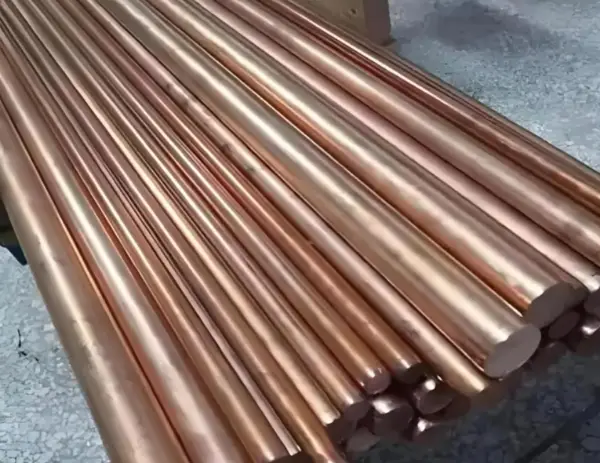
Phosphor bronze does not rust like steel. With a copper content ≥90%, it quickly forms a dense 2–5 μm Cu₂O oxide protective film in air, fresh water, and seawater environments. This effectively resists corrosion from chloride ions and sulfate ions. In a 3.5% NaCl simulated seawater solution, the corrosion rate is ≤0.01 mm/a. Only under long-term extreme conditions may patina-like corrosion products form, rather than rust, giving it excellent corrosion resistance.
What is phosphor bronze mainly used for?
1、 Electronic and Electrical Industry
Relying on its high elastic recovery rate, low contact resistance, and excellent fatigue resistance (up to millions of cycles), phosphor bronze can be made into strips and wires. It is widely used in connector terminals, switch relay springs, conductive elastic components, and lead frames, suitable for high-frequency insertion and removal, micro-load, and long-term energized conditions.
2、 Mechanical Manufacturing Industry
Phosphor bronze can also be made into sliding bearings, bushings, worm gears, and various wear-resistant structural parts. Due to its inherent wear resistance, excellent self-lubricating ability, and high strength, it can withstand certain loads under lubricated conditions, operate smoothly without impact sparks, and reduce explosion risks.
3、 Automotive and Transportation Industry
Due to its excellent temperature resistance, oil resistance, vibration resistance, and fatigue resistance, phosphor bronze is mainly used in automotive connectors, electrical terminals, engine and chassis bushings, as well as battery connectors and high-voltage conductive components in new energy vehicles. It maintains stable elasticity and conductivity under high and low temperature cycles and complex vibration environments.
4、 Aerospace and Marine Industry
Phosphor bronze has excellent resistance to seawater and salt spray corrosion, as well as long-term dimensional stability. It is widely used in ship shaft sleeves, valve sealing components, and marine sensor parts. It is also commonly used in aerospace fields such as instrument elastic elements, sensor diaphragms, and precision connectors.
4、 Precision Instruments and Musical Instrument Industry
In precision instruments and high-end musical instruments, phosphor bronze is used for pressure sensor diaphragms, watch components, and various elastic elements (such as reeds, springs, bronze guitar strings/strings) due to its high elastic precision, low hysteresis, and stable vibration performance. It ensures measurement and mechanical accuracy while improving tone stability and service life.
6、 Daily Hardware and High-End Precision Components
In high-end hardware and consumer electronics, phosphor bronze is mainly used in precision spring components, hinges, and transmission parts, such as eyeglass hinges, luggage locks, and structural parts of digital products. It combines corrosion resistance, elastic life, and surface quality to meet the design requirements of miniaturization, high-frequency use, and high reliability.
Is phosphor bronze expensive?
Priced in USD/lb, phosphor bronze is a mid-to-high-end copper alloy. As of March 2026, the mainstream grades C51000 and C51900 in the U.S. market are approximately $2.95–$4.35/lb. The cost is mainly determined by copper and tin raw material prices and is also affected by alloy grade, processing precision, procurement scale, and futures fluctuations. Overall, it is higher than ordinary brass, similar to electrolytic copper, and much lower than beryllium copper.
Difference between phosphor bronze and bronze
In appearance, ordinary bronze is usually yellowish bronze in color, while phosphor bronze tends to be rose red or light purplish red, with a more uniform and delicate luster. Phosphor bronze has significantly improved strength, hardness, wear resistance, and elasticity due to the addition of phosphorus, and is mostly used in precision industrial elastic parts and wear-resistant components, while ordinary bronze is mainly used in general corrosion-resistant and decorative applications.
Difference between phosphor bronze and brass
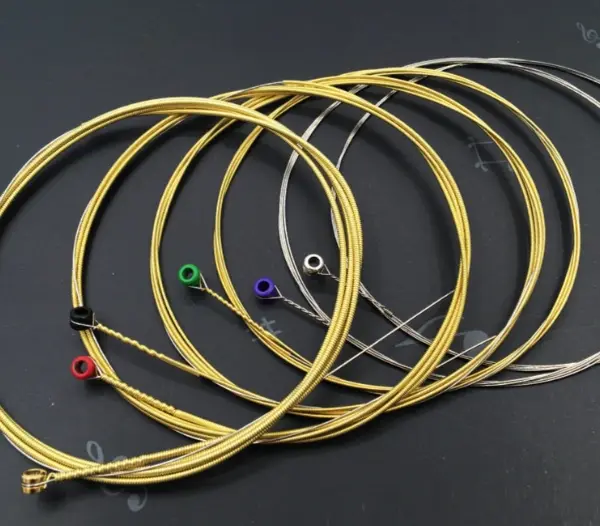
Phosphor bronze appears rose red or light purplish red, while brass is bright golden yellow. Phosphor bronze has excellent elasticity, wear resistance, and corrosion resistance, and is widely used in precision elastic components, bearings, connectors, etc. Brass has good machinability and lower cost, and is commonly used in sanitary hardware, decorative parts, valves, pipes, and other general structural components.
Is phosphor bronze harder than stainless steel?
In terms of tensile strength: phosphor bronze (C5191/C5210) is about 450–880 MPa; stainless steel (304/316) is about 580–1180 MPa, and stainless steel is generally higher.
Yield strength: phosphor bronze is about 170–620 MPa; stainless steel is about 200–800 MPa+, and stainless steel has stronger rigidity and deformation resistance.
Hardness: phosphor bronze (HV 80–220); stainless steel (HV 150–300+), stainless steel is harder with a higher wear resistance limit.
Elasticity/toughness: phosphor bronze has an elastic modulus of about 110 GPa, high elongation, and much better fatigue and repeated bending performance than stainless steel; stainless steel has higher rigidity, lower elasticity, and is more prone to brittle fracture.
Phosphor bronze is suitable for elastic parts, connectors, springs, and wear-resistant bearings; stainless steel is suitable for structural parts, high-strength bolts, pressure vessels, and high-load mechanical components.
Machining Processes Supported by Phosphor Bronze
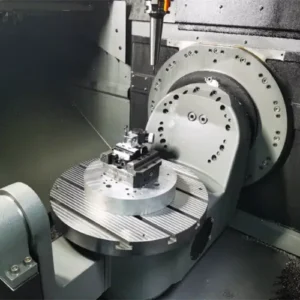
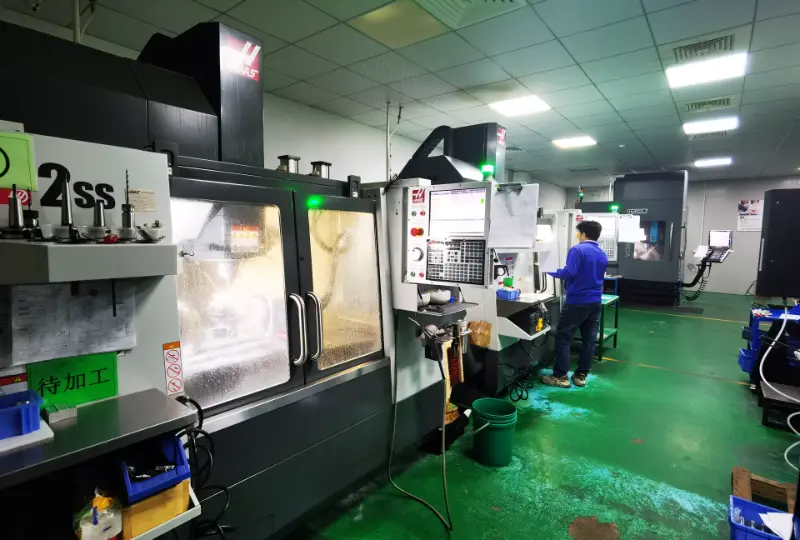
- CNC Turning: Suitable for machining rotating precision parts such as bushings and valve stems, with excellent cutting performance. However, be cautious that high-speed machining can easily cause built-up edge formation, and thin-walled parts may deform during clamping. YT15/YW2 carbide tools (preferably TiN-coated) are recommended, with spindle speeds controlled at 800-1200 r/min. For thin-walled parts, use soft jaws for clamping and add axial support.
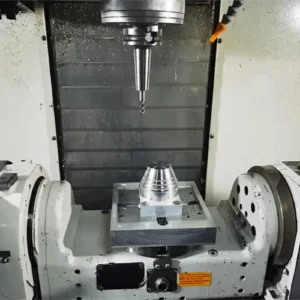
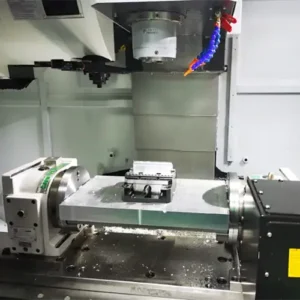
- CNC Milling: Can perform milling of flat surfaces, grooves, and complex contours, used for machining sliding blocks and irregular structural parts. However, thin-walled parts tend to vibrate during milling, and machining complex contours can lead to dimensional deviations. YG8 carbide end mills are recommended for flat milling, while TiAlN-coated solid carbide end mills are ideal for contour milling, using climb milling, and adding auxiliary support for thin-walled parts.
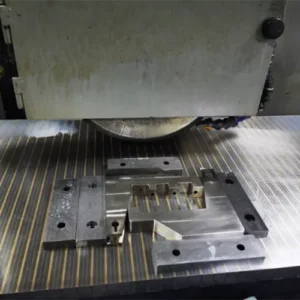
- Grinding: Achieves high-precision dimensions and low surface roughness, suitable for precision components such as bearings and guide bushings. It may cause grinding burns, micro-cracks, and surface scratches. Solutions include using WA46K white alumina grinding wheels for external cylindrical grinding, PA60J chrome alumina grinding wheels for internal cylindrical grinding, and using oil-based cutting fluids. Check and dress the grinding wheel after processing 5-8 pieces.
- Stamping: Suitable for high-speed mass production of electronic components like connector terminals and contact springs, with excellent plasticity and elasticity. During stamping, issues such as springback, edge burrs, and warping of thin materials may occur. Molds can be made from Cr12MoV material (TiN-coated), with the gap set to 10%-15% of the material thickness, and compensating for springback with a pre-set angle. Electrochemical deburring is recommended after stamping.
- Wire EDM (Electrical Discharge Machining): Used for machining narrow slits, irregular holes, and complex contours with high precision and no cutting stress. However, fast wire cutting speeds are slow, and thick materials may cause wire deflection. For slow-speed wire EDM, use 0.18-0.2mm molybdenum wire; for fast-speed wire EDM, use 0.1-0.15mm brass wire or zinc-coated brass wire. Optimize discharge parameters to reduce wire deflection and wear.
- Boring: Used for precision finishing of key hole systems in hydraulic valve bodies, precision bushings, etc., to ensure hole system accuracy. There may be issues such as rough hole walls, concentricity deviations, and vibration during deep hole machining. It is recommended to use YT15 carbide boring tools (TiC-coated), with deep holes processed using deep-hole boring tools with internal cooling channels. Perform boring in stages and enhance workpiece clamping.
- Knurling: Used for texturing the surfaces of shafts and handles to increase grip, with good plasticity adaptability. However, care must be taken to avoid unclear knurling patterns, local chipping, and damage caused by improper knurling pressure. Cr12 material knurling wheels (modulus 0.3-0.6mm) are recommended, with knurling pressure set between 800-1200N. Before processing, polish the workpiece surface and apply machine oil for lubrication.
- Bending: Suitable for making bent shell parts such as shielding covers and spring brackets, with controllable springback. However, during bending, issues such as springback, cracking at the bending area, and deformation of thin-walled parts may occur. It is recommended to use Cr12MoV material molds for bending, with the edge radius of the blade being 1.5-2 times the material thickness. Leave room for springback and perform aging treatment at 180-220°C for 2 hours after bending.
What are the shapes of phosphor bronze materials?
Phosphor Bronze Bars
Phosphor bronze bars are the most commonly used structural profiles, primarily consisting of round bars, square bars, and hexagonal bars, with diameters/side lengths typically ranging from 1mm to 150mm. They are divided into categories such as drawn bars, ground bars, and turned bars. Drawn bars offer high dimensional accuracy and a smooth surface, making them suitable for mass CNC turning into bushings, small gears, and fasteners. Ground bars achieve coaxiality within 0.01mm and are mainly used for precision bearings, valve stems, guide posts, and other parts with strict requirements for dimensions and roundness. Their dense microstructure effectively improves wear resistance and fatigue life.
Phosphor Bronze Sheets
Phosphor bronze sheets are mainly cold-rolled thin sheets and medium-thick sheets, with common thicknesses ranging from 0.1mm to 20mm and widths up to 600mm or more. The surface is usually bright cold-rolled or brushed. Thin sheets are primarily used for electronic connectors, contact springs, and shielding covers. With high elasticity and good stamping formability, they are suitable for high-speed continuous die processing. Medium-thick sheets are commonly used for mechanical wear-resistant pads, sliding blocks, and mold inserts. After milling and grinding, they exhibit excellent dimensional stability and are not easily seized or scratched under heavy load sliding conditions, making them a popular material for industrial wear-resistant structural components.
Phosphor Bronze Strips
Phosphor bronze strips are high-precision cold-rolled profiles, with thicknesses ranging from 0.05mm to 2.0mm and widths from 10mm to 500mm, supplied in coil form. They are a core material in the electronic and electrical industries. With excellent elastic recovery and bending performance, they can withstand repeated bending thousands of times without breaking. They are mainly used for connector terminals, relay springs, switch springs, and mobile phone shielding components. Additionally, their excellent conductivity and corrosion resistance ensure stable electrical contact performance in high-frequency, high-humidity, and salt-spray environments.
Phosphor Bronze Wires
Phosphor bronze wires have diameters ranging from 0.08mm to 6mm and are available in hard, semi-hard, and soft states, supplied as coils or straight rods. They balance conductivity, elasticity, and weldability. Fine diameter wires are mainly used for guitar strings, musical instrument strings, electronic leads, spring wires, and woven mesh conductors, with good brazing and crimping performance. Medium-sized wires can be wound into precision springs and conductive springs, widely used in micro motors, instruments, and sensors. Their uniform metallurgical structure ensures consistent spring force and long-term fatigue life.
Phosphor Bronze Tubes
Phosphor bronze tubes are mainly seamless capillary tubes and thin-walled sleeves, with outer diameters ranging from 1mm to 50mm and wall thicknesses from 0.1mm to 5mm, featuring smooth inner walls and high density. They are primarily used for hydraulic pneumatic fittings, pressure measurement tubes, and heat transfer pipes, offering excellent oil resistance, vibration resistance, and sealing performance in hydraulic systems. Due to their good machinability, they can be processed into bushings, liners, and throttle valve components, suitable for precision fluid control and lubrication structures. They are widely applied in shipbuilding and instrumentation equipment.
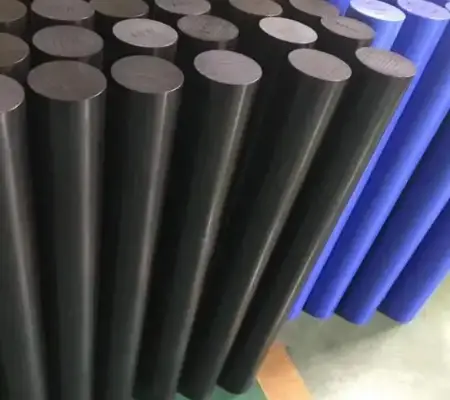
What are the alternative materials for phosphor bronze?
POM
With excellent self-lubricating properties, wear resistance, and rigidity, POM has high fatigue strength and a low friction coefficient. It can replace phosphor bronze in wear-resistant transmission parts such as gears, bearings, sliding blocks, and fasteners. It is cost-effective and does not require lubrication, making it the most commonly used plastic substitute for copper alloys in mechanical structures.
PA66
PA66 offers good toughness, impact resistance, and excellent machinability. When reinforced with glass fibers, its strength is significantly increased. It is wear-resistant and helps reduce vibration and noise, making it suitable for replacing phosphor bronze in bushings, rollers, and structural brackets. It performs stably under moderate loads and in vibrating environments, offering a great cost-performance ratio.
PEEK
PEEK is high-temperature resistant, corrosion-resistant, has high strength, and excellent wear resistance. Its overall performance is close to that of metals, making it suitable to replace phosphor bronze in high-end applications requiring extreme reliability, such as seals, bearing cages, and precision structural components, especially in high-temperature, high-pressure, and harsh chemical environments.
Copper-Nickel-Tin Alloy
As a new generation of high-performance copper alloys, copper-nickel-tin alloys combine high elasticity, excellent electrical conductivity, and superior stress relaxation resistance. They offer better high-temperature stability, welding, and plating performance compared to phosphor bronze. These alloys are mainly used in automotive-grade connectors, fast charging terminals, industrial control elastic components, and precision parts subjected to long-term stress. However, their cost is higher than that of ordinary phosphor bronze, making them more suitable for high-end applications.
Brass
Brass is the most cost-effective alternative to phosphor bronze. It has excellent machinability and some electrical conductivity. It is commonly used in low-load elastic parts, general connectors, decorative components, and non-critical wear-resistant parts. However, its elasticity, wear resistance, and corrosion resistance are much lower than phosphor bronze, making it suitable only for low-cost, low-demand applications.
Summary
Phosphor bronze is a versatile copper alloy that combines strength, elasticity, wear resistance, and corrosion resistance, making it highly suitable for demanding industrial applications. Its unique composition of copper, tin, and phosphorus provides excellent fatigue performance, stable conductivity, and long service life. From electronic connectors and precision springs to bearings, automotive components, and marine parts, phosphor bronze plays an essential role in ensuring reliability and performance across a wide range of industries.
If you want know more details or get phosphor bronze machining quote,please feel free to contact with us.