Choosing the right cnc turning parts supplier is no longer just about finding a shop with CNC lathes. For modern manufacturers, the supplier’s ability to manage complexity, ensure consistency, and support production decisions has a direct impact on quality, lead time, and total cost.
This guide approaches cnc turning parts manufacturer selection from a practical, buyer-driven perspective—focusing on supplier capability layers, risk control, machining decision points, and long-term production support rather than basic process descriptions.
CNC Turning Parts Supplier from a Buyer’s Perspective
From procurement and engineering teams, a cnc turning parts supplier is evaluated on more than machining alone.
Key expectations include:
- Predictable quality across batches
- Manufacturability feedback before cutting starts
- Stable supply for repeat orders
- Clear technical communication
Suppliers that operate only as “job executors” often fail to meet these expectations.
Capability Layers That Differentiate CNC Turning Parts Suppliers
Not all suppliers operate at the same technical level. Understanding capability layers helps buyers avoid hidden risks.
Basic Turning Suppliers
- Standard CNC lathes
- Simple shaft and bushing parts
- Limited tolerance control
- Minimal engineering support
Suitable for simple, non-critical components.
Integrated CNC Turning Parts Supplier
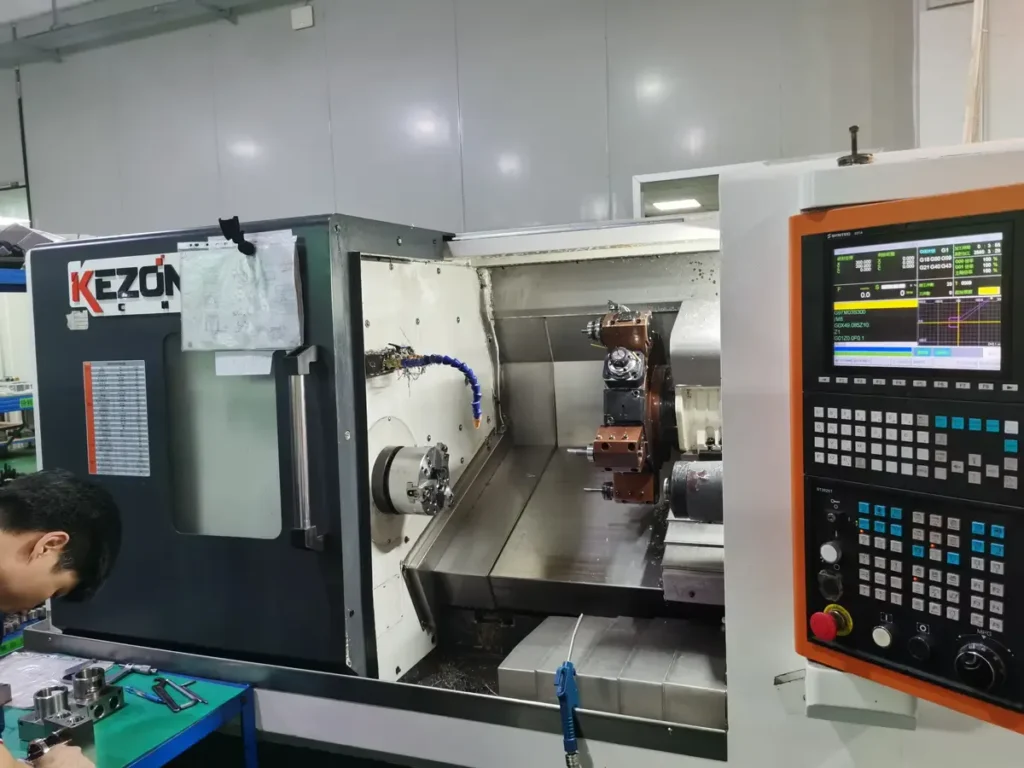
- CNC lathes with live tooling
- Turn-mill operations in one setup
- Better concentricity and repeatability
- Handles moderate complexity
This level handles most commercial CNC turning parts.
Process-Oriented CNC Turning Parts Supplier
- Process planning and DFM involvement
- Controlled cutting parameters
- Statistical quality monitoring
- Long-term production stability
This is the preferred category for precision and repeat projects.
Practical Machining Decisions Managed by CNC Turning Parts Suppliers
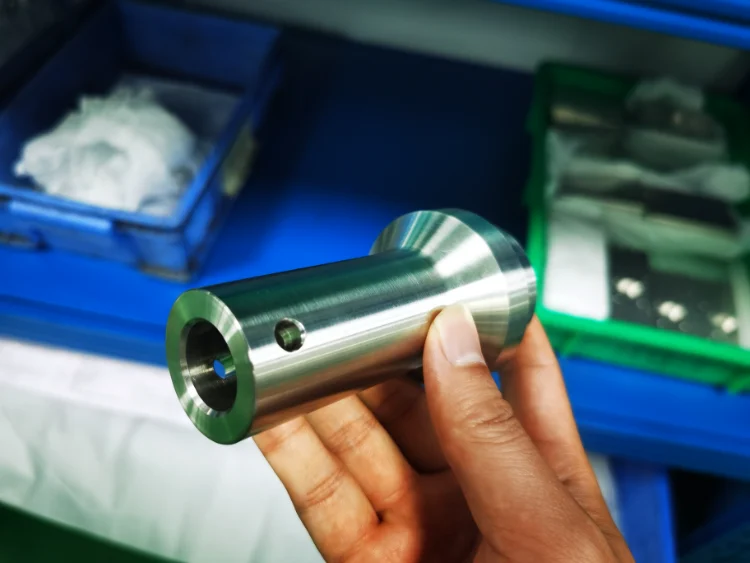
A professional cnc turning parts supplier actively participates in technical decision-making instead of waiting for fixed instructions.
Diameter vs Length Ratio Control
Excessive length-to-diameter ratios cause chatter, deflection, and tolerance failure. Experienced suppliers suggest:
- Additional support points
- Alternative part orientation
- Multi-step machining strategies
Turning vs Turn-Mill Evaluation
Some features look “turnable” on drawings but significantly raise cost. A skilled cnc turning parts supplier evaluates:
- Whether axial drilling or side milling is more efficient
- Whether secondary ops can be eliminated
- Whether tolerances are function-critical or cosmetic
These decisions impact both price and lead time.
Material Strategy from a CNC Turning Parts Supplier
Material knowledge is often underestimated when selecting a supplier.
Commonly Supported Turning Materials
A qualified cnc turning parts supplier typically supports:
- Aluminum alloys (6061, 7075)
- Carbon steels (1018, 1045)
- Stainless steels (304, 316, 17-4PH)
- Titanium alloys
- Brass, copper
- Plastics (POM, PTFE, Nylon, PEEK)
Material-Driven Process Adjustments
Different materials require changes in:
- Cutting speed
- Tool geometry
- Coolant strategy
- Inspection frequency
Suppliers lacking this experience often struggle with consistency.
Precision Responsibility of CNC Turning Parts Suppliers
Precision does not come only from machines—it comes from control.
Where Precision Is Actually Lost
Even modern CNC lathes fail if suppliers ignore:
- Thermal drift
- Tool wear progression
- Bar straightness
- Clamping repeatability
A responsible cnc turning parts supplier compensates for these variables.
Realistic Tolerance Capability
Well-managed suppliers typically achieve:
- ±0.05 mm for general turning
- ±0.02 mm for controlled features
- ±0.005–0.01 mm for selected critical zones
Knowing when not to over-tolerance is equally important.
Quality Control Beyond Inspection Reports
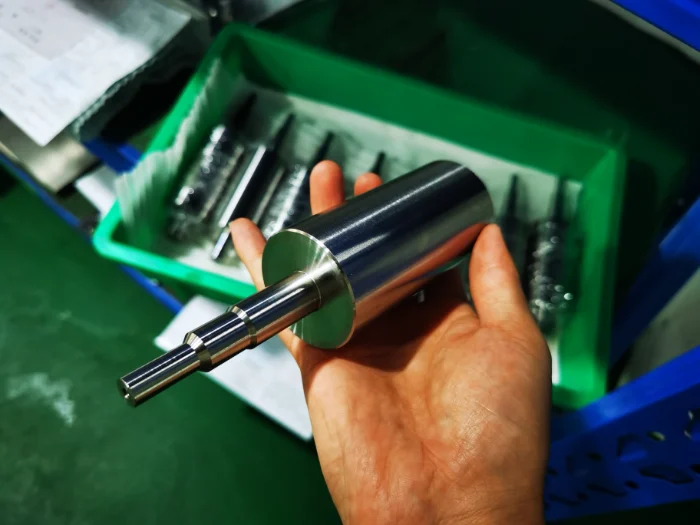
A capable cnc turning parts supplier integrates quality into the process—not just final inspection.
Quality practices include:
- In-process dimensional checks
- Tool life tracking
- Process change documentation
- Lot and material traceability
This reduces rejection risk during repeat production.
Prototype vs Production Viewpoint of CNC Turning Parts Suppliers
Prototype Stage
At this stage, suppliers prioritize:
- Speed and flexibility
- Design feedback
- Functional validation
Production Stage
Here, emphasis shifts to:
- Process locking
- Tooling consistency
- Cost predictability
A mature cnc turning parts supplier adjusts strategy between these stages.
Cost Control Managed by CNC Turning Parts Suppliers
Instead of quoting artificially low prices, reliable suppliers focus on stability.
Sustainable Cost Control Methods
- Stable cycle time
- Reduced handling steps
- Toolpath optimization
- Batch standardization
These methods lower long-term cost more effectively than price cutting.
Industries and Typical Parts Served by CNC Turning Parts Suppliers
A qualified cnc turning parts supplier supports a wide range of industries, each with specific part types, performance requirements, and dimensional standards. Understanding the typical components used in each field helps buyers evaluate supplier experience more accurately.

Automotive & Electric Vehicle Applications
Common CNC-turned components include:
- Shafts and stepped shafts
- Pins and dowel pins
- Bushings and spacers
- Threaded connectors and sleeves
- Motor housings and bearing seats
These parts require stable concentricity, consistent diameters, and reliable batch-to-batch repeatability.
Aerospace & UAV Assemblies
Typical aerospace CNC turning parts include:
- Precision spacers and sleeves
- Structural bushings
- Connectors and fittings
- Shaft collars
- Actuator linkage components
A cnc turning parts supplier serving aerospace must control tolerances, material traceability, and dimensional stability.
Medical Equipment & Devices
Common turned parts for medical applications include:
- Small precision shafts
- Instrument pins and connectors
- Cylindrical housings
- Guide sleeves
- Internal mechanical components
Medical-oriented suppliers focus on clean surfaces, tight tolerances, and suitable material handling.
Industrial Machinery & Automation
Industrial CNC turning parts often include:
- Rollers and guide shafts
- Couplings and hubs
- Spacers and collars
- Bushings for linear motion systems
- Threaded adapters
Durability and long-term dimensional consistency are critical in these applications.
Electronics & Precision Hardware
Typical CNC lathe parts for electronics include:
- Signal connectors
- Shielding sleeves
- Precision pins
- Heat dissipation housings
- Small threaded fasteners
A cnc turning parts supplier in this field must handle small diameters, fine features, and high-volume consistency.
Fluid Control & Mechanical Systems
CNC turning is widely used for:
- Valve bodies
- Nozzles and flow restrictors
- Hydraulic fittings
- Pneumatic connectors
- Precision plugs and inserts
These parts demand high sealing accuracy and smooth internal surfaces.
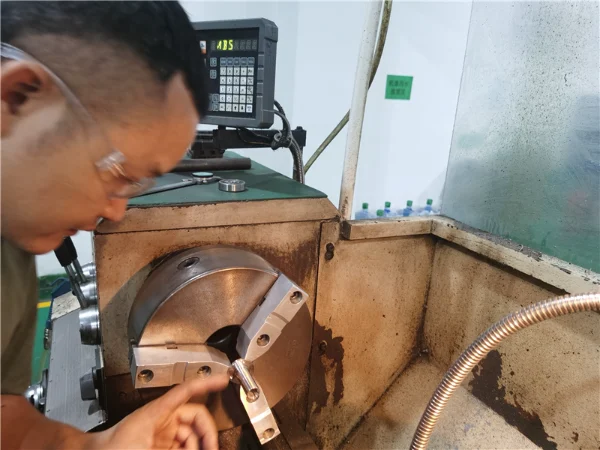
Final Checklist When Choosing a CNC Turning Parts Supplier
Before final selection, buyers should confirm:
- Turning and turn-mill capability
- Material familiarity
- Proven tolerance history
- Communication speed
- Long-term production mindset
The right cnc turning parts supplier reduces risk—not just manufacturing cost.
Conclusion
A professional cnc turning parts supplier is not defined by machines alone, but by its ability to manage process variables, guide machining decisions, and maintain consistency over time. By evaluating suppliers through capability layers, material strategy, and production control, buyers can build stable supply chains for both precision CNC turning parts and scalable production needs.