
When high strength meets lightweight demand, CNC machining 7075 aluminum becomes a go-to solution. But strength comes with a price. Whether you’re prototyping or moving into production, understanding the CNC machining 7075 aluminum cost is essential for budgeting and decision-making.
This article demystifies the cost structure behind machining 7075 aluminum, highlighting key factors, hidden expenses, and actionable ways to reduce cost per part—without compromising quality.

Why 7075 Aluminum Commands a Premium in CNC Machining
7075 is not your everyday aluminum. Known as a high-strength aerospace-grade alloy, 7075 contains zinc, magnesium, and copper—resulting in superior tensile strength and fatigue resistance. These properties make it ideal for aerospace parts, motorsports, and robotics—but also drive up raw material and machining costs.
When you choose CNC machining 7075 aluminum, you’re selecting:
- Higher aluminum alloy pricing:The raw material cost of 7075 aluminum is typically 40%–80% higher than common alloys such as 6061. In addition, aerospace-grade materials like 7075-T6 or 7075-T651 plates often come from specialized supply chains, which further increases procurement costs.
- More aggressive tooling requirements:Due to the higher strength and hardness of 7075 aluminum, cutting tools wear faster during machining. Manufacturers usually need high-quality carbide or coated cutting tools, along with optimized cutting speeds and feed rates, to maintain machining efficiency and tool life.
- Stricter dimensional controls:During machining, internal stress release in 7075 aluminum can cause slight deformation, especially in thin-wall or precision structural parts. As a result, manufacturers often use multi-stage rough and finish machining processes and stricter inspection procedures to maintain stable tolerances.
Key Cost Drivers in CNC Machining 7075 Aluminum
1. Raw Material Cost: Aluminum Alloy Pricing Matters
7075 aluminum is significantly more expensive than 6061 or 5052. As of late 2025, the bulk material price for 7075-T6 hovers around $5.50–$7.00 per kg, depending on global supply chains.
Aluminum alloy pricing is affected by:
- Global demand in aerospace and defense:7075 aluminum is widely used in aircraft structures, drones, and military equipment. As aerospace and defense manufacturing grows, demand for high-strength aluminum increases, which pushes up the price of 7075 material.
- Availability of T6 vs. T651 temper grades:7075 aluminum typically requires T6 or T651 heat treatment to achieve its high strength. Because the heat-treatment process is complex and fewer suppliers can provide consistent quality, availability of these tempers directly affects market pricing.
- Surcharge for plate vs. billet forms:Material form also affects cost. Rolled plates and T651 thick plates are usually more expensive than standard aluminum sheets due to additional processing and stress-relief treatments. Billets and forged blanks may also carry extra costs because of machining and transportation requirements.
Compared to 6061, which often sells for $2.50–$3.50/kg, this is a major cost contributor.
2. Machining Time and Tool Wear
Due to its hardness, 7075 aluminum takes longer to machine, especially in fine-featured or complex parts. More tool passes and slower feed rates increase machining time, which directly impacts cost per part.
Other related factors include:
- Increased tool wear, especially in tight-tolerance work
- Frequent tool changes or re-sharpening
- The need for more robust fixturing due to stress relief
3. Tight Tolerances and Secondary Operations
Aerospace and defense clients often request precision tolerances down to ±0.001 inch, which requires high-end CNC equipment and quality assurance protocols like CMM inspection or FAI documentation.
These elevate costs through:
- Longer setup times
- Slower cutting speeds
- More frequent part revalidation

Surface Treatment: Anodizing and Its Cost Implications
Raw 7075 parts are prone to corrosion due to their high copper content. Most end-users opt for surface treatment—most commonly anodizing or chromate conversion.
Anodizing Cost Factors:
- Basic Type II anodizing: $0.10–$0.25 per square inch
- Hardcoat (Type III): $0.30–$0.60 per square inch
- Custom color or masking increases cost
These post-processing costs are essential in understanding CNC machining 7075 aluminum cost, especially for marine or outdoor applications.
Production Volume: The Economies of Scale
Production size significantly affects cost per part. A one-off prototype will cost drastically more than a batch of 100 or 1,000 due to:
- Setup time amortization
- Bulk material pricing
- Streamlined toolpath optimization
Here’s a simple cost breakdown example:
| Quantity | Cost per Part (USD) | Notes |
|---|---|---|
| 1–10 | $80–$180 | Prototyping stage |
| 50–100 | $35–$75 | Small production |
| 500+ | $15–$40 | Volume manufacturing |
This shows how production volume acts as a lever to manage overall machining cost.
Other Surface Treatments for 7075 Aluminum
Besides anodizing, 7075 aluminum can be treated with bead blasting, conversion coating, painting, electroless nickel plating, micro-arc oxidation, or polishing. Each option affects appearance, protection, tolerances, and cost.
- Bead Blasting / Sandblasting
Bead blasting softens light machining marks and creates a uniform matte finish. Cost is usually low, but sanding, masking, and strict cosmetic control add expense. - Chemical Conversion Coating
This thin coating has little effect on dimensions and improves corrosion resistance and paint adhesion. Conductive grades should be specified and tested when low contact resistance is required. - Powder Coating or Liquid Painting
These coatings provide color and environmental protection for housings, large parts, and cosmetic components. Custom colors, small batches, and complex masking increase cost. - Electroless Nickel Plating
Electroless nickel improves hardness, wear resistance, and corrosion resistance on complex shapes. Cost is higher because 7075 requires activation, zincate treatment, plating, and thickness inspection. - Micro-Arc Oxidation
Micro-arc oxidation forms a hard ceramic-like layer for severe wear and demanding environments. Process control is more difficult on 7075, so the overall cost is usually high. - Mechanical or Chemical Polishing
Polishing reduces roughness and creates a bright finish. Flat surfaces are moderately priced, while complex shapes and mirror finishes require more labor and usually need additional corrosion protection.
Overall, bead blasting and conversion coating are usually lower-cost options, painting is mid-range, and electroless nickel or micro-arc oxidation is more expensive. Final cost depends on part size, batch volume, masking, coating thickness, and tolerances.
Hidden Costs to Watch Out For
Even seasoned procurement teams may overlook certain cost elements in CNC machining 7075 aluminum:
- Material wastage: Larger billets are often used to secure parts during multi-axis machining, leading to scrap.
- Heat treatment verification: Some applications require certification of the T6 temper, adding testing costs.
- Design-for-manufacturing (DFM) adjustments: Sharp internal corners or deep pockets may increase cycle time.
Understanding these allows teams to quote more accurately and avoid surprises.
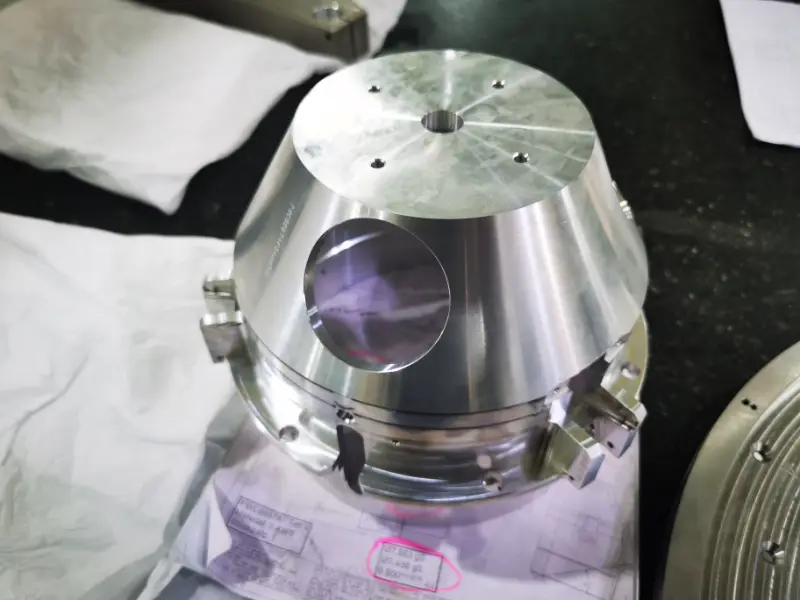
Strategies to Optimize CNC Machining 7075 Aluminum Cost
Design Smart
Simplify geometry where possible. Avoid deep cavities and sharp internal radii that slow machining and wear tools faster.
Use Standard Stock Sizes
7075 aluminum is available in standardized plate and rod dimensions. Design around these to avoid custom cuts and reduce material waste.
Combine Finishing Operations
If possible, group surface treatment processes like deburring, bead blasting, and anodizing to reduce handling costs.
Outsource to Specialists
General job shops may lack experience with 7075 aluminum, leading to longer cycle times and errors. A CNC shop like Weldo Machining, with extensive 7075 experience, optimizes every step from tool selection to finishing.
Real-World Use Case: Aerospace Bracket Cost Breakdown
Let’s look at a real example from an aerospace parts manufacturer:
- Material: 7075-T651 aluminum block, 100 x 75 x 20 mm
- CNC operations: 3-axis contouring, pocketing, drilling
- Tolerances: ±0.002 inch
- Surface finish: Hardcoat anodizing (black)
Cost breakdown (per unit at 50 pcs):
- Material: $8.50
- Machining time: $22.00
- Finishing: $4.50
- QC + packaging: $3.00
- Total: $38.00 per part
This case illustrates how every process step contributes to the final CNC machining 7075 aluminum cost.
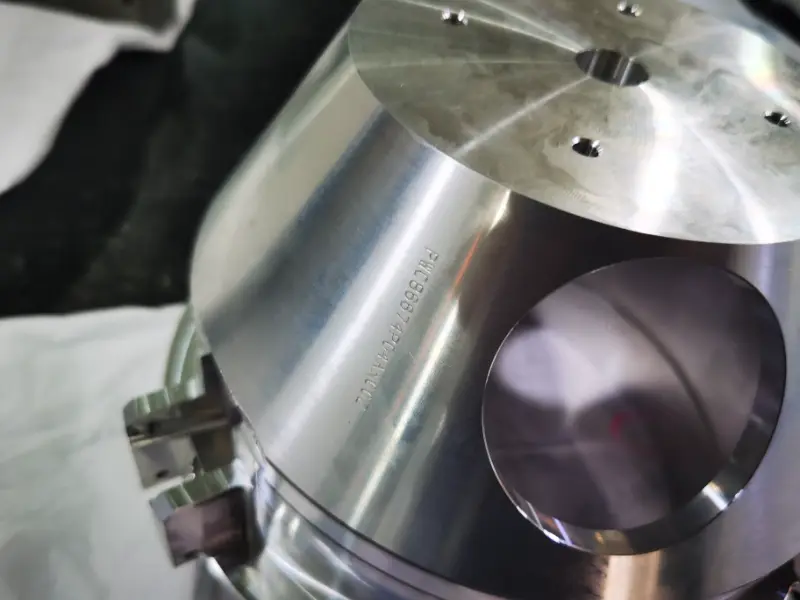
Alternative Materials for 7075 Aluminum Alloy
The choice of alternative materials for 7075 aluminum alloy depends on the specific application requirements, such as strength, weight, cost, or corrosion resistance. The following are several common alternatives:
6061 Aluminum Alloy
6061 is one of the most widely used engineering aluminum alloys, offering good strength, corrosion resistance, and machinability. Although its strength is lower than 7075, it is more cost-effective and easier to machine, making it suitable for structural components, mechanical parts, and general industrial applications.
2024 Aluminum Alloy
2024 aluminum alloy is widely used in the aerospace industry and provides high strength and good fatigue resistance. While its strength is slightly lower than 7075, it remains a common choice for certain aircraft structural parts and high-load components.
7050 Aluminum Alloy
7050 is a high-strength aerospace-grade aluminum alloy with properties similar to 7075. It offers excellent resistance to stress corrosion and high strength, making it a suitable alternative in certain aerospace structural applications.
Titanium Alloys (such as Ti-6Al-4V)
For applications requiring higher strength, corrosion resistance, and temperature resistance, titanium alloys can replace 7075 aluminum. Although more expensive, titanium provides a superior strength-to-weight ratio and excellent environmental resistance, making it common in aerospace and medical devices.
High-Strength Steels (such as 4140 or 4340 steel)
When weight is less critical, high-strength alloy steels can serve as alternatives. Steel typically provides higher strength than aluminum but is heavier, making it suitable for heavy-load structures and high-stress mechanical components.
Conclusion: Invest Smart, Not Just Cheap
When performance matters, 7075 aluminum justifies its premium through strength, fatigue resistance, and weight savings. But cost control comes from smart engineering, reliable CNC partners, and clarity on each contributing factor.
At Weldo Machining, we help clients reduce CNC machining 7075 aluminum cost through expert DFM, in-house tooling strategies, and surface finishing integration. Whether you’re prototyping aerospace components or scaling up high-strength assemblies, we’re here to help.
Contact us now to request a quote or discuss your 7075 machining needs in detail.
