
Flanged bushings are compact, high-performance mechanical components that combine a sleeve and an integrated flange to support radial loads and provide axial positioning. Serving as both plain bearings and thrust washers, they deliver excellent stability, wear resistance, and space efficiency for rotating shafts and pivot assemblies. This guide covers their structure, materials, manufacturing processes, applications, installation, and FAQs to support proper selection and use.
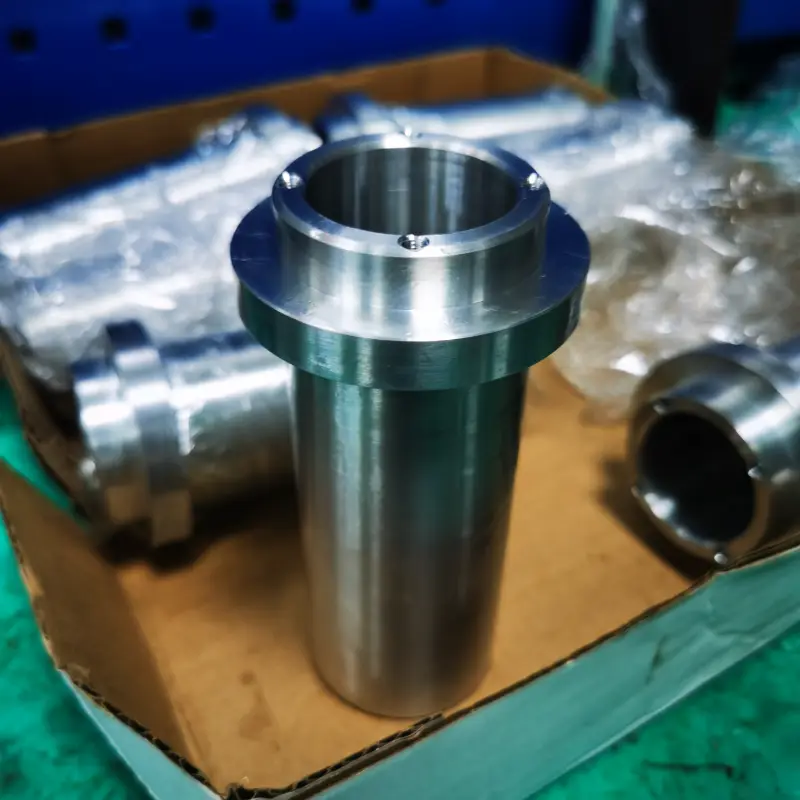
Structure of Flanged Bushings
When designing mechanical components, a common question is whether a standard plain bearing can withstand lateral displacement without sliding out of the housing. A flanged bushing solves this problem by integrating a flange and a sleeve into a single component, forming a two-in-one structure capable of handling both radial and axial loads.
Sleeve and Flange
The structure of this component is divided into two functional areas:
Sleeve (Body): This is the cylindrical portion located inside the housing. Its primary function is to support radial loads and provide a low-friction surface for the rotating shaft.
Flange (Rim): This is the perpendicular extension at the end of the sleeve. It acts as a built-in thrust surface, preventing the bushing from passing through the mounting hole and absorbing axial forces along the shaft direction.
Key Dimensions for Precision Fit
To ensure vibration-free operation and prevent premature wear, we focus on the following 4 key measurement indicators:
| Aspect | Description | Impact on Performance |
| Inner Diameter (ID) | The hole where the shaft is located | Determines shaft alignment and operating clearance |
| Outer Diameter (OD) | The outer surface of the sleeve | Critical for achieving a secure press fit in the housing |
| Flange Diameter | The total width of the rim | Defines the surface area available to support axial loads |
| Flange Thickness | The depth of the rim | Determines spacing between the housing and rotating components |
Flange as a Built-in Thrust Surface
In many applications, using a separate thrust washer is impractical due to space constraints or assembly complexity. The flange on these bushings acts as a positive stop, ensuring the bearing remains properly positioned even under high vibration cycles. It provides a dedicated wear surface for lateral loads without requiring additional hardware, simplifying the bill of materials while maintaining high mechanical precision. This integrated design stabilizes pivot points and steering linkages, minimizing lateral play.
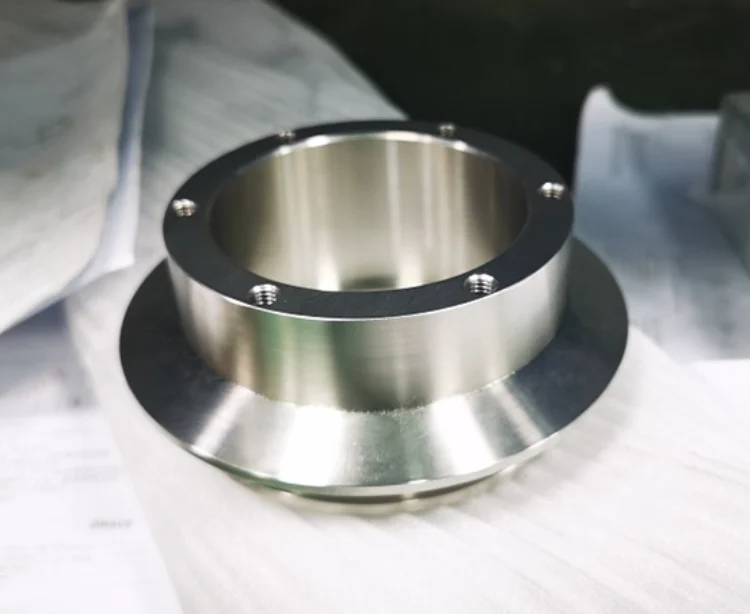
When to Use Flanged Bushings
When designing mechanical assemblies, ensuring precise positioning of components is critical. Flanged bushings do more than reduce friction—they solve multiple mechanical challenges within a compact component.
We rely on them for reliable performance for the following reasons:
Axial Positioning: The flange acts as a built-in anchor, permanently preventing the bushing from shifting or sliding out of the housing during heavy-duty operation, ensuring stable shaft alignment.
Thrust Load Support: Standard plain bearings handle only radial loads, while the flange provides a dedicated thrust surface. This allows the component to easily handle axial loads (forces parallel to the shaft) without additional hardware.
Ease of Installation: Achieving the correct interference fit is simple. The flange serves as a positive stop against the housing, allowing accurate confirmation that the bushing is fully seated.
Space Efficiency: By combining the functions of a traditional radial bearing and a separate thrust washer into one component, we save valuable design space and reduce the total number of parts.
Quick Benefit Analysis of flanged bushes
| Feature | Key Advantage | Mechanical Function |
| Integrated Flange | Prevents migration | Anchors the component securely in the housing |
| Thrust Surface | Handles axial loads | Absorbs forces parallel to the shaft |
| Positive Stop | Foolproof installation | Prevents over-insertion during press fitting |
| Unified Design | Saves space | Replaces plain bearings and thrust washers |
Types of Flanged Bushings
When manufacturing flanged bushings, material determines performance. Selecting the right material ensures optimal wear resistance and friction reduction in specific applications. We focus on matching material composition precisely to the working environment.
Classification by Material:
Metal material
Bronze and Brass Alloys: Designed to withstand heavy loads and high impact forces. These durable metals are the preferred choice for harsh, high-pressure environments where mechanical durability is critical.
Flanged bronze Bushings: Made from tin bronze or aluminum bronze, offering good wear resistance, corrosion resistance, and machinability, suitable for medium load and speed conditions. Another common type is oil-impregnated (sintered) bronze bearings, ideal for hard-to-reach areas. These self-lubricating bearings release lubricating oil when heated during operation, enabling continuous lubrication without manual maintenance.
Brass Flange Bushings: Made from high-strength brass with embedded solid lubricants (such as graphite or molybdenum disulfide), offering high load capacity, impact resistance, and self-lubricating properties, suitable for low-speed, heavy-load, oil-free applications.
Stainless Steel flange bushing: Known for excellent corrosion resistance, high-temperature resistance, and mechanical strength. It can resist chemical attack from acids, alkalis, and salts, as well as continuous moisture and extreme temperature fluctuations (maintaining strength and toughness even at -196°C). Suitable for low-temperature pipelines and wastewater treatment systems.
Steel flange bushing: Alloy steel flanged bushings feature high strength and strong impact resistance. After quenching, nitriding or chrome plating, they are wear-resistant, high-temperature resistant and dimensionally stable, mainly used for support and guidance in construction machinery, mining equipment, heavy-duty machine tools, commercial vehicle chassis and hydraulic mechanisms.
Aluminum flanged bushing: Aluminum are lightweight, wear-resistant, moderately strong and feature an integrated flange for positioning; common grades include mainly 6061-T6, 6063 and 6082, supplemented by corrosion-resistant grades such as 5052 and 5083 and high-strength grades such as 2024 and 7075, and they are often used as bearings and bushings in machinery, automation equipment and lightweight transmission components.
Engineer Plastics (PTFE/POM/PEEK/Nylon):
Preferred materials for corrosion resistance and dry lubrication. Suitable for light-load, low-speed, oil-free environments. These engineering plastics are lightweight, chemically resistant, and operate cleanly without external lubrication.
PTFE Flanged Bushings: Also known as Teflon flange bushings or polytetrafluoroethylene bushings, featuring excellent chemical stability, corrosion resistance, sealing performance, self-lubrication, non-stick properties, electrical insulation, and strong aging resistance.
POM Flange Bushings: Also known as Delrin flanged bushings, made of polyoxymethylene, featuring excellent wear resistance, high strength, low friction noise, and self-lubrication. Suitable for metal-to-metal sliding applications such as bearing sleeves and flanged bushings.
Nylon Flanged Bushings: Also known as PA flanged bushings, primarily composed of polyamide, offering excellent wear resistance, high strength, good machining precision, and dimensional stability. Commonly used in transmission support, equipment connection, and mechanical positioning structures.
PEEK Flanged Bushings: Provide better oil-free self-lubrication performance than POM and nylon, effectively reducing failure risks caused by insufficient lubrication in steel or aluminum alloy components. Strength and toughness can be further enhanced by adding glass fiber or carbon fiber.

Classification by Flanged Bushing Structure
When selecting the right flanged bushing for your project, it typically depends on the specific load and environment. Several main structural types are commonly used in manufacturing and maintenance workshops to ensure smooth equipment operation.
Flat Welded Flange Bushing: The bushing is directly welded to the flange and pipe using flat welding. It has a simple structure and low cost, suitable for low-pressure, normal-temperature conditions, but cannot be disassembled after welding.
Socket Weld Flange Bushing: The pipe is inserted into the socket end of the bushing and then welded. It offers higher connection strength, suitable for medium and low-pressure piping systems, but is also difficult to disassemble after welding.
Threaded Flanged Bushing: Threads are machined on the inner or outer diameter, allowing connection to the flange or pipe via threading. It is easy to install and remove, suitable for applications requiring frequent maintenance, but has relatively weaker sealing performance and requires additional sealing measures.
Loose Flange Bushing: The bushing and flange form a loose connection, allowing relative rotation or movement. Typically used with stub ends or lap joint rings, suitable for thermal expansion or flexible connection scenarios, but with lower load-bearing capacity.
Lined flanged Bushing: The inner surface is lined with corrosion-resistant or wear-resistant materials (such as rubber, plastic, or ceramic), used to protect against media corrosion or wear. Suitable for corrosive or high-wear environments, but lining material selection must match working conditions.
Custom flange bushings: In some cases, off-the-shelf components cannot meet requirements. CNC machining is used to manufacture custom flanged bushings that meet strict mechanical tolerances and specific requirements such as inner diameter (ID) and flange thickness.
Classification by Function
Self-Lubricating Flanged Bushings
These bushings consist of a self-lubricating substrate and a flanged end, featuring embedded solid lubricants. They eliminate the need for external lubrication and are ideal for structural components where manual lubrication or maintenance is difficult to perform.
Common Materials: Molybdenum disulfide ($MoS_2$), bronze, sintered copper, sintered iron, PTFE, POM, PA (Nylon), PEEK, and UHMW-PE.
Thrust Flanged Bushings
Specifically designed to withstand axial loads, these bushings typically feature a thrust face or thrust grooves. They are suitable for operating environments requiring axial force resistance.Among these components, the double-flange bushing is widely utilized in automotive suspension systems; featuring flanges at both ends, it is designed to provide bidirectional limit stops and ensure secure axial positioning.
Sealing Flanged Bushings
The flange section is equipped with an O-ring groove or an integrated sealing lip. When used in conjunction with gaskets, they effectively prevent oil leakage while blocking dust, water, and impurities.These are engineered for heavy-duty applications, oscillating movements, agricultural machinery, and construction equipment.
Standard Inner Diameters for Flanged Bushings
Standard inner diameters of Flanged bushings are essential for proper fit and interchangeability. Internationally, both inch and metric sizes are widely used.
Common inch inner diameters include 1/8″, 3/16″, 1/4″, 5/16″, 3/8″, 1/2″, 5/8″, 3/4″, 7/8″, 1″, 1‑1/4″, 1‑1/2″, and 2″.
Popular metric inner diameters are 3, 4, 5, 6, 8, 10, 12, 14, 15, 16, 18, 20, 25, 30, 35, 40, and 50 mm.
Among them, the 3/8 flange bushing, 5/8 flange bushing, and 3/4 flange bushing are the most frequently selected for general equipment, fixtures, and automation systems, offering great compatibility and stable performance.
Surface Treatment of Flange Bushings
Surface treatment methods for flange bushings are selected according to material, service environment and performance requirements.
Blackening or bluing forms a compact Fe₃O₄ film on steel surfaces, improving corrosion resistance, lubricity and appearance at low cost, making it suitable for steel flange bushings in general industrial automation and common machinery where high corrosion resistance is not demanded.
Phosphating creates a water-insoluble phosphate crystal layer on steel parts, offering better corrosion resistance than blackening and enhancing paint adhesion, so it is widely used as a pre-treatment for flange bushings in automotive and marine applications that require subsequent painting.
Galvanizing deposits a zinc layer via electroplating or hot-dip plating to protect the base metal with strong corrosion resistance at a moderate cost, though it may cause softening in high-strength steels or hydrogen embrittlement in electro-galvanizing, ideal for flange bushings in humid or corrosive outdoor and chemical equipment.
Electroless nickel plating produces a uniform, dense nickel or nickel-phosphorus alloy coating with high hardness, excellent corrosion and wear resistance as well as improved lubricity, mainly applied to high-precision and high-wear flange bushings in aerospace and precision machinery.
Dacromet, a zinc-chromium coating baked from metallic powder and resin, provides exceptional corrosion, high-temperature and salt-spray resistance without hydrogen embrittlement and is environmentally friendly, suitable for flange bushings in extreme environments such as marine engineering, chemical industry and automotive engine bays.
PTFE coating forms a self-lubricating layer with extremely low friction and strong chemical resistance through spraying or dipping, well suited for flange bushings in robot joints, precision instruments and medical equipment that require frequent sliding or low-friction motion.
Anodizing generates a protective aluminum oxide film on aluminum and aluminum alloy surfaces, which can be colored or sealed to enhance corrosion and wear resistance with an attractive appearance, commonly used for lightweight aluminum flange bushings in aerospace and electronic equipment.
In summary, the selection must comprehensively consider material, environment, performance and cost to ensure the flange bushings meet practical requirements for corrosion resistance, wear resistance and lubricity.
Key Applications of Flanged Bushings
We see flanged bushings used across nearly all major industries. Because they can effectively handle both radial and axial loads within a compact unit, they have become a preferred solution in countless mechanical designs. Below are the applications where we typically see them perform best:
Automotive Manufacturing
In the automotive industry, durability is critical. We rely on flanged bushings in steering linkages and suspension pivots. The built-in thrust surface prevents displacement under intense vibration, ensuring long-lasting wear resistance on rough roads.
Industrial Machinery
Heavy-duty equipment requires components that can maintain integrity under pressure. These bushings play a key role in:
Conveyor systems: Maintaining perfect roller alignment and minimizing friction.
Hydraulic cylinders: Providing reliable guidance under extreme operating pressures.
Aerospace Engineering
In aircraft manufacturing, strict mechanical tolerances are non-negotiable. Flanged bushings are essential in landing gear assemblies and flight control surfaces. They provide precise shaft alignment, ensuring safe and stable operation in high-risk environments.
Everyday Household Appliances
Even at home, these components operate quietly. They are core pivot points in washing machines and dryers. By isolating and aligning moving parts, they ensure smooth and quiet operation over many years.
Engineering Considerations for Installing Flanged Bushings
To fully utilize the performance of flanged bushings, precise installation is essential. Even the highest quality parts will fail prematurely if installed incorrectly. The relationship between the bushing and the housing bore ultimately determines performance.
Mastering Press Fit and Slip Fit
Selecting the correct fit depends entirely on your application. Most industrial applications use a press fit to ensure the bushing remains stationary within the housing.
Interference fit: This creates a press fit where the bushing is slightly larger than the bore. It prevents outer diameter rotation, which is critical in high-torque environments.
Slip fit: Mainly used for light-duty applications or where frequent replacement is required. The bushing can slide in easily but usually requires additional locking mechanisms or adhesives.
Importance of Housing Bore Tolerance
When a flanged bushing is pressed into a rigid housing, its inner diameter (ID) naturally contracts. If the housing bore tolerance is too tight, it will squeeze the shaft, causing excessive friction and heat. Conversely, if the bore is too large, it will result in vibration and misalignment. We recommend CNC machining the housing to ensure the final operating clearance meets design specifications.
Avoiding Common Installation Mistakes
I have seen many bushings fail before being put into service due to improper installation. To maintain optimal hardware condition, avoid the following:
Prevent flange mushrooming: Never strike the flange directly with a metal hammer. This will deform the thrust surface and compromise its ability to handle axial loads.
Use a guide mandrel: Always use installation tools or mandrels that support both the inner diameter and flange face to ensure straight installation.
Clean the bore: Even a small burr or debris in the housing can prevent the flange from seating fully, leading to shaft misalignment.
Apply even pressure: Use steady pressure instead of impact force to avoid cracking brittle materials such as sintered bronze or high-performance plastics.
Common process for manufacturing flange bushing
Flanged bushings can be manufactured using a variety of processes. The common ones are as follows:
Casting Processes
- Centrifugal Casting: Molten metal is poured into a rapidly rotating mold, where centrifugal force solidifies the metal. Suitable for copper alloys, cast iron and other materials, it produces flanged bushings with dense structure and excellent performance, especially for large or complex shaped bushings.
- Sand Casting: Uses sand molds, offering low cost and the ability to produce complex shaped flanged bushings. However, surface quality and dimensional accuracy are relatively low, requiring subsequent machining.
- Permanent Mold Casting: Employs metal molds, providing high dimensional accuracy and good surface finish, ideal for mass production, though with higher mold costs.
Forging Processes
- Open Die Forging: Heated billets are deformed via hammering or pressing. Suitable for simple shaped flanged bushings in small batches, it refines grain size and improves strength and toughness.
- Closed Die Forging: Heated billets are forged into shape inside dies, delivering high dimensional accuracy and good mechanical properties, suitable for large scale production but with high mold costs.
Rolling Processes
Ring blanks are radially rolled on a ring rolling machine to reduce wall thickness and increase inner and outer diameters. This process produces flanged bushings with high dimensional accuracy and favorable metal fiber flow, features high material utilization, and is suitable for large annular bushings.
CNC Machining
Based on rough casting or forging blanks, processes including turning, milling, drilling, and grinding are used to accurately machine the inner and outer diameters, end faces, mounting holes and other features of flanged sleeve bushings to meet required dimensional precision and surface quality.
Powder Metallurgy
Metal powders are compacted and then sintered. This method can produce flanged bushings with special properties such as self lubrication and high wear resistance, suitable for small batch, high precision special applications.
The choice of manufacturing process depends on the material, size, precision requirements, production volume and cost budget of the flanged sleeve bushings.
Conclusion
Accuracy of flange bushing is not just a manufacturing preference; it is a necessity for safety and operational efficiency in any industrial application. If you want to learn more about flanged bushings and custom machining quotes, you can contact weldo machining.
FAQ About Flanged Bushings
What is the difference of Plain Bearings vs Flanged Bushings?
The main difference lies in shape and load capacity. A standard plain bearing is cylindrical and designed to handle radial loads. A flanged bushing adds a flat lip at one end, which acts as a built-in thrust surface, securing the bushing in place and preventing movement within the housing.
Can Flanged Bushings Handle Both Radial and Axial Loads?
Yes, they can. This is their primary function.
Radial load: Supported by the main cylindrical sleeve in contact with the shaft.
Axial load: Supported by the flange, which absorbs thrust parallel to the shaft.
When to Replace Flanged Bushings?
You should replace them when any of the following conditions are observed:
Excessive clearance, vibration, or looseness at pivot points
Visible scratches or wear on the inner diameter or flange surface
Poor shaft alignment
Grinding noise indicating complete loss of wear resistance
Do Flanged Bushings Require Lubrication?
Whether lubrication is needed depends entirely on the material selected:
Solid metals: Traditional bronze or steel require regular manual lubrication to ensure proper friction reduction and prevent premature wear.
Maintenance-free: Oil-impregnated sintered bearings or self-lubricating bronze and plastics release their own lubricant when heated, making them ideal for hard-to-reach areas.