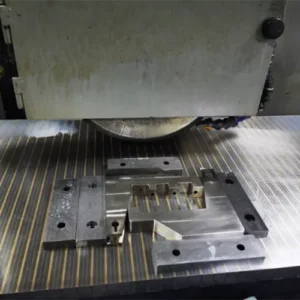









MIC-6 is an aluminum alloy belonging to the 7xxx series. Because of its good dimensional stability during machining, surface finish, and resistance to deformation, it is widely used in precision manufacturing, semiconductor tooling, optical equipment, tables, and fixtures.
It was developed and introduced by the American company Alumax in the late 1960s. Alumax was later acquired by Alcoa (Aluminum Corporation of America), and is now held and produced by Arconic. MIC-6 aluminum alloy solves the pain points of large residual stress in aluminum plates, easy deformation during machining, and poor flatness, and has now become an important material in the field of precision machining.
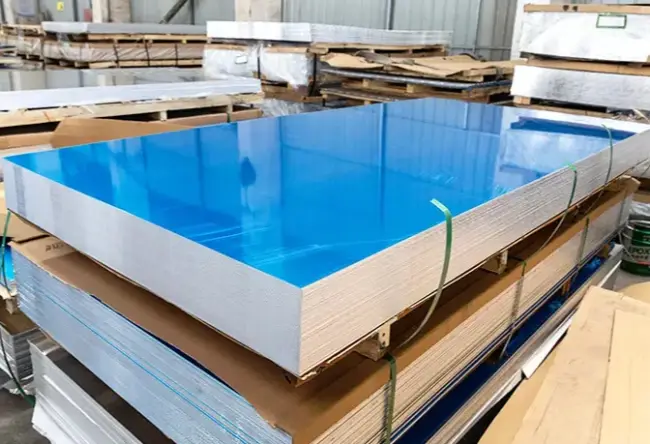
Mic-6 aluminum alloy chemical composition
MIC-6 aluminum alloy is a 7xxx series aluminum material with Al-Zn-Mg-Cu as the core elements, produced through continuous casting and stress relief. Its chemical composition (mass fraction, %) is as follows:
| Element | Content Range(%) | Description |
|---|---|---|
| Aluminum (Al) | Balance | Base metal |
| Zinc (Zn) | 5.1–6.1 | Core strengthening element, improves strength and hardness |
| Magnesium (Mg) | 2.1–2.9 | Synergistically strengthens with Zn, enhancing strength |
| Copper (Cu) | 1.2–2.0 | Improves strength and corrosion resistance |
| Silicon (Si) | 0.40 | Improves casting fluidity and machinability |
| Iron (Fe) | 0.50 | Impurity control element, ensures purity |
| Manganese (Mn) | 0.30 | Refines structure, improves stability |
| Chromium (Cr) | 0.18–0.28 | Prevents intergranular corrosion, enhances toughness |
| Titanium (Ti) | 0.20 | Refines grains, improves casting performance |
| Others (single / total) | ≤0.05 / ≤0.15 | Strictly controlled impurity elements |
· Mainly uses Zn, Mg, Cu as the strengthening material system, belonging to a high-toughness, low-stress casting formulation, specifically designed for precision tooling.
· Compared with 6061, Zn, Mg, Cu content is higher and strength is better; however, due to casting + deep stress relief process, the internal stress at delivery is extremely low, and CNC machining deformation is minimal.
· The typical density of MIC-6 aluminum alloy is about 2.78 g/cm³, and the thermal expansion coefficient is stable (23.6×10⁻⁶/℃), suitable for high-precision scenarios such as large plates, fixtures, and optical base plates.
Understanding the chemical composition of MIC-6 helps to judge its strength, stability, and machining performance, and to achieve correct material selection and control of machining parameters such as speed and feed in different application scenarios, balancing cost, durability, production efficiency improvement, and saving machining costs.
Mic 6 aluminum alloy base properties
The following will elaborate in detail the specific data and practical explanations of its four core properties: mechanical, physical, chemical, and processing technology. All data are based on the factory condition (after deep stress relief treatment) and comply with ASTM B221 standard.
Mechanical and Physical Properties
In the field of aluminum alloy machining, understanding the mechanical properties of mic-6 can ensure machining efficiency, dimensional accuracy, and part reliability. The strength, hardness, and toughness of the material directly affect cutting difficulty, tool life, and deformation control, and also determine the load-bearing capacity and durability of parts in actual use, thereby achieving a reasonable balance between performance and cost:
| Property Item | Tensile Strength (MPa) | Yield Strength (MPa) | Brinell Hardness (HB) | Elongation (50 mm gauge length) (%) | Elastic Modulus (GPa) | Impact Toughness (Charpy V) (kJ/m²) |
|---|---|---|---|---|---|---|
| Value Range | 166–172 | 105–138 | 65–75 | 8–10 | 70–72 | 12–15 |
MIC-6 is essentially a cast aluminum tooling plate (cast aluminum tooling plate), focusing on stability and machinability. Understanding its performance is to avoid deformation during reprocessing and use, ensure precision, and select the correct application scenarios. In terms of yield strength, it is lower than 6061 (240 MPa) / 7075 aluminum (500 MPa+), so it cannot be used for structural parts with large loads and pressure.
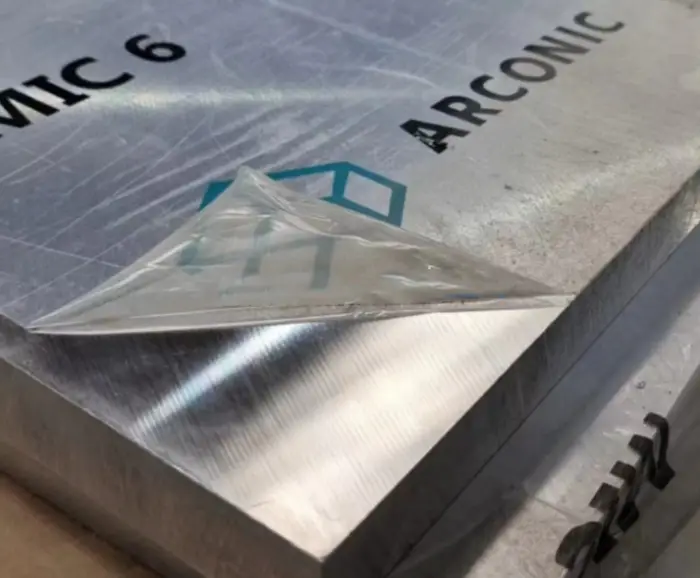
Physical and Thermal Properties of MIC-6:
Understanding the physical properties of this material helps evaluate its thermal stability, thermal conductivity, and structural rigidity, thereby ensuring machining accuracy and reliability in actual applications.
| Item | Density (g/cm³) | Elastic Modulus (GPa) | Thermal Conductivity (W/m·K) | Specific Heat Capacity (J/kg·K) | Electrical Conductivity (%IACS) | Melting Point (°C) |
|---|---|---|---|---|---|---|
| Value | 2.70 | 69–71 | 117–130 | ~900 | 30–35 | 570–640 |
It has good thermal conductivity, dimensional stability, and machining adaptability, suitable for high-precision and high thermal stability application scenarios.
What processing technologies does MIC-6 aluminum alloy support
CNC Milling/turning: MIC-6 has low internal stress and good dimensional stability, suitable for milling processing. The surface is easy to achieve smooth and flat treatment and tight tolerance requirements, and is widely used in equipment base plates, fixture base plates, and tooling platforms and other precision support parts.
Drilling & Tapping: The material has excellent cutting performance, is not easy to crack and deform, suitable for high-precision hole machining and threading, commonly used in mounting holes, connecting structural parts, equipment assembly brackets and other accessories.
Saw Cutting: MIC-6 plate has a uniform structure, suitable for rapid sawing and blanking, and can efficiently obtain dimensionally stable blanks, commonly used for mold base plates, equipment panels, and initial processing of tooling blanks.
Waterjet / Laser Cutting: Suitable for complex contour cutting, especially water cutting can avoid thermal effects and dimensional stability, commonly used for precision contour plates, structural panels, and non-standard customized parts.
Surface Finishing: MIC-6 surface is uniform, suitable for anodizing, sandblasting, brushing and other treatments, improving corrosion resistance and appearance quality, widely used in equipment appearance parts, functional panels, and decorative structural parts.
Does MIC-6 aluminum alloy support welding process?
Due to being a cast aluminum plate, welding performance is poor, and it is easy to produce deformation or performance degradation. Generally, welding is not recommended, and more bolt connections, positioning pins, and assembled structural parts are used as alternatives.
MIC-6 is suitable for a variety of precision machining processes, especially suitable for tooling and equipment parts requiring high stability and high flatness.
How is the surface finish of MIC-6 aluminum
MIC-6 aluminum alloy has excellent surface finish performance, which benefits from the casting process. In the factory state, its surface roughness can reach Ra≤0.8μm, flatness ≤0.08mm/m². The surface is flat and smooth, without obvious casting defects, and no additional grinding or polishing is required to meet the use requirements of precision tooling.
At the same time, its uniform organizational structure makes the surface finish consistency after CNC machining good, not easy to produce tool marks, burrs, scratches and other machining defects, and can easily achieve micron-level surface accuracy, suitable for optical platforms, machine tool fixtures, vacuum chuck platforms and other scenarios, and also provides a good foundation for subsequent surface treatments (such as anodizing, sandblasting).
Is Mic-6 aluminum alloy easy to be corroded
MIC6 aluminum alloy has good corrosion resistance. The dispersoid phase E-Al₁₈Mg₃Cr₂ formed by chromium elements is uniformly distributed in grain boundaries and within grains, which can inhibit recrystallization and grain growth, maintain fine equiaxed grain structure and reduce the proportion of high-angle grain boundaries, thereby blocking the propagation of corrosion cracks.
At the same time, this dispersoid reduces the precipitation of grain boundary strengthening phases (such as η-Mg(Zn,Cu,Al)₂) and reduces the precipitation-free zone (PFZ), reduces electrochemical corrosion differences, and weakens preferential dissolution at grain boundaries.
According to ASTM G48-03 standard test, it has good corrosion resistance to atmosphere, fresh water and general acid and alkali environments, is not easy to rust or oxidize and deteriorate, and is suitable for semiconductor tooling, precision fixtures and other application scenarios.
Applications and fields of MIC 6 aluminum
Semiconductor and 3c electronic equipment: MIC-6 is used as wafer processing tooling, inspection platforms and equipment base plates. MIC-6 due to low internal stress meets the high requirements of such applications for flatness and long-term dimensional stability of parts, and is not easy to deform during long-term use or environmental changes, and at the same time is corrosion-resistant and can be used for a long time.
Automation equipment: Its role is more of a “stable reference”. Whether it is robot bases, assembly fixtures, or mounting plates in conveyor systems, MIC-6 provides a reliable and consistent installation interface. The uniformity of the material itself and good machining performance allow it to maintain high machining accuracy in complex structural parts, thereby reducing the impact of accumulated assembly errors.
Precision machining and inspection equipment: The advantages of MIC-6 are more directly reflected. Inspection platforms and workpiece positioning fixtures essentially rely on a “stable and unchanging” foundation rather than high strength. MIC-6 can maintain dimensional consistency in multiple clamping and repeated use, which is particularly critical for improving machining consistency and inspection reliability.
Molds and tooling: In order to ensure machining efficiency and later stability. MIC-6 is often used as mold base plates or auxiliary templates, its cutting performance is good, the machining process is smoother, and due to stable structure, it is not easy to produce deformation after stress release after machining, which helps to control the overall accuracy of mass production products.
Applications with heat dissipation requirements but low structural load: such as equipment panels or functional base plates, MIC-6 also has certain applicability. Although its thermal conductivity is not outstanding, it is sufficient to cope with general thermal management requirements, and combined with good surface treatment adaptability, it can balance function and appearance.
Overall, MIC-6 is more like a “stable material”, suitable for scenarios that require precision, flatness, and consistency, rather than components that bear major structural loads. In tooling, base plates and precision manufacturing systems, its value is often reflected in “long-term stability” and “controllable machining”.
Advantages and disadvantages of MIC-6 aluminum alloy:
Advantages:
- The greatest advantage of MIC-6 lies in its “stability”. Compared with conventional rolled aluminum plates, it obtains lower internal stress through the casting process, This means that in CNC milling/turning, especially in precision cnc machining processes(0.0005 mm – 0.003 mm Accuracy),deformation or warping is less likely to occur. This is particularly critical in base plates, fixtures, and inspection platforms that require high flatness, and can significantly reduce the cost of secondary correction and rework.
- MIC-6 has good cutting performance. The material structure is uniform and the hardness is moderate. During milling, drilling, and other machining processes, it is not prone to obvious stress release problems, and the machining efficiency is relatively high.
- In terms of thermal performance, MIC-6 has a certain thermal conductivity, which can maintain a relatively uniform temperature distribution in general equipment environments, thereby reducing the risk of local thermal deformation.
Limitations:
- The strength level is relatively low, and it is not suitable for scenarios that bear large loads or structural stress.
- Due to its casting characteristics, the welding performance is poor, Welding can easily introduce defects that affect local material mechanical Properties. Mechanical methods such as threaded inserts and fastening are usually used for assembly.
- Under extreme working conditions (such as high temperature or strong corrosive environments), the performance of MIC-6 also has certain limitations. If necessary, material replacement or stronger surface treatment is required to improve corrosion resistance.
Overall, MIC-6 is more suitable for non-load-bearing structural parts that have high requirements for dimensional stability, machining accuracy, and surface quality. Its advantage lies in “stability and ease of machining”, rather than “high strength”.
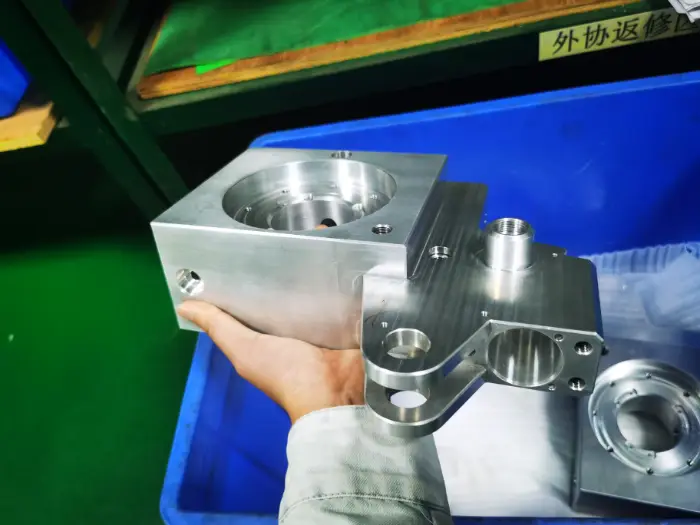
Common forms of MIC-6 aluminum alloy
In practical applications, MIC-6 does not have as rich profile forms as 6061 and 7075. It is mainly in plate form, developed around precision machining requirements.
Cast Aluminum Plate: Usually supplied as flat plates with standard thickness (common MIC-6 plate range from 0.25 – 6 inches), with high flatness and thickness uniformity. In actual use, these plates are often processed into different forms of blocks (Block) or customized blanks to meet different finished product machining sizes and structural requirements.
Mic-6 rods/tubes: This type of MIC-6 aluminum material is mainly used to manufacture precision shafts, pins, assembly pipes, and other components. It also has excellent dimensional stability and is not easy to deform after machining. The diameter range is mostly within 6mm-350mm.
What heat treatment conditions does MIC6 aluminum alloy have?
Because MIC-6 is produced by casting plus stress relief process, the material state tends to be stable. It does not require subsequent solution heat treatment or aging to improve performance. Therefore, MIC-6 has no traditional heat treatment condition, and it is in a stress-relieved stable state when leaving the factory, suitable for direct machining. Deformed aluminum such as 6061 and 7075 require heat treatment to control performance.
Equivalent materials of MIC6 aluminum alloy in different countries
MIC-6 belongs to commercial-grade cast tooling plate. MIC-6 is not a general alloy designation, but a trade name. Different countries do not have a 100% performance standard equivalent. It itself is not an ASTM / EN / JIS standard designation, and there is no completely equivalent “official equivalent material” in various countries. However, we can still substitute it according to performance priorities and application scenarios:
In the United States, 5083 cast plate and 7000 series cast aluminum alloys are usually used as equivalents;
In Europe, materials with similar performance include EN AW-5083, ATP-5, Alca Plus and other rolled aluminum alloys for substitute machining, but the production processes are different;
In Japan, machining factories usually choose A5052 / A5083 deformed aluminum to replace MIC-6 aluminum alloy;
In China, according to different application scenarios, 5083 / 5052 / 6061 aluminum alloys can be selected for substitution in machining and assembly.
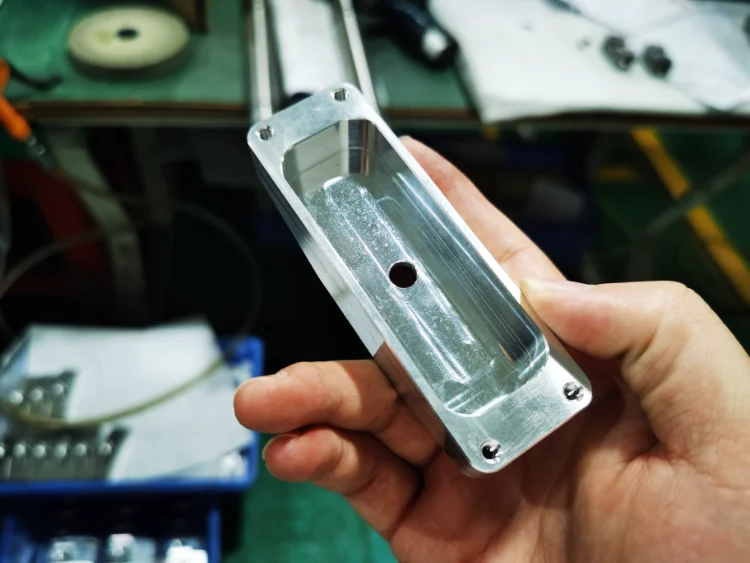
Substitute materials for MIC-6 aluminum alloy
Cast tooling plate materials: such as ATP-5, Alca Plus, K100 series, are the closest to MIC-6 in performance. These materials have low internal stress and relatively uniform surface finish. They are not easy to deform or crack after machining and are suitable for high-precision base plates, inspection platforms, tooling fixtures and other application environments that require high flatness and stability. However, the local hardness uniformity or surface condition of these materials is slightly inferior to MIC-6 (this usually depends on the specific material production process rather than the material system itself). If under high-precision manufacturing requirements, they cannot replace MIC-6.
5083 and 5052 aluminum alloys: The advantage of these two materials is cost saving. 5083 has good corrosion resistance and is suitable for general tooling, structural brackets, and equipment auxiliary plates; 5052 has slightly lower strength and corrosion resistance than 5083, and is mostly used for light-load panels and auxiliary parts. However, since both are deformed aluminum alloys, stress release problems exist during machining, and deformation is likely to occur, so they are not suitable for high-precision fixtures or inspection parts.
6061-T6 aluminum alloy: Its strength is higher than MIC-6 aluminum. 6061 aluminum is suitable for parts that require certain load-bearing and structural strength. It is commonly used for equipment structural parts, connecting plates, and load-bearing brackets. However, the disadvantage is that 6061 aluminum has higher internal stress, and the dimensional stability after machining is not as good as MIC-6 aluminum alloy. It is more suitable for parts with medium precision requirements.
7075-T6 aluminum alloy: Because 7075 aluminum is a high-strength deformed aluminum alloy formed by rolling or forging, it has large internal stress before machining, and the risk of machining deformation is high, and the cost is also high. It is not suitable for high flatness or precision reference parts. However, its tensile and yield strength are significantly higher than MIC-6, and it can be used for structural parts with large loads and high-load connection components.
Overall, the selection of substitute materials depends on application priorities and product surface finish requirements: high stability scenarios prioritize cast tooling plate materials, general tooling or corrosion-resistant environments can choose 5083, and high-strength structural parts turn to 6061 or 7075 with better load capacity.
Conclusion
MIC-6 aluminum is a stability-focused material ideal for precision tooling and high-flatness applications, thanks to its low internal stress, excellent machinability, and consistent surface quality. While it’s not designed for high-load structures, it delivers reliable performance where accuracy matters most. If you’re selecting a mic-6 aluminum machining manufacturer or comparing alternatives, feel free to contact us for expert advice and a competitive quote.