
Slow wire EDM machining
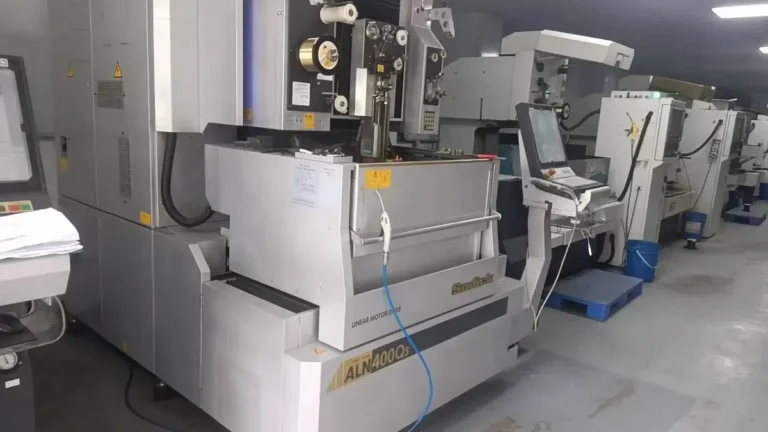
Overview
Experience unparalleled precision with our Slow Wire EDM Machining—perfect for intricate designs and tight tolerances that demand excellence. Contact us now for a customized quote and elevate your project’s accuracy and quality!
Tolerance: 0.0005-0.05 mm
MOQ:1-500 PCs
Price: 20-200 USD/Hour
What is slow wire EDM machining
The principle of slow wire EDM machining involves an electrode wire reaching instantaneous temperatures exceeding 6000°C under pulse power supply, causing localized erosion of the workpiece through high heat.
The electrode wire in our Weldo slow wire EDM machines is typically copper or coated wire. According to our technicians, the wire diameter ranges from approximately 0.05 to 0.3 millimeters. The wire feeds at a slow speed of several millimeters per second.This ensures stability during workpiece machining and reduces processing errors.
Material for slow wire EDM machining
Slow wire EDM (Electrical Discharge Machining) is primarily used for machining conductive materials, especially those that are hard, brittle, or difficult to process with conventional cutting tools. Here are the main types of materials suitable for slow wire EDM:
Material :
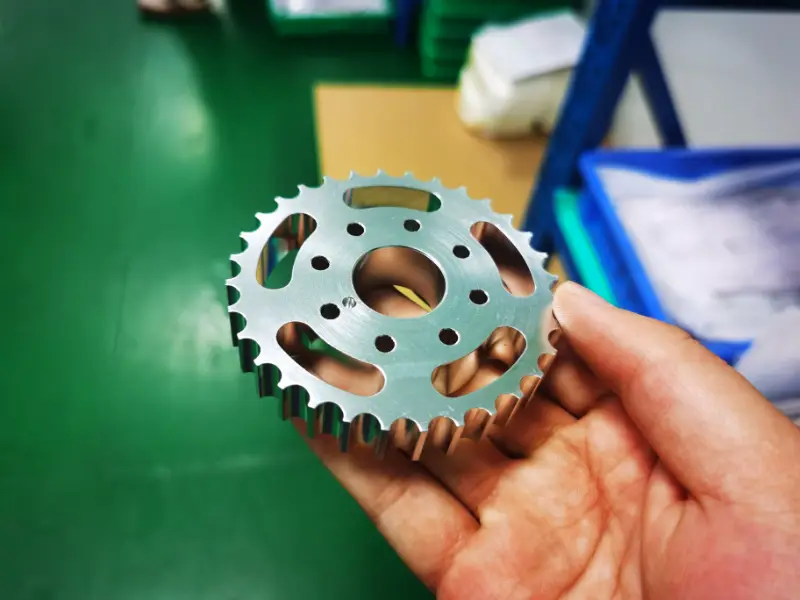
Aluminum
Aluminum is the most commonly used precision-machined component. It has a low density, a hard texture, and a soft material. Thanks to its corrosion resistance, it is widely used in aerospace, bionic bones, and automotive parts manufacturing.
Color : Silver.
Types : Aluminum 6061、7075、2024、5052、6063 and MIC-6.
Surface finish : Polishing, Brushing, Sandblasting, Chrome Plating, Anodizing, Electroplating, Powder Coating, Laser Etching.
Delivery time : 1-5 days.
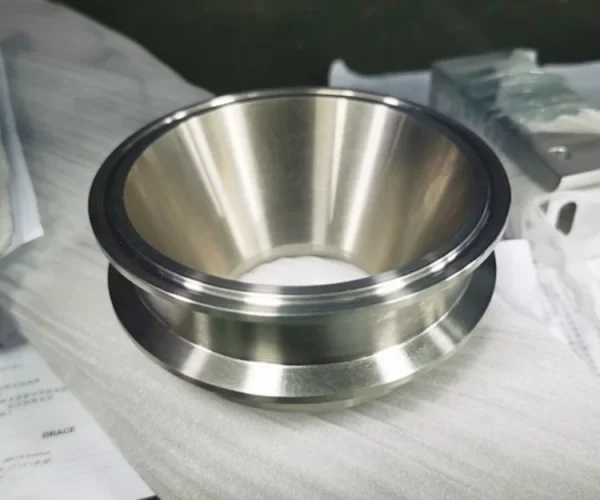
Stainless steel
Stainless steel offers strong corrosion resistance and a smooth, easy-to-clean surface. It is primarily used in kitchen equipment components, medical devices, building materials and construction, as well as automotive parts.
Color : Silver.
Types : Stainless steel 304/316/201/202/430/444/410/420/440c/2205/2507/17-4ph/17-7ph.
Surface finish : Polishing, Brushing, Sandblasting, Electroplating, Spraying, PVD (Physical Vapor Deposition), Passivation, Pickling, Coloring.
Delivery time : 2-5 days.
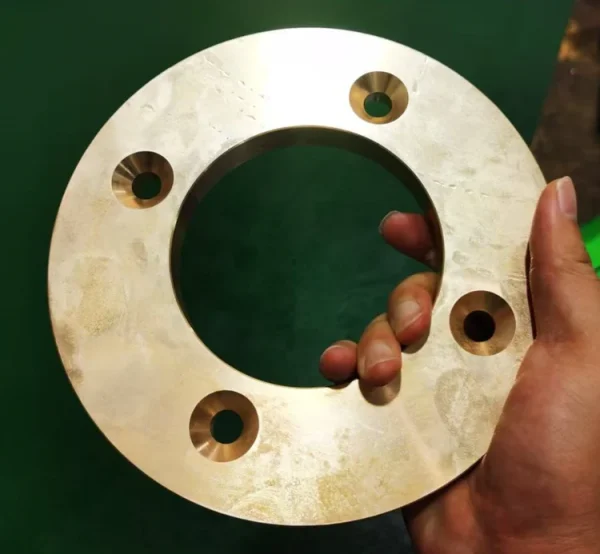
Copper
Possesses electrical conductivity, tensile ductility, and antimicrobial properties, primarily used for processing into crafts, decorative items, and medical equipment.
Color :Orange,yellow.
Types : copper H59/H62/Hpb59-1/C36000/HAI77-2/HSN62-1/HPb/HMn/HAl/HSn/HNi.
Surface finish : Passivation, Electroplating, Chemical Plating, Shot Peening, Sandblasting, Chemical Film Treatment, Polishing, Bright Cleaning.
Delivery time : 1-5 days.

Bronze
Bronze is a copper–tin alloy with good fluidity and corrosion resistance, widely used for bearings, gears, valves, and marine components such as propellers and pumps.
Color : gold/brown.
Types : Tin bronze, aluminum bronze, beryllium bronze, silicon bronze, manganese bronze.
Surface finish : Sandblasting, polishing, knurling, grinding, passivation, chemical film coating, impregnation coloring, brush/spray coloring, electroplating, anodizing, powder coating, brushing.
Delivery time : 1-5 days.
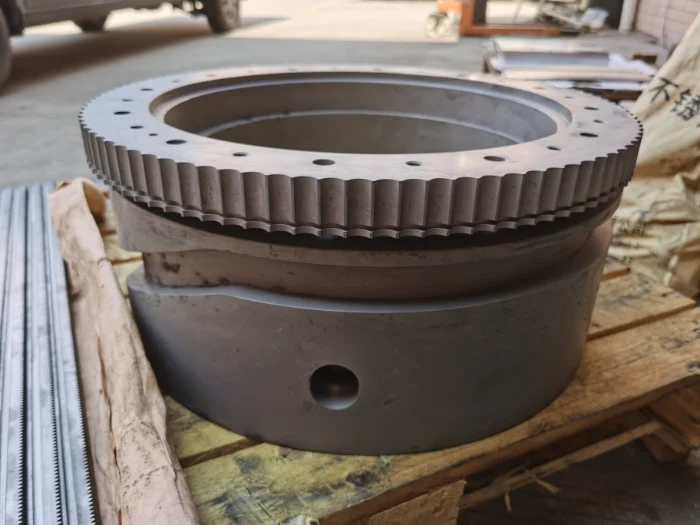
Steel
Steel is an iron–carbon alloy with adjustable strength, toughness, and wear resistance, widely used for bolts, shafts, gears, cutting tools, and engine components.
Color : Silver .
Types : Steel S20C,S45C,S50C,SK85,SK95,40Cr,4140,4130,H13,D2,W1,A2,D2,M2,SKD11,ASP-23,S136.
Surface finish :Sandblasting, Mirror Finish, PVD Coating, Brushed Finish, Spray Coating, Electroplating.
Delivery time : 1-5 days
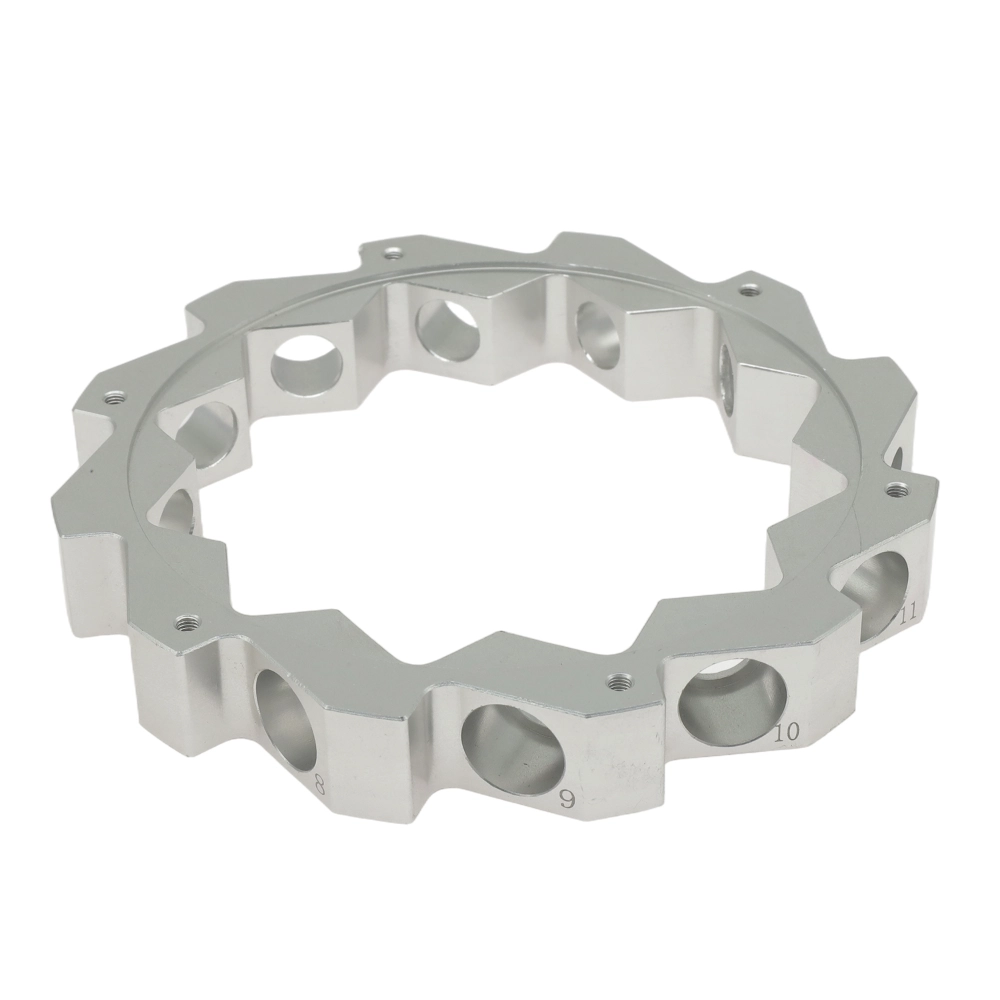
Magnesium
Magnesium is a lightweight metal with low cutting force, excellent thermal conductivity, and a high strength-to-weight ratio. Its superior vibration damping makes it well suited for aerospace, automotive, and electronics applications.
Color : Silver.
Types : Magnesium alloy AZ91D/AM60B/AM50A/AS41B/ZK60/MB8/AZ31/WE43/ZE41/LA141/LZ91.
Surface finish : Chemical conversion coating, anodizing, nickel plating, electroplating, composite coating, spray painting, powder coating, electrophoretic coating.
Delivery time : 1-5 days.
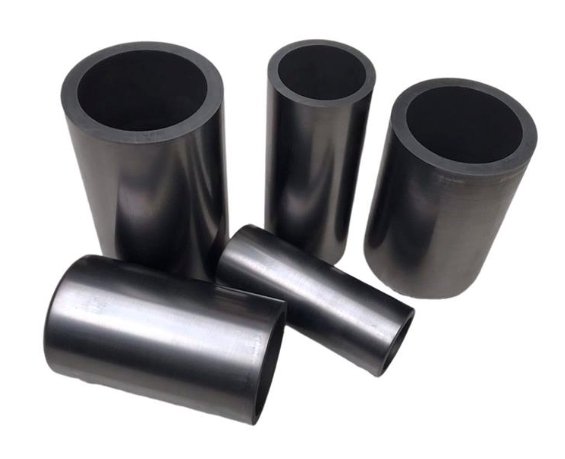
Graphite
Graphite conductivity is used for precision molding to avoid dust pollution caused by machining. It is mainly used for electrode manufacturing and EDM molds.
Color : Black.
Surface finish : Mechanical cutting, pickling, electrolytic treatment, coating, polishing, EDM surface strengthening.
Delivery time : 3-5 days
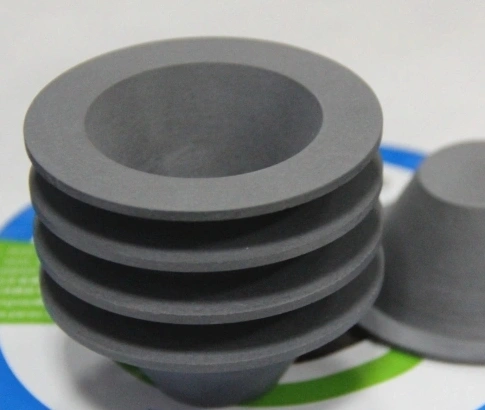
Conductive ceramic part
Conductive ceramics are used in aerospace and other fields due to their high hardness, brittleness, and excellent chemical stability, but they are difficult to process. Using pulsed discharge to generate high temperatures (approximately 10,000°C) to partially melt the ceramic allows for contactless processing, avoiding stress concentration and cracking caused by mechanical processing.
Type : Oxide/non-oxide conductive ceramics, composite conductive ceramics
Color : white, gold, pink black, etc.
Delivery time : 3-5 days
Slow wire EDM machining capability
| Item | Specification |
|---|---|
| Machining Accuracy | ±0.001 ~ 0.005 mm |
| Surface Roughness | Ra 0.1 ~ 0.8 μm |
| Accuracy Control | Constant temperature environment of 20 ± 0.5 °C; thermal deformation compensation ≤ ±1 μm |
| First Article Inspection | CMM inspection; CPK ≥ 1.67, key dimensions CPK ≥ 2.0 |
| Dual-wire Processing | Rough cut 0.25 mm + precision cut 0.1 mm with automatic switching |
Slow wire EDM machining guide
To ensure safe operation and stable machining quality in slow wire EDM, standardized safety measures and basic troubleshooting practices are essential. The following table summarizes key safety requirements and common corrective actions for slow wire EDM machining.
| Item | Requirement / Action |
|---|---|
| Fire Extinguishing Equipment | Two 4 kg ABC fire extinguishers within 30 m of the machining area |
| Exhaust Gas Treatment | Local exhaust ≥ 800 m³/h during brass wire machining; carbon filter replaced every 150 h |
| Grounding System | TN-S system; grounding resistance ≤ 4 Ω; monthly inspection |
| Overload Protection | 30 mA residual-current device (RCD); response time < 0.1 s |
| Electrode Wire Installation | Insulating gloves (1000 V rated) and protective goggles required |
| Equipment Maintenance | Safety shoes with steel toe (200 J impact resistance) |
| General Safety Protection | KN95 dust mask and anti-static clothing |
| Machining Accuracy Deviation | If deviation > 0.005 mm, clean optical scale and recalibrate origin |
| Surface Streaks (Z-axis) | Wire guide wear > 0.01 mm; replace wire guide (≈ every 500 h) |
| Corner Overcutting | Reduce X/Y axis servo gain to ~80%; enable corner deceleration |
| Frequent Wire Breakage | Check tension fluctuation (±0.5 N); replace tension sensor if needed |
| Automatic Wire Threading Failure | Clean threading path (0.4 MPa air); check wire diameter consistency (≤ 0.002 mm) |
Advantage of slow wire EDM machining
Ultra-high precision: Positioning accuracy ±0.001~0.005mm, surface roughness Ra 0.1~0.8μm, no secondary polishing required
Wide material adaptability: Capable of machining difficult-to-cut materials such as cemented carbide (HRC65+) and titanium alloys, heat-affected zone ≤10μm
Superior Stability: Unidirectional wire feed (0.001–0.25 m/s) + single-use electrode wire, processing consistency CPK ≥ 1.67
High Process Integration: Dual-wire auto-switching (coarse wire efficiency 80 mm²/min + fine wire precision 10x improvement)
Application of slow wire EDM machining part
Aerospace: Engine blade molds (titanium alloy TC4, contour error ≤ 0.003 mm)
Medical: Artificial joint molds (cobalt-chromium alloy, surface roughness Ra 0.3μm)
Semiconductor: Chip packaging molds (minimum groove width 0.05mm, perpendicularity error ≤0.001mm/m)
Premium Automotive: Transmission gear molds (7075 aluminum alloy, dimensional stability ≤0.002mm)
FAQ of slow wire EDM machining
What is Slow Wire EDM and how does it differ from other EDM processes?
Slow Wire EDM is a precision machining method that uses a slowly moving wire electrode for electrical discharge erosion. It excels in accuracy, surface finish, and the ability to machine complex geometries compared to Fast Wire EDM or die-sinking EDM, making it ideal for high-precision tasks.
What types of materials can be processed using Slow Wire EDM?
It can process conductive materials such as hardened steels, stainless steels, titanium alloys, copper, and brass. It is particularly effective for hard, brittle, or heat-sensitive materials that are challenging to machine with conventional methods.
What are the common applications of Slow Wire EDM?
Slow Wire EDM is used in aerospace, medical device, and precision tool manufacturing for machining complex molds, dies, prototypes, and small parts with tight tolerances and fine details.
What factors affect the accuracy and surface finish of Slow Wire EDM?
Key factors include wire tension, pulse parameters, servo settings, dielectric fluid quality, and machine stability. The choice of wire and the condition of the wire guides and nozzles are also important.
How can I optimize Slow Wire EDM for better results?
Select the appropriate wire and dielectric fluid, adjust pulse parameters to balance speed and quality, maintain the machine regularly, and use software for optimization and monitoring.