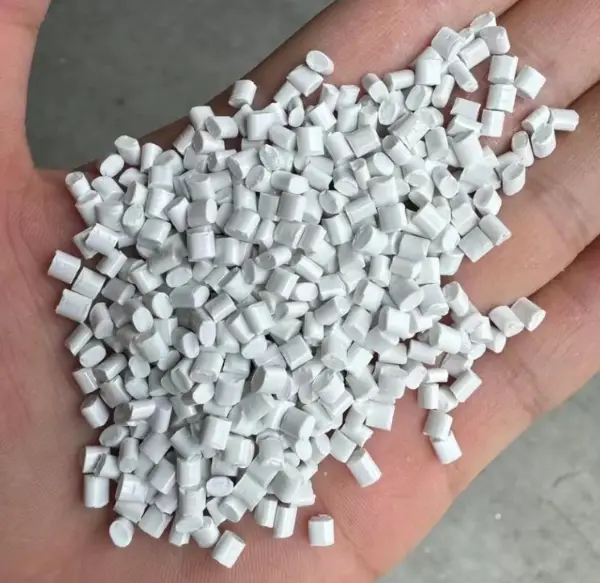
ABS is an amorphous polymer and a type of plastic widely used in everyday life. Its main components include acrylonitrile, butadiene, and styrene. It is often modified or processed with additives to meet specific performance requirements. The following discussion will focus on the melting point of ABS material.
What is the melting point of ABS material?
ABS is a type of plastic. Plastics are classified into crystalline polymers and amorphous polymers. Since ABS is an amorphous polymer, it does not have a defined melting point. Instead, the glass transition temperature (Tg) is typically used as a substitute for its melting point. The glass transition temperature refers to the critical temperature at which an amorphous polymer transitions from a hard, brittle “glass state” to a soft, highly elastic “rubber state.” This is abbreviated as Tg. In the practical application and material data of ABS, the following reference temperatures are typically provided:
· Melting/softening temperature range: Generally between 100°C and 110°C. This is the temperature range at which standard ABS begins to soften noticeably and exhibits flowability.
· Common reference values: Certain specific ABS formulations may reach values ranging from approximately 110°C to 175°C; this typically refers to their softening point or performance under specific test conditions.
It should be noted that the specific Tg temperature values may vary depending on the ratio of the three monomers in the ABS, the presence of modifiers (such as heat stabilizers, flame retardants, etc.), and differences in testing methods.
Why is the melting point of ABS important?
As processing temperatures rise, the state of ABS changes. Once melted or softened, its processing properties and chemical characteristics undergo significant changes, primarily reflected in the following aspects:
1. Key basis for processing and molding: It is central to temperature control in processes such as injection molding, plastic extrusion, 3D printing, and CNC machining. Temperatures that are too low can result in poor plasticization and surface defects, while temperatures that are too high may cause material decomposition and discoloration.
2. Determines Product Performance and Quality: Appropriate temperatures ensure the product’s mechanical properties, dimensional stability, and surface finish; improper control can lead to issues such as internal stress and insufficient weld line strength.
3. Defines Upper Usage Temperature Limits: Its glass transition temperature (Tg, approximately 100–110°C) and softening temperature are key indicators of heat resistance; when ambient temperatures exceed these limits, the product will soften and deform, necessitating appropriate selection of application scenarios based on these parameters.
4. Health Hazards: When ABS reaches its melting temperature, it readily releases carcinogenic substances such as styrene, acrylonitrile, and butadiene, which can cause damage to the nervous system and liver, as well as leukemia in workers. Volatile aerosols and particles must be promptly treated.
Processing Methods Selected Based on the Melting Point of ABS
The melting point (melting temperature) of ABS is closely related to its processing methods. The following are some common processing methods and related equipment.
Injection Molding: This is the most common method for processing ABS materials. It is suitable for mass production of complex-shaped parts with moderate precision requirements, such as enclosures, automotive components, and electrical parts. The injection molding temperature for general-purpose ABS is typically 200–260°C. For heat-resistant or electroplating-grade ABS, the temperature can be raised to 270°C, but care must be taken as ABS tends to decompose when temperatures exceed 250°C.
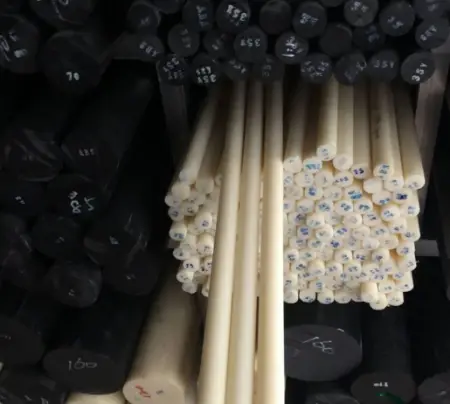
ABS Extrusion: ABS is heated to a molten state and is commonly used to produce materials such as pipes, sheets, and rods. The extrusion temperature is generally 160–195°C, and adjustments must be made based on the design thickness and shape of the ABS pipe to ensure uniform melt flow.
Blow Molding: The blow molding temperature is generally 200–240°C, requiring sufficient ductility of the parison during the inflation process. This method is suitable for producing hollow products such as containers and pipes.
Vacuum Forming (Thermoforming): The vacuum forming temperature is generally 140–180°C, requiring the sheet material to reach a softened state for forming. It is used to produce thin-walled, simple-shaped products, such as packaging boxes and decorative panels.
Does the melting point of modified ABS materials change?
If there are other performance requirements for ABS, our engineers at Weldo Machining typically add other materials to modify properties such as strength, heat resistance, toughness, flame retardancy, and weather resistance.
Alloying and modification of ABS can result in a significant change in the glass transition temperature (Tg). Generally, the Tg is raised to a value between that of ABS and the melting point/Tg of the added material. The most common example is PC-filled modification, where PC is added to ABS; the Tg of PC-ABS material is higher than that of ABS. Additionally, the addition of materials such as PMMA and PBT also leads to a significant increase in Tg, typically by approximately 10–40°C.
Heat-resistant modification of ABS is achieved by adding heat-resistant monomers or resins, which can increase the Tg of ABS. For example, ultra-high heat-resistant ABS resin is produced by adding α-methylstyrene to ABS, resulting in a Tg of up to 130°C, which is significantly higher than that of general-purpose ABS (100–120°C).
Filler-reinforced modification of ABS involves adding inorganic fillers such as glass fiber, talc, and calcium carbonate. This does not alter the Tg or melting temperature range of the ABS matrix itself, but it does increase the heat deflection temperature and melt viscosity.
Flame-retardant modification of ABS involves adding halogen-based flame retardants and other components to the material. This does not change its glass transition temperature but lowers the material’s thermal decomposition temperature; process temperatures must be strictly controlled to prevent material decomposition.
What Shapes Can Be Made from Melted ABS?
Complex three-dimensional shapes are primarily produced through injection molding, which can be used to manufacture products such as electronic device housings, automotive interior components, toys, and home appliance casings. This process enables the creation of complex internal structures, fine details, and precise dimensions.
Continuous abs profiles, pipes, or sheets are produced using the extrusion molding process. This method can be used to manufacture ABS pipes, architectural profiles, furniture components, and sheets, enabling the production of continuous products with unlimited length and fixed cross-sectional shapes.
Hollow containers or bottles are manufactured through blow molding. This process can produce various containers such as plastic bottles and storage bins by inflating a molten ABS parison to form a hollow structure, making it suitable for packaging and storage applications.
Thin-walled or shallow-cavity products are produced using thermoforming or vacuum forming processes, resulting in items such as disposable food containers, trays, and packaging shells. These are formed by heating ABS sheets and molding them against a die using vacuum or pressure, making them suitable for producing thin-walled, shallow-cavity flat products.
Films or sheets are produced using cast film or blown film processes, resulting in products such as packaging films and decorative films. These processes yield films with uniform thickness and smooth surfaces, suitable for applications in food packaging and decoration.
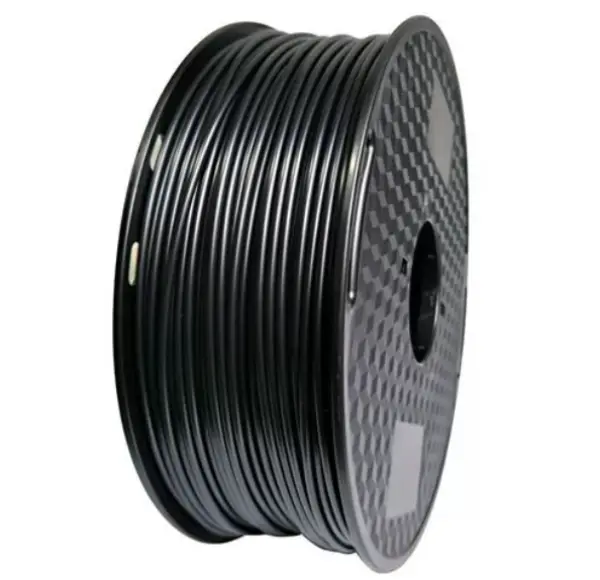
Fibers or filaments are manufactured using filament drawing or spinning processes, producing plastic filaments, ropes, and raw materials for woven bags. This involves extruding molten ABS through fine orifices to form fibers, which are then cooled, solidified, and wound onto a spool.
All of the above shapes are achieved based on the flow properties of molten ABS and the characteristics of different processing methods. Specific shapes can be customized as needed by adjusting mold and process parameters.

Conclusion
The concept of a “melting point” for ABS does not exist in the professional materials field. However, in everyday processing and use, people are more accustomed to using “melting point” interchangeably with “glass transition temperature” for communication. Understanding how to control the glass transition temperature of different modified ABS materials facilitates safe and efficient processing and manufacturing in practical applications. After molding, ABS is typically CNC-machined according to the customer’s precision requirements, with accuracy reaching up to the micron level. If you have related processing needs, please consult us at Weldo Machining. We can provide you with more material processing expertise, DFM reports, and transparent quotes.
Question
Can ABS material be recycled and reused?
ABS is a recyclable material. Physical recycling is the mainstream method; it is technically mature and low-cost, but the recycled ABS’s performance is slightly reduced. Chemical recycling preserves the original properties of ABS and is suitable for high-end applications, but it involves higher technical complexity and costs. The effectiveness of recycling is influenced by material purity, impurities, and processing history, requiring strict control.
Is ABS material toxic?
Under normal conditions at room temperature, ABS is generally non-toxic and complies with safety standards. However, it may release harmful VOCs when exposed to temperatures exceeding 250°C or extreme environments. Products containing substandard additives may also pose risks. We recommend purchasing certified products, avoiding high temperatures and contact with strong corrosives, and ensuring that ABS children’s products are protected from chewing.