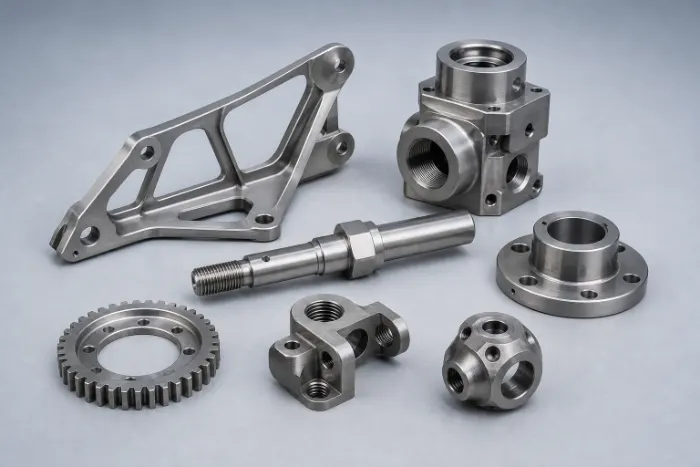
Precision Titanium Parts

Custom Titanium CNC Machining

Titanium combines low weight, high strength and excellent corrosion resistance. Send your drawing for material review, process planning and a transparent quote.

Upload je tekening →
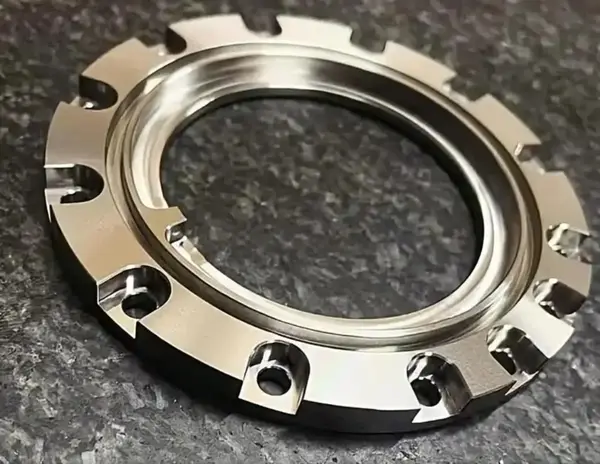
Custom CNC-machined titanium component
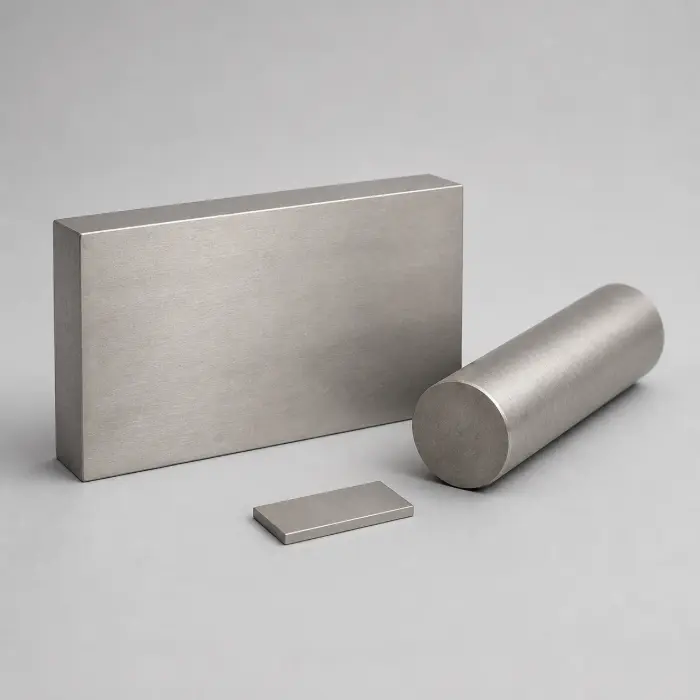
Titanium alloy raw material

Titanium Properties

Key Performance of Titanium

Titanium provides high mechanical strength at approximately half the density of steel, supporting lightweight and corrosion-resistant components.

4.43–4.51Density · g/cm³
240–1,100Tensile strength · MPa
170–1,000Yield strength · MPa
100–120Elastic modulus · GPa
8–30%Rek
6.7–22Thermal conductivity · W/m·K
High strength-to-weight Corrosiebestendig Fatigue resistant Non-magnetic

Values vary by grade, product form and heat-treatment condition.

Titanium Grade Selection

Titanium Grades for CNC Machining

Select the grade by required strength, corrosion resistance, formability, fatigue performance and service environment.

Grade 1 titanium material

Grade 1 · UNS R50250

Grade 1 Titanium

Commercially pure titanium · highest ductility among CP grades

Grade 1 provides the highest ductility and formability among commercially pure titanium grades, together with excellent corrosion resistance and weldability.

Toepassingen Plate heat exchangers, transition plates and formed shells
Material Class Commercially pure titanium
Nominal Composition Unalloyed titanium

Material form and certification requirements are confirmed from the drawing before machining.

Bewerkingsmogelijkheden

Titanium CNC Machining Parameters

Maximale bewerkingslengteUp to 5,000 mm
Minimale bewerkingsdiameterFrom Ø0.5 mm
Standaard maattolerantie±0,02 mm
Precision Critical FeaturesTot ±0,005 mm
Vlakheid / RondheidDown to 0.01 mm
OppervlakteruwheidRa 0.8–1.6 μm · polished to Ra 0.4 μm
ProductassortimentPrototype, low-volume and repeat production

Final capability is confirmed from the grade, size, geometry, datum structure and inspection requirements.

Procesbesturing

How We Control Titanium Machining

Stable titanium machining depends on coordinated tooling, cooling, workholding and toolpath control.

Cutting Tool Control

Sharp carbide tools reduce friction, built-up edge and premature wear.

Warmte- en spaanderbeheer

Directed coolant removes concentrated heat and prevents chip recutting.

Stable Workholding

Rigid support controls vibration and protects thin walls and datums.

Staged Machining

Separate stages control stress release and final dimensions.

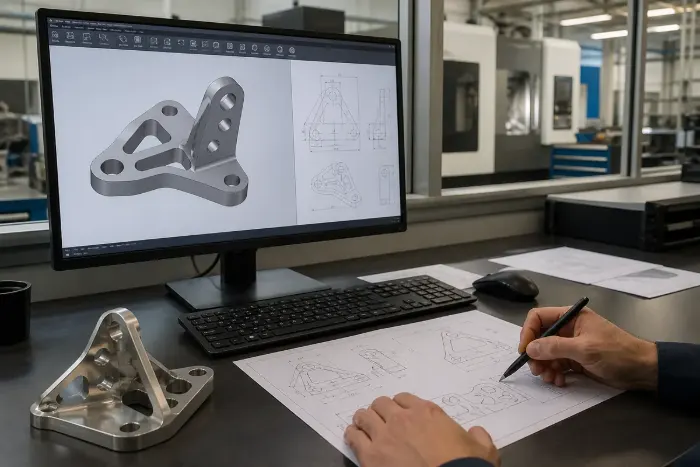
Titanium CNC machining design review

Cost-Saving DFM

Design Titanium Parts for Efficient Machining

A focused drawing review reduces tool wear, setup time and unnecessary finishing operations before production.

Control Tolerances Apply tight tolerances only to functional interfaces.
Increase Corner Radii Larger internal radii improve tool access and stability.
Limit Deep Features Reduce deep pockets and extreme depth-to-width ratios.
Protect Thin Walls Use stable wall sections and clear datum surfaces.

Warmtebehandeling

Controlled Properties After Machining

The treatment route is selected from the titanium grade, strength target, distortion risk and final dimensional requirements.

Stress Relieving Reduces residual stress and dimensional movement.
Gloeien Balances ductility, stability and material condition.
Solution & Aging Strengthens suitable alpha-beta and beta alloys.
Process Records Heat-treatment documentation is available on request.
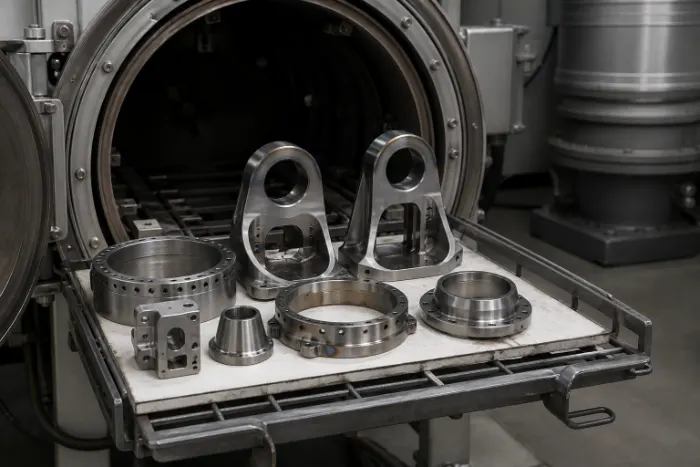
Titanium components prepared for controlled heat treatment

Titanium Projects

Custom CNC-Machined Titanium Parts

Turned, milled and multi-axis titanium components from functional prototypes to repeat production.

Custom CNC-machined titanium parts
01
Aerospace & Marine Lightweight and corrosion-resistant structural parts
02
Medical & Surgical Precision components made to controlled specifications
03
Automotive & Robotics High-performance parts for demanding motion systems
04
Chemische verwerking Corrosion-resistant fittings, housings and interfaces

Kwaliteitscontrole

Van tekeningbeoordeling tot eindcontrole

Material, dimensional and surface requirements are identified before production and verified before shipment.

01

Beoordeling van de tekening

Confirm grade, datums, tolerances, finishes and inspection requirements.

02

Material Verification

Check the specified titanium grade, condition and required certification.

03

Procesinspectie

Monitor critical dimensions between stages to control accumulated error.

04

Eindcontrole

Verify specified features with CMM, optical and precision measuring tools.

Veelgestelde vragen over het bewerken van titanium

Vragen over het project

What are the challenges of CNC machining titanium alloys?

Low thermal conductivity concentrates heat at the cutting edge. High hot strength, chemical reactivity, work hardening and springback also increase tool wear, galling, chatter and dimensional variation.

Which titanium grade is best for machining?

Grade 2 suits corrosion-resistant general parts, Grade 5 provides higher structural strength, and Grade 23 serves medical and fracture-critical applications.

How can titanium machining costs be reduced?

Avoid unnecessary deep pockets, thin walls, sharp internal corners and full-part tight tolerances. Standard holes and clear datums also reduce setups and machining time.

Can titanium parts receive surface treatment?

Yes. Common options include polishing, bead blasting, titanium anodizing, PVD coating, dry-film lubricant and plasma nitriding.