
Een met machinaal bewerkte afwerking is een van de meest voorkomende oppervlakteafwerkingen die rechtstreeks voortkomt uit CNC-bewerkingsprocessen. In veel industriële toepassingen biedt een bewerkte afwerking een optimale balans tussen functionaliteit, nauwkeurigheid en kosten. Inzicht in wanneer en hoe een gefreesde afwerking helpt ingenieurs en inkopers om weloverwogen productiebeslissingen te nemen zonder onnodige nabewerkingen.
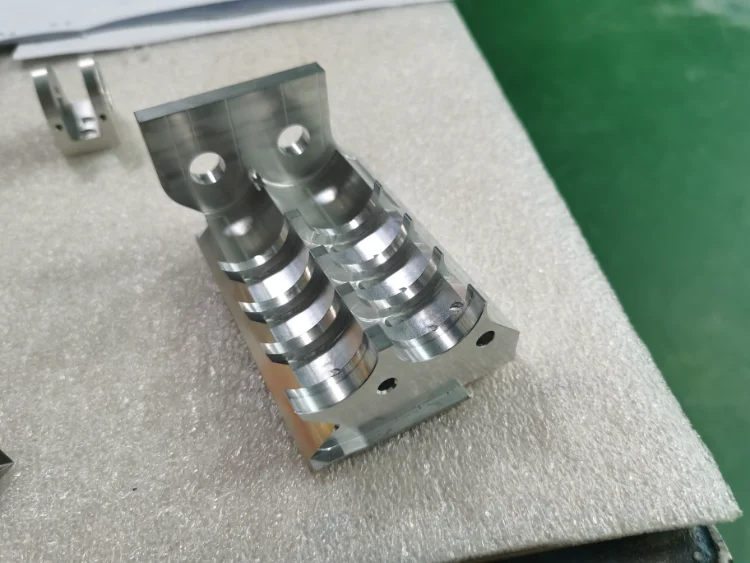
Wat is een „as-machined“-afwerking?
Een gefreesde afwerking verwijst naar de toestand van het oppervlak van een onderdeel direct na CNC frezen, draaien, of boren, zonder enige aanvullende oppervlaktebehandeling. De oppervlaktestructuur wordt bepaald door de snijgereedschappen, de bewerkingsparameters en de materiaaleigenschappen.
In de meeste gevallen is een gefreesde afwerking vertoont zichtbare bewerkingssporen en heeft een uniform, functioneel oppervlak dat geschikt is voor mechanische assemblage en industrieel gebruik.
Typische oppervlakteruwheid voor een machinaal bewerkte afwerking:
- Ra 1,6–3,2 μm (63–125 μin), afhankelijk van het materiaal en het gereedschap
Hoe een „as-machined“-afwerking wordt verkregen
Een gefreesde afwerking wordt vervaardigd door middel van gecontroleerde CNC-bewerkingen in plaats van secundaire afwerkingsprocessen. Belangrijke factoren die het uiteindelijke uiterlijk beïnvloeden, zijn onder meer:
- Geometrie en scherpte van het gereedschap
- Snijsnelheid en voedingssnelheid
- Bewerkingsbaanstrategie
- Bewerkbaarheid van het materiaal
Een deskundige dienstverlener op het gebied van CNC-bewerking zorgt ervoor dat een gefreesde afwerking voldoet aan de functionele en maatvoeringseisen en waarborgt tegelijkertijd de efficiëntie.

Materialen die geschikt zijn voor een „as-machined“-afwerking
Veel technische materialen presteren goed met een gefreesde afwerking, waardoor het een veelzijdige optie voor vloerbedekking is.
Metalen waarbij vaak een machinaal bewerkte afwerking wordt toegepast
- Aluminium legeringen (6061, 7075, 2024)
- Roestvrij staal (304, 316, 17-4PH)
- Koolstofstaal en gelegeerd staal
- Messing en koper
- Titanium legeringen
Deze metalen behouden stabiele afmetingen en een aanvaardbare oppervlaktekwaliteit bij een gefreesde afwerking, met name voor constructie- of interne onderdelen.
Kunststoffen die geschikt zijn voor een afwerking in bewerkte toestand
- POM (Delrin)
- ABS
- Nylon
- PTFE
- PEEK
Voor veel kunststofonderdelen geldt dat een met machinaal bewerkte afwerking is voldoende voor functionele tests en definitief gebruik.

Voordelen van een afwerking ‘zoals bewerkt’
Een gefreesde afwerking biedt verschillende praktische voordelen.
Kostenefficiëntie
Een gefreesde afwerking maakt secundaire nabewerkingsstappen zoals polijsten, coaten of anodiseren overbodig, waardoor de totale bewerkingskosten dalen.
Korte doorlooptijd
Omdat er geen nabewerking nodig is, kunnen onderdelen met een gefreesde afwerking kunnen sneller worden geproduceerd en geleverd.
Maatnauwkeurigheid
Secundaire oppervlaktebehandelingen kunnen de afmetingen van het onderdeel beïnvloeden. Een met machinaal bewerkte afwerking behoudt de oorspronkelijke bewerkingstoleranties.
Functionele prestaties
Voor interne onderdelen, bevestigingsmiddelen, beugels en industriële onderdelen, een gefreesde afwerking zorgt voor een voldoende goede oppervlaktekwaliteit zonder extra kosten.
Beperkingen van de afwerking „As Machined“
Ondanks de voordelen ervan, is een gefreesde afwerking is niet voor elke toepassing geschikt.
Zichtbare gereedschapssporen
Een gefreesde afwerking vertoont doorgaans bewerkingssporen, die mogelijk niet voldoen aan de esthetische eisen voor zichtbare onderdelen.
Beperkte bescherming tegen corrosie
Zonder coatings of behandelingen is een met machinaal bewerkte afwerking biedt een minimale corrosiebestendigheid, met name voor stalen onderdelen.
Beperkingen met betrekking tot oppervlakteruwheid
Toepassingen waarbij ultragladde oppervlakken vereist zijn, kunnen polijsten of slijpen nodig hebben in plaats van een gefreesde afwerking.
Als je deze beperkingen begrijpt, kun je beter bepalen wanneer een met machinaal bewerkte afwerking is gepast.

Machinaal bewerkte afwerking versus andere oppervlakteafwerkingen
In vergelijking met anodiseren, polijsten of parelstralen, is een gefreesde afwerking legt de nadruk op functionaliteit in plaats van op uiterlijk.
- Machinaal bewerkte afwerking: voordelig, snel, functioneel
- Geanodiseerd afwerking: corrosiebestendigheid, kleuropties
- Gepolijste afwerking: strak uiterlijk, decoratief
- Afwerking met parelstraal: matte textuur, minder schittering
Een dienstverlener op het gebied van CNC-bewerking kan op basis van de toepassingsbehoeften de juiste afwerking aanbevelen.
Typische toepassingen van een 'as-machined'-afwerking
Een gefreesde afwerking wordt op grote schaal gebruikt in diverse sectoren, waaronder:
- Onderdelen voor industriële apparatuur
- Automobielindustrie en onderdelen voor elektrische voertuigen
- Lucht- en ruimtevaart constructieonderdelen
- Medisch prototypes van apparaten
- Opspanningen, mallen en gereedschappen
Bij deze toepassingen zijn prestaties en precisie belangrijker dan het uiterlijk.
Wanneer kiest u voor een ‘as-machined’-afwerking?
Een gefreesde afwerking is de beste keuze wanneer:
- Onderdelen zijn inwendig of niet zichtbaar
- Er gelden strenge toleranties
- Kosten en doorlooptijd zijn van cruciaal belang
- De onderdelen worden later verder bewerkt
Door in een vroeg stadium overleg te plegen met een leverancier van CNC-bewerkingsdiensten kunt u de optimale oppervlaktebehandeling kiezen.

Waarom zou u Weldo Machining kiezen voor onderdelen met een „as-machined“-afwerking?
Weldo Machining biedt precisie-CNC-bewerkingen met betrouwbare gefreesde afwerking kwaliteit bij zowel metalen als kunststoffen. Onze ingenieurs optimaliseren de bewerkingsparameters om een constante oppervlaktekwaliteit te garanderen en tegelijkertijd de kosten en doorlooptijd binnen de perken te houden.
Als betrouwbare dienstverlener op het gebied van CNC-bewerking ondersteunen wij onze klanten met:
- Materiaalspecifieke bewerkingsstrategieën
- Strak tolerantie controle
- Prototype en schaalbaarheid van de productie
- Transparante prijsopgaven en snelle doorlooptijd
Conclusie: Als bewerkte afwerking voor praktische CNC-toepassingen
Een met machinaal bewerkte afwerking blijft een van de meest praktische en meest gebruikte oppervlakteopties in CNC-bewerking. Het biedt kostenefficiëntie, snelle levering en betrouwbare maatnauwkeurigheid voor een breed scala aan materialen en toepassingen.
Als u voor uw project functionele, nauwkeurig vervaardigde CNC-onderdelen nodig hebt zonder onnodige afwerkingskosten, neem dan contact op met Weldo Machining vandaag om te bespreken gefreesde afwerking opties en ontvang een concurrerend citaat.
