Aluminiumprofielen op maat
Maatwerkdiensten op het gebied van aluminium extrusie
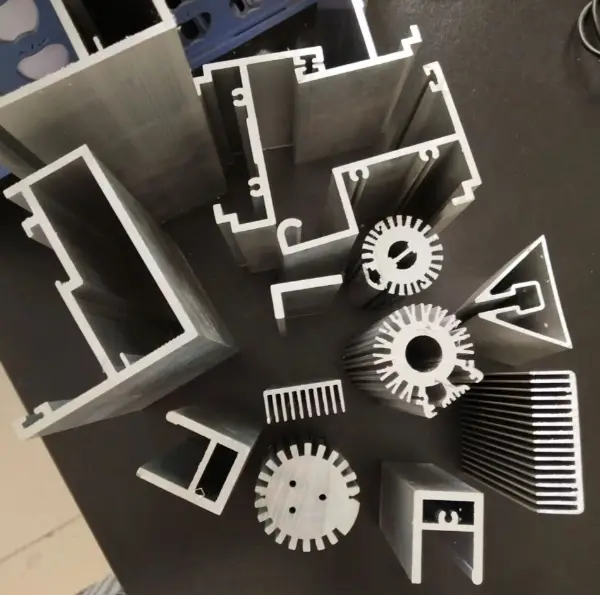
Zet een profieltekening om in productieklaar extrusiemateriaal, waarbij de ontwikkeling van matrijzen, warmtebehandeling, precisiesnijden, CNC-bewerking, afwerking en inspectie via één productietraject worden beheerd.
De haalbaarheid wordt vastgesteld op basis van de legering, de hardheid, de geometrie van het profiel, de toleranties, de afwerking, de hoeveelheid en de vereiste snijlengte.
Extrusieproces
Hoe aluminiumextrusie werkt
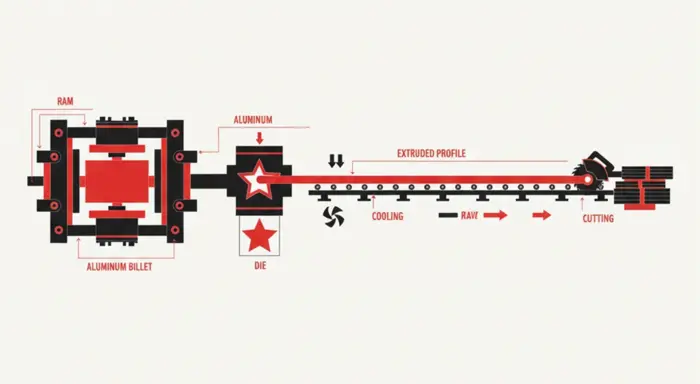
Een verwarmd staafstuk wordt door een profielmatrijs geperst, waarna het wordt afgekoeld, rechtgetrokken, gerijpt en afgewerkt volgens de goedgekeurde tekening.
Voorbereiding van de staaf
De geselecteerde legeringsstaaf wordt gesneden en verwarmd om een gecontroleerde materiaalstroom te verkrijgen.
De extrusie
Het staafmateriaal wordt door een massieve, halfholle of holle profielmatrijs geperst.
Gecontroleerde koeling
Het ontstane profiel wordt gehard volgens de eisen die aan de legering en de hardheidsgraad worden gesteld.
Rekken
Het profiel wordt rechtgetrokken en de resterende vervorming wordt verminderd.
Veroudering
Door natuurlijke of kunstmatige veroudering worden de opgegeven hardheid en sterkte bereikt.
Secundaire bewerkingen
Profielen worden op maat gezaagd, CNC-gefreesd, afgewerkt en gecontroleerd volgens de gestelde eisen.
Directe extrusie
Het werkstuk en de ram bewegen in dezelfde richting. Dit is de meest gangbare werkwijze voor uiteenlopende profielvormen.
Indirecte extrusie
Door de wrijving tussen staaf en container te verminderen, kan de consistentie van de doorstroming bij geschikte profielen en persconfiguraties worden verbeterd.
Keuze van de legering
Kies een aluminium extrusielegering
Kies de legering en de hardheidsgraad in onderlinge afstemming. De uiteindelijke keuze wordt beïnvloed door de sterkte, de complexiteit van de doorsnede, de kwaliteit van de anodisatie, de geleidbaarheid, de lasbaarheid en de gebruiksomgeving.
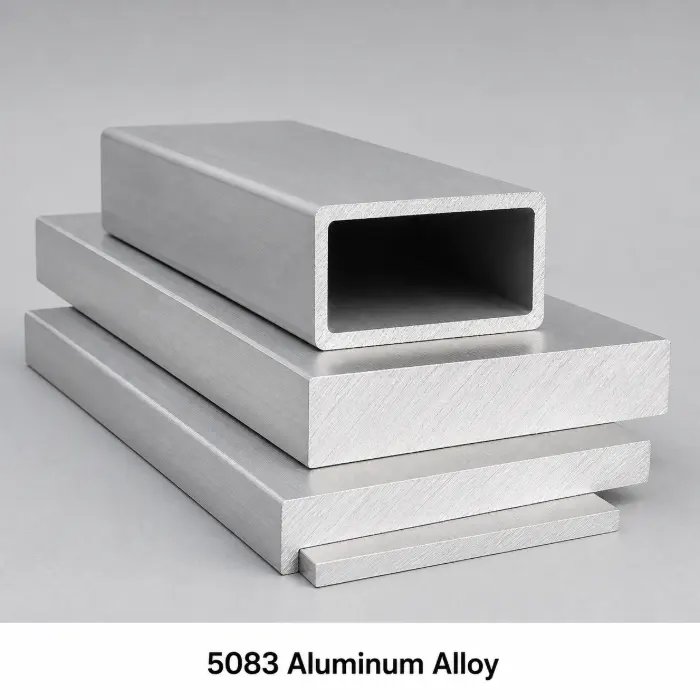
5083 Aluminium
Een niet-warmtebehandelbare, zeer sterke 5xxx-legering met een uitstekende weerstand tegen zeewatercorrosie, lasbaarheid en taaiheid bij lage temperaturen.
Toepassingen in de maritieme sector, de chemische verwerkingsindustrie en cryogene toepassingen, waarbij corrosiebestendigheid en lasprestaties van cruciaal belang zijn.
Scheepsrails, gelaste steunen, dekconstructies, frames en corrosiebestendige profielonderdelen.
Ruwe afwerking, parelstralen, conversielak, poeder- of PVDF-coating en gecertificeerde beschermende anodisatie.
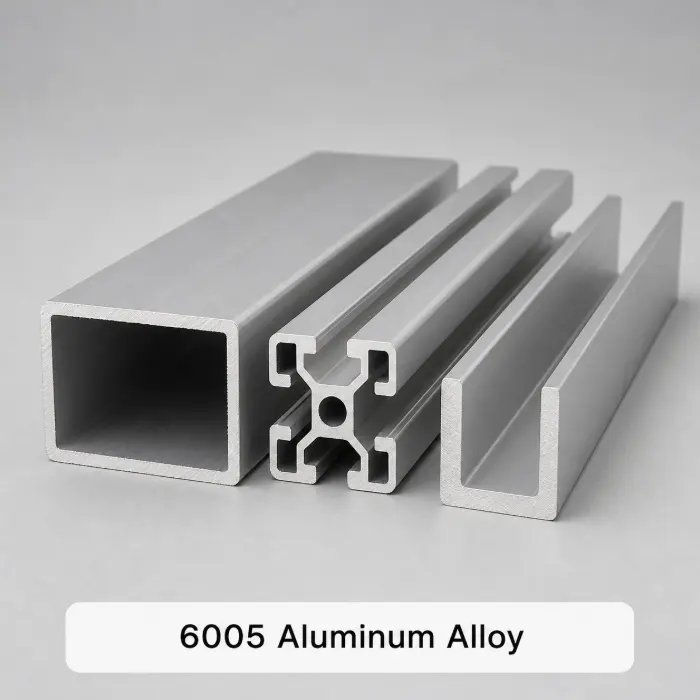
6005 aluminium
Een constructielegering met gemiddelde sterkte, die een goede corrosiebestendigheid en bewerkbaarheid biedt en betere extrusie-eigenschappen heeft dan veel 6xxx-kwaliteiten met een hogere sterkte.
Industriële en transportconstructies waarvoor een hoge sterkte, lasbaarheid en een herhaalbare profielgeometrie vereist zijn.
Machineframes, ladders, platforms, constructierails, steunen en modulaire profielsystemen.
Anodiseren, poedercoaten, elektroforetisch coaten, conversiecoating en machinaal bewerkte afwerking.
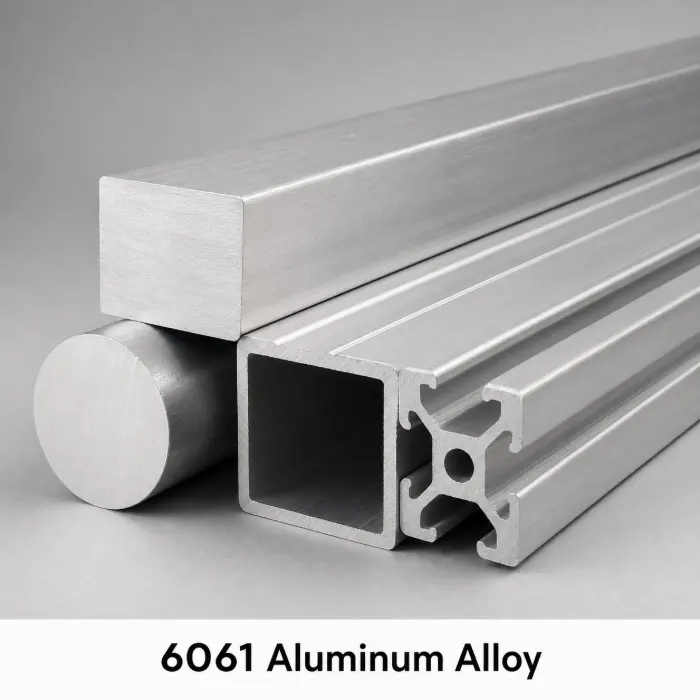
6061-aluminium
Een veelzijdige, warmtebehandelbare legering die een evenwicht biedt tussen structurele sterkte, corrosiebestendigheid, lasbaarheid en bewerkbaarheid na extrusie.
Algemene industriële, automatiserings- en transporttoepassingen waarbij structurele of secundaire CNC-bewerkingen vereist zijn.
Machineframes, geleiderails, montageprofielen, constructiebehuizingen en CNC-bewerkte extrusieonderdelen.
Anodiseren, hardanodiseren, conversiecoating, poedercoating, lakken en machinaal bewerkte afwerking.
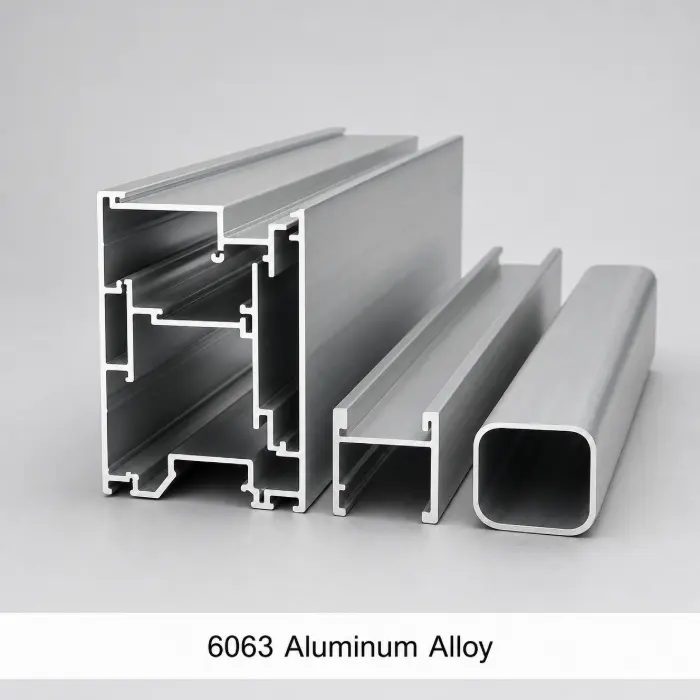
6063-aluminium
Een legering die speciaal is ontwikkeld voor extrusie, met een uitstekende oppervlaktekwaliteit, een hoge extrudeerbaarheid en een uitstekend resultaat bij decoratieve anodisatie.
Toepassingen in de bouw, consumentenproducten en thermische toepassingen waarbij het uiterlijk en de complexiteit van het profiel voorrang hebben boven maximale sterkte.
Raam- en deurprofielen, sierlijsten, LED-kanalen, koellichamen, displayframes en decoratieve behuizingen.
Decoratief anodiseren, elektroforetische coating, poedercoating, PVDF-coating, polijsten en borstelen.
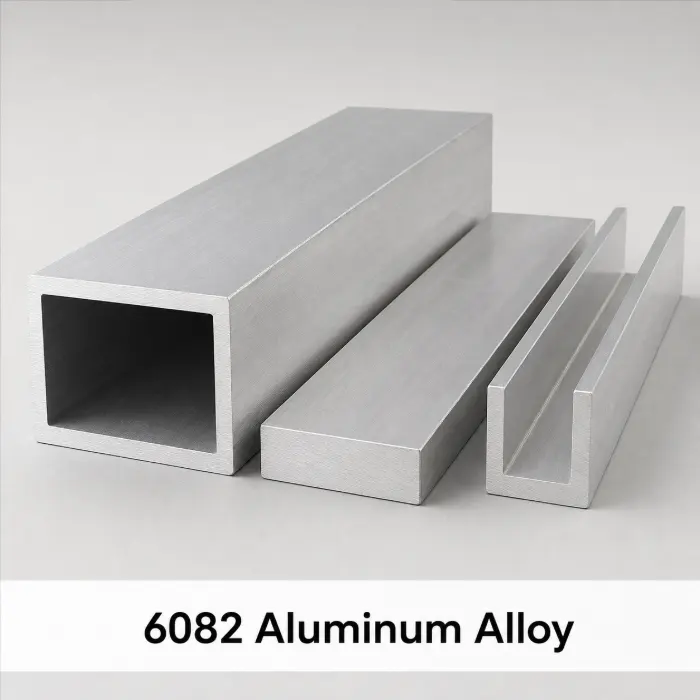
6082 Aluminium
Een zeer sterke 6xxx-constructielegering met een goede corrosiebestendigheid, lasbaarheid en bewerkbaarheid, maar met een lagere extrudeerbaarheid dan 6063.
Transport- en bouwconstructies voor zware belastingen, waarbij sterkte belangrijker is dan een ingewikkelde dunwandige geometrie.
Draagconstructies, brug- en spoorwegonderdelen, zware steunen, transportconstructies en bewerkte profielen.
Beschermende anodisatie met uiterlijke kwaliteitscontrole, conversielaag, poeder- of PVDF-coating en machinaal bewerkte afwerking.
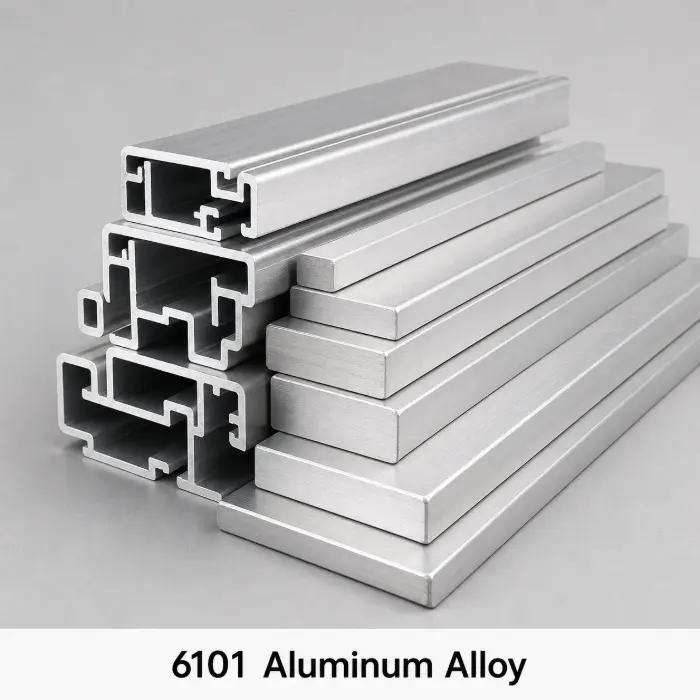
6101 Aluminium
Een warmtebehandelbare elektrische legering die is ontwikkeld met het oog op een hoge geleidbaarheid, een gemiddelde sterkte en goede extrusie-eigenschappen.
Elektrische distributie- en stroomvoorzieningsapparatuur waarbij geleidbaarheid, een consistente doorsnede en een beheersbaar gewicht van belang zijn.
Verdeelrails, stroomrails, elektrische connectoren, schakelapparatuuronderdelen en stroomverdeelprofielen.
Ruwe afwerking, vertinning, vernikkeling of verzilvering zoals gespecificeerd, plus een conversielaag of anodiseren waarbij de contactvlakken zijn afgedekt.
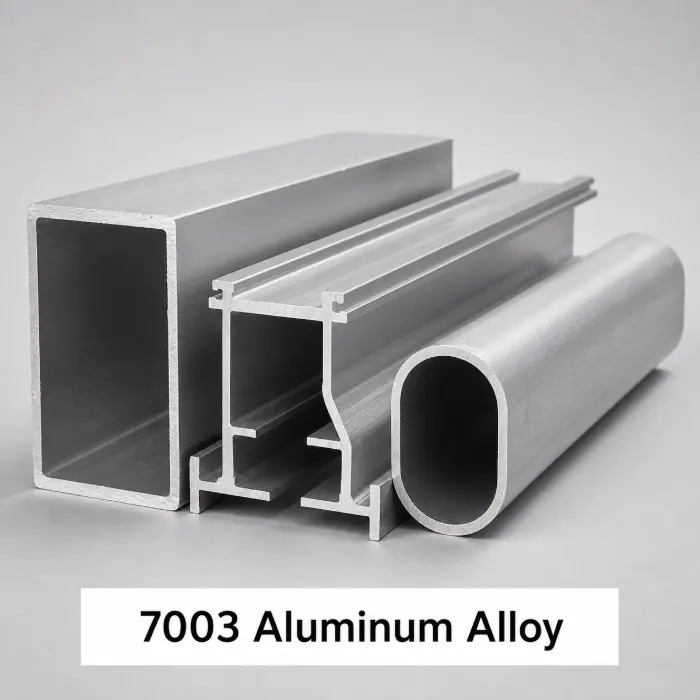
7003 Aluminium
Een zeer sterke zink-magnesium-extrusielegering met een betere lasbaarheid dan veel 7xxx-kwaliteiten en een goed potentieel op het gebied van botsveiligheid.
Automobiel-, transport- en lichtgewicht constructiesystemen waarvoor een hogere sterkte en betere vermoeiingsweerstand vereist zijn dan bij gangbare 6xxx-kwaliteiten.
Versterkingsprofielen voor voertuigen, botsconstructies, fietsonderdelen, rails en gelaste constructie-eenheden.
Beschermende anodisatie, conversielaag, poedercoating of PVDF-coating; bij verbindingen die onder spanning staan, moet bij het ontwerp rekening worden gehouden met corrosie.
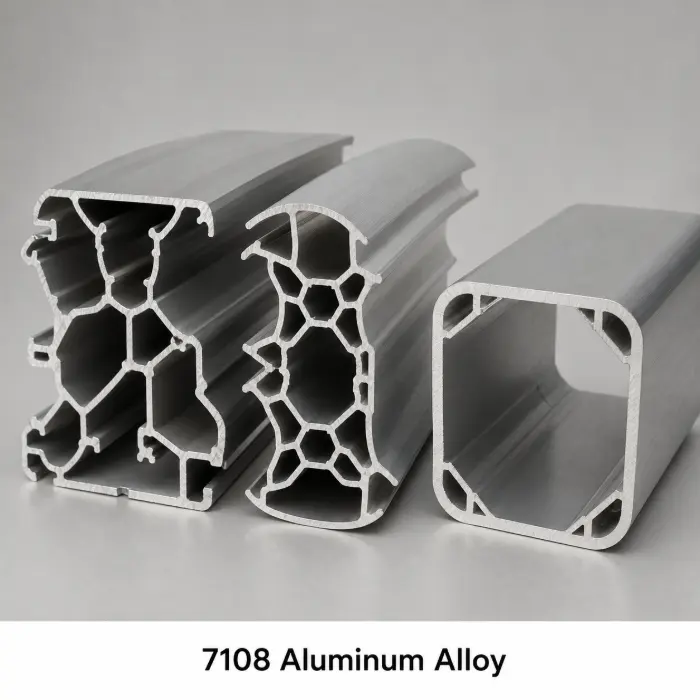
7108 Aluminium
Een zeer sterke extrusielegering met uitstekende vermoeiingsweerstand, beperkte vervormbaarheid en een striktere profielgeometrie dan 6xxx-legeringen.
Bouw- en transportconstructies die aan hoge belastingen worden blootgesteld en waarbij een optimale verhouding tussen sterkte en gewicht de belangrijkste eis is.
Draagconstructies, steunconstructies voor grote overspanningen, constructies voor zwaar verkeer en constructieprofielen voor hoge belastingen.
Beschermende anodisatie, conversielaag en poedercoating; lassen dient beperkt te blijven tot gevalideerde gebieden met lagere spanning.
De uiteindelijke beschikbaarheid, hardheid en afwerking worden afgestemd op de profielgeometrie, de mechanische eisen en het productievolume.
Oppervlaktebescherming
Oppervlakteafwerkingen voor aluminiumprofielen
Kies de afwerking op basis van blootstelling aan corrosie, slijtage, uiterlijk, geleidbaarheid en de eisen voor gebruik buitenshuis.
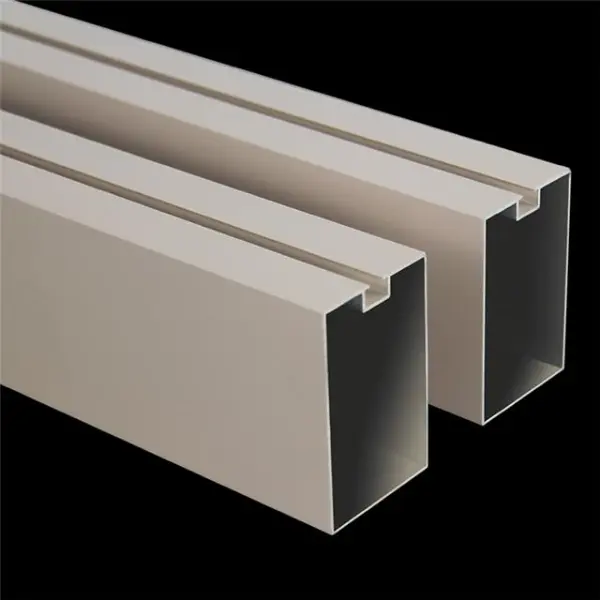
MAO / Keramische coating
Voegt een harde, keramiekachtige laag toe voor veeleisende omstandigheden op het gebied van slijtage en corrosie.
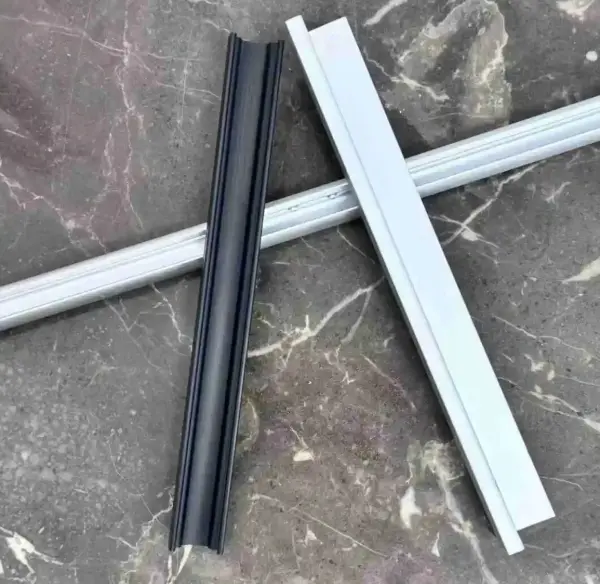
Anodiseren
Verbetert de corrosiebestendigheid, slijtvastheid en kleurcontrole.
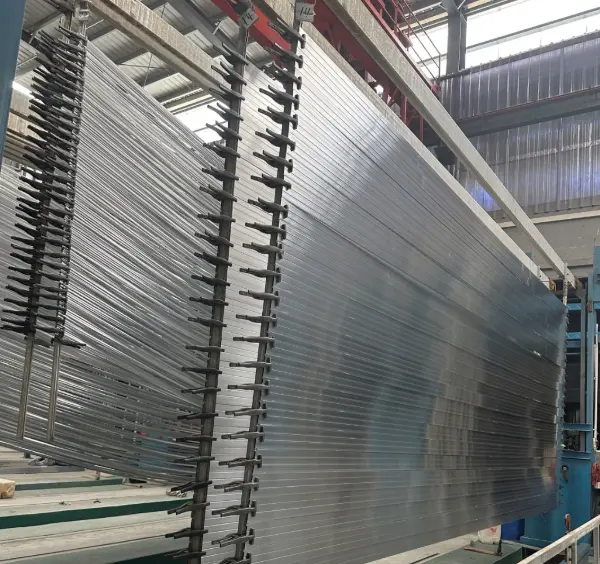
Elektroforetische coating
Zorgt voor een gelijkmatige decoratieve en beschermende laag op geschikte profielen.
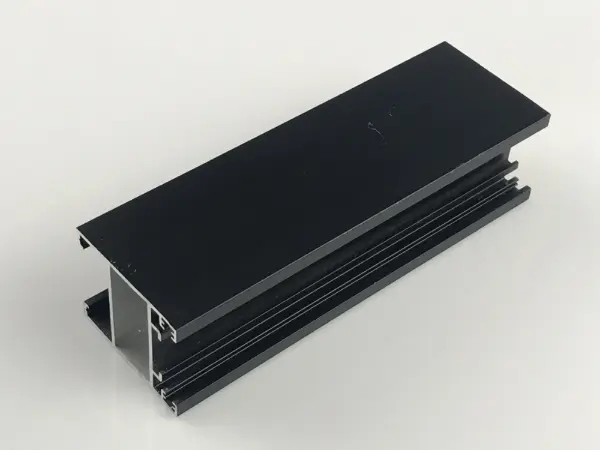
Poedercoating
Zorgt voor een duurzame gekleurde afwerking van architecturale en industriële profielen.
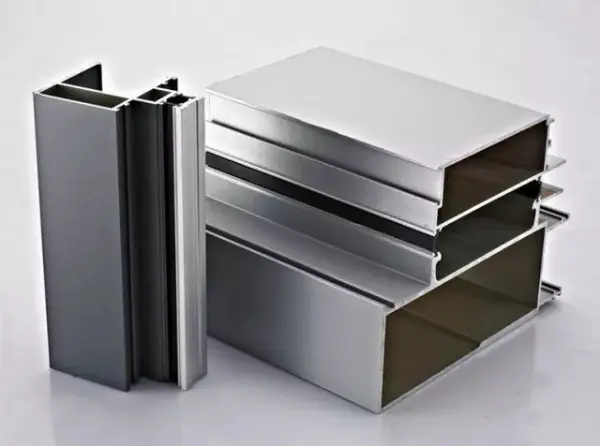
PVDF-coating
Zorgt voor langdurige kleur- en weerbestendigheid bij gebruik buitenshuis.
Toepassingen
Waar op maat gemaakte aluminiumprofielen toegevoegde waarde bieden
Een speciaal ontworpen profiel kan kanalen, bevestigingselementen en verstevigingen integreren en tegelijkertijd het gewicht, het aantal bewerkingsstappen en het aantal montagestappen verminderen.
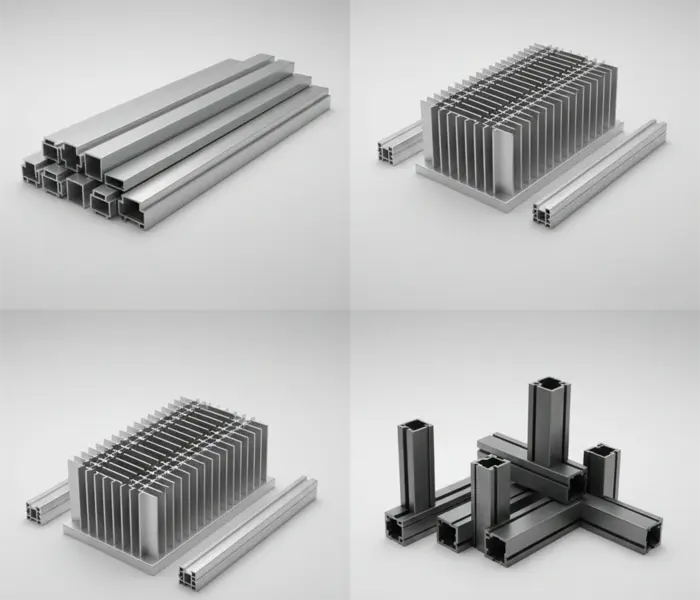
Automatisering
Machineframes, afschermingen, lineaire modules en montagestructuren.
Vervoer
Lichtgewicht rails, frames, steunen en carrosseriestructuren.
Elektronica en thermische techniek
Koellichamen, behuizingen, LED-kanalen en apparatuurbehuizingen.
Architectuur
Raam-, deur-, gevel-, afwerkings- en constructieprofielsystemen.
Hernieuwbare energie
Zonnepanelbevestigingen, accukasten en frames voor energiesystemen.
Meubilair en inrichting
Modulaire frames, displaysystemen, rails en decoratieve profielen.