
PA is one of the most widely used plastics across the five major processing sectors. Renowned for its exceptional tensile strength, durability, self-lubricating properties, and excellent wear resistance, it finds extensive application in fields such as automotive components, consumer electronics, and equipment parts. In the following sections, I will provide a comprehensive overview covering the various types, performance characteristics, and processing-related aspects of this material.
What is PA material
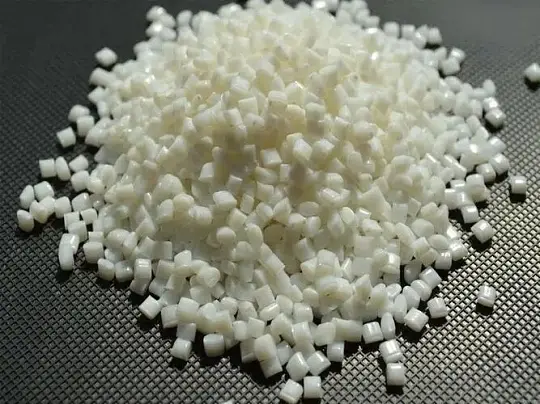
PA is an abbreviation for the English term “Polyamide.” Scientifically known as polyamide, it is commonly referred to as Nylon. Characterized by the presence of repeating amide groups—[NHCO]—within its molecular backbone, PA is a tough, horn-like resin that appears either translucent or milky white.
PA material properties
PA materials typically possess a molecular weight ranging from 15,000 to 30,000. They exhibit high mechanical strength, a high softening point, and excellent heat resistance. Furthermore, they feature a low coefficient of friction, superior wear resistance, and excellent self-lubricating properties, alongside good shock absorption and noise-dampening capabilities. These materials are resistant to oils, weak acids, alkalis, and common solvents; they offer good electrical insulation, are self-extinguishing, non-toxic, and odorless, and demonstrate good weather resistance—though their dyeability is poor. However, they are highly hygroscopic, a characteristic that negatively impacts both their dimensional stability and electrical properties.
Physical Properties of PA Materials:
The physical properties of PA materials vary depending on the specific grade and modification status. The following outlines the key physical properties of common PA materials:
Density
Generally, the density of PA6 and PA66 is approximately 1.14–1.15 g/cm³. Long-carbon-chain nylons, such as PA1010, have a lower density of approximately 1.05 g/cm³.
Melting Point
The melting point of PA6 is approximately 220–230°C, while that of PA66 is about 250–265°C. PA12 has a melting point of approximately 180°C. High-temperature nylons—such as PA46—can reach melting points of up to 295°C, while PA6T has a melting point of approximately 370°C.
Heat Distortion Temperature (HDT)
The heat distortion temperature of unmodified PA6 and PA66 is approximately 80–120°C. Following reinforcement with glass fibers, the HDT of PA66 can be elevated to over 250°C.
Tensile Strength
The tensile strength of unmodified PA6 is approximately 60–80 MPa, while that of PA66 is about 80–100 MPa. After glass fiber reinforcement, tensile strength can increase by a factor of 2 to 3; for certain high-performance PA materials, tensile strength can exceed 200 MPa.
Impact Toughness
PA6 exhibits relatively good impact toughness, with a notched impact strength of approximately 5–10 kJ/m². PA66 has comparatively lower impact toughness—about 3–5 kJ/m²—though its impact toughness can be significantly enhanced through toughening modifications.
Water Absorption
PA6 has a relatively high water absorption rate, with a saturation absorption rate reaching 2.5%–3%. The water absorption rate of PA66 is approximately 1.5%–1.8%. Long-carbon-chain nylons—such as PA12 and PA1010—have a water absorption rate of less than 0.5%; generally, the lower the water absorption rate, the better the dimensional stability of the material.
Coefficient of Friction and Wear Resistance
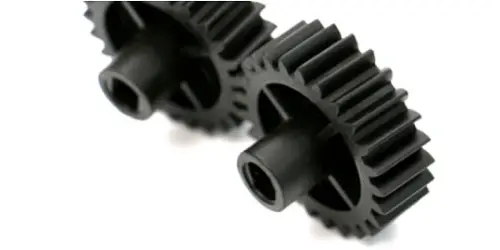
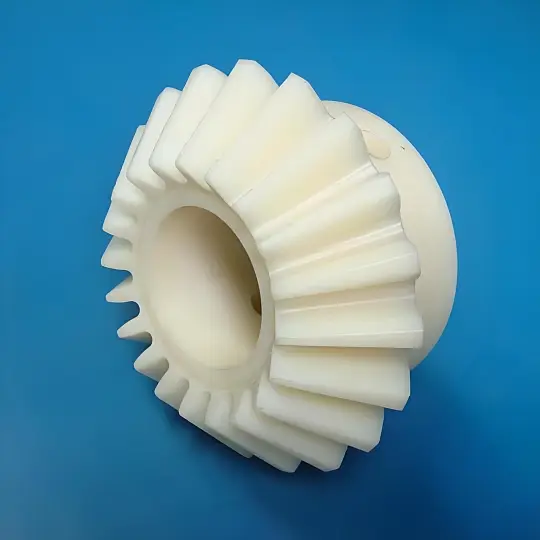
PA materials possess a low coefficient of friction—typically ranging between 0.1 and 0.3—and exhibit excellent self-lubricating properties and wear resistance, making them suitable for use in moving components such as gears and bearings.
Electrical Insulation Properties
In a dry state, PA materials exhibit high volume resistivity and resistance to high-voltage breakdown, making them excellent electrical insulating materials; however, their insulating performance is subject to variation depending on material thickness and moisture content.
Common Types of PA Materials
PA materials (Polyamides) are typically classified in the following main ways:
Classification by Chemical Structure
Aliphatic Nylons: The molecular chains consist entirely of aliphatic carbon chains (e.g., PA6, PA66, PA46, PA1010, PA12). These materials are produced in large volumes, have wide-ranging applications—serving purposes in both fibers and plastics—and exhibit excellent wear resistance and heat resistance.
Semi-aromatic Nylons: The molecular chains contain both aliphatic and aromatic structures (e.g., PA6T, PA9T, PA10T, MXD6). They possess outstanding high-temperature resistance, with long-term service temperatures exceeding 150°C, and are frequently used in high-temperature electronic components and automotive engine parts.
Aromatic Nylons: The molecular chains consist entirely of aromatic structures (e.g., PA1313/Nomex, PA1414/Kevlar). These materials feature extremely high strength, heat resistance, and chemical stability, and are primarily utilized as specialty fibers in fields such as the military and aerospace industries.
Classification by Application Characteristics
High-Temperature Nylons: Including PA46, PA6T, PA9T, PA10T, etc., these materials have long-term service temperatures exceeding 150°C and are suitable for high-temperature environments, such as automotive engine parts.
Long-Chain Nylons: Such as PA11, PA12, PA610, PA612, PA1212, etc., where the number of methylene groups in the molecular chain is ≥10. They are characterized by low water absorption, excellent low-temperature resistance, and dimensional stability, and are commonly used in automotive fuel lines and precision mechanical parts.
Transparent Nylons: High light transmittance is achieved by disrupting the regularity of the molecular chains (e.g., PA TMDT, PA MACM12), resulting in a light transmittance of >90%. Common applications include food packaging, optical instrument components, and medical observation windows.
Nylon Elastomers: Such as Polyether Block Amides (PEBA), which combine high elasticity with high resilience. They are used in athletic footwear materials, silent gears, and medical catheters.
Bio-based Nylons: Synthesized using renewable biomass resources as raw materials (e.g., PA11, PA1010, PA56). These nylon materials align with low-carbon and eco-friendly principles, and their properties can be customized to specific requirements.
By Modification Method
Reinforced Nylon: Enhanced by the addition of reinforcing materials—such as glass fibers or carbon fibers—to improve strength, rigidity, and heat resistance (e.g., PA6-GF30, PA66-GF50).
Flame-Retardant Nylon: Modified through the incorporation of flame retardants (e.g., halogen-, phosphorus-, or nitrogen-based compounds) to enhance the material’s flame resistance and meet standards such as UL94.
Conductive Nylon: Modified by the addition of conductive fillers (e.g., carbon- or metal-based materials) to impart electrical conductivity, utilized in applications requiring conductive or anti-static properties.
Pros and Cons of nylon material
Advantages of PA Materials:
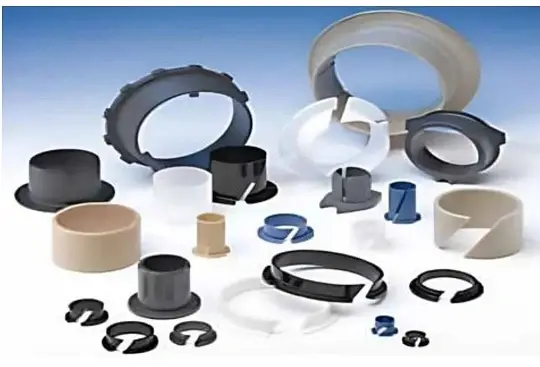
The wear resistance of polyamide is particularly outstanding among plastics; it possesses a low coefficient of friction and inherent self-lubricating properties. Consequently, it is suitable for manufacturing wear-resistant components—such as gears and bearings—thereby effectively extending their service life.
Certain polyamide materials exhibit high melting points; for instance, PA46 can reach a melting point of up to 295°C. Furthermore, they possess high heat distortion temperatures, enabling them to maintain excellent dimensional stability and mechanical properties even in high-temperature environments.
PA materials demonstrate good resistance to a wide range of chemical substances. At room temperature, they exhibit excellent corrosion resistance against most acids, alkalis, and salt solutions, making them well-suited for applications in environments—such as the chemical and electronics industries—where exposure to various chemicals is common.
PA materials feature good flowability, facilitating easy molding and processing. They can be fabricated into products of complex shapes using various molding techniques—including injection molding, extrusion, and blow molding—resulting in high production efficiency. Moreover, most polyamides are self-extinguishing; they exhibit a slow rate of flame propagation and extinguish rapidly once removed from the heat source.
Disadvantages of PA Materials:
However, polyamides do present certain performance limitations. Their molecular structure contains amide groups, which results in significant water absorption; for example, the water absorption rate of PA6 can reach approximately 8%. This absorption leads to dimensional expansion and alterations in material properties, thereby compromising the dimensional precision of the finished products.
At extremely low temperatures, the toughness of polyamide diminishes; the material becomes brittle and rigid, making it susceptible to brittle fracture. This characteristic limits its applicability in ultra-cold environments. Furthermore, prolonged exposure to sunlight or ultraviolet (UV) radiation accelerates the aging of polyamide, leading to a degradation of performance—manifesting as discoloration (e.g., yellowing) and a reduction in mechanical strength. Consequently, anti-aging agents and other additives must be incorporated to enhance its light resistance.
Compared to certain general-purpose plastics, polyamides involve more complex manufacturing processes and higher raw material costs, resulting in relatively higher product prices—a factor that limits their scope of application. During the molding process, improper process control can lead to defects such as uneven shrinkage and warping; as a result, the processing techniques and mold designs required for polyamide materials are subject to stringent standards.
Considerations for PA Materials before machining
Prior to processing Polyamide (PA) materials, the following key factors must be comprehensively considered:
Material Characteristics and Selection
Clearly identify the specific PA grade required (e.g., PA6, PA66, PA1010, etc.). Different grades exhibit variations in melting point, moisture absorption, mechanical properties, and other attributes; therefore, the appropriate material must be selected based on specific product requirements.
If enhanced performance is required—such as increased strength, heat resistance, or dimensional stability—determine whether to utilize glass fiber-reinforced PA, carbon fiber-reinforced PA, or similar materials. Additionally, consider the specific machining parameters required for milling operations, as well as the potential impact of the material choice on mating components.
Drying Treatment
PA materials are highly hygroscopic; moisture absorption can adversely affect melt viscosity, the surface quality of the finished product, and mechanical properties. Consequently, thorough drying is mandatory prior to processing; typically, the moisture content must be controlled to within 0.3%.
Drying methods may include vacuum drying (85–95°C for 4–6 hours) or atmospheric hot-air drying (90–100°C for 8–10 hours). Once dried, the material should be processed as quickly as possible to prevent re-absorption of moisture.
Processing Equipment and Mold Preparation
Select an appropriate injection molding machine or extruder based on the specific characteristics of the PA material—such as its flowability and melting point—ensuring that the equipment possesses sufficient plasticizing capacity, injection pressure, and temperature control precision.
Mold design must take into account the PA material’s shrinkage rate, crystallization characteristics, and the geometry of the finished product. The gate location, runner dimensions, and venting system should be configured optimally to prevent defects such as incomplete mold filling, voids (bubbles), and flash.
Processing Parameter Pre-setting
Temperature: Determine the appropriate barrel temperature, nozzle temperature, and mold temperature based on the specific PA grade being used. For instance, the barrel temperature for PA6 is typically set between 220°C and 300°C, while for PA66, it ranges from 260°C to 320°C. The mold temperature should be established based on the product’s wall thickness and performance requirements (e.g., 20–40°C for thin-walled parts; 60–100°C for thick-walled parts).
Pressure and Speed: Establish initial settings for injection pressure, holding pressure, and injection speed. These parameters must be fine-tuned based on factors such as the product’s geometry and wall thickness to prevent melt degradation or product defects caused by excessive pressure or injection speed.
Environmental and Storage Conditions
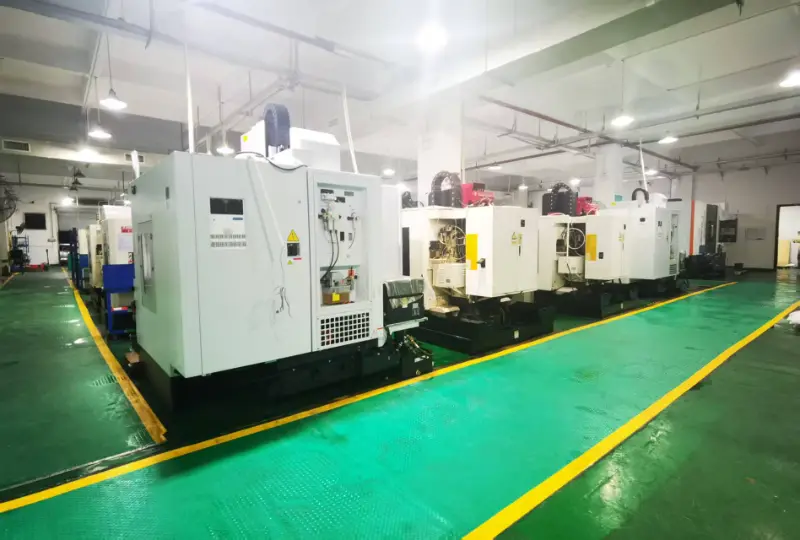
Ensure that the processing environment remains dry and clean to prevent the material from absorbing moisture or becoming contaminated during storage and transportation. For instance, when performing CNC machining on PA, air cooling can be selected to regulate the temperature.
If the material requires long-term storage, it should be kept in a sealed container; its moisture content should be checked periodically, and it should be redried if necessary.
Post-Processing Considerations for PA Materials
PA products retain internal stress after molding, and their dimensions are subject to change due to moisture absorption; therefore, post-processing is required to stabilize their performance.
Solution: Depending on the intended application of the product, perform either an annealing treatment (at a temperature 10–20°C higher than the service temperature for 10–60 minutes) or a moisture conditioning treatment (by soaking in boiling water or an aqueous potassium acetate solution for 1–2 days) to eliminate internal stress and stabilize dimensions.
Application Fields of PA Materials
Automotive Industry
Engine Components: Intake manifolds, coolant pipes, fuel rails, etc., utilizing modified PA materials—such as PA66, PA6T, and PA9T—to achieve lightweighting.
Transmission Systems: Gears, bearings, drive shafts, transmissions, etc., where PA materials help reduce friction loss.
Bodywork & Interiors: Rearview mirror housings, door handles, dashboard frames, seat adjustment components, etc.; these parts typically employ glass-fiber reinforced PA6 or PA66.
Safety Systems: Airbag housings and mounts, which must withstand extreme temperatures ranging from -40°C to 85°C to ensure precise and reliable deployment during a collision.
Electronics & Electrical Engineering
Connectors & Interconnects: Used for signal transmission in devices such as mobile phones, computers, and automotive electronics; the electrical insulation and solder resistance (e.g., in PA46 and PA6T) of PA materials ensure circuit stability.
Electrical Enclosures & Mounts: Circuit breaker housings, coil bobbins, relay casings, etc.; flame-retardant modified PA materials help prevent electrical fires.
LED Lighting: LED brackets and mounts—including black-pigmented materials for display screens and housings for low-to-medium power lighting fixtures—where transparent PA materials offer a combination of light transmittance and heat resistance.
Machinery & Industrial Equipment
Bearings & Pulleys: Bearings and pulleys manufactured from self-lubricating materials such as PA6 and PA66.
Pumps & Compressors: Pump housings, impellers, compressor rotors, etc.
Conveying Systems: Conveyor chain plates, conveyor belts, cable clips, etc.
Home Appliances & Consumer Electronics
Power Tool Housings: Housings for electric drills, power saws, angle grinders, etc.; glass-fiber reinforced PA6 or PA66 provides high rigidity and heat resistance, thereby protecting the internal circuitry.
Kitchen Appliances: High-temperature mixing appliances and components for maternal/infant products (e.g., baby bottles, breast pumps); transparent PA materials are resistant to steam sterilization while offering a balance of transparency and structural strength. Air Conditioners and Refrigerators: Air guide fans and air duct components; the enhanced thermal insulation and weather resistance of PA materials improve energy efficiency.
Aerospace
Structural and Connecting Components: Aircraft interiors, satellite components, missile casings, etc.; the lightweight nature, high strength, and thermal resistance of PA materials meet the rigorous demands of the aerospace industry.
Ballistic and Protective Gear: Bulletproof vests, helmets, etc.; the toughness and impact resistance of PA materials provide effective protection.
Medical Devices
Medical Instruments: Surgical instrument handles, orthopedic braces, medical supports, etc.; the biocompatibility and resistance to sterilization of PA materials make them suitable for medical environments.
Biosensors: PA materials can be utilized in the fabrication of biosensors, where their surfaces can be modified with biomolecules to enable biological detection capabilities.

Common process for PA blank
PA (Polyamide/Nylon) materials are suitable for a wide range of processing techniques due to their excellent mechanical properties, wear resistance, and self-lubricating characteristics. The following are common processing methods for nylon:
Suitable for producing gears, bearings, electronic connectors, automotive components, and similar parts.
Requires strict control over raw material drying (moisture content ≤ 0.3%). Barrel temperature must be adjusted according to the specific PA grade (e.g., PA6: 230–280°C; PA66: 260–290°C), along with mold temperature, injection speed, and holding pressure duration.
Extrusion Molding
Suitable for producing continuous profiles such as pipes, rods, films, and sheets; for instance, PA6 and PA12 are frequently used for extruded films or tubing.
Typically employs a vented extruder. Barrel temperature ranges from 200–280°C, die head temperature from 210–250°C, extrusion pressure from 3–5 MPa, and screw speed from 60–120 rpm. Particular attention must be paid to melt flow uniformity and cooling control.
Blow Molding
Characteristics: Primarily used for producing hollow containers; grades such as PA12 and PA1010 are suitable for packaging containers, fuel tanks, and similar applications.
The process involves first extruding a parison (preform), then injecting compressed air to inflate it against the mold walls. Mold temperatures typically range from 30–90°C, and blowing pressure is adjusted based on the dimensions of the finished product. Careful attention is required regarding parison thickness uniformity and cooling rates.
Casting Molding
Suitable for producing large-scale or intricately shaped components, such as large mechanical parts or decorative elements made from PA6, PA66, and similar grades.
Molten PA material is poured into a preheated mold; after cooling and solidification, the part is demolded. Precise control over mold temperature and cooling rates is essential to prevent the generation of internal stresses.
Suitable for custom, small-to-medium batch production of parts. PA materials can be precision-machined using cutting processes to create custom gears, bushings, structural components, and more.
Process parameters and tool selection must be carefully adjusted based on the specific machine tool conditions and material type. Critical stages—including nylon blank pretreatment, fixture positioning, post-processing, and quality testing—must be prioritized to ensure the quality of the delivered parts.
About Weldo machining
I trust that after reading this article on nylon materials, you now have a comprehensive understanding of the plastic. If you are looking for a reliable PA machining partner to provide a transparent quotation, please feel free to contact us at Weldo Machining. With over 14 years of experience specializing in CNC machining—along with available options for injection molding, casting, and extrusion processes—we are fully equipped to provide comprehensive support for your custom nylon projects and ensure timely delivery. Contact us today to receive a free quote!