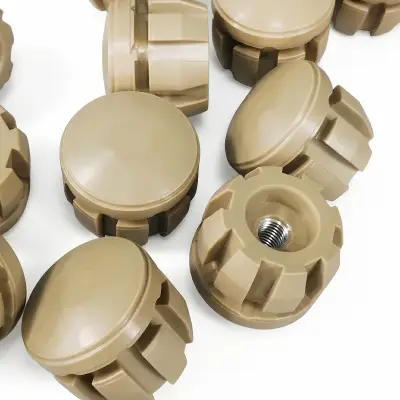
Compared to other engineering plastics, PEEK plastic material offers numerous significant advantages, including high-temperature resistance, excellent mechanical properties, good self-lubricating properties, chemical resistance, flame retardancy, peel resistance, stable electrical insulation, and hydrolytic stability. It is widely used in the aerospace, automotive, electronics, medical, and food processing industries.
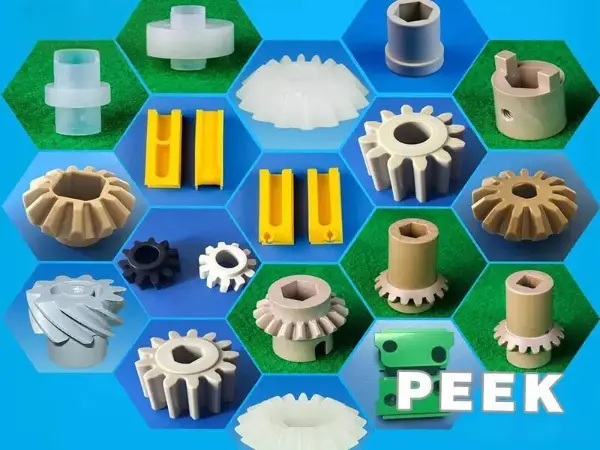
PEEK plastic material Definition
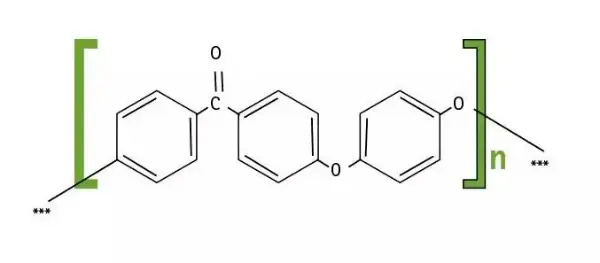
PEEK (polyetheretherketone) is hailed as the “Plastic Gold.” It is a high-performance specialty engineering plastic and a type of synthetic resin. It was first successfully developed by the British company ICI in 1978. Its molecular chain contains benzene rings, ketone bonds, and ether bonds, resulting in a semi-crystalline structure that combines both rigidity and toughness.
Polyetheretherketone belongs to the polyaryletherketone family of materials. Related and similar materials include polyether ketone (PEK), polyether ether ketone ketone (PEKK), polyether ether ketone ketone ketone (PEEKK), and polyether ether ketone ketone ether (PEKEKK).
PEEK Plastic Material Manufacturing Process:
The mainstream production process for polyetheretherketone (PEEK) is centered on nucleophilic substitution condensation. The primary components of the PEEK material formula include fluoroketone (the most critical component), hydroquinone, diphenylsulfone, and sodium carbonate (carbon fiber, glass fiber, graphite, and PTFE). The raw materials—fluoroketone, hydroquinone, and sodium carbonate—undergo a condensation reaction in a diphenyl sulfone solvent. The reaction temperature must be controlled between 280°C and 340°C for a polymerization reaction lasting 8–12 hours. Following purification and drying steps, high-purity PEEK resin crude powder is obtained, which is subsequently machined into various PEEK shapes.
PEEK Plastic Material Properties
The main chain structure of PEEK contains repeating oxygen-p-phenylene-oxygen-carbonyl-p-phenylene units. It has a broad molecular weight distribution, and its side-chain groups exhibit high reactivity and conjugation effects.
The following lists only the properties of standard PEEK material; for other modified or reinforced PEEK materials, please consult us or refer to relevant documentation:
Standard PEEK material density: approximately 1.3 g/cm³. As seen, PEEK’s density is about half that of 6061 aluminum, making it significantly lighter.
High-temperature resistance: PEEK has a melting point of 330–343°C. It can operate normally at temperatures up to 260°C and can withstand brief exposure to temperatures as high as 340°C without melting or deforming.
Excellent mechanical properties: PEEK has a tensile strength three times that of aluminum alloy and twice that of steel, and its flexural modulus is four times that of aluminum alloy.
Chemical resistance: It exhibits extremely high resistance to strong acids (except concentrated sulfuric acid), strong alkalis, and organic solvents, with corrosion resistance levels approaching those of nickel steel.
Biocompatibility: Its stiffness is similar to that of human bone, and it produces no artifacts in post-operative imaging, making it suitable for manufacturing medical devices such as facial plastic surgery implants, cranial prostheses, and spinal implants.
Self-lubrication and wear resistance: PEEK resin inherently possesses excellent self-lubrication and wear resistance; however, for operation at high temperatures up to 250°C, it requires filling with materials such as carbon fiber, graphite, or PTFE to enhance wear and lubrication performance. The modified PEEK can achieve a coefficient of friction as low as 0.15, with extremely low wear rates.
Electrical insulation and dimensional stability: PEEK maintains stable electrical insulation properties even in high-temperature, high-humidity environments (volume resistivity > 10¹⁶ Ω·cm). Additionally, it has a low coefficient of linear expansion, making it resistant to deformation due to temperature changes after molding, and thus suitable for manufacturing high-precision electronic components.
Flame Retardancy: PEEK is self-extinguishing and can meet the UL 94 V-0 standard even without the addition of any flame retardants,satisfying the stringent fire safety requirements of industries such as aerospace.
The following is a summary of the PEEK specific parameters:
| Performance Category | Specific Parameter | Brief Description |
| Density | ~1.3 g/cm³ | About 1/2 of 6061 aluminum, outstanding lightweight advantage |
| High Temperature Resistance | Long-term use 260℃, short-term tolerance 330℃ | After filler modification, heat deflection temperature under load can reach 316℃ |
| Tensile Strength | 90-115 MPa | About 3 times that of aluminum alloy (30-35 MPa, annealed), 2 times that of steel (45-55 MPa, low-carbon steel) |
| Flexural Modulus | 3.5-4.4 GPa | About 4 times that of aluminum alloy (68-70 GPa) |
| Volume Resistivity | >10¹⁶ Ω·cm | Electrically insulating and stable under low/high temperature and high humidity environments |
| Flame Retardancy | UL94 V-0 | No flame retardant additive needed, excellent self-extinguishing performance |
Common PEEK Material Grades
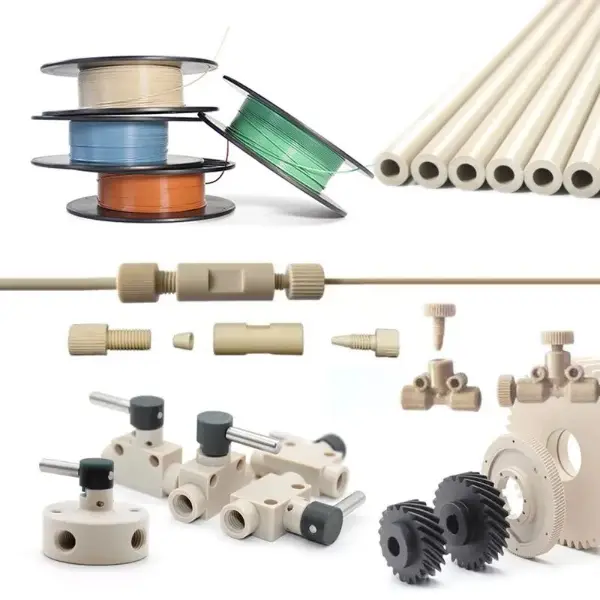
We classify the PEEK materials we process and manufacture into the following grades based on reinforcement type:
Natural PEEK Material: Such as PEEK 450G, 450P, 150G, and 380G. These materials are not reinforced with fibers or fillers and offer good toughness and processability. They are suitable for applications that do not require high strength but demand good chemical resistance and dimensional stability.
Carbon PEEK material: Carbon fiber is used as a reinforcing agent in PEEK implant materials. Common grades include PEEK 450CA30 and 450CA40, which contain 30%–40% carbon fiber. These materials significantly enhance part strength, stiffness, and high-temperature resistance, making them suitable for aerospace, automotive, and mechanical components.
Glass Fiber PEEK: Materials such as PEEK 450GL30 and PEEK GF30 contain 30% glass fiber. Compared to standard PEEK, they offer higher heat resistance and flexural modulus, making them suitable for high-temperature, high-load, and deformation-resistant applications in mechanical engineering and chemical processing.
Wear-Resistant Modified PEEK: Examples include PEEK WG101 and WG102, which incorporate solid lubricants (such as PTFE and graphite). These materials feature low friction coefficients and excellent wear resistance, making them suitable for friction-prone components such as bearings, slide rails, and seals.
UV resistant PEEK: Modified using nanotechnology to incorporate UV absorbers, the UV protection exceeds 90%. The UV-resistant PEEK material maintains extremely high color stability and ensures high mechanical properties in environments with strong radiation, high altitudes, and significant temperature variations.
Pros and Cons of PEEK Materials
Advantages:
PEEK materials combine high rigidity with good toughness. Their fatigue resistance rivals that of alloy materials, enabling them to withstand high loads and high-frequency alternating vibrations;
stable mechanical and physical properties at high temperatures; it resists corrosion from most acids, alkalis, and organic solvents (except concentrated sulfuric acid), with corrosion resistance comparable to nickel steel;
it meets the UL94 V-0 standard without the addition of flame retardants, and produces low-smoke, low-toxicity gases when burned;
it also has an extremely low water absorption rate and excellent hydrolytic stability, allowing for long-term use in high-pressure hot water and steam at 200°C with good dimensional stability.
It also offers several unique advantages for high-end applications, including biocompatibility certified to FDA and ISO 10993 standards; it is non-toxic and non-allergenic, with a modulus of elasticity similar to human bone and X-ray transparency, making it an ideal material for medical implants that does not interfere with medical examinations such as CT and MRI;
It maintains excellent electrical insulation properties across a wide frequency range and at ultra-low temperatures, making it suitable for insulating components in the electronics and electrical sectors;
The material is lightweight, allowing for significant weight reduction while meeting strength requirements, perfectly aligning with the lightweight design needs of industries such as aerospace and automotive.
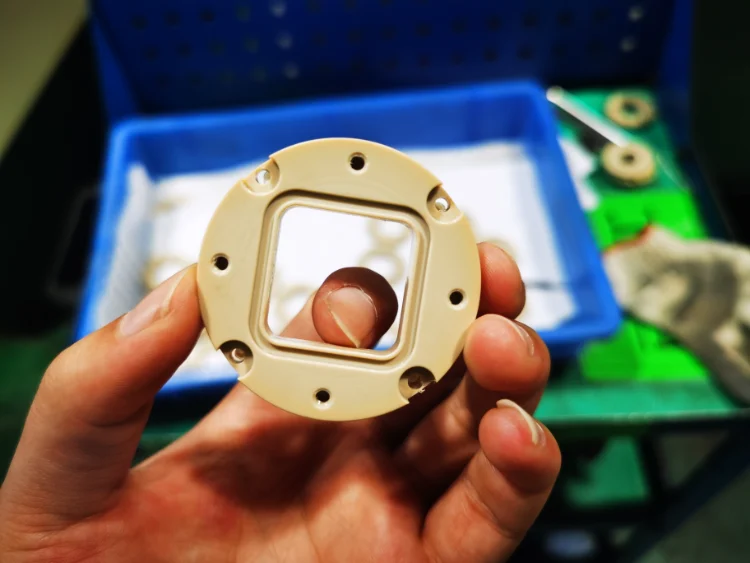
Limitations
PEEK is expensive and difficult to process, with standard PEEK material costing approximately $100 to $400 per KG. Its synthesis process is complex, and both raw material costs and energy consumption are high. In addition, its high melting point, high viscosity, and semi-crystalline nature impose strict requirements on equipment operation and maintenance.
Additionally, it exhibits insufficient wear resistance in high-speed, high-wear environments and has poor UV resistance. Direct surface bonding and coating are difficult, requiring plasma, solution, mechanical, or radiation treatments to enhance the surface adsorption and friction of PEEK materials.
Furthermore, PEEK’s high chemical stability makes recycling difficult, and it may experience reduced insulation performance or static electricity issues in high-electric-field or high-humidity environments. However, these shortcomings can be addressed through technical measures such as material modification and process optimization.
PEEK Application Areas and Components
1. Aerospace: In the aerospace sector, PEEK is primarily used to reduce weight and enhance wear resistance, enabling the manufacture of high-temperature engine components, transmission parts, and steering components.
2. Medical Field: The medical sector is one of the areas where PEEK offers the highest value, as its elasticity is similar to that of bone and it exhibits excellent biocompatibility. PEEK materials are used in artificial joints, facial cosmetic implants, surgical instruments, orthodontic appliances, dental crowns, and dental restorations.
3. Automotive: Due to its self-lubricating properties and high-temperature stability, PEEK is primarily used in the automotive industry for engine valve bodies, valve stems, bearings, bushings, and gears in transmission and steering systems, as well as battery housings and directional heat-conducting plates for new energy vehicles.
4. Electronics and Electrical Industry: With its excellent electrical insulation, dimensional stability, high-frequency stability, and extremely low water absorption, PEEK is widely used in flexible substrate materials for high-frequency communications, semiconductor wafer carriers and fixtures, PCB substrates, 5G electronic circuit boards, sensor housings, and electronic component packaging.
Forms of PEEK Raw Materials
PEEK (polyetheretherketone) raw materials are commonly available in the following forms:
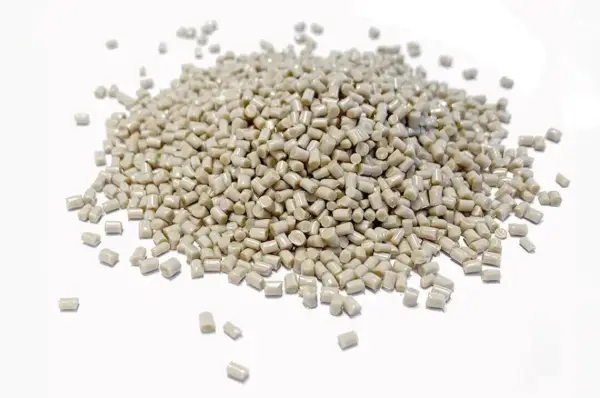
Granules
This is the most common form, typically consisting of cylindrical or irregular granules with diameters generally ranging from 1 to 5 millimeters. Granular PEEK is easy to store, transport, and process, and is suitable for conventional molding processes such as injection molding and extrusion.
Powder
Composed of fine PEEK particles, with particle sizes typically ranging from a few micrometers to several tens of micrometers. Powdered PEEK is suitable for processes such as compression molding, powder coating, and 3D printing (e.g., selective laser sintering), and can meet the molding requirements for complex shapes or thin-walled products.
Rods
Rods with cylindrical or square cross-sections, with diameters or side lengths generally ranging from a few centimeters to over ten centimeters; lengths can be customized as needed. PEEK rods are primarily used for machining into custom parts, such as bearings, gears, and seals.
Sheets
Thickness typically ranges from a few millimeters to tens of millimeters, with width and length adjustable according to production requirements. PEEK sheets can be processed through cutting, milling, and other methods to produce components such as flat plates, housings, and mounting brackets.
Tubing
Available in tubular forms with varying inner and outer diameters, with wall thickness designed according to application requirements. PEEK tubing is commonly used for fluid conveyance, insulating sleeves, and similar applications.
Film
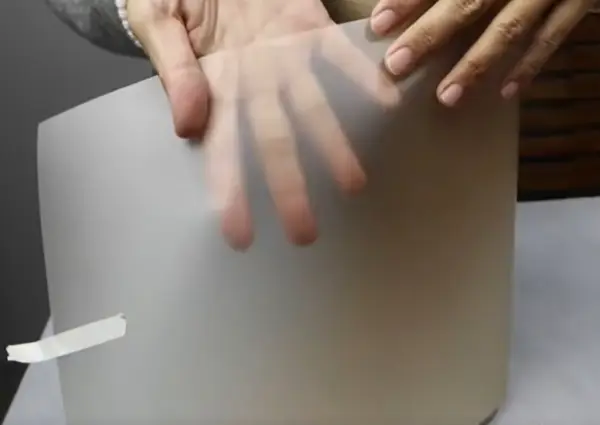
Due to its high heat and cold resistance, excellent insulation properties, and combination of strength and flexibility, PEEK film can be used in applications such as micro-speaker diaphragms, battery insulation layers, electronic packaging, and sensor substrates. Its thickness typically ranges from 3 micrometers to 500 micrometers.
PEEK raw materials in various forms can be selected based on specific application requirements and transformed into final products through corresponding processing techniques.
Common PEEK Processing Techniques
Injection Molding: After drying, PEEK raw material is melted at high temperatures and injected into molds under high pressure to form the final shape. Followed by annealing treatment, this process enables efficient mass production of complex, precision parts. Strict control of temperature and pressure is required to avoid molding defects.
Extrusion Molding: PEEK material suppliers typically dry the raw material, melt it at high temperatures, extrude it, cool it, and cut it to shape. This ensures PEEK quality and is primarily used for the continuous production of long-form profiles such as PEEK sheets and tubes.
Compression Molding: Dried PEEK raw material is placed into a mold and formed through high-temperature, high-pressure compression followed by slow cooling. The resulting products have excellent density and are suitable for the production of medium-sized structural components in medium batches; however, production efficiency is relatively low.
3D Printing: This method includes FDM and SLS printing techniques, enabling rapid production of various complex PEEK components with high design flexibility. The challenge lies in controlling interlayer strength and crystallinity.
Powder Coating: After substrate pretreatment, a PEEK coating is applied at high temperatures and heat-treated as required. This process enhances the substrate’s protective properties and is commonly used for corrosion resistance and wear resistance modifications on the surfaces of various components.
Custom Machining: Through multi-axis CNC machining, grinding, tapping, and other processes, PEEK can be used to replace metal in custom structural components, ensuring long-term, stable performance under harsh acidic, alkaline, and high-temperature conditions. However, this requires careful adjustment of machining parameters and the selection of appropriate cutting tools.

Common surface finish for PEEK plastic part
- Plasma Treatment: High-energy plasma particles break chemical bonds on the PEEK surface and introduce polar functional groups, chemically enhancing surface activity, hydrophilicity, and adhesion, thus meeting the modification needs of medical implants and electronic components.
- Chemical Etching: Highly reactive chemical reagents are used to etch the PEEK surface, increasing surface roughness and chemical reactivity, enabling high-strength and stable bonding between PEEK and dissimilar materials such as metals.
- Sandblasting: High-speed abrasive impact creates a rough, uneven surface on PEEK, increasing the contact area and releasing some internal stress. This is a fundamental surface pretreatment process before coating and bonding.
- Laser Treatment: Utilizing the dual effects of laser photothermal and photochemical processes, the morphology and chemical composition of the PEEK surface are precisely controlled to form micro/nano functional structures, achieving localized directional modification.
- Coating Treatment: Various functional composite coatings are applied to the PEEK substrate to address shortcomings in wear resistance, corrosion resistance, conductivity, and biocompatibility, making it widely applicable to complex working conditions across multiple industries.
- Mechanical Polishing: Physical grinding and fine polishing methods remove burrs and unevenness from the PEEK surface, improving surface smoothness and dimensional accuracy to meet the appearance and precision requirements of high-end precision components.
Future Development of PEEK Plastic Material
In terms of market prospects, industry forecasts indicate that the global PEEK market is expected to reach $2.14 billion by 2030, with
China accounting for over 40% of the market and maintaining an annual growth rate of over 15%. Particularly in fields such as robotics, new energy vehicles, aerospace,and medical applications, the use of PEEK materials will experience explosive growth.
Technological trends are primarily reflected in three areas:
High Performance: Developing PEEK materials with higher temperature resistance, such as PEEK filament capable of withstanding ultra-high temperatures of 350°C, to meet the requirements of space shuttle fuel tanks.
Improved Purity: Enhancing product purity; for example, PEEK film with a temperature resistance of 260°C achieves a purity of 99.99%, with a unit price as high as 800,000 yuan per ton and a gross profit margin of 50%.
Customization: Developing specialized grades for different application scenarios, such as antimicrobial-coated PEEK materials for surgical instruments and photosensitive PEEK ink for 3D printing.
The main challenges include:
Raw Material Supply: Unstable supply of PEEK’s core raw materials—DFBP (4,4′-difluorobenzophenone) and hydroquinone—with price fluctuations potentially impacting gross profit margins.
High-end technical barriers: For semiconductor-grade and medical-grade applications, some companies must achieve breakthroughs in high-purity resin synthesis and precision molding processes.
Production capacity expansion risks: If the growth rate of PEEK market demand falls short of expectations, it may lead to temporary overcapacity.
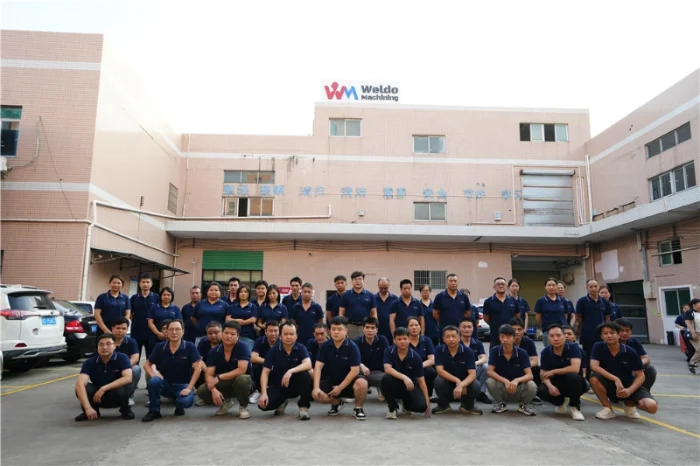
About Weldo machining
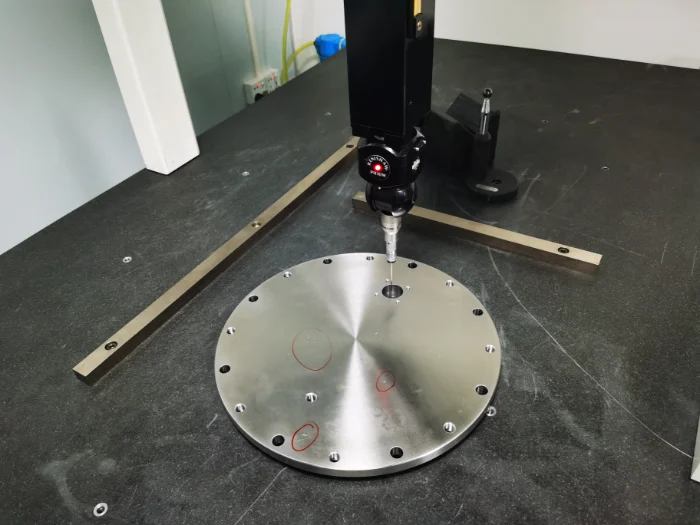
Weldo Machining has over 14 years of experience specializing in CNC machining and PEEK custom parts. We are familiar with more than 50 surface treatment methods and have many years of experience in injection molding, casting, sheet metal, and extrusion processes. We are ISO 9001:2015 certified and have accumulated years of experience in raw material supply chains, including a complete set of CMM processes. We can meet your high-quality customization needs. Please contact us for more information and a processing quote.
FAQ of PEEK plastic material
Why is PEEK plastic so expensive?
The production of PEEK raw materials is difficult, and the scarcity of raw materials (such as fluoroketone and hydroquinone) drives up costs. Its synthesis reaction conditions are stringent, the purification process is complex, and the high-temperature processing equipment and modifying materials further increase production costs.
This material is mostly used in high-end niche industries. The non-standardization of products makes it difficult to reduce costs through economies of scale. Coupled with the long-term and stringent performance verification processes downstream, the overall cost is further increased.
Is PEEK plastic toxic?
PEEK itself has a stable and non-toxic chemical structure. Under normal use, it meets food and medical safety standards, and it does not release toxic substances when in contact with various common media.
At extremely high temperatures (usually exceeding 480℃), PEEK may decompose and release small amounts of phenolic compounds. However, in actual use, the operating temperature of PEEK is generally below 300℃, and the risk of decomposition is extremely low.
Is PEEK the strongest plastic?
PEEK exhibits excellent general tensile and flexural strength, but materials such as polyimide and carbon fiber reinforced plastics can surpass it in specific shapes, high-temperature environments, and specific strength.
PEEK’s core advantages lie in its comprehensive properties, including high-temperature resistance, corrosion resistance, wear resistance, and biocompatibility, making it suitable for diverse and complex applications. If only a single strength performance is required, other high-performance materials may be a better choice.
Does PEEK material offer UV protection?
Pure PEEK has weak UV resistance. Long-term outdoor exposure can easily cause molecular chain breakage and photo-oxidative aging, leading to discoloration, brittleness, and a decline in mechanical properties. Therefore, it cannot be used directly for long-term outdoor applications. Its UV resistance can be effectively improved by adding UV-protective additives or modifying the surface with a coating. However, the actual effectiveness still needs to be determined through on-site testing in specific application scenarios.