
Protecting aluminum parts from corrosion while maintaining electrical conductivity is a common challenge in manufacturing machining. Alodine (also known as chem film) is a chromate conversion coating that uses a chemical reaction to form a thin protective layer without changing part dimensions. This makes it an ideal solution for precision components requiring both protection and conductivity.
What is the definition of Alodine?
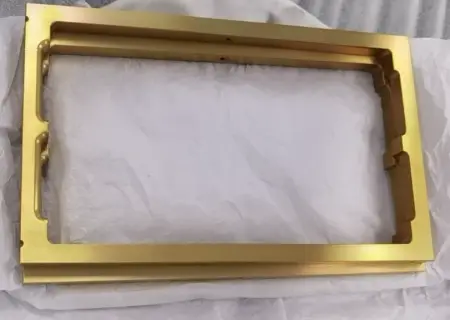
Alodine is a chromate conversion coating process (a trademark of Henkel) primarily used on aluminum and its alloys. It works through a chemical reaction in a solution containing chromates and fluorides, forming a dense, porous protective film composed of chromium oxides and aluminum oxides on the metal surface. The coating thickness is typically only about 0.025–1 μm, causing virtually no dimensional change while significantly improving corrosion resistance and enhancing paint or adhesive adhesion.
Understanding Alodine and Chromate Conversion Coating
Are you struggling to protect precision aluminum components from corrosion without destroying their natural electrical conductivity? We see this exact engineering challenge constantly, and the most reliable solution relies on a very specific chemical finish.
When reviewing part prints and specifications, you will frequently see the terms Alodine, chem film, and Iridite used interchangeably. To clear up the terminology, these are all just different names for a chromate conversion coating. Alodine is simply a highly recognized brand name that became the industry standard shorthand for the process.
Not an Electrolytic Process
The science driving this surface treatment is straightforward: it relies entirely on a pure chemical reaction. Unlike traditional anodizing, applying Alodine does not require an electrolytic process or an electrical current to force the finish onto the metal.
When we submerge a bare aluminum part into the chemical bath, a highly controlled reaction takes place at the surface level:
- Direct Chemical Reaction: The active chemical solution immediately reacts with the exposed raw metal.
- Gelatinous Film Formation: This rapid reaction converts the top layer of the metal into a microscopic, protective gelatinous film.
- Negligible Coating Thickness: As the soft film cures and hardens into a durable shield, it adds virtually zero measurable coating thickness. This ensures that your tight CNC machining tolerances remain perfectly intact.
Military Standards for Alodine: The MIL-DTL-5541 Standard
When we process aluminum parts, we strictly follow the MIL-DTL-5541 standard for Alodine finishes. This military specification breaks down the chromate conversion coating into distinct types and classes so you get the exact performance your project demands.
Alodine Types: Hexavalent vs. Trivalent
- Type I: The legacy chem film process relying on hexavalent chromium. It provides a distinct gold or brown finish but faces heavy environmental restrictions today.
- Type II: Our standard, eco-friendly solution. It uses trivalent chromium, making the finish entirely RoHS compliant while delivering top-tier protection. Most of our US commercial clients require Type II.
Alodine Classes: Performance Focus
- Class 1A: We apply this when maximum corrosion resistance is the ultimate goal. It seals the metal perfectly and acts as an unbeatable paint adhesion primer.
- Class 3: When your parts need to ground out, this is the choice. It offers reliable protection but is engineered specifically with a thinner profile to maintain peak electrical conductivity.
MIL-DTL-5541 Quick Reference Guide
| Specification | Chemistry / Feature | Primary Application |
|---|---|---|
| Type I | Hexavalent chromium | Legacy defense systems requiring traditional specs |
| Type II | Trivalent chromium | Modern, RoHS compliant commercial and military parts |
| Class 1A | Maximum protection | Harsh environments or as a paint adhesion primer |
| Class 3 | Thinner conversion layer | EMI shielding and maintaining electrical conductivity |
4 Key Benefits of Alodine for CNC Machined Parts
When you are manufacturing precision parts for the US market, choosing the right surface treatment makes or breaks the project. We highly recommend Alodine (widely known in the industry as chem film) because it delivers top-tier performance without the high costs or long lead times of an electrolytic process.
Here is exactly why this chromate conversion coating is a game-changer for your CNC machining finishes:
| Key Benefit | Why It Matters for Your Parts |
|---|---|
| 1. Preserves Electrical Conductivity | Unlike standard anodizing, this finish maintains excellent electrical conductivity. It is our go-to recommendation for electronic chassis, EMI shielding, and grounding points. |
| 2. Zero Dimensional Change | Alodine’s microscopic thickness (0.025–1 μm) keeps machining tolerances untouched while providing reliable protection without altering part dimensions. |
| 3. Superior Paint Adhesion | The film acts as the ultimate paint adhesion primer. Because the coating is naturally porous, paints and topcoats lock into the metal surface permanently without flaking. |
| 4. Cost-Effective & Efficient | Relying on a simple chemical immersion bath rather than complex electrical currents makes the process incredibly fast and budget-friendly for both short runs and high-volume production. |
The Alodine Application Process Explained
When we apply a chromate conversion coating, it is a completely different approach than using an electrolytic process. It relies entirely on a highly controlled chemical immersion. Here is exactly how we build up that reliable chem film on your aluminum parts step by step:
- Degreasing and Cleaning: First, we strip away all the heavy oils, cutting coolants, and surface grime left over from the CNC machining phase. Starting with a perfectly pristine surface is non-negotiable.
- Initial Rinsing: Next, we thoroughly rinse the parts in clean water to completely neutralize and wash away any remaining heavy-duty cleaning agents.
- Deoxidizing and Etching: Aluminum naturally develops a tough, invisible oxide layer. We chemically etch this away to expose the bare, raw aluminum underneath so the treatment takes perfectly and evenly.
- Alodine Immersion: We submerge the raw parts directly into the Alodine chemical bath at room temperature. The chemicals react instantly with the bare aluminum surface, forming the protective gel-like film without adding any problematic coating thickness.
- Rinse and Curing: We pull the parts from the bath, wash off the excess chemicals, and let them dry out. At first, the freshly formed film is soft and delicate. As it cures, it hardens into a highly durable, corrosion-resistant surface ready for final assembly or a fresh coat of paint.
Alodine vs. Anodizing: Making the Right Choice
When we compare Anodize vs Alodine, the core difference comes down to the underlying science. Anodizing relies on an electrolytic process—using an electrical current in an acid bath—to grow a thick, ceramic-like oxide layer directly out of the aluminum surface. It is incredibly tough, highly durable, and built for heavy mechanical wear.
Alodine (often called chem film), on the other hand, requires no electricity. It is a straightforward chemical dip that creates a microscopic chromate conversion coating over the metal without altering the part’s dimensions.
To help you decide which finish is right for your next run of CNC machined parts, we put together this quick breakdown:
Performance Breakdown
| Feature | Alodine (Chem Film) | Anodizing |
|---|---|---|
| Process Type | Chemical Immersion | Electrolytic Process |
| Coating Thickness | Microscopic (Near zero) | Thick (0.0001” to 0.002”) |
| Electrical Conductivity | Excellent | None (Acts as an electrical insulator) |
| Durability & Wear | Low to Moderate | Extremely High (Ceramic-like hardness) |
| Cost & Speed | Very Cost-Effective / Fast | Higher Cost / Slower turnaround |
If your project requires high electrical conductivity and perfectly maintained machining tolerances, stick with Alodine. If you need maximum scratch resistance, intense durability, or color-matching, anodizing is the way to go.
Common Alodine Industry Applications
In our facilities, we see massive demand for Alodine across high-stakes US industries. Because it delivers solid protection without the dimensional shifts of an electrolytic process, it is a premier aluminum surface treatment for precision parts.
Here is exactly where we rely on this chromate conversion coating:
- Aerospace: Flight components need intense corrosion resistance without extra weight. Because a chem film relies on a microscopic coating thickness, it perfectly protects lightweight structural parts without adding unnecessary mass.
- Electronics: When we treat aluminum enclosures or EMI/RFI shielding, keeping a reliable ground is non-negotiable. This finish preserves the essential electrical conductivity while effectively sealing the raw metal.
- Military & Defense: Tactical hardware operates in brutal, unpredictable conditions. We apply this finish to hit the strict MIL-DTL-5541 standard, ensuring rugged durability and creating the ultimate paint adhesion primer for heavy-duty military topcoats.
Conclusion
Alodine provides an efficient balance of protection, conductivity, and cost for aluminum parts. Combined with reliable weldo machining and precision cnc machining, it ensures consistent quality and performance. For more details or a fast quote, feel free to contact us.
FAQs About Alodine
What is the difference between Alodine and chem film?
They are exactly the same thing. Alodine is simply a popular trademarked name for a chromate conversion coating. Across the US metal finishing services industry, we regularly use the terms “chem film,” “Iridite,” and “Alodine” interchangeably to describe this specific chemical finish.
Is the Alodine process safe for the environment?
It entirely depends on the class of coating you choose. Traditional Type I coatings rely on hexavalent chromium, which is highly toxic and heavily regulated. Today, we steer most modern projects toward Type II coatings, which use trivalent chromium. This updated aluminum surface treatment is fully RoHS compliant, significantly safer for the environment, and still delivers outstanding corrosion resistance.
How does Alodine affect the dimensions of my CNC machined parts?
It practically doesn’t. Unlike an electrolytic process like anodizing that physically builds up a layer on the metal, chem film creates a microscopic coating thickness. Your tight manufacturing tolerances stay intact, making it one of the most reliable CNC machining finishes for high-precision components.
Can I paint over an Alodine-coated surface?
Absolutely. In fact, it is highly recommended. The finish acts as an exceptional paint adhesion primer. It alters the aluminum surface just enough to give wet paints, powder coats, and primers a perfect base to grip, preventing long-term flaking or peeling.