As one of the most widely used materials, aluminum alloys are well recognized for their strength, toughness, and machinability, and their corrosion resistance also surpasses that of most metals. Below, I will analyze 5052 aluminum vs 6061 to help you understand their similarities and differences, and assist you in making suitable choices in industrial production.
Similarities of 5052 Aluminum vs 6061
Although 5052 aluminum alloy and 6061 aluminum alloy belong to different alloy grades, they share the following similarities:
Similar Basic Composition
Both use aluminum as the base material and contain magnesium (Mg) elements, while impurity elements (such as iron, copper, manganese, etc.) are controlled at relatively low levels.
Good Corrosion Resistance
In conventional atmospheric environments, fresh water, and some corrosive media, both can form a dense oxide film. The aluminum oxide layer can effectively prevent further corrosion and has self-healing properties.
Weldability
Both can be connected and repaired through common welding methods (such as TIG welding and MIG welding). After proper treatment, welded joints can maintain good strength and corrosion resistance, making them suitable for welded structural parts.
Good Machining Performance
Both possess certain plasticity and can be formed through rolling, stamping, bending, CNC machining, and other processing methods to meet manufacturing requirements for customized shapes and structures.
Low Density
Both have a density of around 2.6–2.8 g/cm³, making them lightweight metal materials suitable for weight-sensitive applications such as aerospace, transportation, and equipment parts.

Differences Between 5052 Aluminum vs 6061
There are some obvious differences between 5052 and 6061 aluminum alloys in terms of detailed characteristics and application fields. This is mainly because the proportions of their constituent elements are different. We will discuss the following common machining factors, including comparisons of related grades.
Composition:
The main alloying element of 5052 aluminum is magnesium, while other impurity elements account for only a small proportion. It has good forming and machining performance, corrosion resistance, weldability, medium strength, and good fatigue resistance.
In addition to magnesium, 6061 aluminum also contains silicon and other impurity elements. It has medium strength, good corrosion resistance, weldability, high toughness, no deformation after processing, easy coloring film, and excellent oxidation effects.
The following lists the detailed composition comparison of the two materials:
| Element | 5052 Aluminum | 6061 Aluminum |
| Si | ≤0.4% | 0.4 – 0.8% |
| Cu | ≤0.1% | 0.15 – 0.4% |
| Mg | 2.0 – 2.8% | 0.8 – 1.2% |
| Mn | 0.15 – 0.4% | 0.15% |
| Ti | ≤0.15% | 0.15% |
| Fe | ≤0.4% | 0.7% |
| Cr | 0.15 – 0.35% | 0.04 – 0.34% |
| Al | Balance | Balance |
Processing Methods:
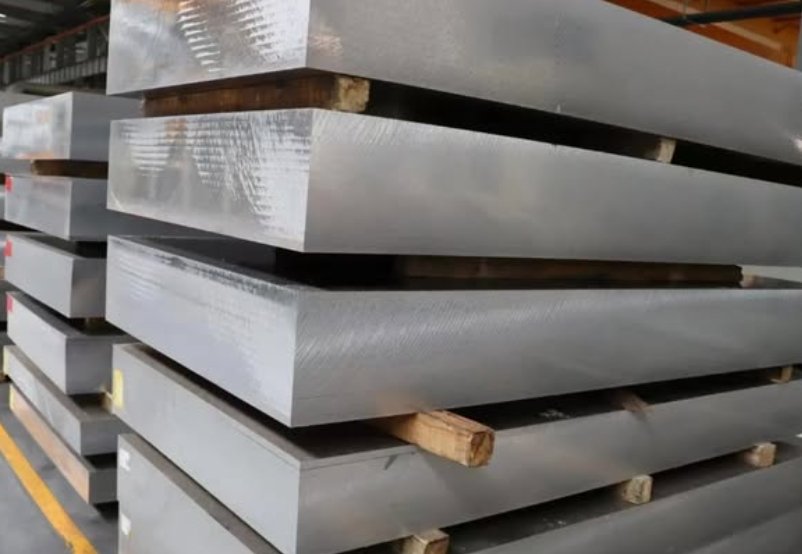
1. The heat treatment conditions of the two are also different. In addition to the O temper shared by both 6061 aluminum plate and 5052 aluminum plate, 6061 aluminum plate is generally available in T4, T6, and T651 tempers, while 5052 aluminum, except for H112 which is hot-rolled treated, is mostly in H24, H32, H34, H36, H38, and other room-temperature strain-hardened tempers.
Among them, cold rolling of 5052 can significantly improve its strength grade, while hot rolling treatment can improve its plasticity and ensure its processing capability. The room-temperature machinability of 5052 is better than that of 6061 aluminum. After T4 and T6 heat treatment, the strength and hardness of 6061 aluminum are greatly improved. Among them, 6061-T4 has slightly lower hardness than T6, but better plasticity, making it suitable for small-angle bending and stamping forming.
2. Both can be milled, but the chip evacuation of 6061 is smoother because its higher Si content makes aluminum chips more likely to form hard spots and break easily. Since 5052 aluminum has lower Si content, chips are more likely to accumulate, causing slightly greater tool wear, so milling parameters need to be adjusted according to the material.
3. There are differences in weldability between 5052 and 6061 aluminum alloys. 5052 aluminum generally uses MIG and TIG welding processes, and its corrosion resistance remains stable after welding, usually without the need for post-weld heat treatment. 6061 aluminum can meet conventional welding and forming requirements, but the high temperature during welding may cause softening in the heat-affected zone and reduce joint strength. Heat treatment tempering is required to restore the strength and toughness of the weld area. High-strength and high-precision applications require special welding wire for welding 6061 aluminum parts to ensure the stability and reliability of the welded structure.
Surface Treatment:
The commonly used surface treatment methods for 6061 and 5052 aluminum alloys are as follows. Different methods are suitable for different application scenarios:
Anodizing: 5052 aluminum forms oxide film quickly, with thicker oxide film layers. The film layer is transparent and easy to dye, and the processing is stable, but the hardness and wear resistance of the oxide film are relatively weak. 6061 aluminum forms film slightly slower, with thinner film thickness and slightly inferior coloring texture. Hard anodizing is mostly used, and its film layer has better wear resistance and hardness.
Electrophoretic Coating: The oxide film on the surface of 6061 aluminum is dense, making the electrophoretic pretreatment process simpler. Higher voltage is generally used to improve coating adhesion, protective performance, and appearance uniformity. The surface of 5052 aluminum is porous, requiring higher pretreatment standards. Electrophoresis requires reduced electrical parameters to avoid defects. The coating corrosion resistance and surface texture of 5052 aluminum are generally inferior to those of 6061 aluminum, and subsequent polishing treatment is usually required.
Powder Coating: After powder coating, 6061 aluminum is prone to orange peel texture and color differences. Early-stage processes can easily affect powder coating adhesion, making it more suitable for customized high-strength structural workpieces. The coating on 5052 aluminum bonds firmly, with a smooth and uniform appearance. After coating, it has better corrosion resistance and weather resistance, and is mostly used for decorative and highly corrosive environment parts.
Sandblasting: 6061 aluminum alloy has higher hardness, allowing more precise roughness control during sandblasting and producing uniform surface textures. Combined with subsequent processes such as anodizing and coating, surface performance can be further improved. Since 5052 is relatively soft, lower air pressure and finer abrasives are required during sandblasting. Its adjustable roughness range is smaller, and surface uniformity is slightly poorer. Multiple rounds of sandblasting and process parameter adjustments may be required to improve surface quality.
Electroless Nickel Plating: Due to the silicon content in 6061 aluminum, pretreatment standards before electroless nickel plating are higher, and parameters must be finely controlled during processing to ensure coating bonding quality. The coating has good hardness and wear resistance. Since 5052 aluminum contains fewer impurities, the pretreatment process is simpler, but the plating solution composition and pH value must be controlled to manage the activity of magnesium elements and avoid coating peeling. Its coating has excellent corrosion resistance, though its mechanical properties are slightly inferior.
Summary: 6061 aluminum alloy, due to its high strength and good machining performance, commonly adopts treatments such as anodizing, electrophoretic coating, and powder coating, balancing wear resistance, corrosion resistance, and decorative properties;
5052 aluminum alloy is known for its corrosion resistance and commonly uses anodizing, electrophoretic coating, and sandblasting treatment, making it suitable for outdoor, humid environments or parts with high decorative requirements.
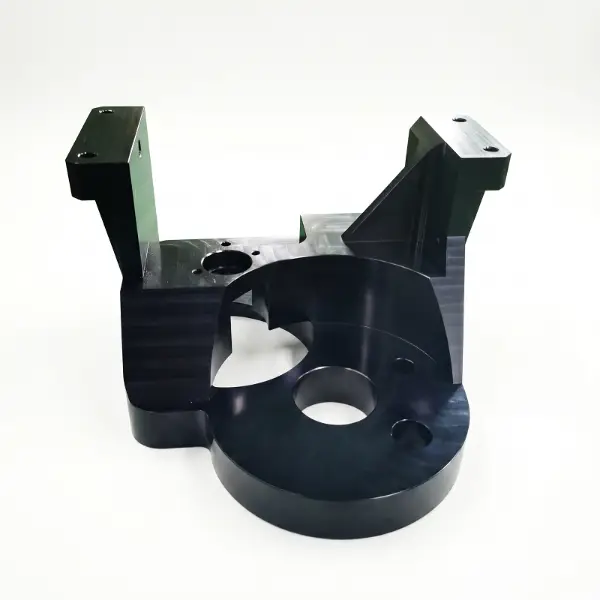
Which is More Expensive: 5052 vs 6061 Aluminum
The price differences between 6061 and 5052 aluminum alloys are mainly reflected in the following aspects:
Raw Material Cost
6061 Aluminum Alloy: Contains magnesium (0.8%-1.2%) and silicon (0.4%-0.8%), and requires the addition of copper and other elements, resulting in relatively higher raw material costs.
5052 Aluminum Alloy: Mainly contains magnesium (2.2%-2.8%), with lower silicon and copper content, making its raw material cost slightly lower than 6061.
Heat Treatment Cost
6061-T4/T6: Requires solution treatment and artificial aging treatment (T6 condition) to achieve high strength and toughness. The heat treatment process is complex and costly.
5052-T32/T36: Does not require heat treatment aging annealing and mainly adopts room-temperature rolling processes (except T112 which requires heated rolling), resulting in significantly lower costs.
Machining Cost
6061 Aluminum Alloy: Has higher hardness (approximately 95-100HB in T6 condition), making machining more difficult, causing faster tool wear, and resulting in higher machining costs.
5052 Aluminum Alloy: Has lower hardness (approximately 60HB), better machinability, and relatively lower machining costs.
Overall Cost Difference
Under the same specifications and conditions, the cost of 6061 aluminum alloy is usually 10%-20% higher than that of 5052 aluminum alloy. Actual quotations in the international market may fluctuate slightly. Generally, the price of 5052 aluminum ranges from USD 3,500-4,000 per ton, while 6061-T6 aluminum ranges from USD 4,000-4,500 per ton. For price comparisons of other strengthened aluminum alloy conditions, you can consult our material procurement engineers for further information.
Application Fields:
6061 aluminum alloy, with its high strength, excellent machining performance, and corrosion resistance, is widely used in aerospace structural parts, automotive wheels and chassis components, precision mechanical parts, architectural frame profiles, as well as electronic heat dissipation housings and lightweight sports equipment that require high structural load-bearing capacity and machining precision.
5052 aluminum alloy has outstanding corrosion resistance and welding formability, especially suitable for seawater environments. It is mainly used for marine sheet metal oil circuit components, automotive fuel tanks and exterior panels, architectural decorative sheets, and can also be used to manufacture electrical housings, food and pharmaceutical packaging materials, and various conventional hardware accessories.
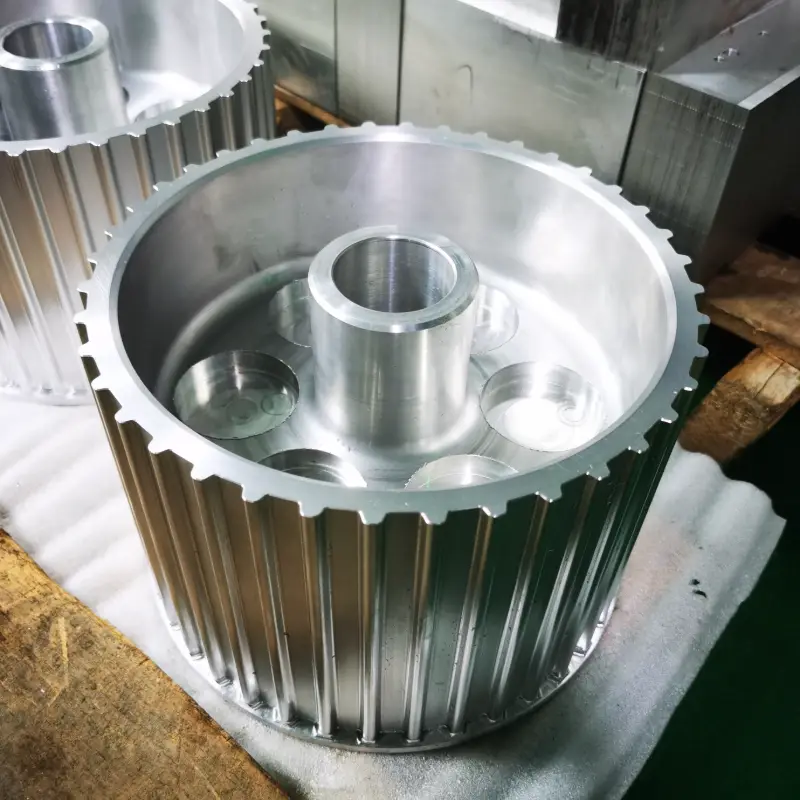
How to Choose: 5052 or 6061 Aluminum Alloy
If high strength, high rigidity, precision machining, or large load-bearing structural parts are required, 6061 aluminum alloy (T6 or T651 condition) should be preferred.
If good formability, fatigue resistance, corrosion resistance, or medium-load and complex-shaped parts are required, 5052 aluminum (H32 or H34 conditions) should be preferred.
FAQ
Which condition of 5052 has hardness similar to 6061-T6?
The hardness of 6061-T6 is similar to the hardness of 5052 aluminum alloy in the H38 condition.
The Brinell hardness (HB) of 6061-T6 is approximately 95-100.
The Brinell hardness (HB) of 5052-H38 is approximately 77-80.
Although the hardness values are not exactly the same, in practical applications, the hardness level of 5052-H38 is relatively close to that of 6061-T6, and both belong to relatively high-hardness aluminum alloy conditions.
Which condition of 5052 has hardness similar to 6061-T4?
The hardness of 6061-T4 is similar to the hardness of 5052 in the H32 condition.
6061-T4: After solution treatment and natural aging, the Webster hardness is approximately 9, and the Brinell hardness (HB) is approximately 65-80.
5052-H32: Belongs to the semi-cold-work hardened condition, with a Brinell hardness (HB) of approximately 60-65.
The hardness values of the two are relatively close, both being at a medium hardness level and suitable for application scenarios requiring certain strength while maintaining some plasticity.
What are the differences in mechanical properties between 6061-T4 and 5052-H32
The differences in mechanical properties between 6061-T4 and 5052-H32 are mainly reflected in the following aspects:
Tensile Strength:
6061-T4: The tensile strength is approximately 205-240MPa. After solution heat treatment and natural aging, it has relatively high strength and can withstand large tensile forces.
5052-H32: The tensile strength is approximately 230-260MPa. Its strength is improved through cold work hardening treatment, but its overall strength is slightly lower than that of 6061-T4.
Yield Strength:
6061-T4: The yield strength is approximately 140-160MPa, with good deformation resistance and less likelihood of plastic deformation under stress.
5052-H32: The yield strength is approximately 195-215MPa. Although its strength is relatively high, its deformation resistance is slightly weaker than that of 6061-T4.
Elongation (Plasticity):
6061-T4: The elongation is approximately 22%-25%, with good plasticity and the ability to withstand tensile deformation to a certain extent without fracture.
5052-H32: The elongation is approximately 10%-12%, with relatively lower plasticity and a greater tendency to develop cracks during large deformation.
Hardness:
6061-T4: The hardness is approximately 65-70HV, with moderate hardness balancing strength and machinability.
5052-H32: The hardness is approximately 80-85HV, with higher hardness and better surface wear resistance.
Summary: 6061-T4 has better overall performance in terms of strength, deformation resistance, and plasticity, making it suitable for structural parts requiring high strength and precision. 5052-H32 excels in corrosion resistance and work hardening performance, making it suitable for scenarios requiring high corrosion resistance and certain strength, but it may not perform as well as 6061-T4 in applications requiring complex forming or high plasticity.