
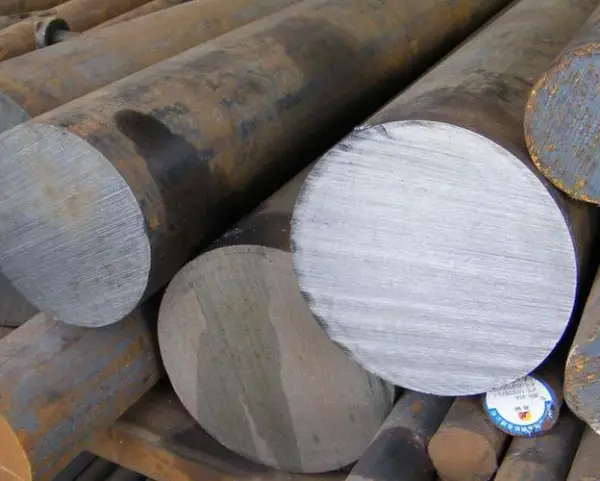
AISI 4140 is an American standard grade of chrome moly steel. The 4140 steel equivalent in China is 42CrMo, in Germany is 42CrMo4, and in Japan is SCM440 alloy steel. It features high strength, high toughness, and good hardenability. Due to its moderate carbon content and rich alloying elements, it is also commonly heat treated to produce martensitic alloy steel with higher hardness. 4140 chrome moly steel can easily meet the application requirements of heavy-duty load-bearing components. Below, I will explain the characteristics and machining processes of AISI 4140 steel.
AISI 4140 Steel Properties
To introduce this material more scientifically, I will explain it according to the properties of metals, mainly including mechanical properties, physical properties, chemical properties, corrosion resistance, and machining processes.
AISI 4140 Chemical Composition
AISI 4140 is also called low alloy 4140 chromoly steel. Its chemical elements mainly include the following:
Carbon (C): Content 0.38%-0.43%, belongs to medium carbon steel, and is the key element that determines whether 4140 carbon steel can be quenched and tempered.
Manganese (Mn): Content 0.75%-1.00%, mainly improves the hardenability of steel, refines grains, and can also combine with sulfur to form MnS, reducing hot brittleness caused by sulfur and improving the hot working performance of AISI 4140 steel.
Chromium (Cr): Content 0.80%-1.10%, can improve the hardenability, wear resistance, and oxidation resistance of 4140 material, forming stable carbides to strengthen the matrix and improve the corrosion resistance of AISI 4140 steel, especially performing well in oxidizing environments.
Molybdenum (Mo): Content 0.15%-0.25%, is a key alloying element in AISI 4140, significantly improving hardenability, effectively suppressing temper brittleness, enhancing the strength and hardness of 4140 chrome moly steel at high temperatures, while also improving the corrosion resistance of steel, especially resistance to chloride corrosion.
Silicon (Si): Content 0.15%-0.35%, mainly acts as a deoxidizer, and a small amount can improve the strength of 4140 steel.
Phosphorus (P) and Sulfur (S): Phosphorus content ≤0.035%, sulfur content ≤0.040%, both are impurity elements and need to be strictly controlled. Excessive phosphorus content will reduce the impact toughness and cold brittleness transition temperature of steel, while excessive sulfur content will cause hot brittleness and reduce the ductility of steel.
These chemical compositions with reasonable proportions give 4140 CrMo steel excellent comprehensive properties in strength, toughness, hardenability, and corrosion resistance, making it suitable for manufacturing mechanical parts that withstand heavy loads and impact requirements.
Mechanical Properties of AISI 4140
AISI 4140 is a medium carbon chromium molybdenum alloy structural steel. After quenching and tempering heat treatment, it has excellent mechanical properties. The following are the mechanical performance indicators of 4140 steel in the quenched and tempered condition:
4140 steel tensile strength: ≥1080 MPa. 1080 MPa is also the typical value of 4140 steel ultimate tensile strength in the high-temperature tempered condition. If low-temperature tempering is used, its tensile strength will be even higher.
AISI 4140 yield strength: ≥650–1100 MPa.
AISI 4140 elongation: ≥12%, indicating that the material has good plastic deformation ability. This is based on the test result of a 25 mm specimen blank size.
Reduction of area of quenched and tempered 4140 steel: ≥45%, reflecting the material’s ability to withstand plastic deformation before fracture.
AISI 4140 impact toughness: ≥63 J (20°C), reflecting the material’s ability to resist impact loads.
It should be noted that the specific mechanical properties may vary depending on heat treatment processes, material purity, and ambient temperature. For example, using different quenching media (oil cooling, water cooling) or tempering temperatures will affect the balance of strength, toughness, and hardness of the material.
Physical Properties of AISI 4140
Steel 4140 density is about 7.85 g/cm³, similar to ordinary carbon steel.
Melting point is about 1420-1450°C, with slight variations depending on composition.
Thermal conductivity is about 45-50 W/(m·K) at room temperature, decreasing as temperature rises.
Specific heat capacity is about 460 J/(kg·K) at room temperature, indicating moderate heat absorption and release capacity.
Elastic modulus is about 210-215 GPa, reflecting the stiffness of the material during elastic deformation.
Poisson’s ratio is about 0.28-0.30, indicating the ratio of transverse strain to longitudinal strain under stress.
In terms of magnetic properties, AISI 4140 alloy steel is ferromagnetic and can be magnetized, making it suitable for applications requiring magnetic functionality.
It should be noted that the above performance data are typical values, and actual values may vary due to specific production processes, heat treatment parameters, and material batches.
4140 Steel Hardness:
Annealed condition: ≤217 HB
Quenched and tempered condition: 22-35 HRC (depending on tempering temperature)
By adjusting the tempering temperature during quenching and tempering, the hardness of 4140 steel can be changed. For example, hardness decreases after high-temperature tempering.
4140 Steel Corrosion Resistance
The corrosion resistance of 4140 steel has the following characteristics:
Basic Corrosion Resistance
Since AISI 4140 is a chromium-molybdenum alloy material, the chromium element (content 0.8%-1.1%) can form a dense chromium oxide passivation film on the steel surface, providing certain corrosion resistance in general weak acid and alkali environments.
Resistance to Specific Media
In environments containing a small amount of chloride ions (such as ordinary seawater or humid salt spray environments), the corrosion resistance of 4140 CrMo steel is relatively limited. Slight rusting may occur after long-term exposure, but it usually does not fail rapidly due to corrosion.
In strong acidic, strong alkaline, or high-concentration chloride ion environments (such as concentrated hydrochloric acid, concentrated sulfuric acid, or high-salinity seawater), its corrosion resistance decreases significantly, and additional anti-corrosion measures are required (such as painting, galvanizing, chrome plating, or using anti-corrosion coatings).
Heat Treatment Effect
After quenching and tempering treatment (quenching + tempering), the microstructure of AISI 4140 becomes more uniform, and the corrosion resistance is relatively improved compared with the untreated state, but it still cannot compare with stainless steels (such as 304 and 316 stainless steel).
Note: When AISI 4140 material steel is used in strong corrosive environments, anti-corrosion surface treatment or material modification is required.
Common Machining Processes of AISI 4140
The main machining processes of AISI 4140 include the following:
1. 4140 Steel Forging Process
It is divided into free forging and die forging. Free forging is mainly used for processing AISI 4140 material in small batches. Hammering and extrusion are performed at 1100-1200°C, allowing the internal crystal lattice of AISI 4140 material to be refined and deformed, improving toughness and strength.
Die forging places the heated AISI 4140 billet into a mold and applies pressure from different directions of the mold to form the billet.
2. 4140 Steel Heat Treatment
Quenching and tempering: This is the most commonly used heat treatment method for 4140 steel. Oil quenching is performed at 830-860°C to obtain the martensitic structure of AISI 4140, followed by high-temperature tempering at 500-650°C to obtain tempered martensite or tempered sorbite structure, balancing high strength and toughness.
Normalizing: Heated to 850-880°C and then air cooled for AISI 4140. It is used to refine grains, homogenize the structure, and release internal stress. It is commonly used after forging or rolling. The normalized yield strength of 4140 steel is roughly in the range of 700-900 MPa.
Annealing: Heated to 680-720°C and then furnace cooled to reduce the hardness of AISI 4140 and improve machinability, suitable for parts requiring subsequent CNC milling.
3. Machining
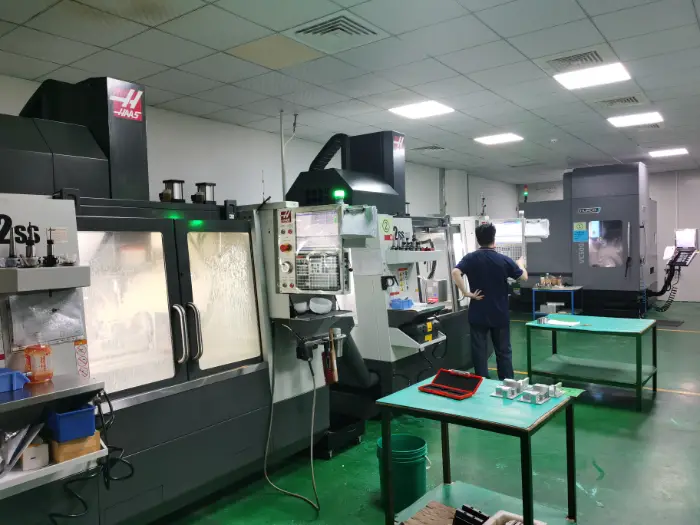
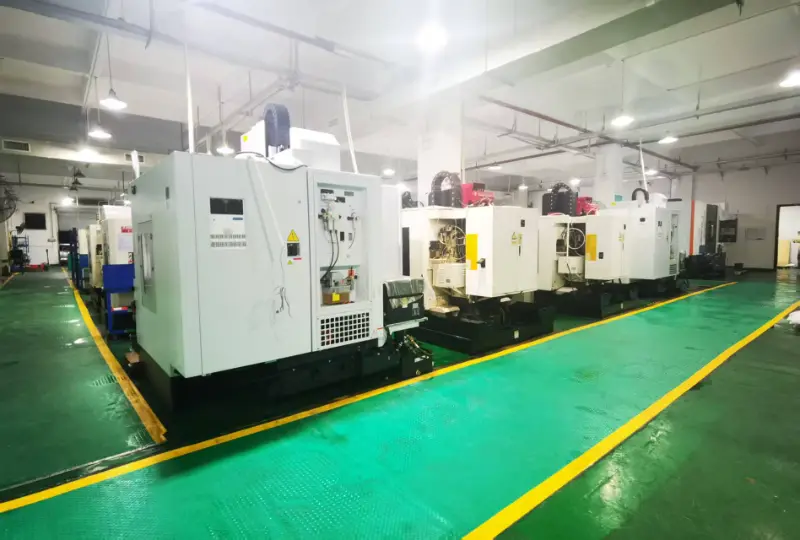
Turning, milling, drilling, tapping, etc.: These are generally carried out after quenching and tempering or normalizing of 4140 alloy steel. The cutting tools used for machining AISI 4140 steel are generally carbide tools or CBN/ceramic tools. The spindle speed is set according to the heat treatment condition of the 4140 workpiece. The following machining parameters are summarized based on the experience of our Weldo four-axis machine operators:
The hardness of annealed 4140 alloy steel is relatively low, and the spindle speed range is generally 150-200 m/min;
The hardness of quenched and tempered alloy 4140 steel is moderate, with a speed range of 100-150 m/min;
The hardness of quenched AISI 4140 steel is relatively high, and the tool speed range is 80-120 m/min;
The tool feed is set at 0.04-0.2, and the tool overhang should not be too long to avoid vibration. Coolant is used to dissipate heat from the workpiece and reduce tool wear rate.
Grinding: Used for finish machining of larger surfaces or batch surfaces of AISI 4140 parts, improving surface finish and dimensional accuracy. Commonly used for final machining of shafts, gears, and other parts.
4. Surface Treatment
The surface treatment of AISI 4140 workpieces is divided into corrosion protection and rust prevention, surface strengthening, and appearance treatment.
Corrosion Protection and Rust Prevention:
Phosphating, black oxide, galvanizing, chrome plating
4140 commonly uses manganese phosphating, which has better temperature resistance and wear resistance, mainly used for machined parts, shafts, and gears, followed by oil immersion / spray painting.
Black oxide treatment for 4140 has low cost, and the micron-level film layer does not affect dimensions.
Galvanizing treatment for quenched and tempered 4140 is mainly used for outdoor parts, fasteners, and petroleum machinery.
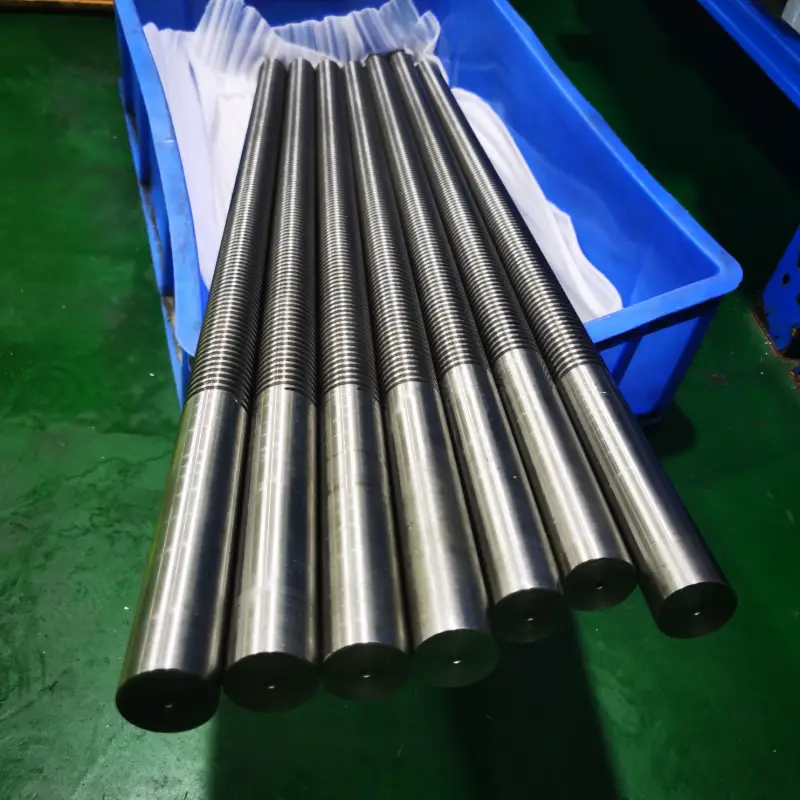
4140 steel applications after quenching, tempering, and chrome plating include hydraulic cylinders, piston rods, and molds, with the advantage of strong coating adhesion.
Surface Strengthening:
Nitriding treatment: After quenching and tempering heat treat 4140 steel followed by nitriding treatment, its fatigue resistance is improved by more than 50%, mainly used in gears, crankshafts, bearing seats, and screws.
Induction hardening: High efficiency, suitable for surface hardening of large batches of 4140 steel parts, such as shafts, gears, pins, etc.
Laser hardening: High-energy local heating and self-cooling for AISI 4140 parts, with small deformation, suitable for local strengthening of precision parts and complex cavities.
Shot peening / blasting: Treatment after quenching and tempering of 4140, releasing part of the internal stress of the workpiece, improving fatigue resistance and crack prevention, mainly used for crankshafts, connecting rods, springs, etc.
Appearance Treatment:
Polishing: AISI 4140 supports both mechanical polishing and electrolytic polishing. Electrolytic polishing provides better surface finish, reaching RA≤0.2, suitable for machining complex 4340 parts.
PVD coating: Improves the surface hardness of 4140 and reduces the friction coefficient. Shafts and friction components are common 4140 steel uses.
Common Shapes of AISI 4140 Steel
4140 Steel Plate
4140 steel plates mainly include hot rolled plates, cold rolled plates, and leveling plates. 4140 steel specs range in thickness from 0.1 mm to 300 mm, with width and length customizable according to requirements. They are suitable for manufacturing molds, structural parts, pressure vessels, etc.
4140 Steel Bar
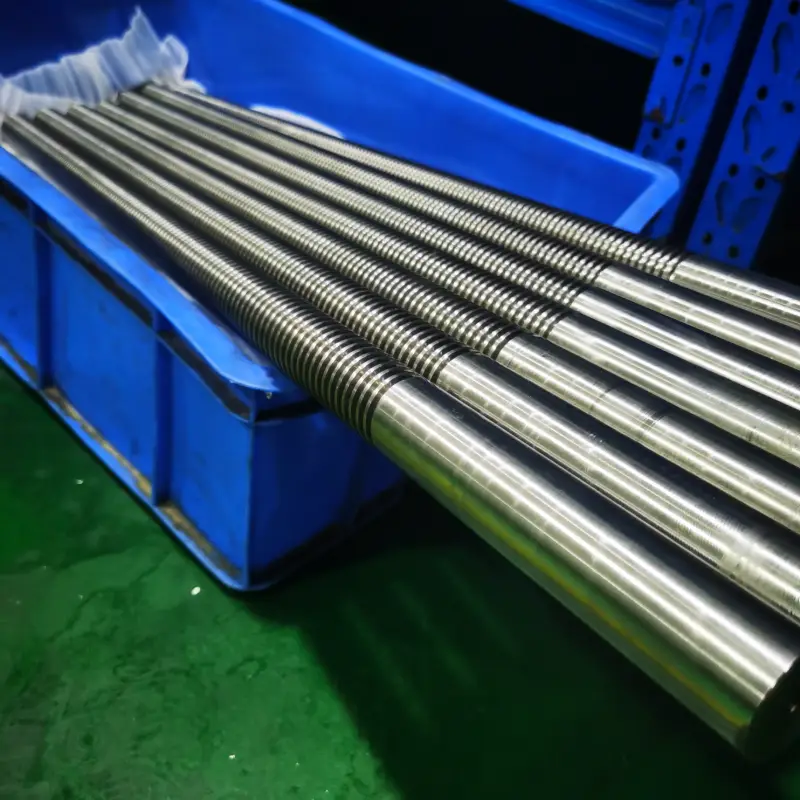
When visiting our 4140 steel bar suppliers, you can often see hot rolled round bars, cold drawn round bars, and forged rounds in 4140 steel bar stock. Diameters range from several millimeters to hundreds of millimeters, commonly used for manufacturing shafts, gears, bolts, and other mechanical parts.
4140 Steel Tube
Including 4140 seamless tubes and welded tubes, with various outer diameter and wall thickness specifications. Commonly used in oil drilling, chemical pipelines, mechanical transmission, and other fields, meeting the requirements for strength, corrosion resistance, and sealing performance.
4140 Forgings
4140 can be forged into customized shapes according to specific requirements, such as gear blanks, crankshafts, connecting rods, and other 4140 alloy steel machined parts, with uniform crystal structure, good toughness, and certain impact resistance.
4140 Steel Wire
Fine-diameter wire can be used for manufacturing springs, steel wire ropes, welding materials, etc. It has good elasticity and strength. 4140 steel weldability is at a medium to low level. Preheating is required before welding 4140 steel. It is recommended to choose gas shielded welding or manual arc welding, and avoid welding processes that easily generate hydrogen.
Conclusion
The above covers the complete material characteristics of aisi 4140 steel, as well as its common raw material forms. If you would like to learn more or obtain a quote for steel machining services, please feel free to contact us at Weldo Machining.
FAQ
How to Quench and Temper AISI 4140 Alloy Steel?
Heat AISI 4140 to 810-850°C for austenitizing and holding, then oil quench for cooling, followed by high-temperature (or low-temperature) tempering to obtain martensite. This process is commonly referred to as quenching and tempering.
Can AISI 4140 Carbon Steel Be Water Quenched?
AISI 4140 cannot be water quenched. Even small parts are prone to quenching cracks at the cross-sections of the parts. Water quenching is strictly prohibited for large AISI 4140 parts, thick-walled parts, and complex parts. Rapid cooling may cause cracking, severe deformation, and result in scrapped workpieces.
In most cases, AISI 4140 workpieces are oil quenched. The cooling rate of oil medium is relatively moderate, which can better balance hardening effect and deformation control.
Is 4140 Stainless Steel
Because the chromium content of 4140 alloy steel is usually 0.80%-1.10%, which is far lower than the stainless steel standard of not less than 10.5%, it does not have the unique corrosion resistance of stainless steel. Therefore, 4140 steel is not stainless steel.